What Are The Major Natural Resources Of Iran?
Iran is one of the world's most resource-rich states, with the second-largest natural gas reserves on Earth, the fourth-largest proven oil reserves, world-leading agricultural output in saffron and pistachios, and substantial reserves of copper, iron ore, zinc, and other industrial minerals. The country's economy is also under unprecedented strain. By mid-2026, Iran is operating under reimposed UN "snapback" sanctions, has lost the founder of its current political order with the assassination of Supreme Leader Ali Khamenei on February 28, 2026 in US-Israeli strikes that opened the 2026 war, and faces a national water crisis that the Iranian president has described as making the capital, Tehran, possibly unsustainable. The country's resource economy must now be read against all three pressures at once. The seven sections below cover the resources that anchor Iran's economic position and the constraints that currently shape what those resources can deliver.
Crude Oil

Iran holds approximately 157 billion barrels of proven crude oil reserves, the fourth-largest national total in the world after Venezuela, Saudi Arabia, and Canada, and equivalent to roughly 9% of the global proven total according to the US Energy Information Administration. Iran's crude is concentrated in giant fields in the southwest, including Ahvaz, Marun, Gachsaran, and the developed northern part of the Azadegan complex shared with Iraq. Most production is exported as crude through the Kharg Island terminal in the Persian Gulf, which has handled roughly 95% of seaborne exports for decades.
Crude oil production through 2025 and into 2026 averaged 3.2 to 3.3 million barrels per day, with exports of roughly 1.7 to 2.1 million barrels per day. Approximately 87% of those exports go to China, with the remainder transiting via the United Arab Emirates, Malaysia, and other intermediary points that obscure final origin. Iran sells its crude at discounts of about $5 to $13 below Brent benchmark prices to maintain demand under sanctions. The reimposition of UN sanctions on September 27, 2025 (the "snapback" under Security Council Resolution 2231) targeted financial, maritime, and insurance services rather than oil exports themselves, and has not significantly cut export volumes by itself. The greater constraint is structural: aging oil fields, chronic underinvestment, and limited access to enhanced-recovery technology have all compounded over more than fifteen years of intermittent sanctions. Iran's main refineries at Abadan, Esfahan, Bandar Abbas, Arak, and Tabriz process most domestic fuel demand.
Natural Gas

Iran holds the world's second-largest proven natural gas reserves at approximately 1,200 trillion cubic feet, about 17% of the global proven total. Only Russia has more. The single largest source is the South Pars field in the Persian Gulf, which Iran shares with Qatar (which calls its side the North Field). South Pars is the largest natural gas field on Earth by reserves, with approximately 35 trillion cubic meters of recoverable gas, and provides roughly 70% of Iran's annual gas production. The field has been developed in 24 contractual phases, most of which are operational, though several remain incomplete due to the absence of foreign technical partners after sanctions were reimposed in 2018.
Iran consumes the overwhelming majority of its gas production domestically, in part because sanctions and the absence of liquefaction infrastructure prevent meaningful LNG exports. The country exports limited volumes by pipeline to Turkey and Iraq. South Pars onshore processing facilities were damaged in an Israeli airstrike in March 2026, reducing condensate output by approximately 100,000 to 120,000 barrels per day according to the Center on Global Energy Policy at Columbia University. The wider risk to Iran's gas sector is not catastrophic damage but slow erosion: reservoir pressure at South Pars is declining, and the offshore compression facilities needed to sustain long-term output cannot be built or sourced under sanctions.
Saffron

Iran produces approximately 90% of the world's saffron, the highest share for any country of any major agricultural commodity. Saffron, called "red gold" for both its colour and its weight-for-weight price (it commonly sells at retail above the wholesale price of gold per gram), is the dried stigmas of the autumn-flowering crocus, Crocus sativus. The flower blooms only in late October and early November, and harvesting is entirely manual: each flower contains three stigmas, and approximately 150,000 flowers are required to produce one kilogram of dried saffron. The province of Khorasan Razavi in northeastern Iran produces roughly 75 to 80% of the national total, with the cities of Torbat-e Heydarieh and Gonabad as historical centers of the trade.
Saffron is graded in Iran by international standard ISO 3632 and by Iranian national categories including Super Negin (the highest grade, with the largest unbroken stigmas), Negin, Sargol, and Pushal. Sanctions have made direct exports difficult, and a substantial share of Iranian saffron now reaches European markets through Spain (which buys raw saffron and rebrands it) and the United Arab Emirates. Iran's saffron sector is, however, increasingly stressed by the ongoing drought; reduced winter precipitation in Khorasan has shortened the flowering season and reduced yields in 2024 and 2025 harvests.
Pistachios

Iran was the world's largest producer of pistachios for the better part of a thousand years. That position has now been lost. According to the USDA's Foreign Agricultural Service, in the 2024-2025 crop year California produced 712,682 metric tons of in-shell pistachios; Iran produced 200,000 metric tons; Turkey produced 120,000 metric tons. The 2025-2026 forecast widens the gap further, with California projected at approximately 770,000 metric tons. The United States has been the world's largest producer since the mid-2010s. The reasons combine sanctions, drought, irrigation electricity shortages, and a 241% US anti-dumping tariff on Iranian in-shell pistachios that has been in place since 1986 and was most recently renewed on May 30, 2025.
Iran continues to produce the highest-quality pistachios on the global market, with varieties including Akbari, Ahmad Aghaei, Fandoghi, and Kale Ghoochi prized for flavor profile and oil content. The crop is concentrated in Kerman, Yazd, and Khorasan provinces, primarily around oasis-irrigated land. The pistachio sector employs roughly 350,000 Iranians. The viral growth in global pistachio demand from 2023 to 2026, driven by "Dubai chocolate" products and pistachio cream desserts, has lifted prices significantly, but Iran's share of the resulting revenue has been captured largely by California growers due to the tariff barrier and Iran's water-related yield problems.
Other Agriculture and Fruit Production

Iran is one of the world's largest fruit producers in absolute terms, ranking first globally in pomegranates and consistently in the top three for dates (alongside Egypt and Saudi Arabia). Iran is also a major producer of apples (top five globally), grapes, walnuts (the Persian walnut, Juglans regia, originates in the region), figs, and apricots. Wheat is the largest single field crop by area, but Iran has not been self-sufficient in wheat production in most recent years and imports substantial volumes from Russia, Kazakhstan, and India. Approximately 12% of Iran's total land area is under crop production, well below the roughly 35% considered theoretically arable, with the gap driven primarily by water constraints. The most productive agricultural regions are in the northwest (around the Caspian Sea littoral) and in the western Zagros foothills, where rainfall has historically been highest.
Minerals and Industrial Metals
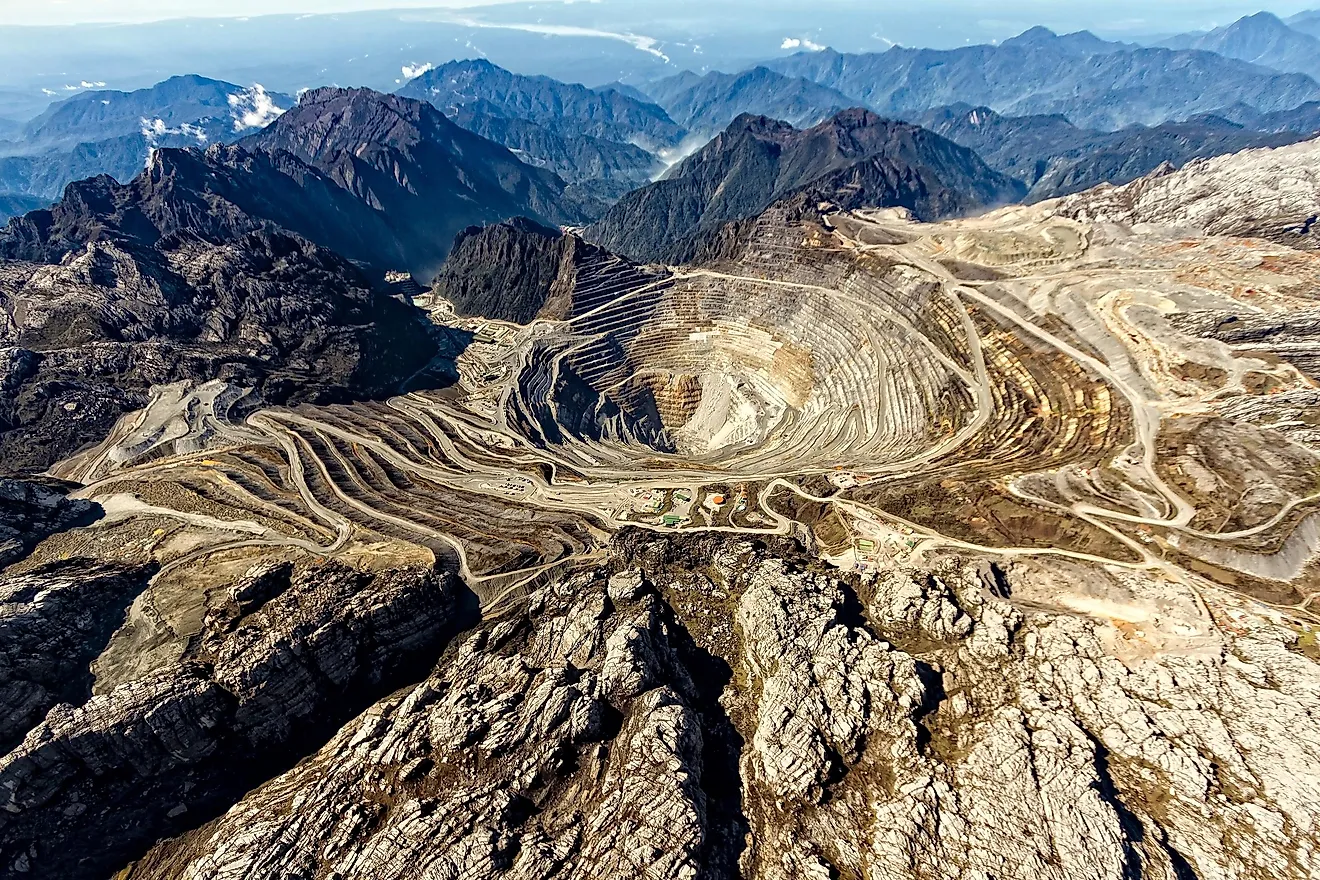
Iran holds one of the world's largest combined mineral resource inventories. The United States Geological Survey and Iran's own Ministry of Industry estimates put the country's identified mineral reserves at roughly 60 billion tonnes across 68 different minerals. Iran is the second-largest holder of copper reserves in the world after Chile, anchored by the Sarcheshmeh mine in Kerman province, one of the largest open-pit copper operations globally. The country is also a major producer of iron ore, with the Chadormalu and Gol-e-Gohar mines as the principal sites, and substantial reserves of zinc, lead, gypsum, chromite, and decorative stone.
The Iranian steel industry produces approximately 30 million tonnes of crude steel per year, placing the country in the global top ten. However, the mining sector contributes only about 1% of GDP and remains severely underdeveloped relative to the resource endowment. The constraints are familiar: sanctions limiting access to advanced extraction and processing technology, foreign-currency shortages restricting capital investment, and electricity rationing affecting smelter operations. Through 2025 the steel industry experienced repeated production cuts when power was diverted to residential users during summer heat waves and winter cold snaps.
Water - The Resource Iran Is Losing
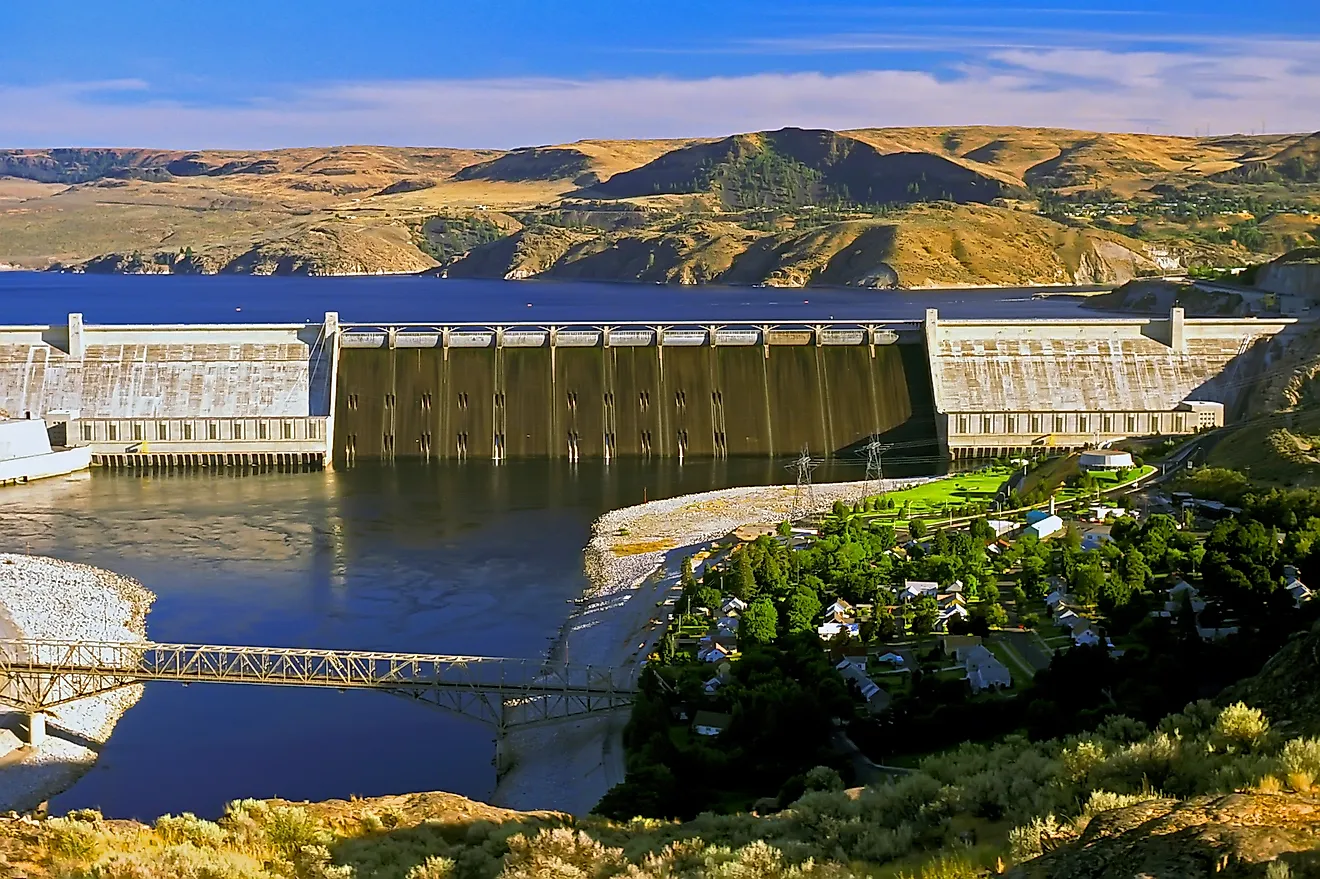
The single most acute resource problem facing Iran in 2026 is not oil, gas, or minerals; it is water. The country is in the fifth or sixth consecutive year of severe drought, depending on the measurement method. In November 2025, the storage in Tehran's five main reservoirs fell to approximately 11 to 13% of capacity, with the Latyan Dam at about 9% and the Amir Kabir Dam at around 8% of total capacity. Rainfall in the Tehran area for 2024-2025 was 42% below the long-term average. Nineteen essential dams across the country ran dry entirely in 2025. Lake Urmia in the northwest, once one of the largest salt lakes in the world, has been reduced to a salt flat. Mashhad, the country's second-largest city, draws from the Doosti Dam (shared with Turkmenistan), which fell to roughly zero usable storage in 2023 and has not meaningfully recovered.
President Masoud Pezeshkian warned in late 2025 that residents of Tehran's 15 million-person metropolitan area might need to be evacuated if precipitation did not return by December, and the government has discussed a long-term plan to relocate the national capital out of Tehran. The proposed new site is in the Makran coastal region near the Gulf of Oman. The crisis has multiple causes operating simultaneously: the heavy state subsidy of agricultural water use (which accounts for approximately 90% of national consumption), more than 700,000 illegal wells extracting groundwater, the abandonment of the ancient qanat system that once sustainably tapped underground reserves, the construction of hundreds of dams on rivers too small to fill them (resulting in enormous evaporation losses from large surface reservoirs), urban distribution networks losing 30 to 50% of throughput to leakage, and irreversible land subsidence in Tehran exceeding 30 centimeters per year in some districts due to aquifer depletion. Climate change and the upstream dam-building of the Taliban government in Afghanistan (which now controls up to 80% of the Harirud River feeding Mashhad through the Pashdan Dam, operational since August 2025) further compound the problem.
A Resource Economy Under Three Simultaneous Pressures
Iran's natural-resource position on paper is among the strongest of any country: top-five global standing in proven oil reserves, second-largest natural gas reserves, dominant share of world saffron supply, top-three global standing in copper reserves and in pomegranate and date production. The translation of that endowment into national income is now constrained by three pressures operating simultaneously, in ways that no single one of the three could produce alone. Sanctions, in their current sixth year of continuous application, limit access to the foreign capital, technology, and partners needed to sustain advanced extraction in oil and gas. The 2026 war has caused direct damage to processing facilities at South Pars and elsewhere, and the political instability following Khamenei's assassination has paralyzed long-term planning. And the water crisis is rapidly converting Iran's most productive agricultural regions into marginal land, while threatening the urban consumption base that drives industrial demand. Iran will remain a structurally important supplier in global oil, gas, saffron, and pistachio markets through the end of this decade. Whether the country can also continue to be a functioning state at its current population of approximately 89 million is the more open question, and the answer will turn primarily on whether the political and water problems can be addressed before the resource buffer that has cushioned the regime since 1979 is fully depleted.