How The Red Sea Shipping Crisis Affects Global Trade
Houthi attacks on commercial shipping in the Red Sea paused after the October 2025 Gaza ceasefire, but the crisis they triggered is not over. Container lines that diverted around the Cape of Good Hope are still making the longer voyage. The Bab el-Mandeb Strait remained at moderate threat level as of the April 2026 multinational maritime advisory, and the Houthis have warned they will resume attacks if the Gaza ceasefire breaks down or the 2026 Iran war escalates. Suez Canal traffic remains well below pre-crisis levels. The crisis began in November 2023, peaked through 2024, and remains active in suspended form.
Shipping In The Red Sea

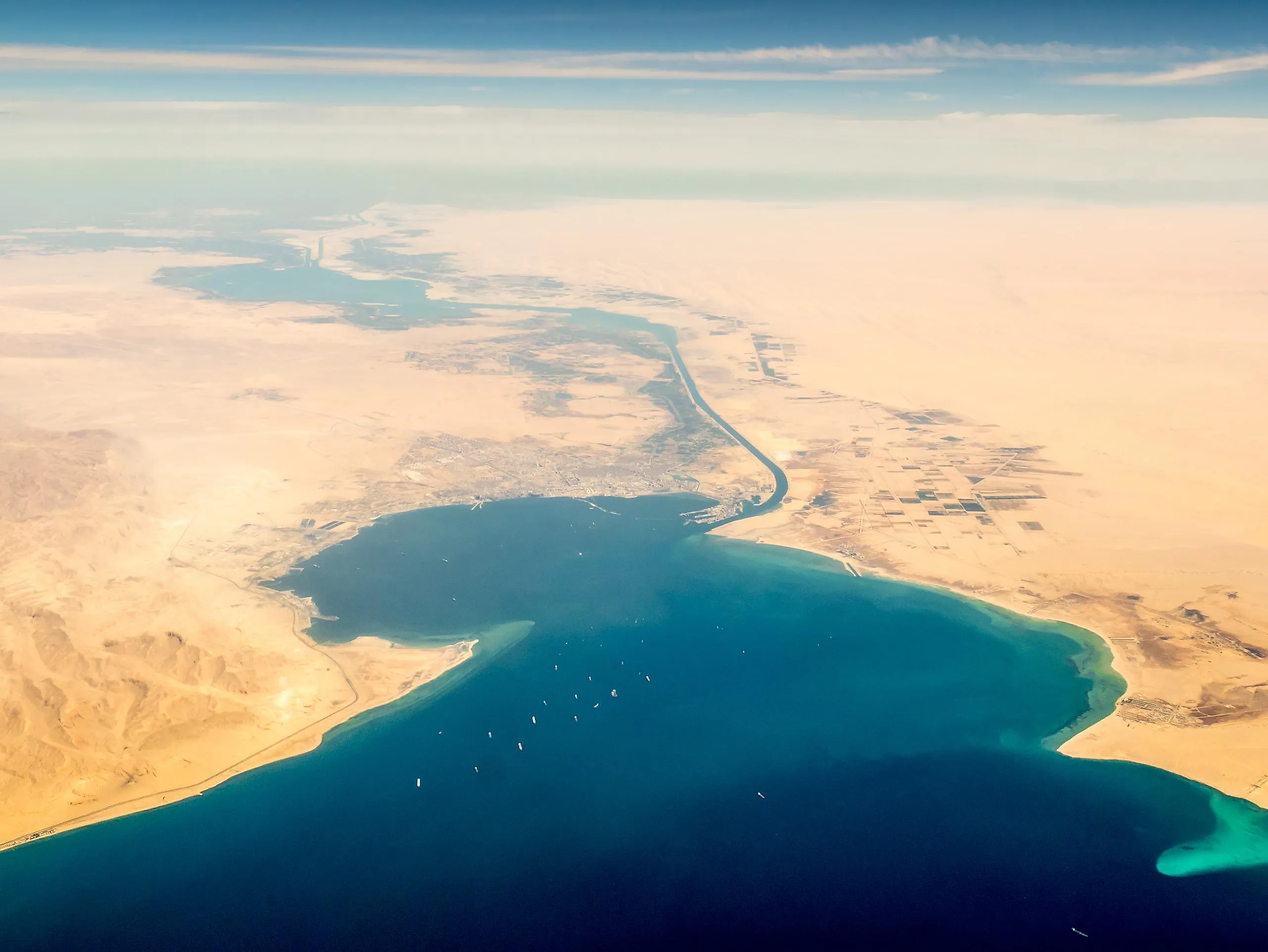
The Red Sea is a long, narrow body of water between Africa and the Arabian Peninsula. Its coastline runs through Egypt, Sudan, Eritrea, Djibouti, Saudi Arabia, and Yemen. At its northern end, the Suez Canal connects it to the Mediterranean Sea. At its southern end the Bab el-Mandeb Strait connects it to the Gulf of Aden and the Indian Ocean beyond. The strait is only about 20 miles wide at its narrowest point. Both ends are choke points, and the southern one is the one that matters for the current crisis: ships entering or leaving the Red Sea from Asia must pass through Bab el-Mandeb, within easy missile and drone range of Houthi-controlled western Yemen.
The Suez Canal is the connector that makes the Red Sea matter to the rest of the world. The 120-mile waterway runs north to south through Egypt and was completed in 1869. It saves a Europe-Asia voyage roughly 4,000 miles compared to the Cape of Good Hope route. In normal years it handles about 12 to 15 percent of all global trade and roughly 30 percent of global container trade. Toll revenue is one of the Egyptian government's largest sources of foreign currency, with collections reaching a record $9.4 billion in fiscal year 2022-2023.
The Houthis And The Shipping Crisis

Sana'a, Yemen's capital and largest city, currently under Houthi control.
The Houthis are a Zaidi Shia armed movement that emerged in northern Yemen in the early 1990s. The movement was founded by Hussein Badreddin al-Houthi as a religious revival group called the Believing Youth. Its initial purpose was to oppose the spread of Saudi-funded Salafi influence in Yemen's Zaidi heartland. By 2004 the group had escalated into armed conflict with the Yemeni government, and a series of six wars between the Houthis and the state ran intermittently through 2010. Yemen's Arab Spring uprising in 2011 weakened the central government further. In September 2014 the Houthis took control of the capital, Sanaa. By February 2015 they had effectively overthrown the Yemeni government, forcing then-President Abdrabbuh Mansur Hadi to flee. A Saudi-led coalition has fought against Houthi rule on behalf of the recognized Yemeni government since 2015, and Iran has provided weapons and training to the Houthis throughout.
The attacks on Red Sea shipping began on November 19, 2023, weeks after the start of the Gaza war between Israel and Hamas. The Houthis framed their campaign as solidarity with Palestinians in Gaza and as pressure on Israel to end the war. Their initial targets were vessels they claimed were linked to Israel, but Houthi targeting was often inaccurate, and over the following months they hit or threatened vessels of dozens of nationalities. The United States and the United Kingdom launched airstrikes against Houthi missile and drone infrastructure starting in January 2024. The campaign continued through 2024, with at least one ship sunk and crew members killed and others taken captive. ACLED recorded 150 Houthi attacks on commercial vessels in 2024.
International Logistical Issues

The Suez Canal Bridge over the Suez Canal with ships passing below.
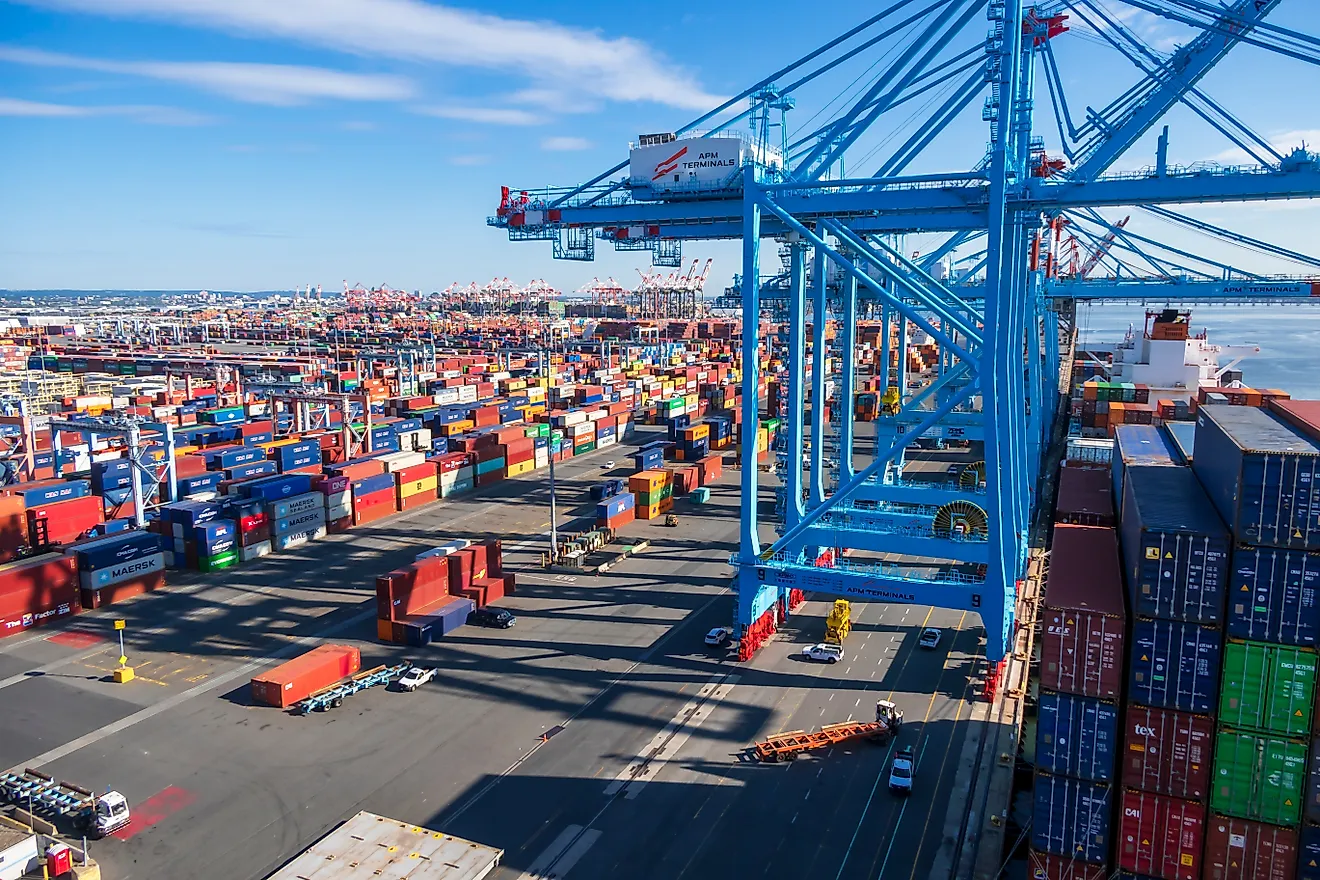
The shipping industry's response was to avoid the Red Sea. Major container lines including MSC, Maersk, and Hapag-Lloyd suspended Suez transits and rerouted their fleets around the Cape of Good Hope at the southern tip of Africa. The detour added roughly 4,000 miles and 10 to 14 days to a Europe-Asia voyage, turning what was a 30-to-40-day trip into a 50-day one, and it required carriers to deploy more ships to maintain schedules. Bab el-Mandeb daily ship transits dropped from around 70 in normal months to roughly 19 by January 2024. Suez Canal traffic fell by about 50 percent year-over-year in the first two months of 2024. Industry analysts estimated the crisis effectively cut global shipping capacity by about 20 percent, as the world's container and bulk fleet spent significantly more time in transit.
Where Things Stand Now
The crisis evolved through two ceasefires in 2025. In May 2025, the United States and the Houthis reached a ceasefire mediated by Oman. The Houthis agreed to stop attacks on US-linked vessels but kept threatening Israeli-linked shipping. In October 2025, Israel and Hamas reached a ceasefire in Gaza, and the Houthis paused attacks on commercial shipping shortly after. They confirmed the pause in a letter to Hamas's al-Qassam Brigades published in November 2025, and on December 3, 2025, they released the captured crew of the Greek-operated MV Eternity C. ACLED counted only 7 Houthi attacks on commercial vessels across all of 2025, compared with 150 in 2024.
The pause has not translated into a full return to Red Sea shipping. Major carriers remain in a posture of watchful waiting, and many vessels are still rerouting around the Cape of Good Hope. The Suez Canal Authority's 2025 toll revenue ran well below pre-crisis levels. The 2026 Iran war complicated the picture further. In February and March 2026, the Houthis threatened to resume Red Sea attacks, launched a ballistic missile at Israel, and warned that closure of the Bab el-Mandeb Strait was "likely" if the conflict against Iran escalated sharply. The US deployed the aircraft carrier USS Gerald R. Ford to the Red Sea in March 2026. As of the April 2026 multinational maritime advisory, no confirmed incidents had affected commercial maritime traffic since the Gaza ceasefire, but the Bab el-Mandeb sat at moderate threat level. The Soufan Center's 2026 Middle East forecast called Houthi resumption of Red Sea attacks "almost certain" if the Gaza ceasefire collapses.
Global Economic Impact

About 30 percent of global container trade passed through the Red Sea and the Suez Canal in normal years. The attacks and the resulting reroutes pushed shipping costs up sharply. According to J.P. Morgan Research, container spot rates from Asia to Europe surged nearly five-fold compared with their early-December 2023 levels. Insurance premiums for vessels transiting the Red Sea climbed steeply. Carriers passed those costs through to retailers and ultimately to consumers. J.P. Morgan estimated in early 2024 that the disruptions could add 0.7 percentage points to global core goods inflation and 0.3 percentage points to overall core inflation in the first half of 2024 if shipping costs persisted at then-elevated levels. UNCTAD recorded a 256 percent increase in container shipping rates from Shanghai to Europe between early December 2023 and late January 2024.
Air freight became a partial substitute for some routes, but it is dramatically more expensive than sea, so it stayed economical only for high-value or time-sensitive cargo. Most goods stayed on the longer sea route, with the additional voyage time and freight costs absorbed downstream by importers, retailers, and consumers.
Impact On Vulnerable Industries
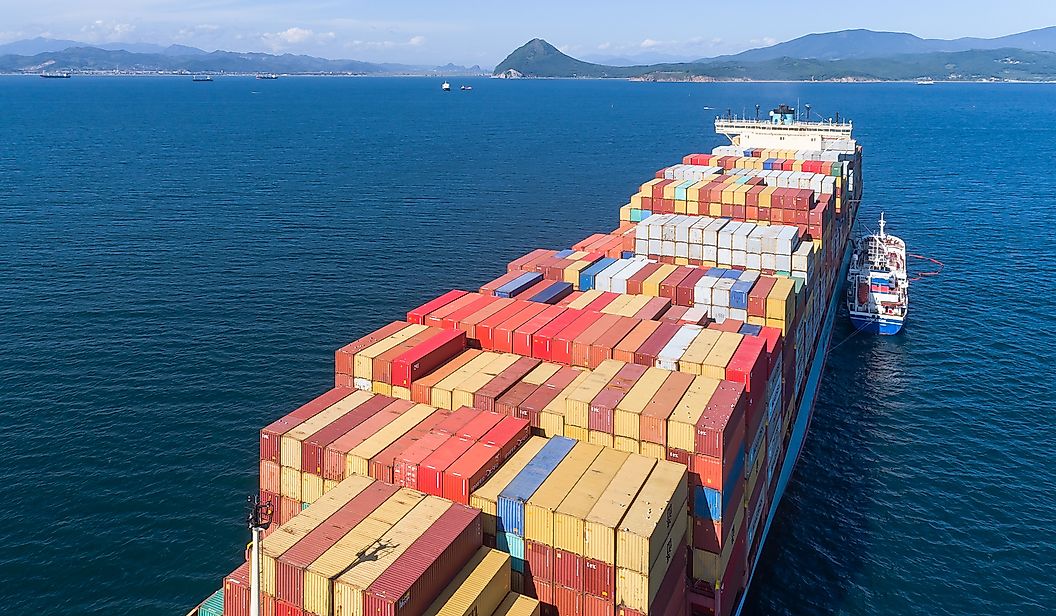
A cargo ship in Nakhodka, Russia. Editorial credit: VladSV / Shutterstock.com.
Just-in-time manufacturing took the worst of the disruption. The model coordinates production so companies receive components only when they need them, holding minimal inventory. When one piece of the supply chain is delayed, the entire chain slows. The European auto industry, which relies on parts shipped from Asia under just-in-time arrangements, saw factory slowdowns at multiple plants in early 2024 due to delayed Red Sea shipments. The shift to electric vehicles compounded the problem, since many EV components and finished EVs travel by sea between China and Europe.
Food and energy supplies to developing countries were the other major casualty. Liquefied natural gas and oil deliveries to several import-dependent countries took longer or shifted to more expensive routes, raising domestic energy prices. The UN's Food and Agriculture Organization noted impacts on food deliveries, with Yemen itself among the most affected, since the Houthi-controlled north depends heavily on food imports through the same Red Sea route the group was targeting.
The Outlook
The crisis has not ended; it has shifted shape. Attacks have paused, but the conditions that made the Red Sea a high-risk transit zone have not been resolved. The Houthis remain in control of northern Yemen, including the Red Sea coastline. Iran-backed weapons and training are still flowing. The Israel-Hamas ceasefire is fragile, with Hamas refusing to disarm under the Trump administration's Gaza peace plan. The April 2026 US-Iran ceasefire is a two-week conditional one. Whether 2026 settles into a true return of Red Sea shipping or sees a renewed wave of attacks depends on factors well outside the maritime industry, and the carriers, insurers, and importers exposed to the route are operating accordingly.