The Worst Currencies in the World
A currency's exchange rate to the US dollar does not measure how stable or healthy it is. The Japanese yen trades around 150 to the dollar and remains one of the world's reserve currencies. The currencies on this list are different. They combine low exchange rates with hyperinflation, sanctions, multi-tier exchange systems, or political collapse, and most have continued to slide against the dollar since the early 2020s. The figures below are May 2026 reference rates. Where official and free-market rates diverge sharply (most notably in Iran), both are noted. The Lebanese pound's post-2019 collapse and the Iranian rial's free-market rate are the two cases that dwarf the rest.
Iranian Rial

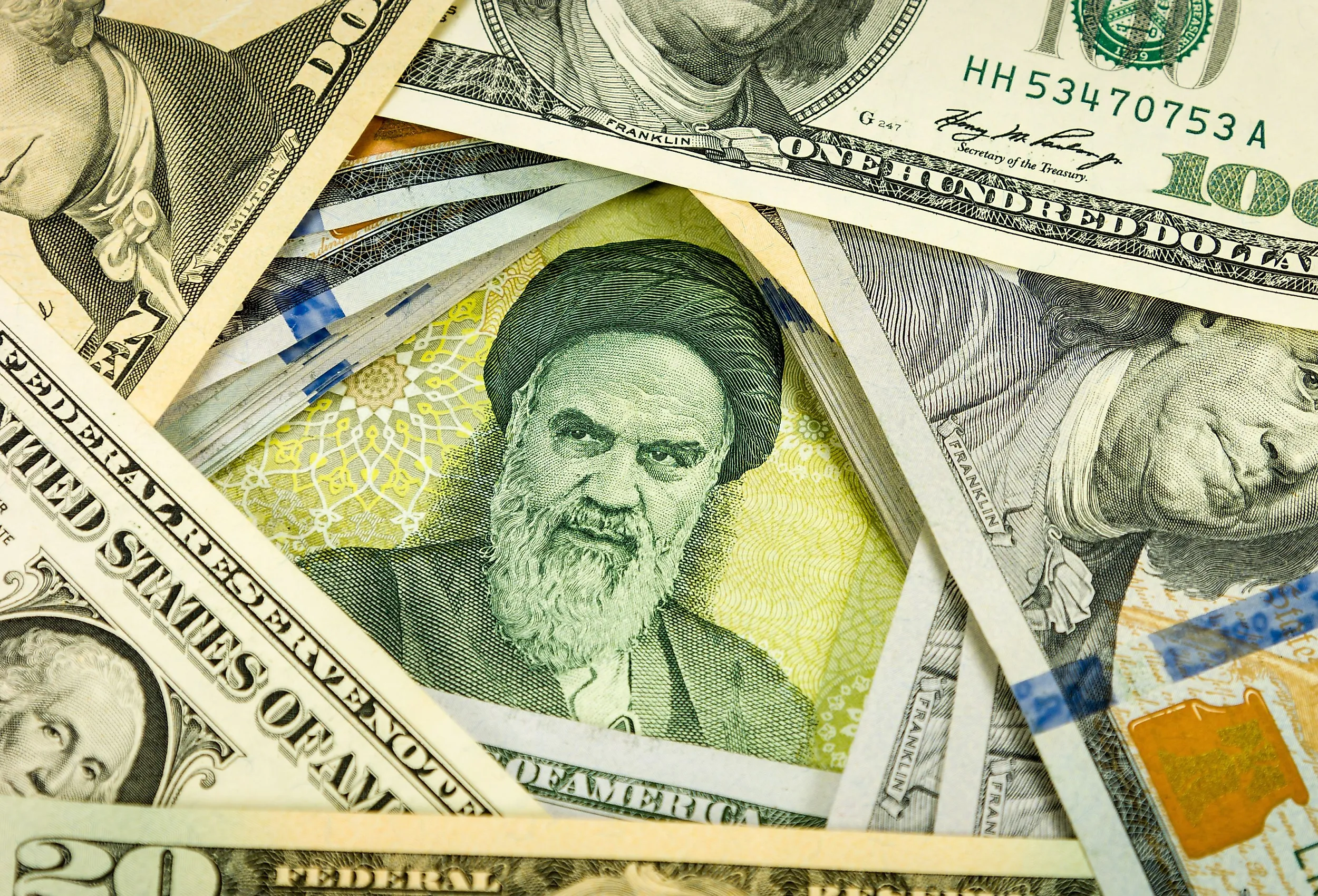
The Iranian rial is the lowest-valued national currency in the world by free-market exchange rate. As of May 2026, one US dollar trades for about 1,830,000 rials on the open market in Tehran. The Central Bank of Iran's official rate is held near 42,000 rials per dollar for selected imports, but very little real activity moves at the official rate. The currency has steadily devalued since the 1979 Islamic Revolution and the immediate exodus of foreign businesses that followed. The Iran-Iraq War (1980-1988) added to the pressure, as did the layered sanctions regime imposed since the early 2000s over Iran's nuclear program. Iran's parliament passed legislation in 2020 to redenominate the rial as the toman (chopping four zeros off the existing currency), but the redenomination has not been implemented, and the rial remains the practical currency.
Lebanese Pound

The Lebanese pound is the most dramatic currency collapse of the past decade. From 1997 until October 2019, the pound was pegged at 1,507.5 LBP per US dollar. The peg held through wars, financial sector pressure, and political crises. It broke in late 2019 when Lebanon's banking sector seized up and capital controls left depositors unable to access their dollar accounts. The Banque du Liban formally devalued the official rate multiple times between 2020 and 2023, with parallel-market and "Sayrafa platform" rates running far below. By May 2026, one US dollar trades for about 89,500 Lebanese pounds, a depreciation of more than 98% from the 2019 peg. The country's deposits-to-GDP ratio, banking-sector liquidity, and external-debt position all collapsed alongside the currency, and the resulting crisis has been characterized by the World Bank as one of the three most severe economic crises globally since the mid-1800s.
Vietnamese Dong

The Vietnamese dong is the lowest-valued currency in Southeast Asia by exchange rate. One US dollar trades for around 25,000 dong as of May 2026, up from about 23,000 in 2022. Vietnam's GDP has continued to grow steadily through the manufacturing and export sectors, but the State Bank of Vietnam has allowed gradual depreciation of the dong as part of its managed-float regime. Unlike the Lebanese pound or Iranian rial, the dong is not in crisis. It is simply a low-denomination currency that has never been redenominated.
Laotian Kip

The Laotian kip has been in circulation since 1952. As of May 2026, one US dollar buys about 21,000 kip, up from around 17,000 in 2022. The kip's run of depreciation accelerated in 2022-2023 alongside Laos's rising external-debt burden, much of it linked to Chinese-financed infrastructure projects. The Bank of the Lao PDR has tried various measures to support the currency including stimulus spending and exchange-rate management, but annual real GDP growth fell from around 8% in 2010 to roughly 4% by the mid-2020s, which has limited the room for currency support.
Indonesian Rupiah

Despite Indonesia's relatively stable economy, strong GDP growth, and steadily improving Human Development Index ranking, the rupiah remains one of the lowest-valued currencies in Southeast Asia by exchange rate. One US dollar trades for around 16,300 rupiah as of May 2026, up from about 15,000 in 2022. The 1997-98 Asian financial crisis caused severe inflation and the rupiah never recovered its pre-crisis exchange ratio, even though the underlying Indonesian economy has continued to grow steadily.
Uzbek Sum

A former republic of the Soviet Union, Uzbekistan has been independent only since 1991 and has worked through a multi-decade transition to a market economy. The sum is one of the world's least traded major currencies. As of May 2026, around 12,800 sum trade for one US dollar, up from about 11,000 in 2022. The Uzbek government adopted a floating exchange rate in 2017 as part of a wider liberalization package, and the country has since posted relatively stable GDP growth of around 5% annually despite continued currency-side pressure.
Guinean Franc

Guinea shares its southwestern border with Sierra Leone and, like its neighbor, has a currency that has struggled with sustained inflation for decades. Widespread poverty, political instability (the September 2021 coup compounded the picture), and an annual GDP of roughly $24 billion combine to keep the Guinean franc among the world's lowest-valued monetary units. As of May 2026, around 8,700 Guinean francs trade for one US dollar despite the country's substantial mineral and bauxite wealth.
Colombian Peso

The Colombian peso is one of the lowest-valued currencies in South America. One US dollar buys around 4,200 pesos as of May 2026, with the rate trading between roughly 3,800 and 4,800 over the past three years on a mix of inflation pressure and political volatility. The peso traded much closer to the US dollar at its mid-20th-century historical highs, but gradual devaluation has widened the spread steadily since.
Cambodian Riel

After decades of Khmer Rouge dictatorship and civil war in the late 20th century, Cambodia's currency remains among the lowest-valued in Southeast Asia. The US dollar is widely accepted across the country, which has historically reinforced the riel's marginal status: many retail transactions are quoted in dollars and change is given in riel. As of May 2026, one US dollar buys roughly 4,000 riels, essentially unchanged from 2022. The National Bank of Cambodia has been pushing a de-dollarization program since the late 2010s with modest progress, but USD currency in circulation still dominates large transactions.
Venezuelan Bolivar
The Venezuelan bolivar is the textbook hyperinflation case of the past decade. The bolivar was once considered one of the most stable currencies in Latin America until the inflationary spiral began in the 1980s. Despite the country's standing as a major oil producer, Venezuela's economic crisis has continued to deepen rather than ease. Three redenominations have stripped a cumulative 14 zeros off the original bolivar (3 zeros in 2008, 5 in 2018, and 6 in October 2021). The most recent reset issued the Bolívar Digital (still using the VES code) at four VES per US dollar. By May 2026, that rate has slid to roughly 500 VES per dollar, an annualized depreciation of well over 100%. Venezuela's economy now uses the US dollar for most large transactions, with the bolivar serving mainly for small everyday payments.
Reading the List
Hyperinflation, sanctions, multi-tier exchange systems, and outright banking collapse show up across the currencies above. Compared to global reference currencies like the US dollar and the Euro, the list reflects the underlying economic pressures faced by each country. Two important notes on what the list does not say. First, a low exchange rate is not the same as a "weak" currency in any economic sense (the Japanese yen example in the intro is the standard one). Second, the list moves. Sierra Leone's old leone (SLL) was redenominated to the new leone (SLE) in July 2022 at a rate of 1,000 to 1, and the country no longer ranks in the lowest tier. Argentina's peso slid from roughly 140 ARS per dollar in late 2022 to around 1,385 ARS per dollar by May 2026 under the Milei-administration reforms, a dramatic depreciation that does not yet bring the peso into the lowest-tier list by nominal exchange rate but is the most-watched recent case. Zimbabwe launched the gold-backed ZiG (Zimbabwe Gold) in April 2024 to replace the collapsed Zimbabwe dollar, the latest in a long sequence of Zimbabwean currency resets. The redenominations keep changing the list. The underlying inflation and growth pressures are what determine where each currency settles next.