10 Prettiest Small Towns In Missouri
Missouri's prettiest places sit along the Missouri and Mississippi Rivers and extend south into the Ozarks. They also celebrate the region's European and industrial roots. Hermann sits in a valley of forested hills and vineyards, with a wine trail connecting several wineries above the river. Ste. Genevieve still has the Creole-influenced homes and white picket fences of a French colonial settlement older than the state itself. In Hannibal, you can climb 244 steps to the Mark Twain Memorial Lighthouse for panoramic scenery. Just west of Eminence, the red mill at Alley Spring stands beside the brightest turquoise water in the Ozarks. These 10 small towns show the prettiest side of Missouri, featuring wine country and river bluffs.
Hermann

German immigrants established Hermann in 1837 along the Missouri River, and that heritage remains visible in its traditional architecture, wine culture, and annual festivals that give downtown a distinctly European feel. History lovers can visit Deutschheim State Historic Site, which interprets the lives of German immigrants through restored homes and exhibits. The Katy Trail also passes near town, making Hermann a convenient stop for cyclists and hikers. A drive along the Missouri River or a train ride on the Amtrak Missouri River Runner adds to the old-fashioned appeal.
Known also as the wine capital of Missouri, this town sits in a scenic valley framed by forested hills and vineyards. The Hermann Wine Trail connects several nearby wineries, including Adam Puchta Winery, Hermannhof Winery, G. Husmann Wine Company, and OakGlenn Vineyards. Many offer views across the Missouri River Valley, especially beautiful when the surrounding hills turn gold and red in autumn. The Hermann area is part of the state's historic Rhineland wine region, where lush valleys and bluffs create ideal settings for vineyards.
Ste. Genevieve

Not unlike Hermann's German influence, Ste. Genevieve offers a rare glimpse into Missouri's French colonial past. It was established by French Canadian settlers in 1735, making it older than the state itself. It is recognized by the National Park Service as Missouri's first permanent European settlement. The town later moved to higher ground after devastating Mississippi River floods, but much of its early character survives in the historic district. The town's prettiest streets feature Creole-influenced homes, shaded lawns, white picket fences, and traditional wooden architecture. The Bolduc House, one of the community's best-known historic buildings, provides an example of early French colonial construction. Visitors can also explore Ste. Geneviève National Historical Park, which includes historic structures, exhibits, and stories connected to the town's French, African American, and Indigenous history.
Ste. Genevieve's location near the Mississippi River gives it a peaceful, open landscape. Weingarten Vineyard and Charleville Brewery & Winery offer countryside views and relaxed places to sample regional beverages. Downtown shops and restored inns like The Inn St. Gemme encourage visitors to explore on foot. The city itself recommends staying in refurbished original structures, many of which now operate as lodging or visitor accommodations. Fall is particularly appealing when the surrounding hills and tree-lined streets take on warm autumn colors.
Arrow Rock

Arrow Rock is a tiny historic village with an extraordinary sense of place. Founded in 1829 on a bluff overlooking the Missouri River, the community developed near an important river crossing and route connected to the Santa Fe Trail, and walking through Arrow Rock feels like stepping into a carefully preserved 19th-century landscape. The streets are lined with brick buildings, clapboard homes, historic churches, cottages, and mature trees. The J. Huston Tavern, operated as part of Arrow Rock State Historic Site, is one of the town's best-known landmarks. Visitors can also see the Old Courthouse, the George Caleb Bingham House, or the Lyceum Theatre, which illustrate life in a river-port community.
The village's position above the Missouri River makes the surrounding countryside especially attractive. Gently rolling hills and wooded ravines create a peaceful backdrop for a leisurely drive. Arrow Rock also has an important African-American history that should be included in any visit. The nearby Sappington African American Cemetery contains the remains of more than 350 people and is part of Missouri's state park system. Seasonal tours, historic demonstrations, and quiet walks beneath the village's shade trees make Arrow Rock a rewarding destination for travelers who appreciate beauty connected to history.
Rocheport

Rocheport is one of Missouri's most scenic small towns for travelers who enjoy river views, cycling, and historic architecture. The community sits near the Missouri River, beneath dramatic limestone bluffs that rise above the Katy Trail, a route through other small communities shaped by the railroad and Missouri River. Riders and hikers pass through a 243-foot-long stone-arched railroad tunnel, one of the trail's most memorable features. The route also follows the river near towering bluffs and wooded slopes. Lewis and Clark Cave and nearby rock drawings add historical interest.
The town's historic district includes numerous houses dating from before the Civil War, such as The Hill House and Moses U. Payne House. Its compact downtown is home to local favorites like Meriwether Café, a popular stop for cyclists and visitors looking for a casual meal near the trail. Rocheport looks especially appealing in spring, when wildflowers appear along the trail, and in autumn, when the forested bluffs become a tapestry of orange, red, and gold. The Blufftop at Rocheport provides another scenic vantage point, with lodging and a tasting room overlooking the Missouri River.
Hannibal

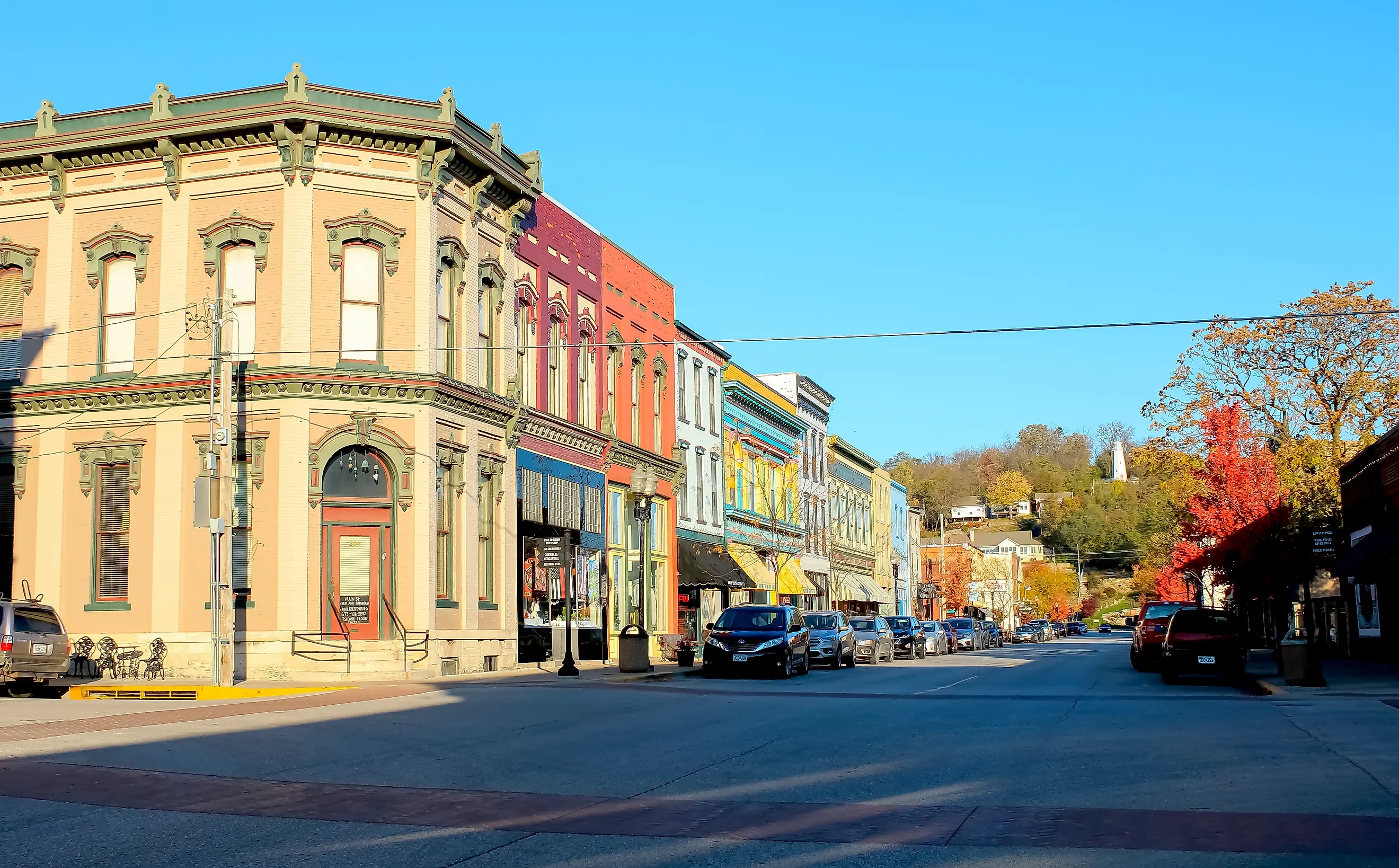
Hannibal is a beautiful Mississippi River town with a literary legacy, historic architecture, and scenic blufftop views. The community is best known as the boyhood home of Samuel Clemens, better known as Mark Twain. Historic Downtown Hannibal stretches along Main Street, just one block from the Mississippi River and the Illinois state line, and colorful murals create distinctive backdrops throughout the district. The Mark Twain Boyhood Home and Museum includes seven historic properties, including the Clemens family home and the Becky Thatcher House.
For panoramic scenery, climb the 244 steps to the Mark Twain Memorial Lighthouse on Cardiff Hill. Riverview Park offers hiking trails, picnic areas, and overlooks toward the Mississippi, while Lover's Leap provides one of the town's best views of the river, islands, and surrounding bluffs. Mark Twain Cave, another nearby attraction, connects the landscape to the adventures that inspired the novel The Adventures of Tom Sawyer. Visitors can finish a day at Mark Twain Dinette, known for homemade root beer and Maid-Rite sandwiches, or take a sightseeing cruise aboard the Mark Twain Riverboat.
Washington

Washington is another town that combines Missouri River scenery with a handsome historic downtown and a strong German-American heritage. Located in Franklin County and founded in 1839, the town occupies a bend in the river surrounded by wooded hills and rolling farmland. Downtown Washington is known for its preserved historic homes and locally owned restaurants such as Oak & Front and Old Dutch Hotel & Tavern. The town's architecture reflects its development as a river and railroad community, with traditional storefronts facing streets that are easy to explore on foot.
The Katy Trail also passes near the town, giving visitors access to walking and cycling routes along the Missouri River. A short drive through the surrounding Missouri wine country leads to vineyards and tasting rooms, including Triple 3 Vineyard. Washington's charm comes from its balance of scenery and everyday community life. Visitors can browse antiques, attend a seasonal festival like the OxFest Music Festival, or simply watch barges move along the river.
Boonville

Boonville was once a major river port on the Missouri River that later became an important railroad community. Reminders of both eras remain throughout the historic district. The town's restored MKT Depot now serves as a local landmark and visitor destination. Historic downtown streets feature preserved sites like the Thespian Hall, Hotel Frederick, and the River, Rails & Trails Museum. Outdoor travelers can also connect with the Katy Trail in Boonville. Roads through Cooper County pass old farmsteads and river bottoms, and there are restaurants near the riverfront like Coco Loco Cuban Café and The Cove, which serves signature cocktails and hand-cut steaks.
Eminence

Eminence lies near the Current River and Jacks Fork River within the Ozark National Scenic Riverways, a protected landscape known for spring-fed waterways, forests, caves, bluffs, and outdoor recreation. Windy's Floats rents equipment for kayaking, canoeing, and swimming. The town itself has a relaxed, rustic atmosphere. J&B's Olde Tyme Family Restaurant serves homestyle meals, while the Dairy Shack, a local staple since 1968, offers burgers, ice cream, and hand-squeezed juice.
Just west of Eminence, Alley Spring & Mill creates one of the most recognizable views in the Ozarks. The red 19th-century mill stands beside brilliantly turquoise water from the spring, surrounded by forest. The Spring Branch Trail circles the spring, while the Alley Spring Overlook Trail climbs to views of the valley. About 20 minutes north, Echo Bluff State Park features a towering dolomite bluff above Sinking Creek, along with trails, cabins, a lodge, and the Creekside Grill. Highway 19, one of the most scenic routes in Missouri, passes forests, springs, and river country.
Kimmswick

Kimmswick grew around river commerce, and many of its traditional buildings remain clustered along the main streets. Its walkable layout makes it easy to spend several hours browsing independent, locally-owned boutiques such as Kimmswick Mercantile and Cozy Cottage. Kimmswick is particularly known for its food traditions and seasonal events, including Food Truck Fridays, Strawberry Festival, and Apple Butter Festival.
The surrounding landscape adds to the town's visual appeal. Kimmswick sits near the Mississippi River and beneath the wooded hills of Jefferson County, and nearby roads pass through limestone outcrops and forests. Kimmswick's prettiest moments often come during the shoulder seasons. Spring brings flowering trees and comfortable walking weather, while autumn brings colorful foliage to the surrounding hills. Holiday events like the Kimmswick Cookie Walk and Christmas Festival add lights and decorations to the historic core during winter.
Weston

Weston sits among the rolling hills and farmland of northwest Missouri, giving it a scenic setting that feels distinctly different from the Ozark and Mississippi River towns farther east. Weston's architecture reflects its 19th-century history as a Missouri River community. The Avalon Cafe, located in the 1847 home nicknamed "White Lace," serves lunch, dinner, and Sunday brunch. The Tin Kitchen serves pecan-wood-smoked barbecue and is located in the Rumpel Hardware building, which dates back to 1842.
The compact downtown is easy to explore on foot, and the town's seasonal events, such as the Muddy Ribbon festival and Ghost Tales of Weston, add to its welcoming personality. Other community celebrations include Weston's WineFest, a Polish pottery festival, and the Candlelight Homes Tour. Weston Bend State Park, located along the Missouri River, includes wooded trails and overlooks with views of the river bottoms and surrounding bluffs. A scenic drive through Platte County and the Missouri River hills makes the journey part of the experience.
Why These Missouri Towns Are Worth Visiting
Missouri's prettiest small towns combine vineyards, historic trails, spring-fed rivers, and preserved architecture. Big cities have their appeal, but Missouri's small towns offer a different kind of beauty, one best enjoyed at a slower pace. Take a scenic drive along the Missouri River, walk a historic Main Street, follow the Katy Trail, or spend a quiet afternoon beside a clear Ozark spring. These Missouri towns invite visitors to linger, look closely, and enjoy the scenery one charming street, river view, and country road at a time.