The County That Grows The Most Wheat In America
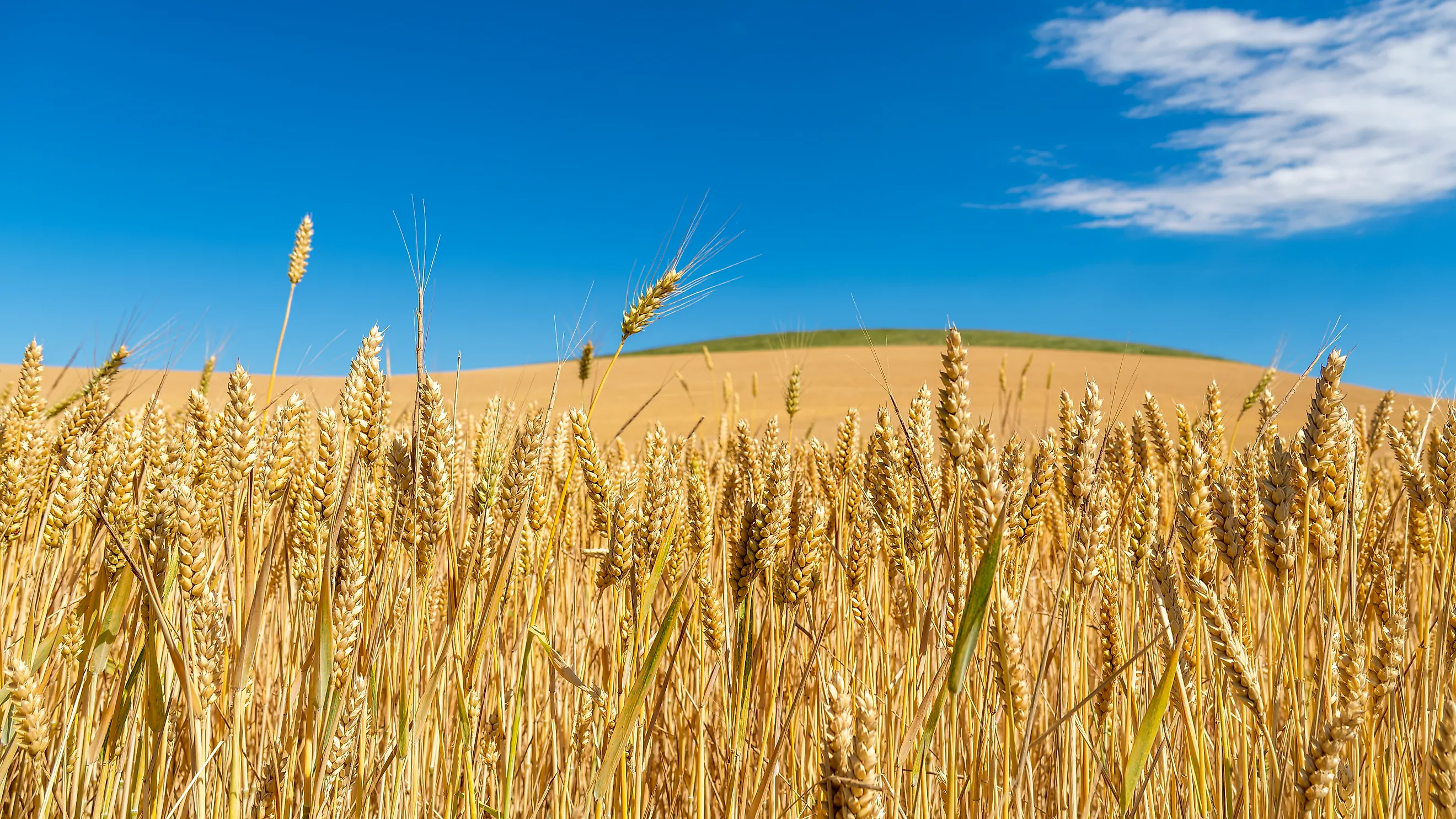
No county in the United States carries more federally counted wheat than Whitman County, Washington, where the rolling hills of the Palouse run up against the Idaho state line. Wheat has driven its economy since the 1880s, not to mention the American export market. The US is the fifth-largest producer of wheat in the world, with production of 54.1 million tons in 2025/2026, according to the Department of Agriculture (USDA). The agency projects that about 46 percent of that harvest will be exported.
This article uses the USDA's Price Loss Coverage (PLC) program figures, which multiply a county's registered wheat acreage in federal programs by the government-assigned yield per acre used to calculate farm payments. In the 2025 program year, Whitman County led the nation on that measure and also topped the country in actual harvested bushels.
Whitman County on the Map

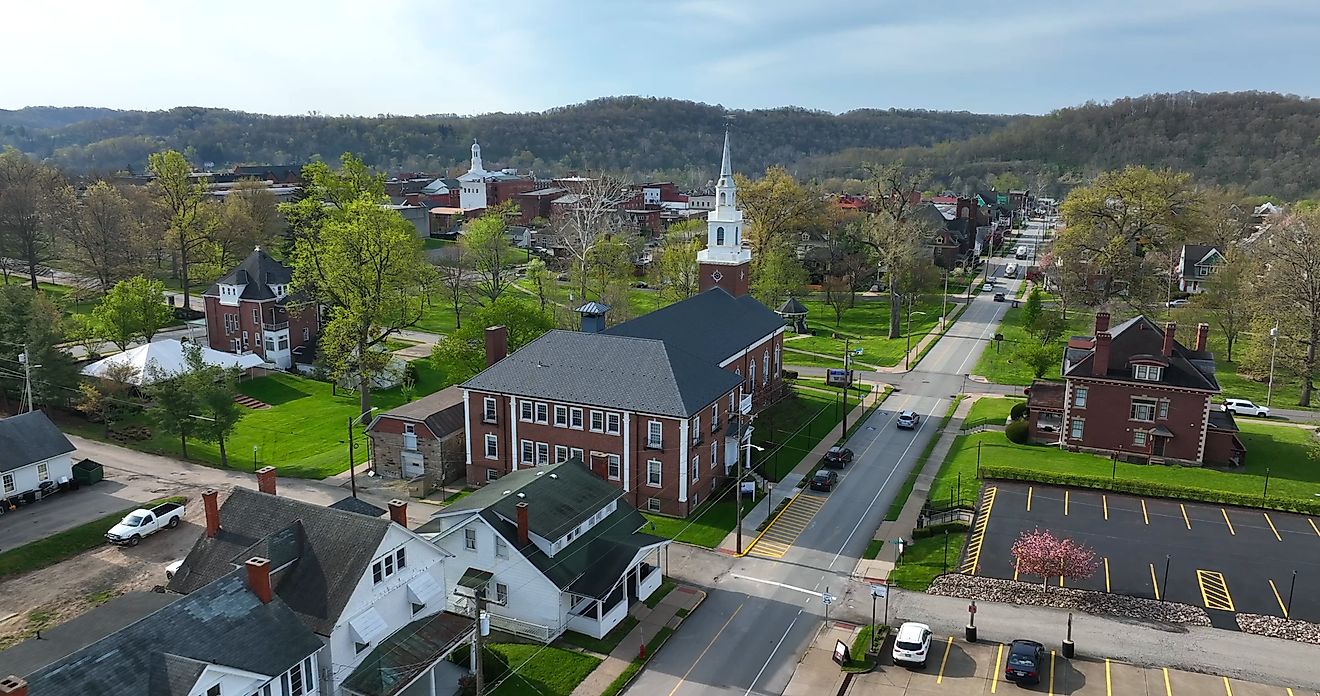
Whitman County was formed in 1871 and named after Marcus Whitman, a missionary who was killed in 1847. It spans about 2,159 square miles of the Palouse, a region of steep, rolling farmland that stretches across eastern Washington and into Idaho. The Snake River forms much of its southern boundary, and the Idaho state line marks its eastern edge. Colfax is the county seat. Pullman, the largest city, sits in the eastern part of the county close to the Idaho border and is home to Washington State University, the county's largest employer. Outside the towns, the county is overwhelmingly agricultural. Wheat is the dominant crop, but farms in Whitman County also grow barley, dry peas, and lentils.
Soil Built by Volcanoes, Floods, and Wind

The main reason Whitman County is so well suited to wheat is its deep, rich soil. According to the Washington Grain Commission, the Palouse took its shape over thousands of years. About 15,000 years ago, the Lake Missoula floods scoured eastern Washington and left huge deposits of sediment near the meeting of the Snake and Columbia rivers. Wind then lifted that silt and carried it east, building up the rolling hills that define the region. Ash from the eruption of Mount Mazama about 7,700 years ago also enriched the soil. This wind-blown silt, known as loess, retains moisture well and gives plants room to establish deep roots. The Palouse also receives more precipitation than the drier wheat country farther west, which allows farmers to grow high-yielding crops without irrigation.
How Wheat Reached the Palouse

Wheat arrived in North America with European colonists. Native American communities had not grown it, but it quickly became a staple for settlers, especially in New York, New Jersey, and Pennsylvania. As the country expanded west, so did wheat farming. By the late 19th century, it had become a major crop of the Great Plains and had spread as far as Washington.
In Whitman County, early settlers mostly raised cattle, sheep, and hogs, but crop farming spread during the 1870s. In 1876, the first shipment of Whitman County wheat traveled by steamer on the Snake River from Almota to Portland, Oregon. The first train reached Colfax in 1883, and by the mid-1880s, the county's economy had turned primarily agricultural. Machinery followed. A device that could cut, thresh, and sack grain in one operation first appeared in the county in 1893, and by 1930, about 90 percent of Palouse wheat was harvested by combine.
The Wheat That Washington Grows

The USDA recognizes six major classes of wheat, and Washington grows five of them: soft white, hard red winter, hard red spring, hard white, and durum. Only mild red winter is missing. Soft white dominates, making up 89 percent of the state's wheat production in 2024, according to US Wheat Associates. It is a low-protein wheat used for cakes, pastries, crackers, and Asian noodles, and most of it is shipped overseas to buyers in the Philippines, Japan, South Korea, and Mexico. Hard red winter and hard red spring wheat are mainly used in breads, bagels, and pizza dough, while hard white wheat is used for whole-wheat breads, flatbreads, and noodles. Durum, a botanically distinct wheat used for pasta, is grown in small amounts under contract.
Washington also grows a subclass of soft white called club wheat, which is bred for low gluten strength and very soft flour that suits cookies, cakes, crackers, and pastries. Club wheat is grown almost exclusively in eastern Washington, and its breeding programs are run by Washington State University and the USDA's Agricultural Research Service in Pullman. According to the Washington Grain Commission, the state harvested 143.5 million bushels of wheat from about 2.24 million acres in 2024, and 141.5 million bushels in 2025. Generations of farming expertise and some of the highest yields in the country make those totals possible. So does transportation: a network of rail lines, trucks, and barges on the Columbia River and Snake River system moves the grain to Pacific ports.
How Whitman Stacks Up Against Other Counties

Whitman County does not win on every measure. In the 2025 program year, Chouteau County in Montana registered the most wheat base acres of any US county, at 671,022 acres, while Whitman ranked third. Yield changes the picture. Chouteau's PLC yield is about 41.7 bushels per acre, compared with Whitman's 70.7, which lifts Whitman to 38.1 million program bushels, the highest total in the nation. Chouteau falls to third.
Ranked on yield per acre alone, Whitman does not crack the top 10. That list is led by mostly irrigated counties in Idaho and Oregon, along with Snohomish County in western Washington, which posts a PLC yield of 156.1 bushels per acre on just 381 base acres. Those counties produce impressive yields on small acreage, but they cannot match the combined size and productivity of Whitman's dryland wheat. Harvest records tell a similar story: in 2015, Whitman County produced nearly 30.5 million bushels of wheat, about 14.6 million more than Lincoln County, the next-highest in Washington, according to the National Agricultural Statistics Service.
Washington's Wheat Capital
Some counties register more wheat acreage, and others coax more bushels out of each acre, but none combines the two the way Whitman County does. Deep Palouse loess, reliable rainfall, and more than a century of farming experience have made this corner of southeastern Washington the most productive wheat county in the country. Its harvest travels by rail and river barge to bakeries and noodle makers around the Pacific.