US Towns That Inspired Famous Novels
The United States has produced its fair share of famous literary icons, and several small towns where these writers lived and worked have made their way into the pages of their stories. Some of these towns display their literary heritage with statues, others maintain a childhood home or a birthplace, and a few mark the exact sites that appear in an author's most famous works. Some of the places are lightly fictionalized, while others are reproduced almost one to one. What they share is a lasting connection to the writers who put their streets and buildings into print. Here are some of the most notable small towns that inspired famous American novels.
Hannibal, Missouri

The foremost chronicler of life on the Mississippi River, Mark Twain is considered by many to be the father of American literature. A Missouri native, Twain was raised in the town of Hannibal, and his boyhood there gave him the material for one of his most famous novels, The Adventures of Tom Sawyer.
Twain tells readers in the preface that "most of the adventures in this book really occurred," and several landmarks from the novel can still be visited in Hannibal. Cardiff Hill, where Tom and his companion Huckleberry Finn play, is a real place, and a statue of the two mischievous youths now overlooks Historic Main Street. Jackson's Island, where the pair run away to play pirates, is based on a real trio of islands on the Illinois side of the river. Present-day Hannibal holds numerous tributes to Twain's legacy, including the Mark Twain Memorial Lighthouse atop Cardiff Hill, the Mark Twain Riverboat, and the Mark Twain Boyhood Home and Museum. The Tom Sawyer Days festival, held every summer, features live music, a talent show, and a fence-painting contest in honor of the book's most famous scene.
Monroeville, Alabama

Harper Lee published only two novels in her lifetime, and her first, To Kill a Mockingbird, won the Pulitzer Prize and has sold an estimated forty million copies. The Southern Gothic classic is known for its warmth and humor despite dealing with serious social issues, and it remains a fixture on high school reading lists. Maycomb, the town where the novel takes place, is based on Monroeville, Alabama, where Lee grew up.
While the novel is a work of fiction, it draws on several details from Lee's childhood in the Deep South. Amasa Coleman Lee, Harper's father and a Monroeville attorney, served as the model for the novel's champion of justice, Atticus Finch. The book's central trial echoes a real case Lee's father followed in Monroeville during the 1930s. The former Old Monroeville Courthouse, where a young Lee watched her father practice law, is now a museum with exhibits on Lee and fellow Monroeville native Truman Capote. Every spring a stage adaptation of To Kill a Mockingbird is performed at the courthouse, with the first act on the courthouse lawn and the second inside the real courtroom. Visitors to Monroeville can also see the Atticus Finch monument on the northeast side of the courthouse and Harper Lee's gravesite at Hillcrest Cemetery.
Key West, Florida

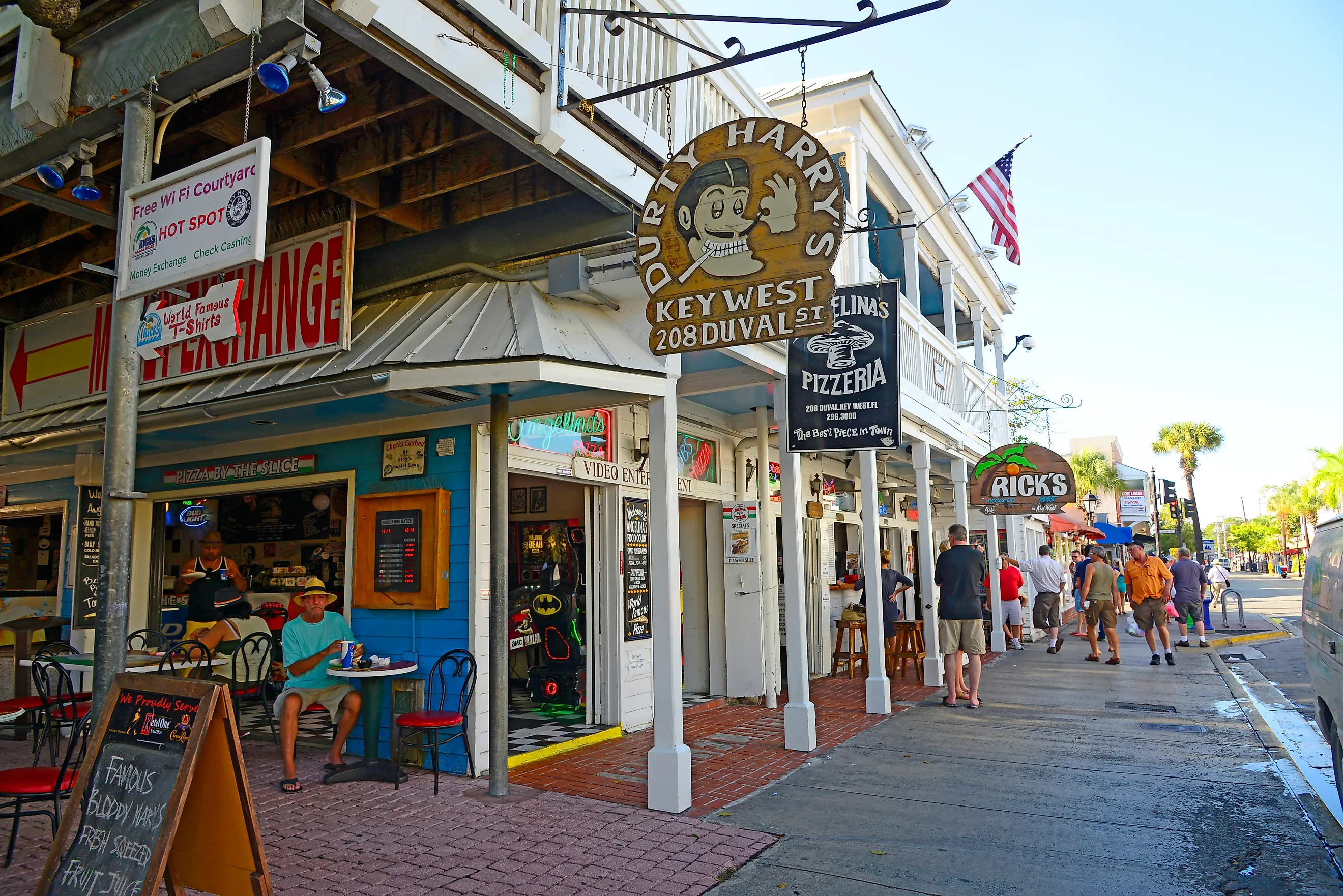
This town at the very southern end of the Florida Keys has an outsized literary reputation. More than a dozen Pulitzer Prize winners have called the island home, but the one most associated with Key West is Ernest Hemingway. The Nobel Prize winner lived in a French Colonial style house in town from 1931 to 1939, after his years abroad in Paris, and it was here that he wrote some of his most famous work, including To Have and Have Not.
Published in 1937, that novel follows Harry Morgan, who makes his living during the Great Depression by smuggling contraband between Cuba and Florida. In its pages Hemingway put down some of his favorite Key West haunts and drinking companions, including Sloppy Joe's, the storied saloon that still operates today, though at a different location. Hemingway remains a larger-than-life figure in the tropical city. Visitors can tour his former home, now the Hemingway Home and Museum, see the room where he wrote, and meet the many polydactyl cats that live on the property. Hemingway Days, held each July, is a celebration of the author's life and work that includes a running of the bulls, a marlin tournament, and a Hemingway lookalike contest.
Oxford, Mississippi

Numerous antebellum homes stand along the tree-shaded streets of Oxford, and one of them, the stately Rowan Oak estate, was the home of William Faulkner. The Nobel Prize winner was one of the progenitors of Southern Gothic literature and spent most of his life in Oxford. The city and surrounding Lafayette County are the setting for all but a few of his novels, fictionalized as Yoknapatawpha County and the town of Jefferson.
Around town you can see several sites that inspired scenes from Faulkner's work, including the Thompson-Chandler House, the model for the Compson family home in The Sound and the Fury. A sculpture of Faulkner sits in front of Town Hall, dedicated in 1997 to mark 100 years since his birth. At Rowan Oak you can see the typewriter Faulkner used to write his masterpieces and the large personal library he kept in the living room. Before leaving town, stop by Oxford Memorial Cemetery, where Faulkner is buried. Bottles of whiskey, his drink of choice, still turn up beside the grave as a tribute.
Bangor, Maine

Much like Faulkner, horror icon Stephen King set most of his work in his home state of Maine. King has lived in the state for much of his life, and several towns have served as settings across his extensive bibliography. The most famous of them is the fictional town of Derry, which is based on the city of Bangor.
When King moved to Bangor in 1980, he was working on a manuscript that would become one of his most famous novels, It. He has said that while Derry is fictional, any native of Maine's third largest city will instantly recognize it. The events of the novel were inspired in part by the legends surrounding the sewer system in and around Bangor, and several local landmarks found their way into the book. Horror fans can visit the Thomas Hill Standpipe, where the Losers Club enters the sewer to fight Pennywise the Clown. Farther along Main Street is the Paul Bunyan statue, worth a photo, though readers of the book might not want to turn their backs on it for long. King's former home in Bangor, a Victorian behind Gothic wrought-iron gates, looks the part of a horror writer's house. It is not open to the public, but it remains a popular landmark for fans and draws thousands of visitors each year.
Great Neck and Sands Point, New York

Plenty of novels are set in New York City, but one of the most famous New York novels takes place outside the five boroughs, on Long Island's North Shore. F. Scott Fitzgerald moved to Great Neck with his wife, Zelda, in 1922, and the extravagant parties and Jazz Age wealth of the area's residents shaped his most famous novel, The Great Gatsby.
The novel's twin Long Island towns, East Egg and West Egg, are fictional, but they closely mirror Great Neck and the corresponding village of Sands Point on the opposite side of Manhasset Bay. The area has changed dramatically in the century since The Great Gatsby was published, yet visitors can still see the world of the novel reflected in the large estates along the shoreline. The house where Fitzgerald once lived, at 6 Gateway Drive in Great Neck, is a Mediterranean-style residence that is privately owned and not open to the public. No one can say for certain which of the island's manors inspired Gatsby's mansion, but visitors standing before the opulent architecture can easily picture the scenes of Jazz Age excess depicted in the book. Several of these surviving estates have been preserved and are open to the public, including Old Westbury Gardens and Oheka Castle.
A Literary Map Worth Following
These six places show how closely a novel can be tied to the ground it came from. In Bangor, the sewer grates and the standpipe are the raw material Stephen King reworked into Derry. In Oxford, the antebellum homes and tree-lined streets are the physical stock from which Faulkner built Yoknapatawpha County. Key West is so thoroughly identified with Hemingway that residents still hold a lookalike contest in his honor every summer. Read the books first and you can trace the towns like a map, and walk the towns first and you can give the novels a specific, verifiable geography. Either way, the connection between the writer and the place is easy to see.