The State Parks Where Black Bears Den For The Winter
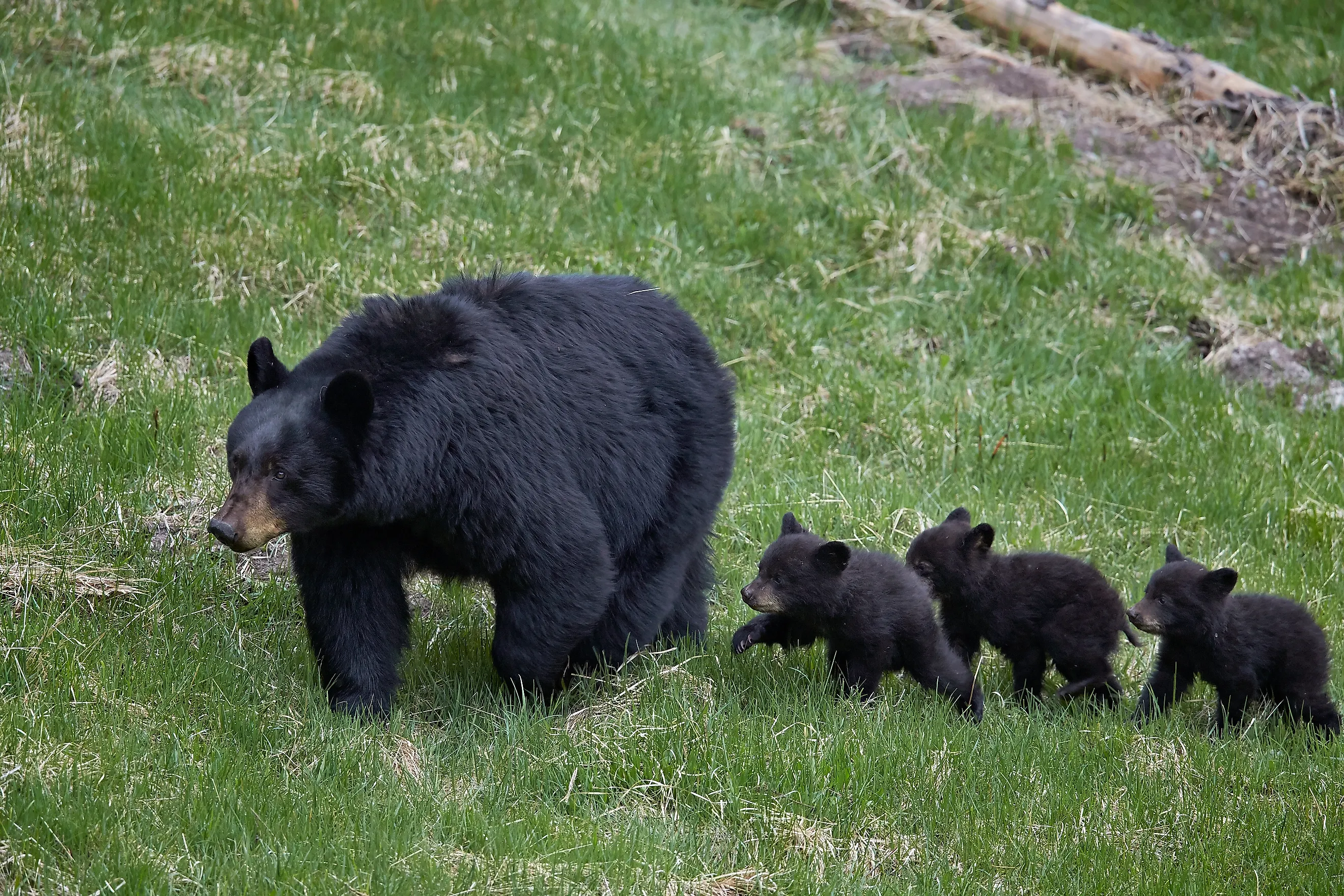
A black bear can spend months without eating or drinking, and pregnant females may even give birth while sheltered beneath a snow-covered tree. During winter, these powerful animals retreat into hollow trunks, rocky crevices, and underground cavities, surviving on fat accumulated during warmer months. Across the United States, several state parks protect the mature forests and rugged landscapes that black bears use for their winter dens. These parks also offer visitors spectacular scenery, with snowy waterfalls, towering trees, and quiet woodland trails that rival those of nearby national parks. Although bears generally remain hidden during winter, their presence is an important part of what makes these eight state parks special.
Douthat State Park, Virginia

Tucked into Virginia's Allegheny Mountains, Douthat State Park covers 4,545 acres of forested ridges and sheltered valleys. Black bears are established residents, and the park's combination of mature trees, fallen timber, and rocky slopes provides the types of protected spaces they favor for winter denning.
Virginia's Department of Wildlife Resources reports that black bears commonly den inside hollow trees in mountainous areas, although they also use brush piles, fallen logs, and rocky cavities. Some dens have been discovered dozens of feet above the ground. Bears generally enter their dens between October and January, depending on weather and food availability. Pregnant females tend to remain sheltered longer than males, which may become active during warmer winter periods.
Visitors can experience Douthat's mountain scenery on more than 43 miles of trails. The park also surrounds a 50-acre lake and offers historic cabins constructed during the Civilian Conservation Corps era. Winter is particularly peaceful, with bare trees revealing views of the surrounding mountains.
Allegany State Park, New York

At approximately 65,000 acres, Allegany State Park is one of the largest conventional state parks in the eastern United States. Its vast woodlands, rocky outcrops, and secluded valleys support an established black bear population, providing extensive habitat during every season.
One of the park's most unusual attractions is Bear Caves, a series of rock formations containing narrow openings and sheltered passages. Despite the name, park officials explain that black bears do not typically den inside these particular caves. They are too cold and damp. Instead, the animals prefer warmer, drier shelters beneath fallen logs or exposed tree roots. It is a surprising reminder that the most dramatic-looking cave is not necessarily the best place for a bear to spend winter.
Cook Forest State Park, Pennsylvania

Some of Pennsylvania's tallest old-growth trees rise above the forest floor at Cook Forest State Park, an 8,500-acre preserve in the northwestern part of the state. Its famous Forest Cathedral contains enormous eastern hemlocks and white pines, creating an impressive woodland environment where black bears are native residents.
The mature forest offers several features associated with suitable winter denning habitat. Hollow trees, fallen trunks, and cavities beneath exposed roots can provide shelter against freezing temperatures and winter storms. The Pennsylvania Department of Conservation and Natural Resources confirms that black bears inhabit the area, and its Black Bear Trail even directs hikers to look for claw marks left on trees.
Ricketts Glen State Park, Pennsylvania

Ricketts Glen State Park is famous for its 22 named waterfalls, but its 13,193 acres also protect extensive woodland habitat used by Pennsylvania's black bears. The park lies in the mountainous northeastern part of the state, where old-growth trees and rugged terrain provide secluded areas suitable for winter dens.
Some of the park's enormous hemlocks and hardwoods are more than 300 years old. These ancient trees, along with fallen timber and rocky slopes, create the sheltered environments black bears seek during the colder months. Bears living in Pennsylvania generally reduce their activity significantly through winter, while pregnant females give birth inside their dens, usually during January or February.
For visitors, Ricketts Glen offers one of Pennsylvania's most impressive waterfall landscapes. Ganoga Falls plunges 94 feet, while the surrounding glens contain smaller cascades framed by towering trees. In winter, sections of the waterfalls can freeze into dramatic formations. However, the famous Falls Trail is closed to ordinary winter hiking and is restricted to properly equipped ice climbers and hikers because of hazardous conditions.
Porcupine Mountains Wilderness State Park, Michigan

Michigan's Upper Peninsula receives some of the heaviest snowfall in the Great Lakes region, and Porcupine Mountains Wilderness State Park protects an enormous stretch of the rugged landscape. Covering approximately 60,000 acres along Lake Superior, the park contains about 35,000 acres of old-growth northern hardwood and hemlock forest.
Black bears are well-established inhabitants of this wilderness, although visitors rarely encounter them. The Michigan Department of Natural Resources confirms that the state's black bears generally spend winter in dens after accumulating fat during autumn. The park's fallen trees, root cavities, and sheltered rocky terrain provide the kinds of places bears can use during these long periods of inactivity.
Itasca State Park, Minnesota

The Mississippi River begins as a small stream flowing out of Lake Itasca, surrounded by more than 32,000 acres of forest and lakes in northern Minnesota. Itasca State Park, established in 1891, protects some of the state's remaining old-growth red and white pine forests, making it an important habitat for black bears.
Wildlife records maintained through the University of Minnesota identify black bears as common inhabitants of Itasca's coniferous forests. The landscape also contains extensive hardwood stands, fallen timber, and secluded woodland areas that provide suitable winter denning conditions. Minnesota's bears typically enter their dens during late autumn and emerge in spring, although the timing varies with weather and food availability.
Copper Falls State Park, Wisconsin

Nearly 100 inches of snow falls annually around Copper Falls State Park in northern Wisconsin, transforming its rocky gorges and hardwood forests into a striking winter landscape. Located near Mellen, the park is known for its waterfalls and ancient volcanic rock formations, but it also supports a variety of large mammals.
The Wisconsin Department of Natural Resources identifies black bears among the animals commonly found in the park area. Its forests contain eastern hemlock, sugar maple, white pine, and yellow birch, while fallen trees and wooded ravines provide potential winter shelters. Such protected spaces help black bears conserve energy during periods when natural food is scarce.
Copper Falls offers visitors several ways to explore this northern landscape. The 1.7-mile Doughboys Nature Trail passes impressive rock formations and views of Copper and Brownstone Falls, although it is not maintained during winter. The park also has groomed cross-country skiing trails and designated snowshoeing routes.
Ed Z'berg Sugar Pine Point State Park, California

Along the western shore of Lake Tahoe, Ed Z'berg Sugar Pine Point State Park protects dense conifer forests where black bears live among towering pines, firs, and cedars. Unlike California's warmer coastal parks, this Sierra Nevada landscape experiences substantial winter snowfall, making seasonal denning an important part of local bear behavior.
California State Parks confirms that black bears inhabit Sugar Pine Point and describes their emergence following winter dormancy. Bears in the Lake Tahoe region commonly den inside hollow trees, beneath fallen timber, or among sheltered rock formations. However, some bears may remain active during unusually mild winters, particularly where human food is available. Denning patterns can therefore vary considerably between individual animals.
Black Bears Love These Winter Escapes
Black bears survive winter by dramatically reducing their metabolism, heart rate, and overall activity. Unlike animals that must regularly awaken to eat, bears can live for months using stored body fat. Pregnant females often give birth during this period, nursing tiny cubs inside their sheltered dens until conditions improve.
The location of a den depends on the surrounding landscape. In Pennsylvania and Virginia, hollow trees and rocky cavities are common choices. In the Great Lakes states, bears also use fallen timber and cavities beneath roots. In the Sierra Nevada, rugged slopes and sheltered rock formations offer additional possibilities. A den does not need to be elaborate, but it must provide enough protection for the bear to conserve energy.
For visitors, these state parks provide opportunities to appreciate the same forests that sustain black bears through winter. Discovering an occupied den, however, is never a goal worth pursuing. Disturbing a resting bear can force it to waste valuable energy, while frightening a female with cubs may threaten the survival of her young. Anyone who accidentally encounters a den should leave the area immediately and notify park staff.