The Most Charming River Towns In Missouri
Towns along the rivers of Missouri offer their own personality and these seven beat out the rest. Most of these river towns share one more thing in common, they maintain a museum unique to their history. One town inspired Mark Twain's classic novels while another relives the glory days of old Route 66. Some sit on the Mississippi and others on the Missouri or the Meramec. Take a tour through one of these Missouri river towns this summer.
Hannibal

Missouri's river towns begin with Hannibal, the hometown of the beloved author Mark Twain. Situated on the bank of the Mississippi River, listed on the National Register, the Mark Twain Historic District maintains historic buildings and inviting storefronts. Built one block away from the river in 1844, since 1912 the Mark Twain Boyhood Home and Museum has welcomed the public into the restored and preserved historical complex. Listed as a National Historic Landmark, Twain's Boyhood Home serves as a steward of American literary heritage.
The adventure continues onto the riverfront aboard the Mark Twain Riverboat. From the beginning of April until November, the family-owned business offers a daily one-hour sightseeing tour or a 2-hour dinner cruise at sunset. As the captain narrates the history and legends of the area, the float also highlights Twain's inspiration for his classic stories.
Overlooking the river and town from a limestone bluff, the Georgian Revival Style Rockcliffe Mansion, built in 1900, also transforms into a boutique bed and breakfast for those wishing to spend the night in one of the historic bedrooms. From mid-April through mid-November, the Mansion, listed on the National Register, opens to the public for guided tours. This river town delivers an all-around historic experience.
Ste. Genevieve

In Eastern Missouri, the French Colonial inspired Ste. Genevieve also borders the Mississippi River. Located in the Ste. Genevieve Historic District, the Centre for French Colonial Life introduces visitors to the town's heritage. Exhibits include period clothing, portraits, maps, small boats, information highlighting French Creole architecture and building methods. The museum campus also features the 18th century Bolduc House, a National Historic Landmark, built with vertical log architecture. Every Saturday from late March through early November, costumed interpreters present living history in the Beauvais-Linden House. Also a part of the Ste. Genevieve National Historical Park, listed on the National Register, the National Park Service preserves the 18th century Beauvais-Amoureux House, Green Tree Tavern and Jean Baptiste Vallé House.
Aside from French Colonial history, the Ste. Genevieve Museum Learning Center also displays The Darrough's collections and Lost World Studios' exhibits that are on loan which includes life-size dinosaurs and fossils, ancient cultures and historical artifacts. Ste. Genevieve shares their unique slice of Mississippi River life.
Jefferson City

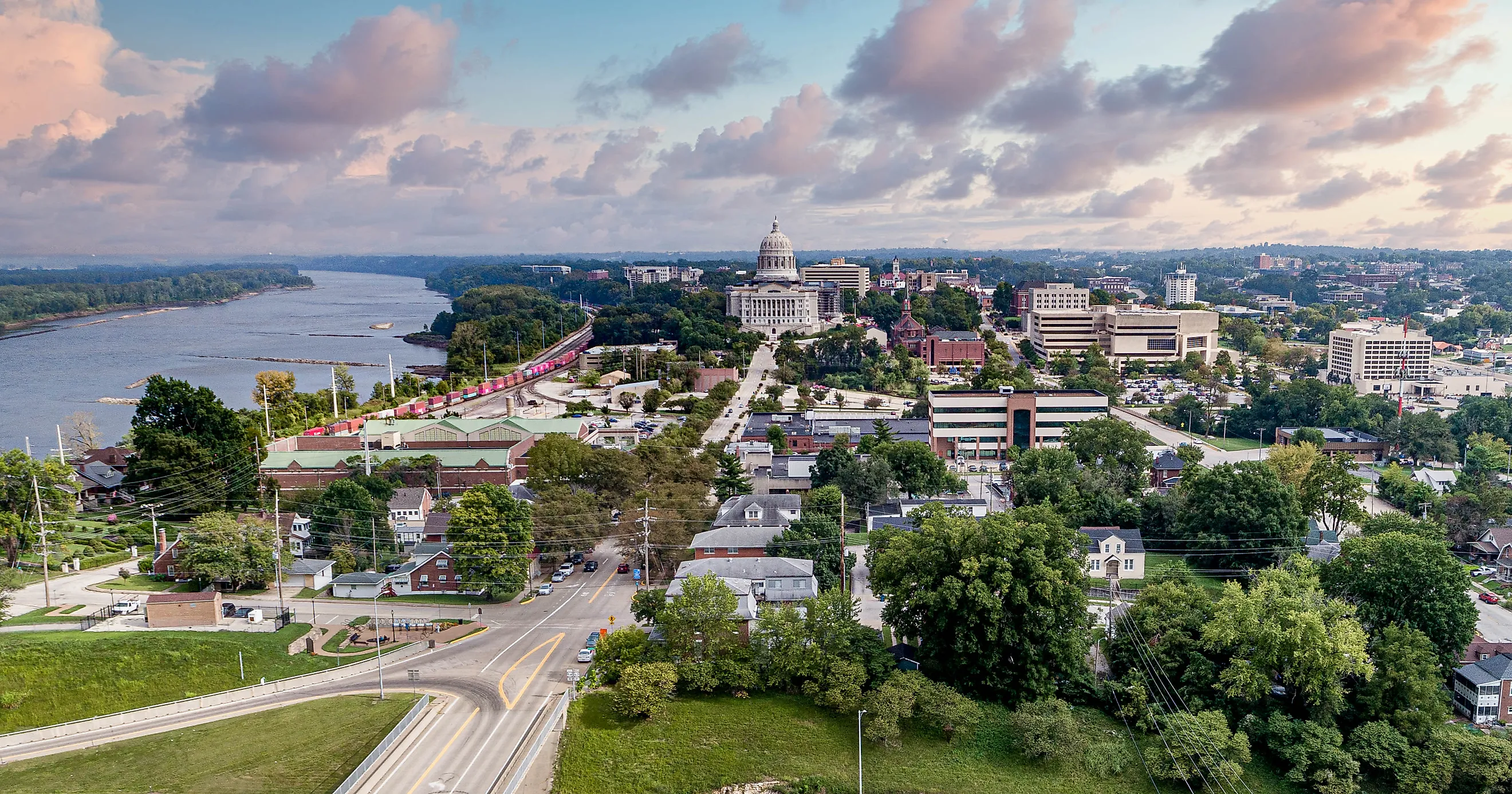
The preserved structures on the bank of the Missouri River share Jefferson City's history with the public. Located on the first floor of the capitol building, listed on the National Register, the Missouri State Museum introduces visitors to the state's history. For over one hundred years, the museum collected and conserved 30,000 artifacts and objects important to Missouri's cultural and natural history. The History Hall and Resources Hall feature permanent exhibits, the Veterans Gallery and Foundations Gallery highlight rotating exhibits, and travelling exhibits educate students and other groups.
Overlooking the river two blocks away from the Capitol, also listed on the National Register, the Missouri Governor's Mansion opens to the public for free tours from the beginning of spring into the early part of summer. The residence was completed in 1872 with much of the work performed by prisoners of the nearby penitentiary. The Second Empire architecture houses 13 bedrooms with Renaissance Revival furnishings. The mansion also saw restoration and preservation over the years.
Along the banks of the river five blocks away from the Governor's Mansion, the Missouri State Penitentiary offers a two-hour history tour focused on escape attempts, riots, female inmates and more, or a two-hour ghost tour of the dungeon cells and other areas of the prison. Built in 1836, the old penitentiary operated for 168 years before decommissioning. Now it stands as a historical attraction along with the Governor's Mansion and the Capitol Building.
Carthage

In Southwestern Missouri, Carthage offers unique attractions. The Precious Moments Chapel south of town invites visitors to experience the art of Samuel J. Butcher. Since 1978, Butcher created the Precious Moments collectibles and in 1989 he built the chapel to commemorate his brand. The museum showcases permanent exhibits including Butcher's earliest pencil sketches, hand-drawn greeting cards, original artwork and rare first-edition figurines. Rotating exhibits feature fan collections and milestone anniversaries. The peaceful garden walkways promote quiet reflection for visitors.
To the northeast of town, Red Oak II represents a restored and preserved open air museum. Starting in 1987, resident Lowell Davis bought old structures from the Red Oak ghost town and relocated them to his farm near Carthage. Buildings include Grandpa Weber's Blacksmith Shop, the Feed and Seed Store, the General Store run by Lowell's father and the Old Phillip's 66 Station originally located on old Route 66.
Three miles west of town on Old 66 Boulevard, the 66 Drive-In still entertains drivers today. Listed on the National Register, in 1949 the drive-in started showing movies and after renovation in 1998 it reopened to the public. Almost all the original structural elements still exist and are in operation. The concession stand/projection booth in the center of the theater area and the ticket booth at the entrance still retain their original Art-Deco and Streamline Moderne styling. This small river town offers a mix of historic attractions for visitors to witness.
Eureka

Surrounded on three sides by the Meramec River in Eastern Missouri, Eureka offers a mixture of summer and winter outdoor activities. Located next to old Route 66 two miles east of town, the Route 66 State Park sprinkles picnic sites and trails throughout the park. From the Beach Drive Trail to Riverside Drive, the trails lead to the sight of the Meramec River U.S. 66 Bridge, listed on the National Register. Built in 1932 and decommissioned in 1985, Missouri State Parks now owns the historic bridge.
Open since 1982, Hidden Valley Ski Resort's proximity three miles north of Eureka makes it a winter recreation destination for residents and visitors. The resort maintains 13 trails for both skiers and snowboarders. The snowtubing park boasts 16 lanes with two conveyor lifts to take riders back up to the top of the lanes. Hidden Valley looks like Eureka's winter amusement park.
On the west side of Eureka, Six Flags St. Louis amusement park opens to visitors seasonally from the end of April through the beginning of September. With a mix of attractions from classic and modern coasters to water and children's rides, the park covers acres of ground. Eureka maintains seasonal outdoor attractions for the public.
Branson

Set on the shore of Lake Taneycomo in Southern Missouri, Branson showcases a mix of unique attractions. Nine miles west of Branson in the Ozark Mountains, Silver Dollar City maintains a mining themed park. The park opens year-round, but with varying hours depending on the season. They also feature classic and modern coasters and water and children's rides.
Showcasing a similar theme on the west side of town, Dolly Parton's Stampede creates a unique experience. The dinner show attraction features a four-course dinner, top-notch trick riders, 32 trained horses, riding stunts and aerial acrobatics in a 35,000 square-foot arena. Combo tickets are available for both the stampede and the Titanic Museum Attraction. The museum allows visitors to experience what it was like to walk the hallways, parlors, cabins, and the Grand Staircase of the historic Titanic ocean liner. Four hundred authentic artifacts also include personal belongings and architectural pieces. There's more to this river town than meets the eye.
Washington

On the Missouri River in Eastern Missouri, Washington maintains their museums and vineyards. Four blocks from the river, the free Washington Historical Society Museum exhibits items related to the history of the town and its surrounding area. Exhibitions include John B. Busch Brewery items, Schwarzer zithers, Turnverein, the Missouri River, corn cob pipes, Native Americans, pottery, furnishings, veterans, advertising pieces, art and photographs. While southwest of town, the Iron Spike Model Train Museum operates a wide range of model train scales and uses their displays to both entertain and teach the public. The museum runs several of their trains and displays their more vintage trains.
With many wineries within driving distance of Washington, visitors can experience vintage wines and tastings, welcoming estates with views, charcuterie, live music and other events. Triple 3 Vineyard located west of town along the Lewis and Clark National Historic Trail also brings music lovers together for concerts. Washington shares their history and viticulture.
Riverside Missouri, Chapter by Chapter
These seven river towns in Missouri share their uniqueness with visitors. From inspiration for Mark Twain's stories in Hannibal and preservation of French Colonial structures in Ste. Genevieve to the stately influence of Jefferson City and the offerings of Washington's viticultural area, these river towns offer a mixture of attraction. The history of Route 66 continues to influence both Carthage and Eureka today while western themes continue to play out in Branson. Dive into these Missouri river towns this summer.