10 Most Hospitable Towns In Florida
Florida's sunshine puts people in a good mood. With more miles of coastline than any state but Alaska, gathering near the water comes naturally. Fernandina Beach and Apalachicola both draw crowds for annual seafood festivals. Each town on this list has its own approach to welcoming newcomers. Some sit along the Panhandle or the Gulf Coast. Others trace the Atlantic shore.
St. Augustine

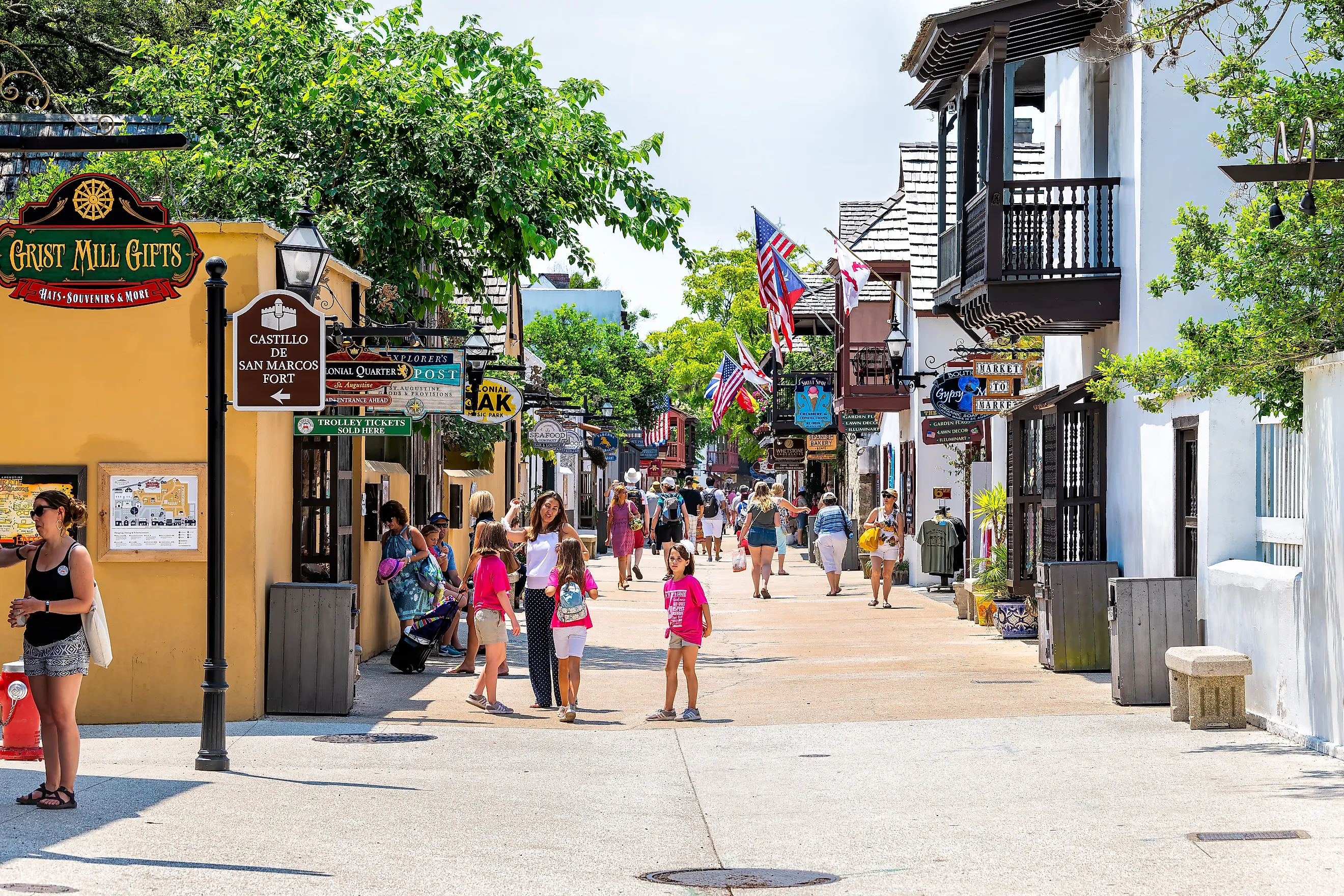
St. Augustine gets its old-world feel from brick lanes, coquina walls, and breezes rolling in from Matanzas Bay, less than an hour south of Jacksonville. A good place to start is high above town at the St. Augustine Lighthouse & Maritime Museum, where 219 steps lead to wide coastal views, shipwreck exhibits, and a restored keepers' house. Come winter, Nights of Lights transforms the old quarter, including the Plaza de la Constitución, the bayfront, and Castillo de San Marcos National Monument, into something quieter and softer, the whole historic core outlined in white. For a change of pace, cross the inlet to Anastasia Island, where protected dunes, tidal marshes, campsites, and Atlantic access spread out beyond all of that history. Food stops can be simple and close by: Whetstone Chocolates on King Street offers tastings and factory tours, while the Spanish Bakery near the old gates serves empanadas, picadillo, and fresh bread.
Fernandina Beach

On Amelia Island near the Georgia line, Fernandina Beach mixes Victorian storefronts, riverfront views, and a shrimping tradition that still shapes the town's identity. That tradition takes center stage during the Isle of Eight Flags Shrimp Festival, when a parade, art booths, antiques, waterfront crowds, and no shortage of shrimp dishes fill the historic district. History shows up in several other forms too: the former Nassau County jail now houses the Amelia Island Museum of History, and Fort Clinch brings together a 19th-century brick fort, ocean access, fishing, camping, and Civil War-era living-history programs. Families can keep things easy at Main Beach Park, which has sand, picnic space, a playground, and a skate zone. For a classic downtown stop, The Palace Saloon has been pouring drinks in its landmark Centre Street barroom since 1903.
Mount Dora

Northwest of Orlando, this lakeside town feels made for wandering with breezes off the water, shaded lanes, antique shops, and a downtown that stays busy without feeling rushed. The Mount Dora waterfront is anchored by the Lakeside Inn, open since the 1880s, its yellow clapboard buildings and broad verandas facing out over Lake Dora. Just nearby, Palm Island's boardwalk winds through wetlands where herons, turtles, and the occasional alligator are common sights. Collectors often head first to Renninger's Antique Center for its indoor antique mall, flea market, and special events, while the Mount Dora History Museum, set inside the former firehouse and jail, fills in the local stories. The Mount Dora Arts Festival brings juried artists, outdoor booths, galleries, cafés, and sizeable crowds into the old downtown core each winter.
Dunedin

Dunedin pairs Scottish heritage with a walkable Gulf Coast center close to the Pinellas Trail and the water. Outdoor time usually points toward Honeymoon Island, where Gulf beaches, shelling, osprey nests, and ferry access to Caladesi Island make it the area's signature nature stop. Back in town, the Dunedin History Museum fills a former Atlantic Coast Line railroad depot with exhibits on the citrus, rail, and maritime history that shaped the place. The local landmark list also includes Dunedin Brewery, a longtime downtown staple that traces its roots to the mid-1990s, and the historic Fenway Hotel, whose rooftop bar looks out across the Dunedin waterfront. When the Dunedin Highland Games & Festival rolls around, pipe bands, athletic events, clan tents, and Scottish dancing bring the town's heritage right to the foreground.
Cedar Key

Along Florida's Nature Coast, life in Cedar Key moves at the pace of tides, kayaks, and fishing boats. Getting out on the water is a big part of any visit. The Cedar Keys National Wildlife Refuge protects bird-nesting islands best reached by boat or kayak, and the surrounding estuary rewards slow exploration. Back in the small center, October's Cedar Key Seafood Festival adds seafood booths, music, and a parade to the waterfront's usual rhythm. Local history is split between the St. Clair Whitman home, which traces the town's fishing, pencil-making, and railroad years, and the Historical Society's collection of photographs, tools, maps, and waterfront artifacts. Steamers Clam Bar & Grill is a straightforward waterfront stop for Cedar Key seafood, with local clams and oysters on the menu.
Apalachicola

Where the Apalachicola River meets Apalachicola Bay, this Panhandle port keeps much of its working waterfront character. Seafood still frames the town's calendar. The Florida Seafood Festival in Battery Park brings oyster shucking, oyster eating, a parade, and seafood booths that celebrate the bay connection every fall. Architecture and invention tell another side of the story. The Orman House preserves an 1830s Greek Revival home built by cotton merchant Thomas Orman, and John Gorrie Museum State Park explains how a local physician's ice-making experiments helped nudge the world toward modern refrigeration and air conditioning. The Gibson Inn, built in 1907, remains one of the commercial district's most recognizable buildings. For undeveloped coastline, a boat from Indian Pass reaches St. Vincent National Wildlife Refuge, where shores, dunes, pine flatwoods, and migratory bird habitat replace the town grid entirely.
Micanopy

South of Gainesville, Micanopy is all live oaks, old storefronts, and the slow curve of downtown streets. The antique shops along that main stretch make a natural first stop, with books, art, furniture, and vintage finds, and the pace of the street encourages lingering. The Micanopy Historical Society, set inside the landmark Thrasher Warehouse, gives the town deeper context with exhibits on Native history, settlement, railroads, and local commerce. Step outside town, and Paynes Prairie Preserve opens up with boardwalks, observation points, and broad open views where wild horses, bison, alligators, and birds may all appear. Herlong Mansion Bed & Breakfast adds columned porches and period interiors to the historic atmosphere, while the Micanopy Fall Festival brings art booths, food stalls, and music to the main drag each year.
Safety Harbor

On the western shore of Tampa Bay, this compact downtown pairs walkability with deep local roots. Philippe Park is the essential heritage stop, with shaded bayfront grounds surrounding the Tocobaga Temple Mound, a significant Indigenous ceremonial site. The mineral springs that once shaped the town's visitor identity are still tied to Safety Harbor Resort and Spa, while the Safety Harbor Museum & Cultural Center displays Native American artifacts, pioneer-era objects, and neighborhood archives nearby. For something more playful, Whimzeyland, the mosaic-covered home of artists Todd and Kiaralinda, adds a bright burst of roadside art to the mix. Main Street gets especially lively during Third Friday, when live music, makers, and food turn downtown into a neighborhood block party. Marker 39 Floribbean Cuisine serves Caribbean-leaning dishes, and Troubled Waters Brewing pours craft beer in a downtown taproom.
Tarpon Springs

Tarpon Springs is shaped by Greek culture, sponge boats, and the busy stretch of Dodecanese Boulevard known as the Sponge Docks. Along the waterfront, shops, working vessels, bakeries, and restaurants keep the city's sponge-diving legacy close to the surface. It's a stretch that rewards slow walking rather than a quick pass-through. St. Nicholas Greek Orthodox Cathedral offers a quieter but equally memorable stop, with Byzantine-style murals, stained glass, and carved woodwork inside. For Gulf air and sunset views, Fred Howard Park reaches out by causeway to open water and swimming access. Food is part of the experience near the docks, especially at Hellas Restaurant & Bakery, known for baklava, spanakopita, gyros, and Greek pastries. Each January, the Tarpon Springs Epiphany Celebration centers on the cross dive in Spring Bayou and draws one of the country's largest Greek Orthodox Epiphany gatherings.
Venice

This Gulf city has built much of its coastal identity around fossil hunting, earning the nickname "Shark Tooth Capital of the World," and the reputation holds up. The search often starts near Caspersen Beach, one of Venice's best-known shark-tooth spots, though storm repairs have limited some direct beach access and facilities, so visitors should check current county updates before heading out. The Venice Sharks Tooth Festival carries that energy inland with fossil dealers, live music, food, and family activities. North of the fossil-hunting beaches, the Venice Fishing Pier extends into the Gulf beside Sharky's on the Pier and Fins at Sharky's. Away from the water, the Historic Venice Train Depot preserves the railroad story and connects with the Legacy Trail for walkers and cyclists. Venice Theatre, founded in 1950, rounds things out with plays and musicals near Venice Avenue.
What Makes A Florida Town Worth The Trip
What makes a Florida town truly worth visiting isn't always the lighthouse, the festival, or the famous chowder. It's the feeling that strangers are genuinely welcome to slow down and stay awhile. Cedar Key runs on tidal rhythms while Safety Harbor anchors its identity around block-party Fridays. These ten communities share something rarer than good weather: the kind of warmth that turns a weekend trip into a standing invitation to return.