11 Chesapeake Bay Small Towns With Unmatched Friendliness
Friendliness is easy to claim and hard to prove, so the towns worth trusting are the ones that show it rather than say it. Along the Chesapeake Bay, the proof is in the habits. One town closes its main street once a month just to gather. Another drops everything for a festival the whole place runs together. A third keeps a crab deck where nobody eats alone for long. These are small communities where people still recognize one another, and a visitor gets folded into that without much effort. The eleven towns below line the bay and its rivers on the Maryland and Virginia sides. Each one earns the word friendliest in a way you can see and join, and somebody almost always says hello first.
Cape Charles, Virginia

In Cape Charles, neighbors get around by golf cart, and they wave to each other on the way to the post office and the harbor. About a thousand people live here, on a spit of Virginia's Eastern Shore that grew up as a railroad and ferry terminus in the 1880s. Many of the storefront names along Mason Avenue still trace back to the old clamming and crab-processing families who built the place. The town beach off Bay Avenue is free, with no gate and no parking meter, and the bay water there is shallow and calm enough to wade out a long way. When the sand empties out, the line reforms at Brown Dog Ice Cream a block up. Ten minutes south, Kiptopeke State Park keeps a fishing pier and a row of concrete ships sunk offshore in the late 1940s to break the waves, which now make an odd and popular backdrop for a paddle. Come the third weekend of the year's warm stretch, the LOVE Run pairs a road race with LoveFest, a street party that takes over the park.
St. Michaels, Maryland

People in St. Michaels will tell you the town once fooled the British by hanging lanterns in the trees, and the harbor has been trading on its water ever since. The Chesapeake Bay Maritime Museum sits on eighteen acres at Navy Point, and its centerpiece is the 1879 Hooper Strait Lighthouse, a screwpile beacon barged in from down the bay and reassembled here. Climb it for the view over the Miles River, then head to Waterman's Wharf, where the staff hand you the tools and let you try oyster tonging and hauling a crab pot, the same work that has paid the town's bills for generations. Out on the water, Patriot Cruises runs a narrated trip along the Miles, or you can book a sunset sail on the Selina II, a wooden yacht built in 1926. Talbot Street handles the browsing and the tasting rooms afterward, and The Crab Claw has been picking crabs at the harbor's edge for decades. Every fall the whole town turns out for OysterFest, a day built entirely around the bay's oyster, fried and raw and roasted, with music on the lawn.
Chestertown, Maryland

Chestertown was a colonial port big enough to rival Annapolis, and its brick High Street still runs straight down to the Chester River the way it did in the 1700s. Washington College, founded in 1782 with George Washington's blessing, keeps the sidewalks full of students, so the town reads young and old at once. Local tradition holds that in May 1774 the townspeople marched down High Street, boarded the brigantine Geddes, and threw its tea into the river; whether it truly happened or not, the town reenacts it every Memorial Day weekend, with a colonial parade, a raft race, and reenactors playing Tories getting tossed off the boat. Late each fall, the river fills with sail for the Sultana Downrigging Weekend, one of the largest annual gatherings of tall ships in North America, paired with three days of bluegrass on the waterfront. Any Saturday morning, the farmers and artisans market spreads two blocks with produce, bread, and craft, and the Garfield Center for the Arts downtown keeps a rotating bill of plays, music, and film.
Onancock, Virginia

Captain John Smith is said to have called Onancock the gem of the Eastern Shore, and the town has leaned into that ever since, wrapping its life around a deepwater creek and the wharf at the end of it. From the Onancock Wharf, the ferry crosses to Tangier Island in about forty-five minutes, often run by a local captain who narrates the trip out of long habit. The arts community here is genuinely active: on summer evenings the Second Friday Art Stroll keeps the shops open late, with music outdoors and local wine poured on the sidewalk, and the North Street Playhouse stages plays and musicals through the year. Ker Place, a Federal-style mansion finished in 1799, holds the county's history museum. For a slower afternoon, Burnham Guides rents kayaks and runs eco-tours along Onancock Creek, where the water stays flat and the marsh comes right up to the paddle.
Havre de Grace, Maryland

Havre de Grace sits where the Susquehanna River empties into the head of the bay, and Smithsonian named it one of the country's twenty best small towns to visit back in 2014. The Promenade, a three-quarter-mile boardwalk, traces the water's edge from Millard Tydings Memorial Park down to the Concord Point Lighthouse, with the wide river on one side and dogs and birdwatchers on the other. That lighthouse dates to 1827, which makes it one of the oldest continuously operating beacons in Maryland; you can climb the spiral stairs and then tour the keeper's house next door. A short walk along the waterfront brings you to the Decoy Museum, where the town's duck-decoy carving tradition is treated as the folk art it is, and the Susquehanna Museum at the Lock House explains the canal that once moved boats through here. On the first Friday of every month from spring through fall, downtown closes to cars and fills with art, music, and food.
Rock Hall, Maryland

Rock Hall still calls itself a watermen's town, and it means it: the working boats go out for crab and oyster, and the whole social calendar bends around the water. The town's signature event is Pirates and Wenches Weekend in summer, a slightly ridiculous and much-loved tradition of sea-shanty sing-alongs, rum tastings, and a costumed parade down Main Street. The Mainstay, a small theater on Main Street, keeps a steady rotation of blues, jazz, folk, and rock. Just south, the Eastern Neck National Wildlife Refuge covers 2,200 acres of forest and marsh laced with walking trails, one of the better spots on the upper shore for birds. Ferry Park sits right on the bay with a gazebo and a rocky jetty where people gather to watch the sun drop, and Blue Crab Chesapeake Charters will take you out for a crab feast on the water itself.
Kent Narrows, Maryland

Kent Narrows is barely a town, just a cluster of seafood houses and marinas strung along the channel that separates Kent Island from the rest of the Eastern Shore. About six hundred people live here, five miles east of the Chesapeake Bay Bridge, and the place has packed and served seafood for as long as anyone can remember. That is the whole appeal: it is nearly impossible to eat a crab here without ending up in conversation with the next table. The Cross Island Trail starts near the visitor center and runs to Terrapin Park past the wetlands, and Ferry Point Park adds a forty-one-acre stretch of boardwalk and marsh trail for a quieter walk. Anglers charter out of the marina for a day of sport fishing, and Fisherman's Crab Deck serves the catch at picnic tables over the water, the kind of all-you-can-eat crab spread that leaves everyone's hands a mess. In warmer months the yacht club hosts a festival of classic cars and vintage boats that draws families for the afternoon.
Irvington, Virginia

Fewer than five hundred people live in Irvington, a village on Virginia's Northern Neck where locals talk about the "rivah" and mean it as a way of life. With a town that small, people get to know each other fast, usually over a plate of oysters pulled from the water nearby. The Steamboat Era Museum tells the story of the passenger and freight boats that once connected this stretch of the bay to the wider world, a lifeline before the roads came. At The Dog and Oyster Vineyard, next to the Hope and Glory Inn, the tastings are relaxed and paired with local seafood rather than ceremony. The farmers market takes over on the first Saturday of the month from late spring into fall, with produce, baked goods, and music, and Irvington Road holds a short run of family-owned shops selling coastal wares and art. For families with restless kids, the Compass Entertainment Complex keeps go-karts, mini golf, a climbing wall, and a small movie theater going.
Urbanna, Virginia

Urbanna is a small port on Urbanna Creek, a short paddle from where the Rappahannock River meets the bay, and it has traded in blue crab and oysters since colonial days. The whole town's identity comes to a head each November at the Urbanna Oyster Festival, Virginia's official one, with shucking contests, craft-beer gardens, fire jugglers, and a street parade. The rest of the year runs quieter. The Urbanna Museum, in a restored eighteenth-century building above the creek, keeps a copy of the John Mitchell Map, a colonial-era map that shaped how the young country understood its own borders. Downtown stays walkable, anchored by the old R.S. Bristow's Store and Marshall's Drug Store, where the retro soda fountain still runs. Golden Age Charters takes visitors out on the river at sunrise or sunset, and in summer the town gathers for Second Saturdays and the farmers market in Taber Park, where the shade makes for an easy picnic.
Berlin, Maryland

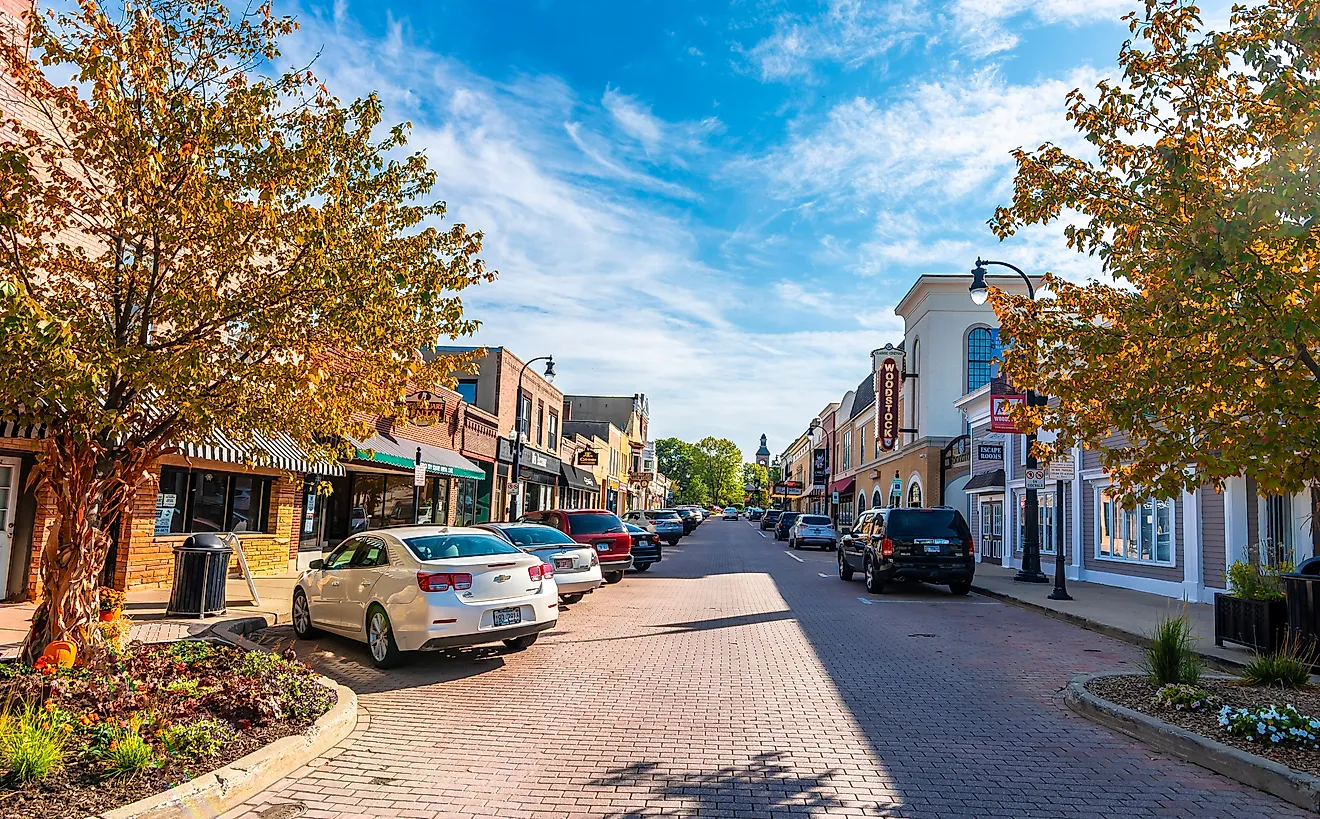
Berlin sits a few miles inland from Ocean City, close enough to the bay's watershed to belong to it and far enough from the boardwalk to keep its own pace. Budget Travel named it America's Coolest Small Town in 2014, and the town has worn the title lightly, with a Victorian Main Street of galleries, bookshops, and boutiques set in nineteenth-century brick. What earns the friendliness is the sheer volume of things the town throws itself into: bathtub races, a fiddlers' convention, a peach festival in August that celebrates the old orchard heritage, and Second Fridays year-round. The Calvin B. Taylor House Museum preserves the town's past inside an 1832 Greek Revival home. In the middle of downtown, Stephen Decatur Park keeps picnic tables and a pond, with kayaks heading out onto Ayers Creek, and the Burley Oak Brewing Company draws an evening crowd for local beer and live music.
Annapolis, Maryland

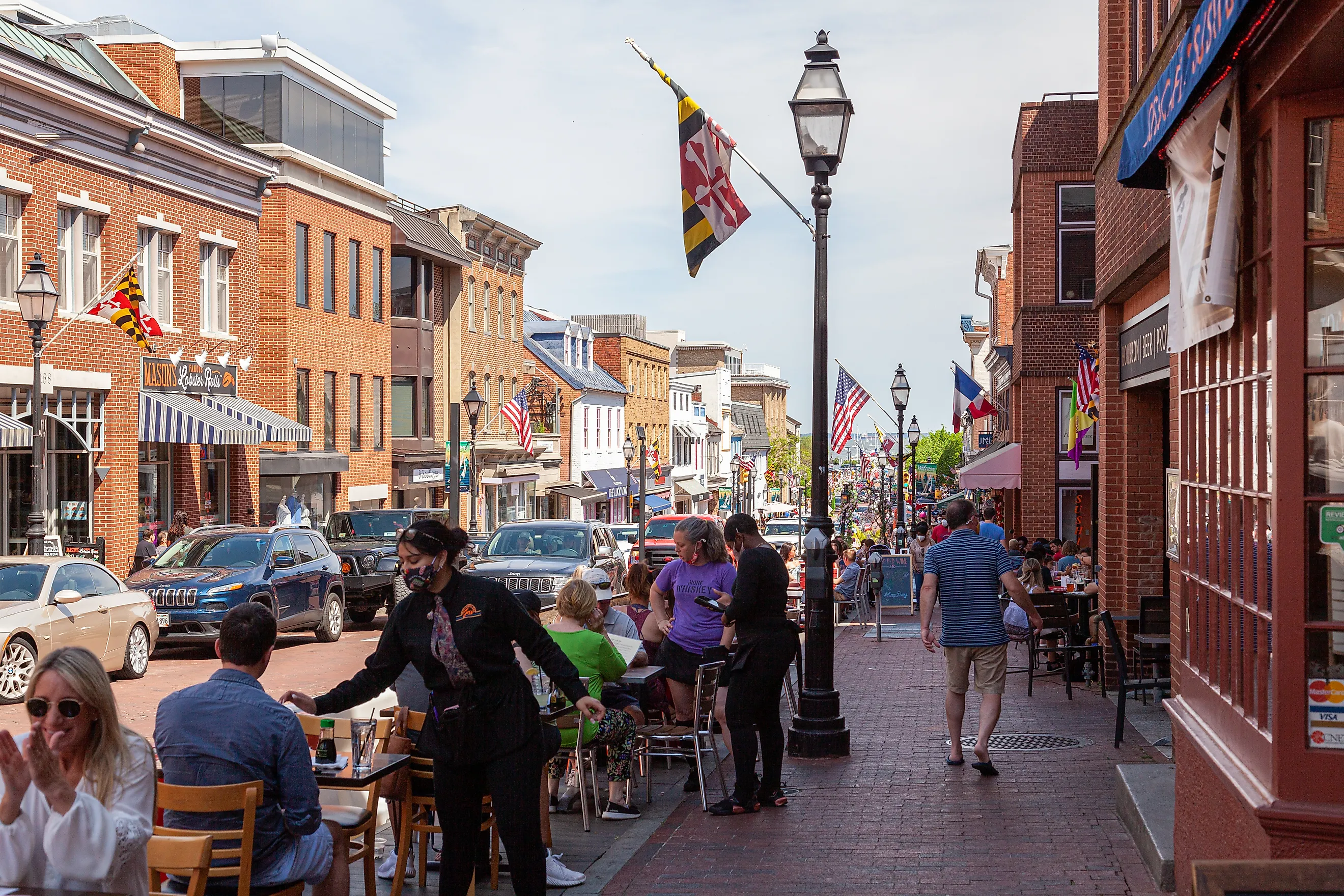
Annapolis is the biggest place on this list and the one most people already know, but its downtown still behaves like a small town where everyone ends up in the same spot. That spot is City Dock, the historic basin where Main Street meets the water and locals gather on benches to watch boats squeeze into Ego Alley, the narrow turning basin where sailors come to show off. The colonial core stays walkable, with the Maryland State House, the oldest still in use, a few blocks up the hill. The United States Naval Academy anchors the town, and its band plays free public concerts through the year, with the midshipmen's noon formation drawing a regular crowd. Down the street, St. John's College fields a croquet team that plays the Academy every spring in a match half the town turns out for, cheering in lawn chairs. Market House at the dock keeps the oyster bars and crab counters going, and on a warm weekend the whole waterfront fills with people who came to do exactly the same thing.
One Shoreline, One Kind Of Welcome
What ties these towns together is not the scenery, though there is plenty of it. It is that people here still make their living off the water, and that work keeps everyone in close company. You feel it at the crab deck in Kent Narrows, at the oyster festival in Urbanna, at the free beach in Cape Charles where the whole town seems to end up on the same stretch of sand. Pick one for a weekend, order the seafood, and stay long enough to talk to somebody. On this shoreline, that is how you meet the place.