The Best National Parks In The Desert Southwest
The desert Southwest holds far more than an endless sea of sand. Its national parks shelter unique wildlife, a startling range of topographic and geological diversity, and some of the darkest night skies in the country. Hikers, climbers, and nature lovers travel here every year for the quiet and the solitude. Gypsum dunes, salt flats below sea level, and cactus forests all sit within a day's drive of one another. These are the best national parks the desert Southwest has to offer.
Big Bend National Park

Located in a remote corner of West Texas, Big Bend National Park protects the largest stretch of Chihuahuan Desert in the United States. Covering over 800,000 acres of desert, the park has a rich cultural history, a wide array of wildlife, and some of the darkest night skies anywhere in the country.
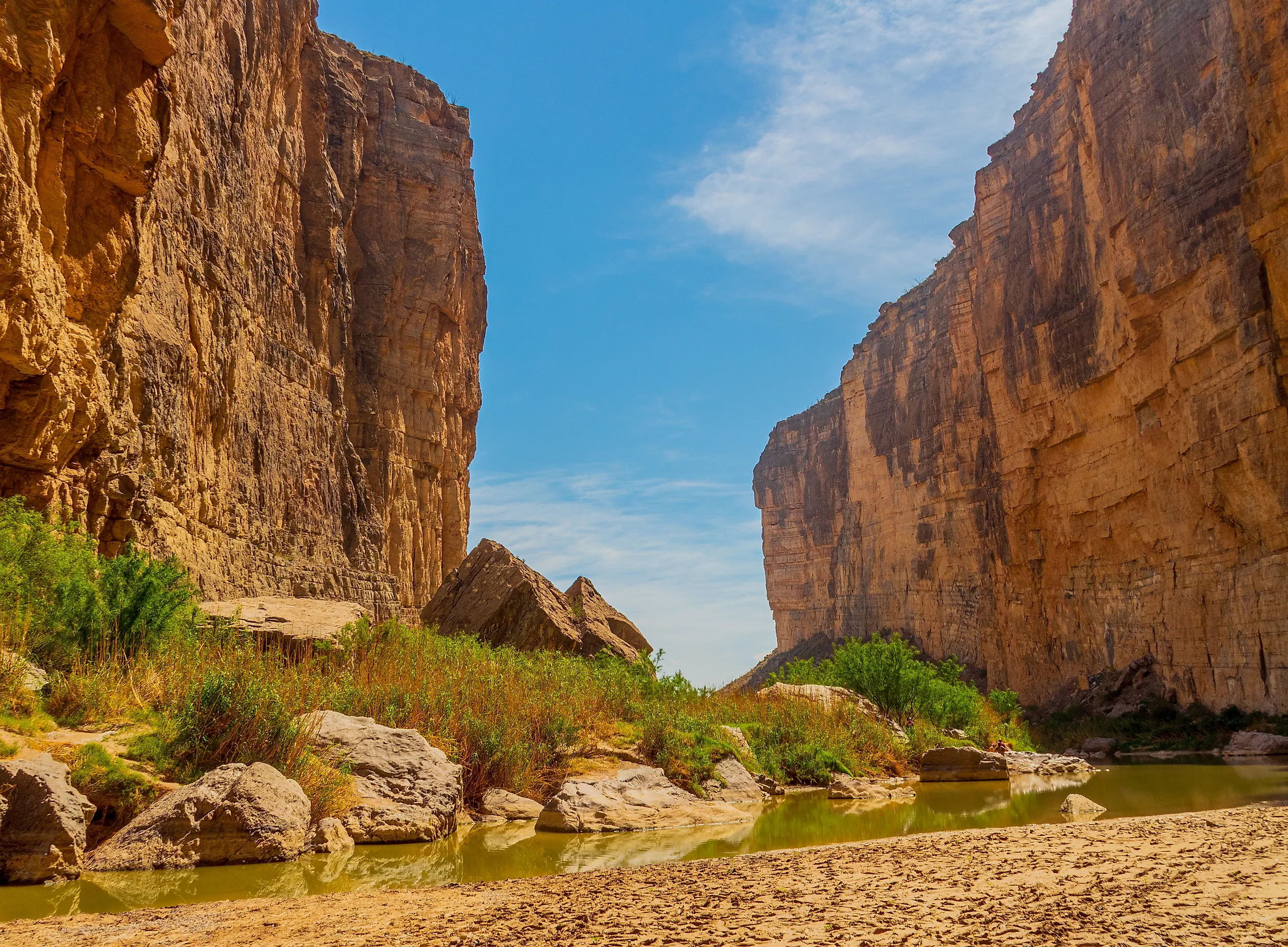
One of the best ways to explore the beauty of the desert, especially during the hot summer months, is by taking the Ross Maxwell Scenic Drive. The 36-mile paved road winds around the western slopes of the Chisos Mountains and passes several worthwhile stops. The Sotol Vista provides panoramic views of the western side of the park, and Sam Nail Ranch, a former homestead, now serves as a habitat for birds and other desert wildlife. The drive ends at the Castolon Historic District, a collection of adobe buildings that represents the largest example of former human settlement in the park. While down at the southern border of the park, be sure to check out the dramatic Santa Elena Canyon, whose walls rise as high as 1,500 feet above the Rio Grande. Several concessionaires offer guided trips into the canyon, and experienced paddlers can secure an overnight permit for self-guided overnight river trips.
Hikers will want to explore the Chisos Basin, which contains some of the park's most popular trails including Emory Peak and the Lost Mine Trail. Both trails climb into the peaks of the mountain range and provide beautiful views over the desert. The cool, green mountain slopes are also a great spot for wildlife spotting. Black bears, javelina, and mountain lions are present in the mountains, as well as a large variety of birds, reptiles, and amphibians. When the sun goes down, the park offers regularly scheduled night sky programs including moonlight walks and star parties. The lack of light pollution in the region earned Big Bend a Dark Sky Park designation from DarkSky International.
White Sands National Park

If it weren't for the San Andres Mountains rising above the western horizon, it would be easy to mistake this park in southern New Mexico's Chihuahuan Desert for a tropical beach. White Sands National Park sits in the Tularosa Basin about fifty miles northeast of Las Cruces and protects the largest gypsum dune field anywhere on the planet. 12,000 years ago, the vast expanse of white sand was a vibrant landscape of lakes, streams, and grassland, which means several valuable archeological finds have been uncovered within the park, including some of the oldest known human footprints in North America discovered in 2021.
Driving the sixteen mile Dunes Drive Loop is a great introduction to the otherworldly beauty of the dune fields, with several interpretive stops along the way. The Interdune Boardwalk is less than five miles from the visitor center and provides a fully wheelchair and stroller accessible stroll through the dunes with exhibits about the natural history, geology, and biodiversity of the park. For a more rugged adventure, the Alkali Flats Trail is a five mile out-and-back hike that meanders out into the heart of the white sand expanse. Before embarking on this hike, make sure you have plenty of water and a means of navigation as the lack of distinctive landmarks makes it easy to get turned around. As you walk, keep your eyes peeled for wildlife. The harsh white landscape is home to several unique animals including the Apache pocket mouse, bleached earless lizard, and forty species of endemic moths. One of the most popular activities in the park is sand sledding. Visitors can bring their own sleds or can rent or purchase sleds from the park's gift shop. Before you plan a trip to this park, be sure to check the National Park Service website, as the park occasionally closes due to military tests at the nearby White Sands Missile Range.
Saguaro National Park

Saguaro National Park covers 92,000 acres in the Sonoran Desert outside of Tucson in southern Arizona. The park is split into two separate units, The Rincon Mountain District east of the city and the Tucson Mountain District to the west. Between the two units, the park is home to six distinct biotic communities ranging from desert scrub at the lower elevations to mixed conifer forest in the park's higher climes.
The park's most notable resident is the giant saguaro cactus for which the park is named. This towering symbol of the American West is only found in a few areas of the country, but they are in plentiful supply in both districts of the park. Besides the cacti, Saguaro provides a protected habitat for several rare species including the Gila Monster, the country's largest lizard, coatis, and roadrunners. The park is a popular destination for hikers and backpackers, containing 200 miles of trails, ranging from short interpretative trails like the Desert Ecology Trail to longer multiday treks like Mica Mountain. For a great day hike, the trail to Wasson Peak reaches the highest point in the Tucson Mountain District and affords gorgeous views of the surrounding area and the city of Tucson. For those unwilling to trek in the desert heat, the Cactus Forest Scenic Loop Drive in the Rincon Mountain District provides a great way to explore the desert environments from the comfort of your car.
Joshua Tree National Park

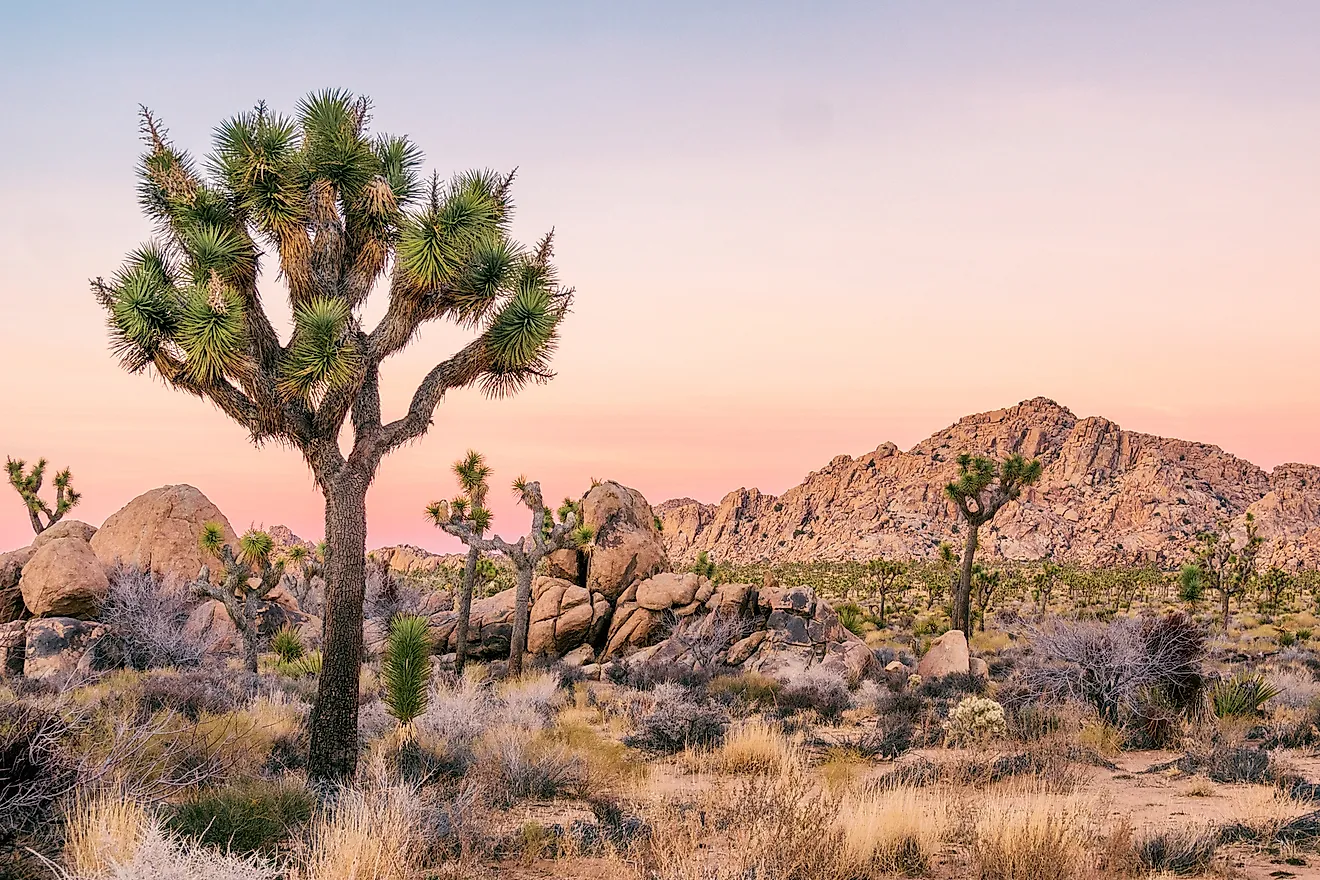
Joshua Tree National Park sits at the intersection of two desert ecosystems in southeastern California: the higher elevation Mojave Desert and the lower elevation Colorado Desert. This rare overlap creates a wide variety of unique and striking landscapes, from mountain ranges and boulder piles to vast stretches of shrubland dotted with cacti and creosote. The unique geologic features, dark skies, and vast stretches of wilderness combine to make the park a popular destination for climbers, hikers, and night sky photographers.
Like Saguaro, Joshua Tree is named for a species of plant life found in abundance within the park's boundaries. The Joshua tree is a species of yucca that is an essential part of the Mojave Desert ecosystem. The spiky, gnarled trees are uniquely adapted to survive the harshness of the desert and provide habitats for several species of animals. The park is also widely considered to be one of the premier rock climbing and bouldering destinations in the country. There are thousands of established climbing routes within the park boundaries, and the coarse monzogranite rock formations provide great traction for climbers. Nearly eighty-four percent of the park's land is designated wilderness with 300 miles of hiking trails crisscrossing the diverse terrain. Hikers of all ages and experience levels can find a trail that will allow them to explore the beauty of the desert safely and comfortably. Joshua Tree is also a designated Dark Sky Park, boasting some of the best stargazing in Southern California. Whether you're on a backpacking trip in the wilderness, or pitching a tent in a front country campground, once the sun goes down, you are sure to get phenomenal views of thousands of stars, meteor showers, and the Milky Way.
Death Valley National Park

The largest National Park in the contiguous United States, Death Valley National Park is larger than the states of Delaware and Rhode Island combined. It protects nearly 3.5 million acres of an interface zone between the Mojave and Great Basin Desert that straddles the California and Nevada border to the east of the Sierra Nevada Mountains. More than ninety-three percent of the park is designated wilderness containing salt-flats, sand dunes, canyons, and mountain ranges.
Death Valley National Park is a place of extremes. It is the hottest place on Earth and the driest in North America. Badwater Basin, a sunbaked landscape of vast salt flats, is the lowest place on the continent at 282 feet below sea level. It's easy to look at the heat waves rising off the valley floor and conclude that Death Valley is a place utterly unfit to inhabit, but several animals have carved out an existence in the park's mountains and colorful badlands. You may see mammals specifically adapted to survive the harsh environment like bighorn sheep in the Panamint Mountains or kangaroo rats hopping amongst the Mesquite Flat Sand Dunes. In the winding, highly saline Salt Creek, you'll see tiny desert pupfish flitting through the still waters. While the extreme temperatures do make exploring the valley on foot difficult during the summer months, the mountains that rise above the valley are much cooler. Drive up into the Panamint Mountains to hike Telescope Peak, the tallest in the park, and marvel at the cool breeze and panoramic views. For shorter hikes at lower elevations, Ubehebe Crater is a great day hike around a meteor crater. Scenic overlooks like Dante's View and Zabriskie Point provide exceptional views of the park, especially at sunrise or sunset.
Embrace the heat, explore the deserts!
Joshua Tree National Park pairs vast stretches of wilderness with world class rock climbing, drawing outdoor enthusiasts of every stripe. Saguaro National Park protects a vast forest of saguaro cactus, the enduring symbol of the American Southwest. In Big Bend National Park, the verdant slopes of the Chisos Basin sit in sharp contrast to the arid stretches of the Chihuahuan Desert. The four deserts of the United States contain an astonishing array of diversity, and these National Parks in the desert southwest are an incredible introduction to the stark and otherworldly beauty of the desert ecosystem.