The 7 Can't-Miss Towns In Michigan
Frankenmuth rings in each hour with 35 bells imported from Bavaria. Mackinac Island has kept automobiles off its roads since 1898. Rogers City loads lake freighters at the largest open-pit limestone quarry on earth. Every can't-miss town in this Michigan lineup is organized around one industry or one stretch of shoreline. That focus shows up in the food, the festivals, and the lively waterfronts, each rewarding a full weekend.
Frankenmuth

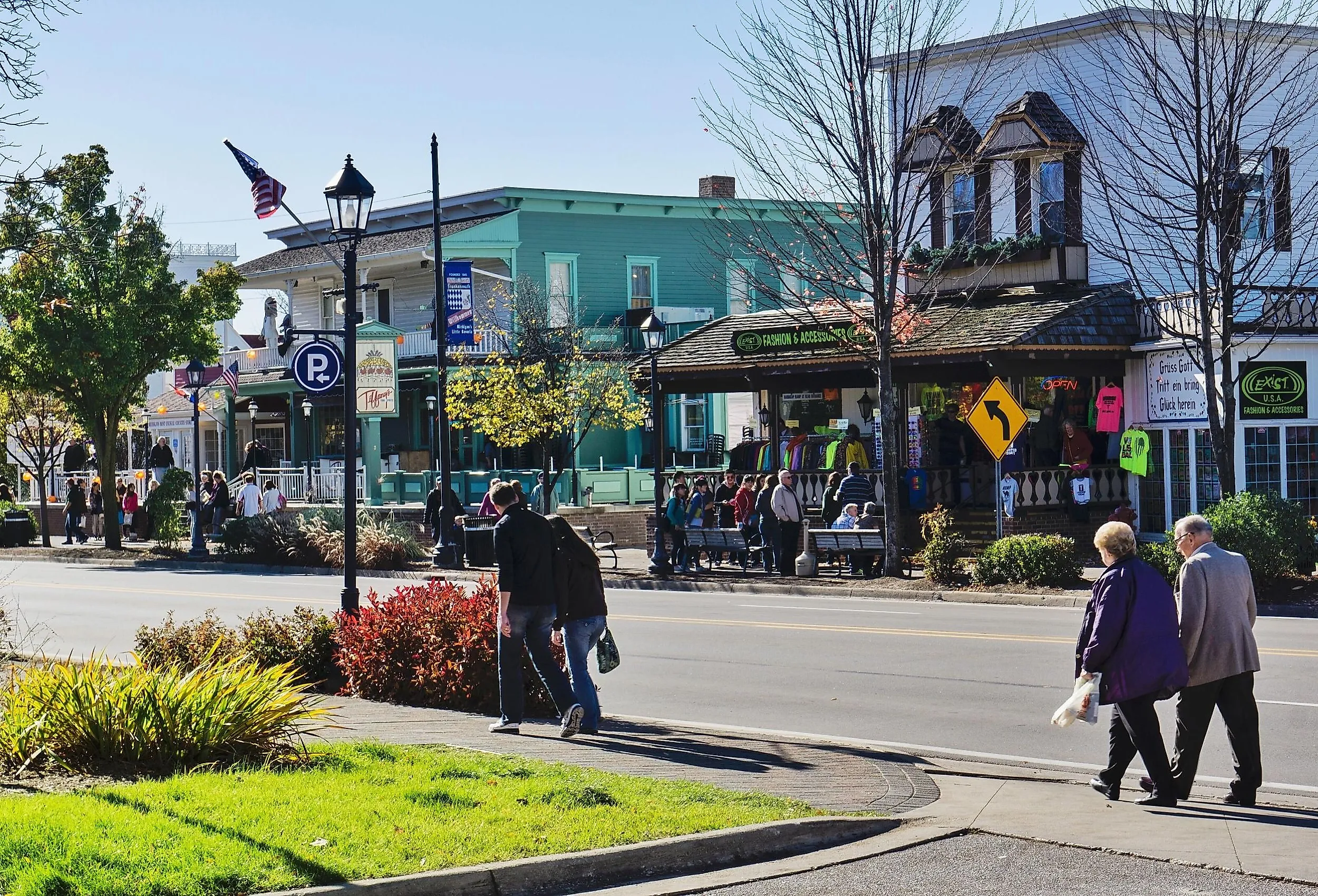
Franconian Lutheran missionaries founded Frankenmuth in 1845 as a mission colony in Saginaw County, and the German inheritance is still the town's working economy rather than a costume. The Bavarian Inn's Glockenspiel Tower carries 35 imported bells and a set of mechanical figures that act out the legend of the Pied Piper of Hamelin several times a day. Bronner's CHRISTmas Wonderland bills itself as the world's largest Christmas store, with more than seven acres of showroom and a calendar that keeps the doors open 361 days a year. Zehnder's and the Bavarian Inn Restaurant face each other across Main Street, both built on the same family-style chicken dinner that made the town's reputation in the middle of the last century. The paddlewheel Bavarian Belle runs sightseeing trips on the Cass River, passing under the wooden Holz-Brücke covered bridge, and the Bavarian Festival fills the streets each June.
Rogers City

The Calcite quarry southeast of town has been cutting limestone since 1912 and has shipped well over 700 million tons of it, which makes this the largest open-pit limestone quarry in the world. Two separate overlooks handle the two halves of the operation: Quarry View on Petersville Road takes in the pit itself, while Harbor View Park puts visitors within sight of the self-unloading freighters taking on stone bound for steel mills around the Great Lakes. Up the Lake Huron shore, the 40 Mile Point Lighthouse was completed in November 1896 and first lit the following April. The local lighthouse society has since restored the keeper's duplex, the outbuildings, and the salvaged pilot house of the steamer Calcite. Timbers from a wrecked wooden steamer still lie exposed on the beach below the light. The 11-mile paved Huron Sunrise Trail follows an old Detroit and Mackinac Railway grade out of downtown to Hoeft State Park and the lighthouse. Inland sits Ocqueoc Falls, the largest waterfall in the Lower Peninsula and the only universally accessible waterfall in the country. The river has cut its channel straight through the limestone bedrock there.
Mackinac Island

On July 6, 1898, the village council resolved that horseless carriages would be prohibited inside the village limits, and the state park commission extended the ban to the rest of the island three years later. It has never been lifted, which leaves M-185 the only state highway in the country closed to motor vehicles. Fort Mackinac has occupied the bluff above the harbor since the British built it during the American Revolution, and 14 of its original buildings survive, staffed now by interpreters in 1880s United States Army uniforms who fire the cannon on a daily schedule. Arch Rock, a limestone span roughly 4,000 years old, stands 146 feet above the shoreline and sits within reach of the more than 70 miles of trails and carriage roads on the island. The Grand Hotel opened on July 10, 1887, after 93 days of construction. Its 660-foot front porch is advertised as the longest in the world and looks south across the Straits of Mackinac. Downtown confectioners turn out something close to 10,000 pounds of fudge on a peak summer day, drawing in roughly ten tons of sugar a week to do it.
Munising

Iron-stained groundwater seeping through 500-foot sandstone cliffs is what gives Pictured Rocks National Lakeshore its streaked coloring, and Munising is the western gateway to all 42 miles of it in the Upper Peninsula. Pictured Rocks Cruises has run boats out of Munising Bay for more than 50 years, and the route passes the sea caves and Spray Falls, which drop over the cliff edge directly into Lake Superior. Miners Castle draws the heaviest traffic in the park and is the rare formation reachable by car, with two of its three viewing platforms built to wheelchair standards. Miners Falls sits a mile and a quarter round trip off the same road, where the park's most forceful waterfall drops 50 feet over a sandstone shelf. Farther east, an old access road runs a mile and a half each way out of Hurricane River Campground to the Au Sable Light Station. Keepers and their families lived there between 1874 and 1958, and shipwreck timbers still lie scattered along the sand below it. Grand Island lies half a mile offshore and takes a short ferry ride, which buys a second day of cliffs, beaches, and bike trails.
Marquette

Iron ore still moves through Marquette, which is the reason the Upper Peninsula's largest city has a working dock at the Upper Harbor, loading pellets onto lake freighters. Presque Isle Park covers 323 acres on a peninsula at the north end of town, and the Black Rocks cliffs at its tip are the local swimming hole for anyone willing to jump. The red Marquette Harbor Lighthouse holds the point below downtown and shares its grounds with the Marquette Maritime Museum. Sugarloaf Mountain rises 470 feet above sea level about six miles north of downtown on County Road 550. A half-mile trail of stairs and rock leads to three summit platforms. They face south toward the city, east along the Lake Superior shoreline, and west into the Huron Mountains. A stone monument at the top was hauled up and built by a Marquette Boy Scout troop in 1921 for a scoutmaster killed in the First World War. Blackrocks and Ore Dock are both a short walk from the water, and the Iron Ore Heritage Trail runs through town on the old rail corridor.
Traverse City

Michigan grows roughly three-quarters of the tart cherries in the United States, and most of that fruit comes off orchards within an hour of Traverse City, which is why the town has called itself the Cherry Capital of the World for a century. Growers began blessing the blossoms here in the 1910s, the first Cherry Festival followed in 1926, and the Michigan Legislature renamed it the National Cherry Festival in 1931. It now runs eight days every July and marked its centennial in 2026. More than 40 wineries work the Old Mission and Leelanau Peninsulas flanking Grand Traverse Bay, a good share of them with tasting rooms facing the water. Sleeping Bear Dunes National Lakeshore begins about 40 minutes west and takes in 65 miles of shoreline, with sand climbing some 450 feet above Lake Michigan. The seasonal Pierce Stocking Scenic Drive reaches the overlooks without a hike. Back in town, the old state hospital campus west of downtown has been rebuilt as the Village at Grand Traverse Commons. The former wards now hold shops, galleries, and restaurants.
Saugatuck

An Art Institute of Chicago student named Elizabeth Bandle invited her instructors to paint at her family's place outside town in 1910. Two of them liked the light enough to build a summer painting school around it. Frederick Fursman and Walter Marshall Clute ran it for decades. That school moved to an old hotel on an oxbow of the Kalamazoo River in 1914 and operates today as the Ox-Bow School of Art, which is the root of the galleries that still line Butler Street and the reason Saugatuck and neighboring Douglas market themselves as the Art Coast of Michigan. Ferry service across the river dates to 1838, and the hand-cranked chain ferry that runs the crossing in summer is billed as the last of its kind in the country. It lands at the foot of Mount Baldhead, where 303 wooden steps climb the dune to an observation deck and a Cold War radar dome, with a sand path dropping down the far side to Oval Beach. Saugatuck Dune Rides sends open-air buggies over the same dune field with a driver narrating the geology, and the Saugatuck-Douglas History Center works out of a restored 1904 pump house near the ferry landing.
The Industry Underneath the Scenery
Rogers City moves limestone, and Marquette moves iron ore, both on working docks that keep the waterfront busy through a season when the tourist traffic thins out. Traverse City runs on fruit, with the festival built on top of an orchard economy. Each town took its modern shape from a decision made more than a century ago. Mackinac banned the car. Frankenmuth kept the German language and the chicken dinners. Saugatuck rented a farmhouse to painters. Don't miss these top towns in Michigan.