10 Most Breathtaking Towns In Spain
Occupying the majority of the Iberian Peninsula, Spain is a European nation abounding in natural beauty. Over the years, Spain has become famous for its Mediterranean Sea coast, and major highlights here include a creative artists’ village in Catalonia and a beach town that briefly became the Pope’s official residence in the 15th century. Travellers can also enjoy an elegant Renaissance-era village on Spain’s Atlantic Coast, and even an Ancient Roman village turned easy, breezy surf town at the very southern tip of the Spanish mainland. If you're curious to know more, now’s probably a good time to take a deep breath, as we’re about to show you around 10 of the most breathtaking towns in Spain.
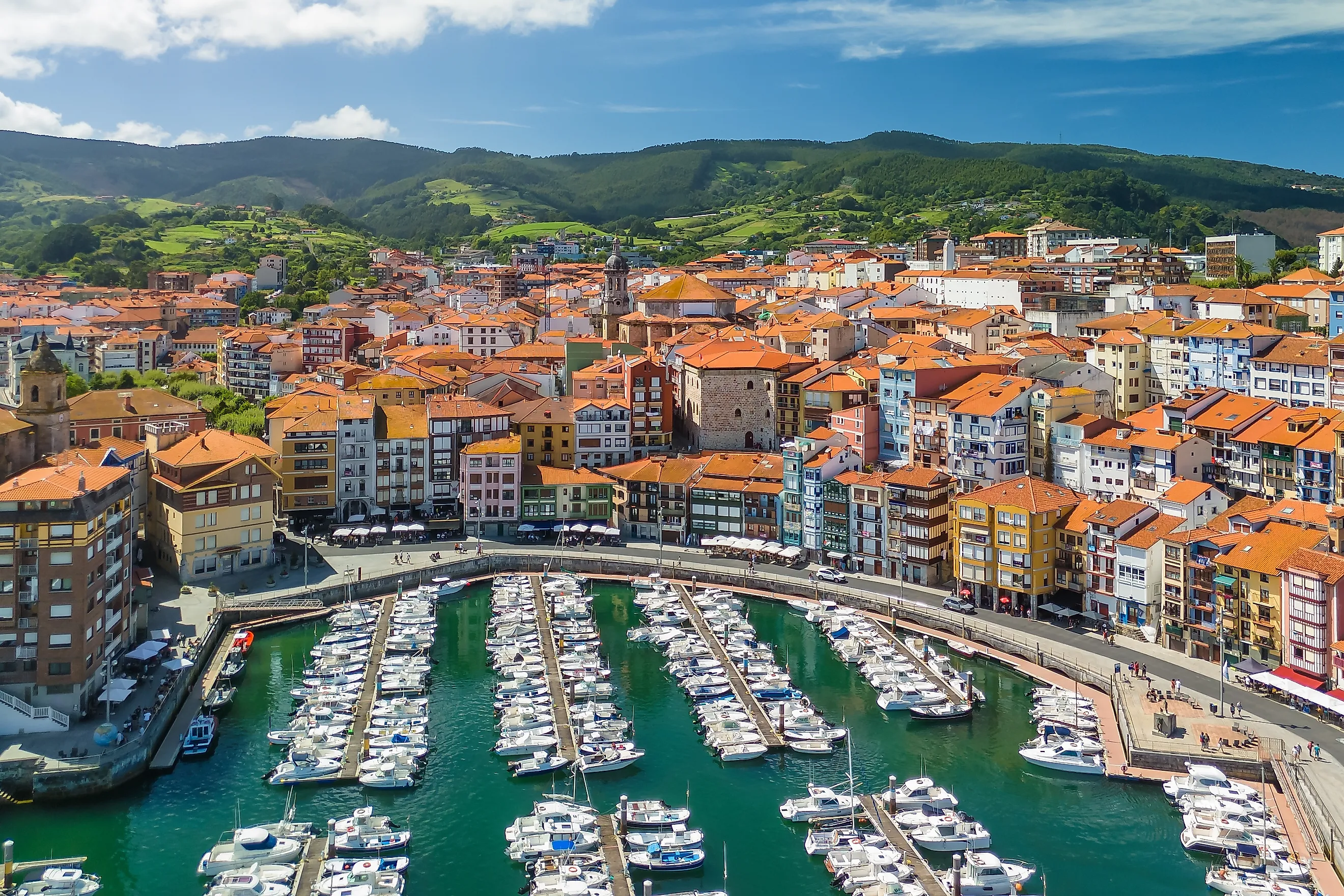
Baiona, Pontevedra

Right where the Ria de Vigo estuary flows into the Atlantic Ocean, about 135 kilometres (or 84 miles) north of Porto (Portugal), is the majestic port city of Baiona. In March 1493, the Pinta arrived here after taking part in Christopher Columbus’ expedition that reached the Americas, making Baiona one of the first places in Europe to learn about Columbus reaching the “New World.” At the Casa de la Navegación museum, visitors can learn more about Baiona’s subsequent rise to prominence in the Trans-Atlantic trade network. Mere steps away from the museum, the Igrexa de Santa María de Baiona is a magnificent Romanesque church that has served local parishioners since the 13th century. And just past the marina, the Fortaleza de Monterreal has fortified walls that date as far back as the 11th century, and the peninsula sports incredible views of the port and the ocean.
Staying on the Monterreal peninsula, travellers can spend some extra quality time here by doing a stay at the Parador de Baiona. The structure was built in the 19th century on the grounds of the Renaissance-era military fort, and it’s now a comfortable 21st-century hotel with contemporary amenities like air conditioning, Wi-Fi, Chromecast-capable flat-screen TVs, and even a seasonal swimming pool.
La Robla, León

Once upon a time, La Robla was a valuable mining town that fueled Spain’s industrial development. Today, this town in the province of León is valued for its natural treasures. In particular, the Zona Alfa has over 120 kilometres of mountain bike trails sorted into 16 routes that offer great rides for cyclists at all levels. Even for those not keen on exploring by bike, the nearby Alto Bernesga Biosphere Reserve is a UNESCO-recognised park that preserves critical habitat in the Cantabrian Mountains for wildlife like brown bears, Egyptian vultures, Iberian wolves, and ibex goats. And for anyone curious about La Robla’s industrial past, they can check out the Mina Museo de La Robla and tour this working mining school that provides interactive experiences with real mining equipment.
Returning to the gorgeous mountains of Alto Bernesga, Hotel Bicis & Vacas provides a very warm welcome along with 14 comfortable guest rooms (all with private bathrooms) and the delectable Tamba - Huerta, Parrilla y Vino, restaurant featuring local wines and food made from locally sourced ingredients.
Bermeo, Biscay

Nestled on the coast of the Bay of Biscay is Bermeo, a town often regarded as the most important fishing port of Basque Country. To better understand why this is the case, it’s worth visiting the Fisherman's Museum (Arrantzaleen Museoa - Museo del Pescador) and viewing their collection of fishing equipment housed in a 15th century tower. Then, for a proper taste of Bermeo’s heritage, the Alakrana Bermeo restaurant serves incredible Basque-style dishes made with locally caught seafood. And for a walk on the wilder side, folks can head out to the Urdaibai Biosphere Reserve, an official UNESCO World Biosphere Reserve that protects some 12 kilometres of sandy beaches, lush holm oak forests, and a pristine coastal wetland area that serves as habitat for numerous bird species.
Set right in between Bermeo’s historic town centre and the Urdaibai Biosphere Reserve is Hotel Luruna, a 19th century palace built for a family of shipping magnates that’s been reinvented as a cool boutique hotel with well-appointed (and soundproofed) guest rooms and a fantastic Basque restaurant on site.
Villanúa, Huesca

Perched high in the Pyrenees of north-eastern Spain, and around 290 kilometres (or 181 miles) south-west of Toulouse (France), Villanúa is the ideal mountain town for grand adventures in the region’s great outdoors. Just beyond town, the Valles Occidentales Nature Reserve features multiple peaks reaching over 2,600 metres in elevation, refreshing alpine lakes like Lake Estanés, and verdant forests that provide habitat to native animals like brown bears, ospreys, otters, and Pyrenean frogs. Also nearby is Peña Collarada, the imposing 2,886-metre (or 9,469-foot) tall mountain with multiple trails suitable for seasoned hikers and climbers. And for those who’d rather go deep, the Cueva de las Güixas is open for guided tours that allow visitors to experience this magical subterranean environment of stalactites, stalagmites, and other interesting limestone formations.
For a truly elevated experience in the Aragonese Pyrenees, travellers can book a stay at the Canfranc Estación, a Royal Hideaway Hotel. This five-star and two Michelin key luxury hotel offers everything from Michelin-starred fine dining and a fully-equipped Wellness Center spa to opulently furnished rooms and suites with incredible forest and mountain views.
Sitges, Barcelona

Around 37 kilometres (or 23 miles) south of the bustling city of Barcelona, travellers can escape to a Catalan coastal paradise and vibrant artists’ village at Sitges. This town has long celebrated artistic creativity, and the Museu del Cau Ferrat lets visitors explore the home studio of Catalan modernist artist Santiago Rusiñol while also showcasing works by artists like Pablo Picasso, Ramon Casas, and Isidre Nonell. A few steps away, the Palau de Maricel museum has a collection of over 3,000 works of art ranging from Romanesque murals and Gothic era wood paintings to early 20th century modernist sculptures. Also within easy walking distance is Platja de Sant Sebastià (San Sebastian Beach), a beautiful beach that’s picture-perfect for easy strolls and refreshing swims in the Mediterranean Sea.
After a long day exploring Sitges’ many artistic treasures and spectacular beaches, it’s an easy retreat to the Casa Vilella Hotel. Located in a quiet neighbourhood to the west of Sitges’ town centre, this hotel sports phenomenal sea views, a gorgeous garden and swimming pool, 14 elegant rooms and suites, and a tasty bar-restaurant serving Catalan tapas along with heartier fare like paella and baked sea bass.
Peníscola/Peñíscola, Castellón

Nestled on the balmy shores of the Costa del Azahar north of València is Peñíscola, a charming beach town with a curious backstory that’s also known as Peníscola in the local Valencian language. Early in the 15th century, Antipope Benedict XIII (or Pope Luna) moved the official papal residence to the Castell de Peníscola, a 14th-century castle built by the Knights Templar on the remains of a Moorish citadel, where visitors can now explore this fascinating intersection of cultures. For some more interesting history, folks can venture outside town and find the nearby Castillo de Pulpis, a structure that was also built atop the remains of an Arab fortress, and one that almost seamlessly blends the Moorish-built walls with the many additions made by the Order of Calatrava and the Knights Templar in the 14th century at a scenic location atop a 431 metre-tall mountain. And just beyond this old castle, the Parc Natural de la Serra d'Irta extends across 12 kilometres of pristine Mediterranean Sea shores and offers multiple top-tier hiking and biking trails.
Heading back down to town, the Castillo de Peñíscola Hotel makes the ideal “base camp” for poking around the region thanks to its prime location near the beach and the town’s historic castle. In addition, this hotel has a great rooftop lounge, a peaceful, sheltered swimming pool, and 80 sleek and beachy chic guest rooms.
Segura de la Sierra, Jaén

Heading up to the Cordilleras Béticas of southern Spain, we reach the ruggedly beautiful village of Segura de la Sierra. Only about 300 kilometres (or 187 miles) south of Madrid, it’s possible to explore the great mountains of the Parque Natural de las Sierras de Cazorla, Segura y Las Villas, Spain’s largest protected nature park (measuring over 200,000 hectares) and an official UNESCO Biosphere Reserve with multiple 2,000-plus metre-tall mountains, the source of the Guadalquivir and Segura Rivers, and lush pine forests that support an astounding array of biodiversity. Meanwhile, in town, folks can also check out the Castillo de Segura de la Sierra, which was used to protect the southern reaches of the Kingdom of Castile from the 13th to 15th centuries. And at the Baños Árabes, visitors will see the Arab hammams that were first developed during Moorish rule of the region and restored in 1971.
Once travellers are ready to settle down for the evening, they can kick back and enjoy the fresh mountain vibes at Hotel Poeta Jorge Manrique. This is a wonderful boutique hotel built with traditional materials like stone, wood, iron, and lime, yet it also has state-of-the-art insulation and soundproofing alongside additional contemporary amenities like fast wifi internet and smart TVs.
Monachil, Granada

Just beyond Granada’s city proper, Monachil makes the perfect launchpad for exciting excursions in the Sierra Nevada Mountains. After all, this town does function as the gateway to the Parque Nacional de Sierra Nevada, the home of the Iberian Peninsula’s highest peak at Mulhacén (3,479 metres, or 11,414 feet) and over 20 more mountains surpassing 3,000 metres above sea level. During the winter season, Sierra Nevada Ski Station operates as Europe’s southernmost ski resort and offers up to 112 kilometres of skiable terrain. And whenever folks are in town, they will find another stunning landmark at the Iglesia de la Encarnación, a church that dates back to 1501 and showcases some of the finest artisan handiwork of the Granada Renaissance.
For even more spectacular Sierra Nevada scenery, it’s worth booking a stay at Hotel La Almunia del Valle. This Michelin key boutique hotel features incredible mountain views all around, along with well-appointed guest rooms and a gorgeous outdoor swimming pool.
Nerja, Málaga

Nerja may now be known as a sunny beach town on the famed Costa del Sol of Andalucía, but it’s also a town with a very deep backstory. Yes, really, La Cueva de Nerja was found in 1959 and includes some two kilometres of prehistoric treasures, such as Paleolithic era petroglyphs and a “Prehistoric Cathedral” full of stalactites and stalagmites. Then, heading to the coast, folks can stop at the Balcón de Europa and take in the panoramic mountain and sea views. And right next to the Balcón, the Playa el Salón is a compact yet breathtakingly beautiful Mediterranean Sea beach that’s ideal for swimming and sunbathing.
A few blocks east of the Balcón de Europa and Playa el Salón, the Hotel Paraíso del Mar really does live up to its name. Not only does this boutique hotel have a prime beachfront location, but they also provide a paradise-like environment with simple yet comfortable rooms, a full breakfast every morning, and a phenomenal pool and jacuzzi complex perched just above the shore.
Tarifa, Cádiz

While the British exclave of Gibraltar attracts plenty of attention with its curious landscape and unique local culture, the actual southernmost point of the Iberian Peninsula can be found about 48 kilometres (or 30 miles) south-west at the Spanish village of Tarifa. In town, travellers will discover marvelous landmarks like the Castillo de Guzman el Bueno, Europe’s southernmost castle and a fort originally built during Moorish rule by Abd-ar-Rahman III, Caliph of Córdoba. To the east, visitors will reach the Parque Natural del Estrecho, an incredible natural wonderland with sand dunes reaching over 30 metres above sea level, cool underwater caves, and a dynamic population of wildlife like porpoises, loggerhead turtles, tuna fish, and golden eagles who often stop at this crossroads of Europe and Africa. And to the west, Playa de los Lances fronts the Atlantic Ocean and makes prime territory for surfing, windsurfing, and kite surfing.
And right by the harbour and mere steps away from the beach, La Residencia Puerto Hotel & Spa offers a lovely Moroccan-inspired atmosphere complete with a heated infinity pool, a full-service spa, 55 elegant guest rooms, and the delicious El Patio seafood restaurant.
Breathwork Doesn’t Feel Like Work at All at These Breathtakingly Beautiful Spanish Towns
Spain has no shortage of beautiful towns and villages that will absolutely take your breath away. Up by the Ria de Vigo, Baiona is steeped in majestic nautical history. Out at La Robla, cyclists can bike to their hearts’ content along their seemingly endless stretch of world-class bike trails. Then, there’s Bermeo, the Basque Country fishing village that keeps traditions alive in the tastiest ways. Shifting over to the Mediterranean coast, Sitges is a stunning Catalan beach town with quite the artistic flair, and Nerja stuns on the Costa del Sol with its very own “Balcony of Europe.” Staying on the southern end of Spain, Monachil features Europe’s southernmost skiable mountain slopes, while Tarifa combines fascinating medieval heritage with timelessly scenic Mediterranean and Atlantic beaches.
No matter what you find most beautiful, it’s really not hard to discover something so beautiful in Spain that you will simply have to catch your breath.