6 Snake-Filled Waters In Georgia
Georgia boasts 70,150 miles of waterways, more than 425,000 acres of lakes, and over 4.5 million acres of wetlands. That is according to its Department of Natural Resources, which also claims to oversee 47 species of snakes, making Georgia one of the most snake-rich states in America. Unsurprisingly, Georgia's snakes love Georgia's water, with specific streams, reservoirs, and swamps being extra nourishing. Discover which Georgian water bodies to visit or avoid based on your tolerance for snakes. Either way, let their native inhabitants be.
Chattahoochee River
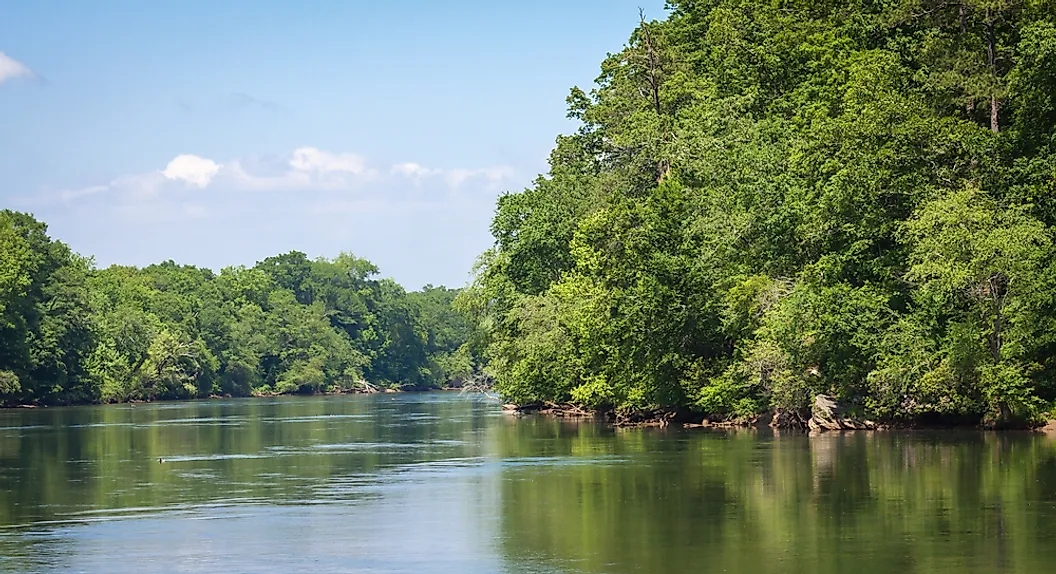
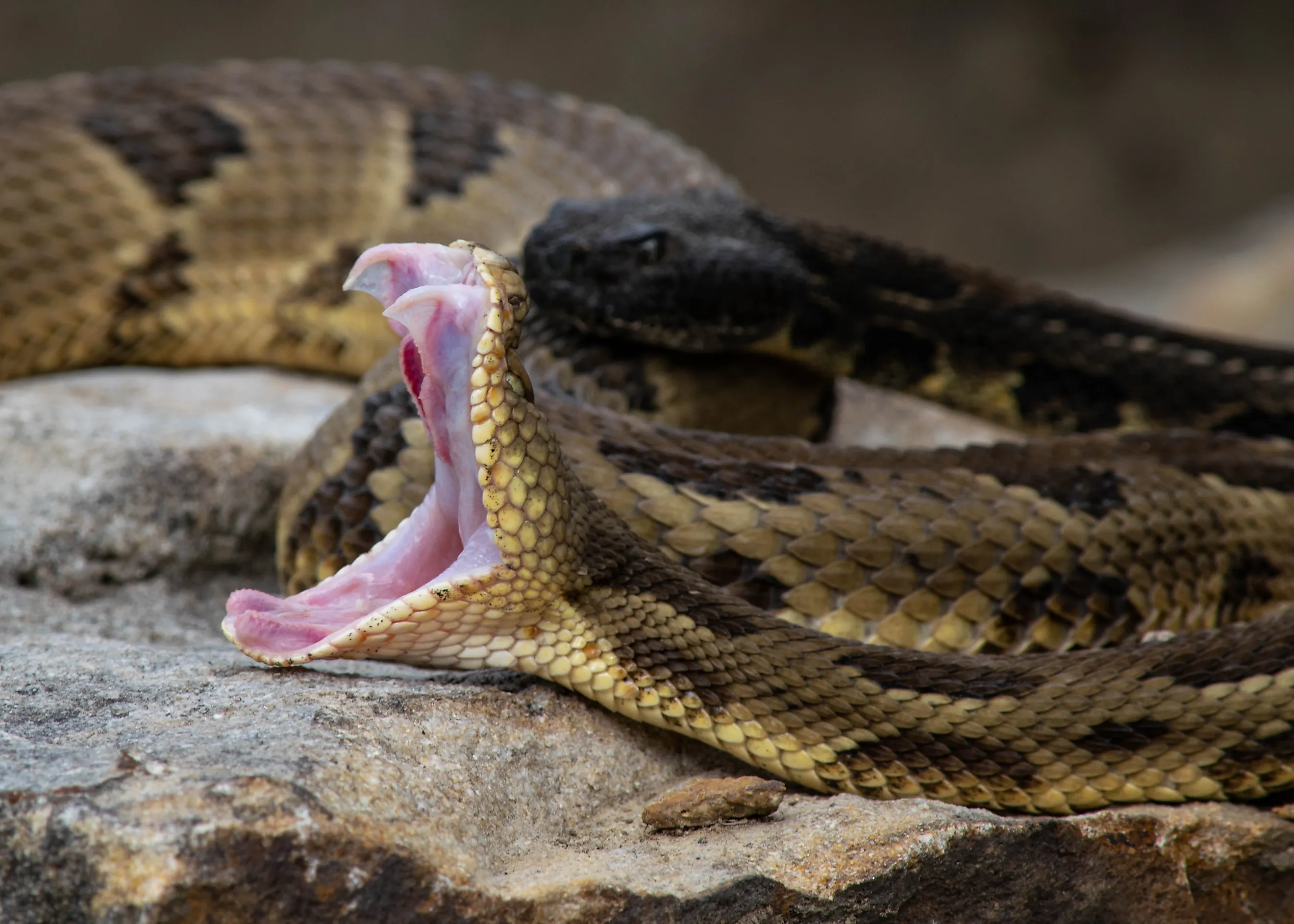
Way down yonder on the Chattahoochee, it gets hotter—and snakier—than you may have realized. Alan Jackson failed to mention serpents in his 1992 ode to this muggy river, which literally, and metaphorically, snakes from north to south Georgia for about 430 miles. It begins in the North Georgia mountains, nourishing the Chattahoochee National Forest and sheltering high-altitude herps, such as the Ring-necked Snake (Diadophis punctatus) and the Timber Rattlesnake (Crotalus horridus).
Continuing southwest to Metro Atlanta, the Chattahoochee River nourishes more than 40 species of reptiles, over half of which are snakes, as part of the Chattahoochee River National Recreation Area. From there, it finds and becomes the Georgia-Alabama border as it flows southward through multi-snake, multi-state oases like Lake Harding and Walter F. George Lake (also known as Lake Eufaula) before terminating in super-snaky Lake Seminole on the Florida-Georgia line.
Lake Allatoona

While most snakes live near water, few live in water. The most common of the uncommon aquatic species is the aptly named common watersnake (Nerodia sipedon). Non-venomous but often mistaken for the venomous Cottonmouth, the common watersnake, unlike the Cottonmouth, is prevalent in North Georgia, especially around Lake Allatoona. A 12,000-acre reservoir built on the Etowah River, Allatoona provides passage for the common water snake and other species that occasionally enter the water. Although many prefer land, virtually all snakes can swim. In fact, a timber rattlesnake crossing Allatoona was recorded by a fisheries biologist in 2021.
Conversely, water snakes can also venture far from water. Besides the common watersnake and Timber Rattler, Allatoona, along with adjoining Red Top Mountain State Park, supports the Gray Rat Snake (Pantherophis spiloides), North American Racer (Coluber constrictor), Common Garter Snake (Thamnophis sirtalis), Eastern Hognose Snake (Heterodon platirhinos), Eastern Copperhead (Agkistrodon contortrix), and several others.
Sweetwater Creek

Despite being a tributary of the Chattahoochee, Sweetwater Creek has enough snakes to merit a separate entry. Along its 45-mile course, which branches from its mainstem west of Atlanta, live a variety of species ranging from the common water snake and Plain-bellied watersnake (Nerodia erythrogaster) to landlovers like the Timber Rattlesnake and Eastern King Snake (Lampropeltis getula), as well as hybrid snakes that can both swim and slither.
One such semi-aquatic species is the Queen Snake (Regina septemvittata), which scours the creekbed for its favorite food: crayfish that have recently molted and are thus easier to swallow. Queens, Kings, and other Sweetwater royals tend to congregate at Sweetwater Creek State Park, a 2,549-acre preserve with a 215-acre lake near the confluence of the Chattahoochee.
Lake Oconee

Georgia has five species of designated "water snakes." Of those, it is the Brown water snake (Nerodia taxispilota), not the common water snake or plain-bellied water snake, that loves Lake Oconee. Sure, the latter kinds have been spotted near Oconee, but the Brown water snake is especially fond of this 19,000-acre central Georgian reservoir. Beneath its surface and along its banks, the snake seeks prey such as frogs, crayfish, and fish—particularly catfish.
Lake Oconee is enmeshed in the Oconee National Forest, which is part of the greater Chattahoochee-Oconee National Forest that spans about 867,000 acres. Naturally, it houses a ton of terrestrial snakes, including the DeKay's brown snake (Storeria dekayi), rough green snake (Opheodrys aestivus), eastern rat snake (Pantherophis alleghaniensis), and red-bellied snake (Storeria occipitomaculata).
Savannah River

Rounding out Georgia's water snakes are the Banded Water Snake (Nerodia fasciata) and the Florida Green Water Snake (Nerodia floridana), both of which occupy the Savannah River. Flowing for more than 300 miles as the boundary between Georgia and South Carolina, the Savannah shelters said species around the border city of Augusta. This sheltering is crucial for the Florida Green Water Snake, which is imperiled in both Savannah-bound states. Of course, the river supports many more snakes along its course, especially where it opens into water bodies like Clarks Hill Lake (also known as Lake Strom Thurmond) and Lake Hartwell. Some snakes even chill near the Atlantic Ocean, where the Savannah River terminates.
Besides water snakes and terrestrial snakes, the Savannah claims several species that are considered at least partly aquatic. They include the Rainbow Snake (Farancia erytrogramma), Mud Snake (Farancia abacura), and the aforementioned cottonmouth, which actually comprises two species: Northern Cottonmouth (Agkistrodon piscivorus) and Florida Cottonmouth (Agkistrodon conanti). Only the former is common on the Savannah, while the latter resides, alongside many other envenomators, in the last of our snaky Georgian water bodies.
Okefenokee Swamp

The Florida Cottonmouth is one of five venomous snake species known to inhabit the Okefenokee Swamp, a nearly 440,000-acre wetland located in southeast Georgia and northeast Florida. The other four snakes common here are the Timber Rattlesnake, Pygmy Rattlesnake (Sistrurus miliarius), Eastern Diamondback Rattlesnake (Crotalus adamanteus), and Eastern Coral Snake (Micrurus fulvius). Only the Northern Cottonmouth and Eastern Copperhead are exclusive to elsewhere in the state.
Although Georgia may seem like a heaping bowl of danger, roughly 85% of Georgian snake species are harmless, which is evident in the Okefenokee. The swamp is protected mainly by the Okefenokee National Wildlife Refuge, which contains around 37 species of snakes, 32 of which are non-venomous. Such non-venomous snakes include the Rough Earth Snake (Virginia striatula), Scarlet Snake (Cemophora coccinea), and Corn Snake (Pantherophis guttatus).
Snakes In Georgia
Georgia's surplus water bodies support surplus serpents. Nearly all 47 species of snakes in the state are nourished by at least one of the aforementioned bodies of water. Whether you love or hate snakes, keep the Chattahoochee River, Lake Allatoona, Sweetwater Creek, Lake Oconee, the Savannah River, and Okefenokee Swamp on your mind as you travel through Georgia. And if you do see a snake at one of those sites, give it space to keep Georgia's ecosystem balanced, as support is mutual between the stream and the serpent.