10 Largest US Lakes By Volume
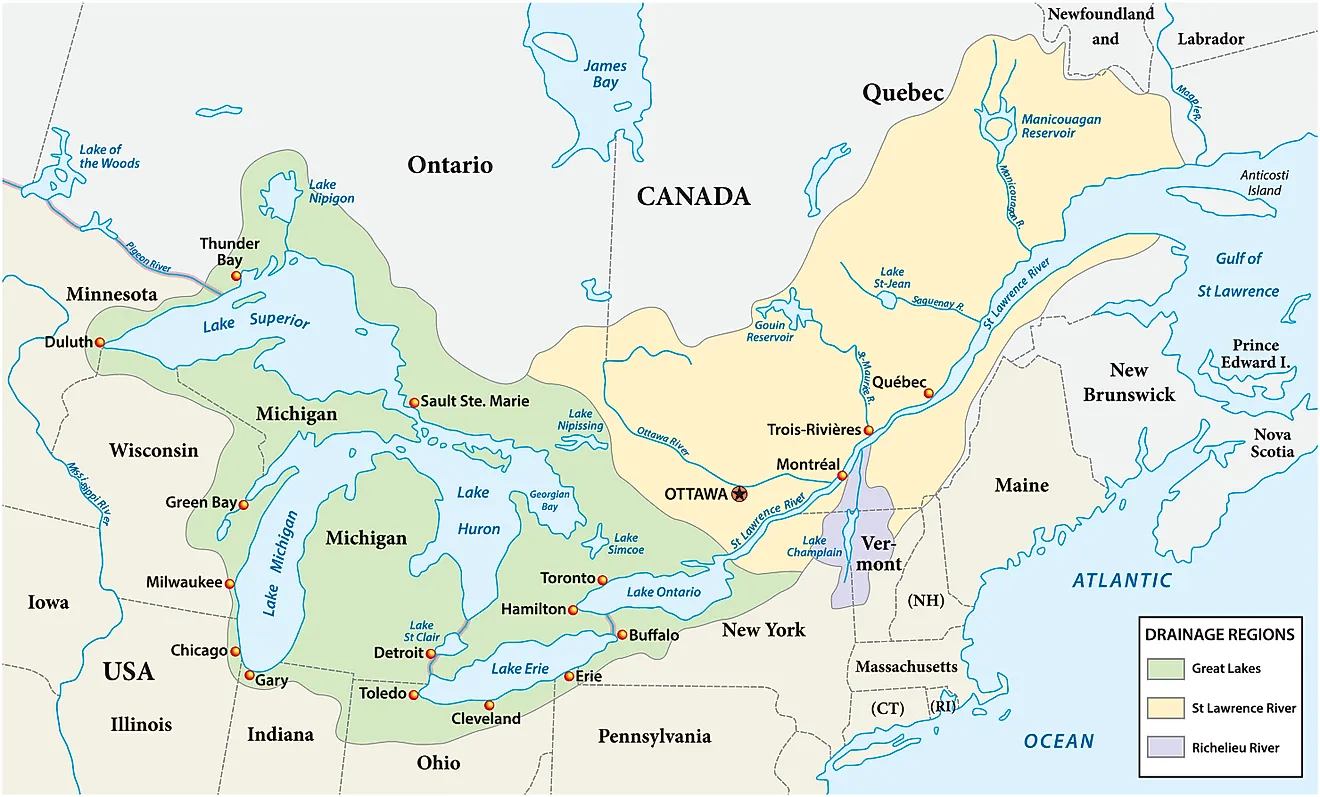
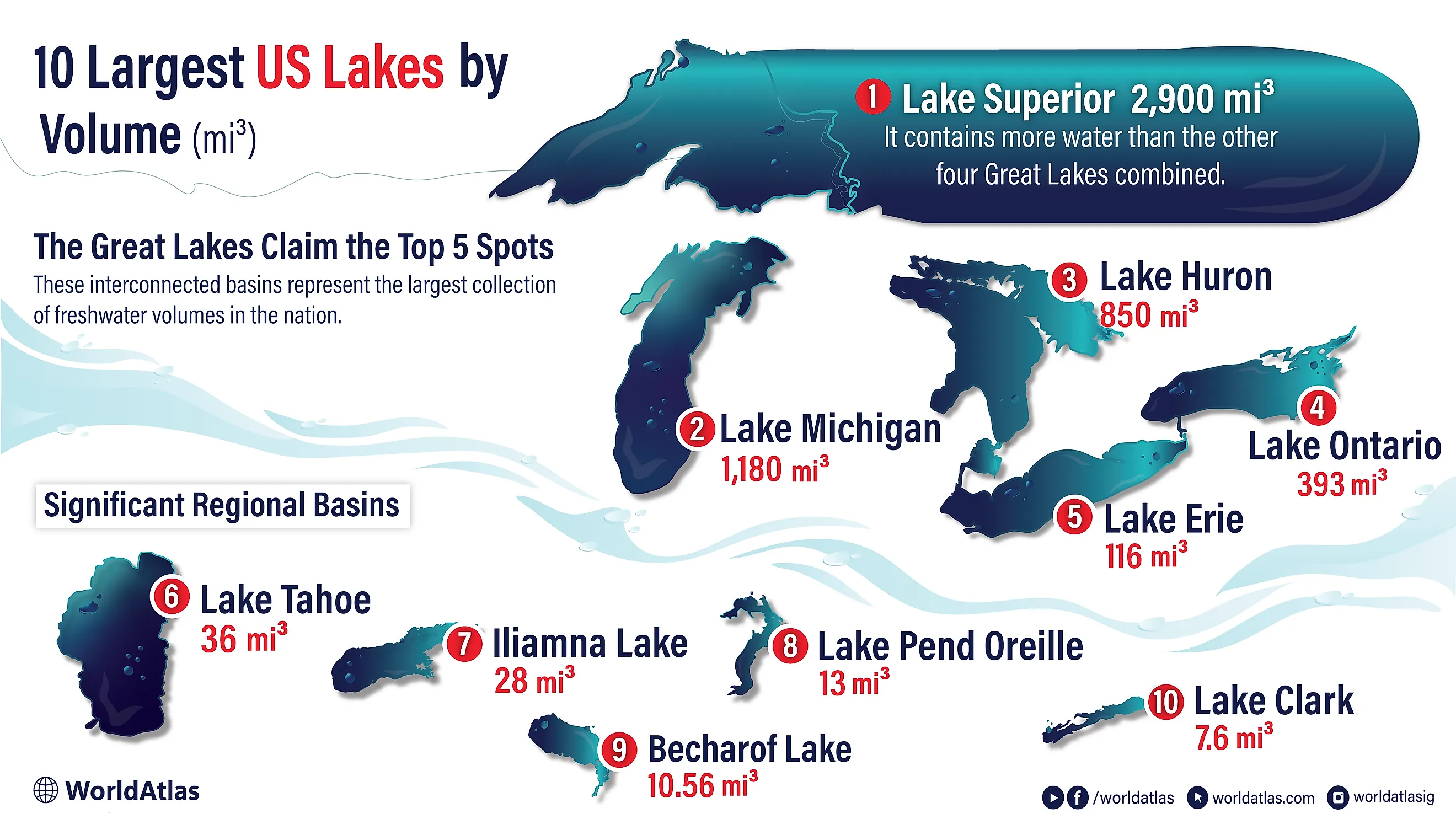
The United States is packed with lakes, well over 100,000 of them. Some lakes sprawl for miles yet stay relatively shallow, while others drop so deep they hold an almost unbelievable amount of water. That’s why this list ranks lakes by volume, and the top of the chart is dominated by the Great Lakes heavyweights. Lake Superior towers over everything else in the US by sheer water held, with Lake Michigan close behind. Then comes Lake Huron, another freshwater giant that rounds out the top three and helps explain why this region is in a category of its own.
Beyond those headliners, the list gets even more interesting: a handful of deceptively deep western lakes and several massive, remote Alaskan waters crack the top ten thanks to depth, scale, and relatively untouched basins. Let’s take a look at the 10 largest by volume.
10 Largest US Lakes By Volume
| Rank | Lake | States | Volume (mi3) |
|---|---|---|---|
| 1 | Lake Superior | Michigan, Minnesota, and Wisconsin | 2,900 |
| 2 | Lake Michigan | Illinois, Indiana, Michigan, Wisconsin | 1,180 |
| 3 | Lake Huron | Michigan | 850 |
| 4 | Lake Ontario | New York | 393 |
| 5 | Lake Erie | Michigan, New York, Ohio, Pennsylvania | 116 |
| 6 | Lake Tahoe | California, Nevada | 36 |
| 7 | Iliamna Lake | Alaska | 28 |
| 8 | Lake Pend Oreille | Idaho | 13 |
| 9 | Becharof Lake | Alaska | 10.56 |
| 10 | Lake Clark | Alaska | 7.6 |
1. Lake Superior (Michigan, Minnesota, and Wisconsin) - 2,900 mi3

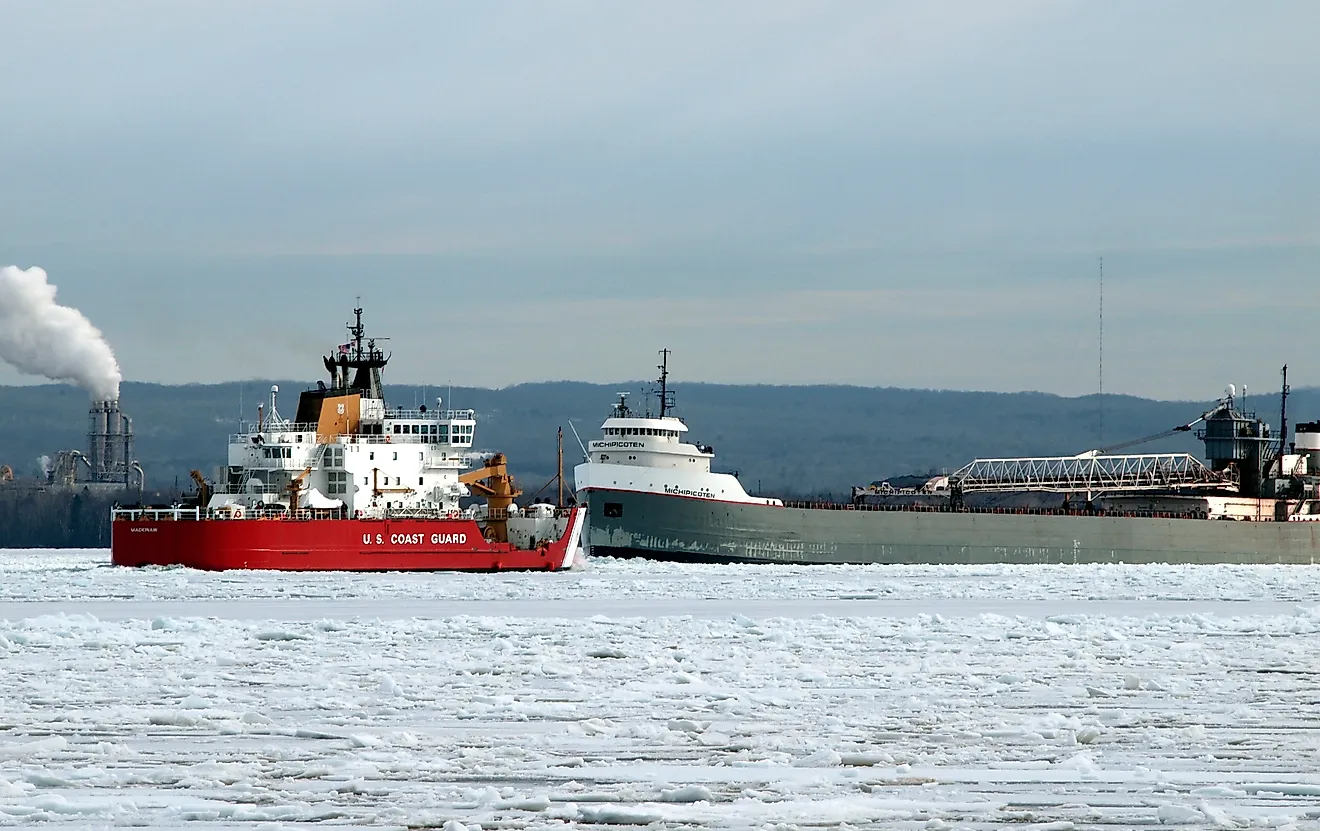
“Superior” is a fitting description of the largest-by-volume lake in the U.S.: holding a whopping 2,900 cubic miles (12,088 km3) of water, it is nearly three times the size of the next-largest Great Lake. That’s so much water that it would take 191 years to empty the lake if water were to be drained at its current rate without any water entering. It's so much water that it accounts for about 10% of the entire world's freshwater supply not bound up in icebergs. It could cover the entirety of the Americas in almost a foot of water if it was spread across the continents.
More than that, it has millennia of history, with plenty of artifacts, specially engineered human settlement evidence, and pictographs being found along its immense shoreline. Mineral deposits around the lake, natural harbors, and remote areas with beautiful scenery have made mining, shipping, and recreation major industries around the lake, which borders three U.S. states to the south and Ontario to the north. Its scale is mind-blowing; its Ojibwe name means "Great Sea," and of course its modern name of "Superior" is directly related to its incredible size.
2. Lake Michigan (Illinois, Indiana, Michigan, Wisconsin) - 1,180 mi3

By virtue of its proximity to major cities like Chicago and Milwaukee, Lake Michigan is one of the best-known of the Great Lakes: if you’ve ever seen a photo of the Chicago skyline, you’ve seen Lake Michigan. What you likely haven’t seen is just how much water it holds, to the tune of 1,180 cubic miles (4,918 km3). This makes Lake Michigan, the only Great Lake located entirely within the U.S., the second-largest of the five by volume. Depending on who you ask, it's even larger. This is because Lake Michigan and Lake Huron are tied together by the Straits of Mackinac, making them geologically one enormous lake. What is called Lake Michigan-Huron is the largest freshwater lake in the world by surface area. Even without this tag-team, however, Lake Michigan is undeniably huge. Because so many major industrial cities are located around its shores, Lake Michigan handles extensive shipping and transportation.
3. Lake Huron (Michigan) - 850 mi3

Lake Huron is the third-largest U.S. lake by volume, with 850 cubic miles (3,543 km3) of freshwater. It’s the second-largest of the Great Lakes by surface area, forming the border between Michigan and the Canadian province of Ontario.

Lake Huron is most notable for the tens of thousands of islands, especially those in its northern region, many of which, like Michigan’s famous Mackinac Island, are major tourist attractions. The legends of its thousands of shipwrecks, combined with its beautiful summer weather, fuel recreational diving expeditions as well. Fishing, lumbering, and shipping have historically been important industries focused upon Lake Huron.
4. Lake Ontario (New York) - 393 mi3

Sandwiched between northern New York and southern Ontario in Canada, Lake Ontario holds 393 cubic miles (1,638 km3) of water. Though it’s the smallest Great Lake by surface area, it’s deeper both on average and at maximum depth than Lake Erie, hence its higher volume. Its industrial importance is not as pronounced as that of Lake Erie, but it is still an important regional economic driver, as it connects to the St. Lawrence River and hence to the Atlantic Ocean. Overfishing has ended its commercial fishing opportunities, but it remains a recreational fishing location across its shores, and contains an enormous National Marine Sanctuary, which covers areas spiritually sacred to the Haudenosaunee Confederacy.
5. Lake Erie (Michigan, New York, Ohio, Pennsylvania) - 116 mi3

Even the smallest of the five Great Lakes dwarfs any other U.S. lake outside that group by volume. Lake Erie holds 116 cubic miles (484 km3) of water. It’s no wonder Lake Erie has played a vital role in shipping and transportation for centuries, and continues to even today. Most United States children can recall at least the chorus of the folk song "Low Bridge," harkening to the mule-barge era of the economically vital Erie Canal, even if they no longer remember what it commemorates.

Even with centuries of development, Lake Erie remains an important habitat for birds and fish. It provides more fish for the commercial market than any of the other Great Lakes, and provides drinking water to roughly 12 million people. Like most of the Great Lakes, it acts as a water border with Canada.
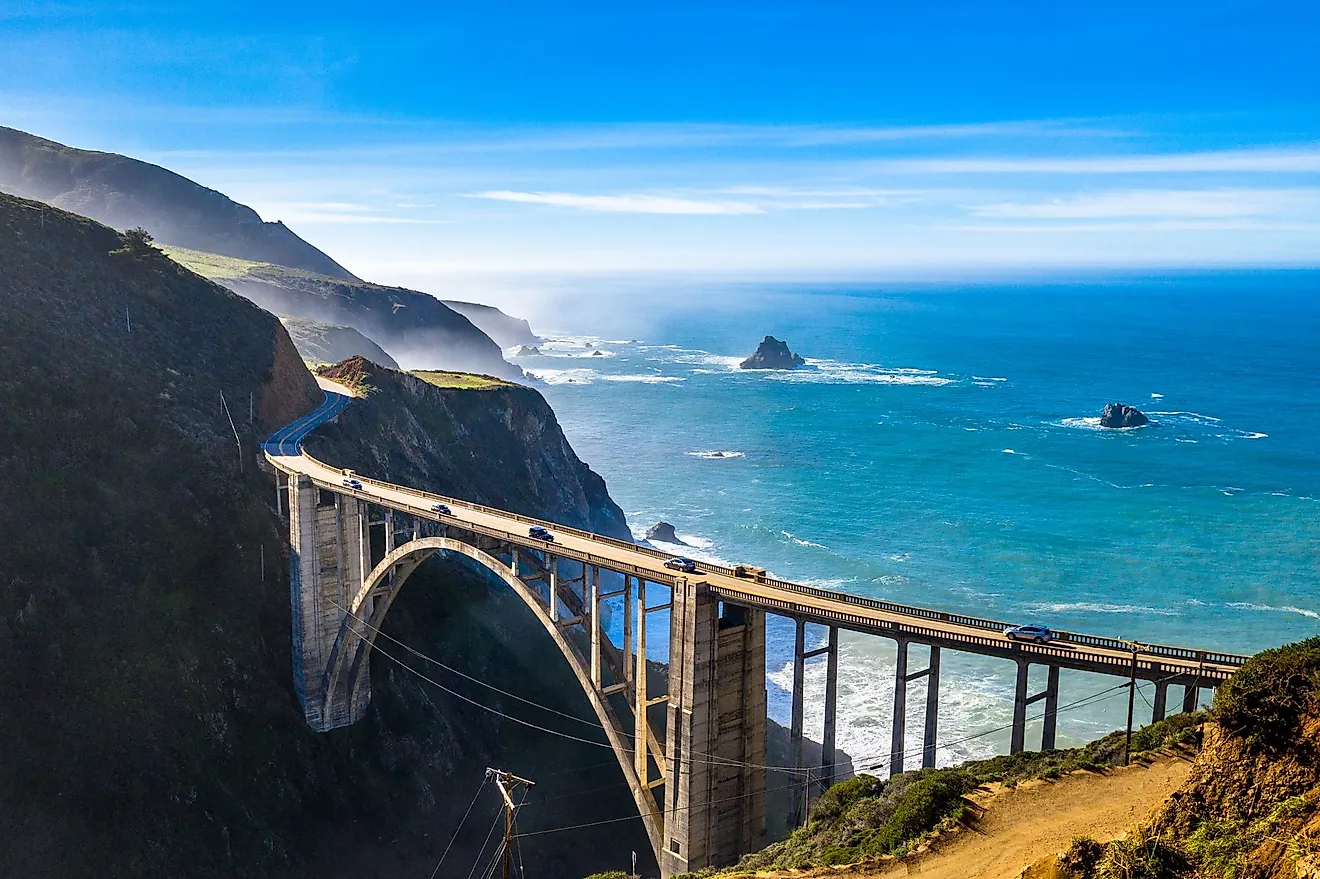
6. Lake Tahoe (California, Nevada) - 36 mi3

Outside of the Great Lakes, the largest lake in the United States by volume is Lake Tahoe on the border of northeastern California and western Nevada. But it’s not the 36 cubic miles (150.7 km3) of water that most people know Lake Tahoe for. Unique among the five lakes ranked below the Great Lakes on this list, Lake Tahoe is highly accessible, and extremely popular with travelers and outdoor enthusiasts for its brilliant blue color, its proximity to major ski resorts, and its abundant aquatic recreation activities. Unlike the other lakes in the lower half of this list, Lake Tahoe drives a robust tourism economy, and its recreation opportunities are year-round, generating major development around it, and a highway system that runs its entire circumference.
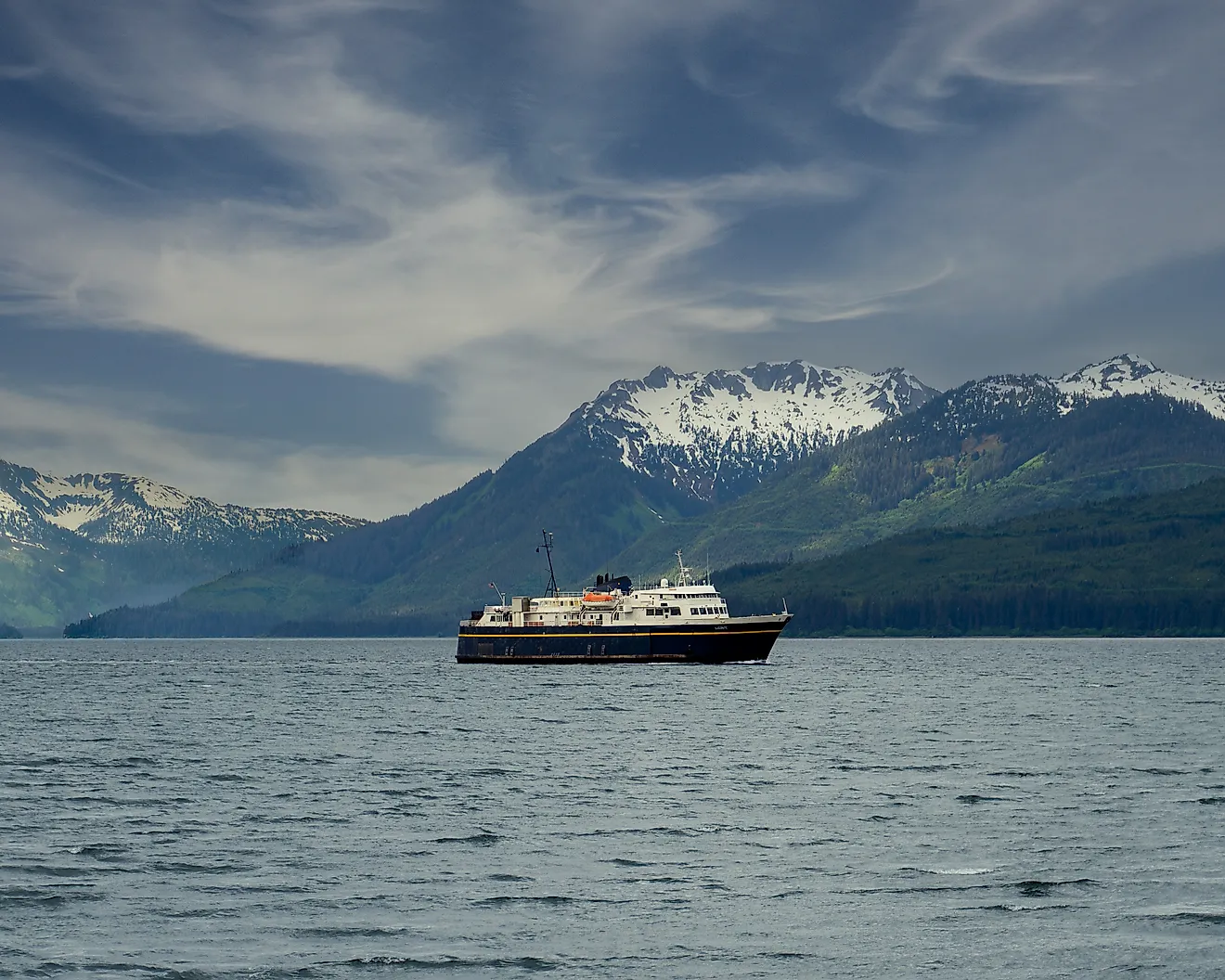
7. Iliamna Lake (Alaska) - 28 mi3

Alaska’s largest lake is unsurprisingly one of the largest in the nation outside of the Great Lakes. Iliamna Lake, at a volume of about 28 cubic miles (116.1 km3), is by far the state’s highest-volume lake, and unlike the other Alaskan lakes on this list, it’s partially accessible by road and a little bit less remote. That said, this rugged and isolated lake in southwestern Alaska is also unusually pristine, with a rare population of freshwater seals and excellent fishing opportunities, including rainbow trout and red salmon, of which Lake Iliamna forms the nursery for the largest run in the world. The lake even contains its own legendary local cryptid, the Iliamna Lake Monster, which some believe might be an extremely northern population of white sturgeon, or even a Pacific sleeper shark.
8. Lake Pend Oreille (Idaho) - 13 mi3

Leaving Alaska behind, we arrive next at Lake Pend Oreille in northwestern Idaho, which is the 8th largest U.S. lake by volume, with 13 cubic miles (54.2 km3) of freshwater. While it's not even in the top 30 largest lakes in the U.S. by area, it's the deepest lake in the state, and one of the deepest major lakes in the U.S. at 1,158 feet (353 metres) deep. This depth is what gives it such incredible volume, even if it can't be seen from above. Like some of the more remote lakes on this list, its primary human significance is recreational: many towns and a highway line the northern end of the lake, and its many lakeside beaches are used for regular summer activities.

It’s known for its extremely healthy fish and bird populations and is popular with anglers, boaters, and campers, although all the human activity means it has more invasive species, like walleye and lake trout, than some of the more remote lakes only accessible by plane.
9. Becharof Lake (Alaska) - 10.56 mi3

Even further to the west in southern Alaska than Lake Clark, you’ll find the state’s second-largest lake in Lake Becharof. Holding 10.56 cubic miles (44.0 km3) of water, it’s also an important ecological and recreation site in a remote corner of the state where the Aleutian Range meets the sea. Located within the Becharof National Wildlife Refuge, it’s mostly known to out-of-staters as an excellent place to fish for salmon and other freshwater fish. In fact, Becharof is one of the biggest sockeye salmon factories in the world, producing the second-largest run in the world, which in turn feeds one of the highest brown bear concentrations on Earth. Much like Lake Clark, it isn’t accessible by road, and visitors must charter a flight in, which is often the best way to get a sense of this behemoth's true size.
10. Lake Clark (Alaska) - 7.6 mi3

The largest U.S. state is unsurprisingly home to some of the largest lakes by volume outside of the Great Lakes, one of which, at 7.6 cubic miles (31.7 km3), is Lake Clark. The namesake of the similarly massive U.S. national park, Lake Clark is located in southwestern Alaska and known for its vibrant turquoise color, bear population, and outdoor recreation opportunities. In a remote location with minimal road access, Lake Clark remains at the center of a very healthy ecosystem and its importance is largely ecological.
The largest lakes by volume in the U.S. range in size, scale, and location, but all of them play critical roles in maintaining ecosystem balance, supporting human life, or even both. The Great Lakes alone hold over 20% of the world’s liquid freshwater, and countless other lakes of smaller size by volume provide habitats for wildlife, recreation opportunities, and even much-needed water resources. So although some lakes are so far-flung we might not ever think about them, they have a part to play in our world that cannot be overlooked.