Achilles
Achilles knew he would die at Troy. According to the prophecy his mother gave him, he had two possible futures: stay home and live a long life forgotten by history, or sail to Troy, win eternal fame, and die young. He chose Troy. That choice, and the rage that came with it, gave Western literature its first great tragic hero. The son of the sea-nymph Thetis and King Peleus, Achilles was raised by the centaur Chiron and led the elite Myrmidon warriors to Troy, where the events of Homer's Iliad unfold across roughly fifty days of the war's tenth and final year.

The Iliad's very first word is μῆνιν (mēnin), meaning rage, and that rage belongs to Achilles. Homer's poem covers the consequences of his anger: Achilles withdraws from the Greek army, the Trojans push the Greeks to the edge of disaster, his closest companion Patroclus dies wearing his armor, and Achilles returns to the field to kill Hector and refuse the body burial rites. The story has carried for nearly three thousand years because Achilles is both unstoppable and ruined, the warrior who wins everything by losing everything that matters.
Historical and Mythological Context

The Trojan War, traditionally dated by ancient Greek chronographers to around 1184 BCE, sits at the boundary between mythology and Bronze Age history. Modern archaeology has identified the city of Troy with the ruins at Hisarlik in northwestern Turkey, with the destruction layers known as Troy VI and VII often suggested as candidates for the war Homer described. The conflict was set off, according to legend, by Paris of Troy carrying off Helen, the wife of King Menelaus of Sparta. Menelaus and his brother Agamemnon raised a coalition of Greek kingdoms and laid siege to Troy for ten years.
Homer's Iliad is the most influential surviving account, but only a fragment of the broader story. The poem covers a few weeks near the end of the tenth year, leaving most of the war (including the Trojan Horse and the death of Achilles himself) to other epics. Some of those, including the lost Aethiopis, Little Iliad, and Iliou Persis, formed what scholars call the Epic Cycle. Plays by Aeschylus and Euripides (notably Iphigenia in Aulis) and Virgil's Aeneid filled in additional pieces. Where Hercules represents superhuman strength and Odysseus stands for cunning, Achilles holds the third corner of the Greek heroic ideal: peerless skill in battle joined to a fatal inability to back down.
Birth and Early Life

The prophecy at Achilles' birth split his life into two possible futures, and his mother Thetis spent his childhood trying to give him a third option. The most famous version of her efforts (the dipping of the infant Achilles into the River Styx, leaving only the heel she gripped vulnerable) does not actually appear in Homer. The earliest extant source for the Styx-and-heel detail is the Roman poet Statius, writing in his unfinished Achilleid in the late first century CE, more than seven hundred years after the Iliad. In Homer's version, Achilles is simply mortal, and his death is fated rather than dependent on a single anatomical weakness.
What the older tradition does emphasize is his upbringing under the centaur Chiron, the same teacher who trained Jason and Asclepius. Chiron taught Achilles the warrior's skills (combat and strategy) alongside the healer's (medicine and the use of herbs). By the time the call came to join the Greek expedition to Troy, Achilles already had a reputation, and his mother knew the cost of letting him answer it.
Achilles in the Trojan War

The Iliad begins with Achilles refusing to fight. In Book 1, Agamemnon, the Greek high king, claims Achilles' war prize Briseis after being forced to give up his own captive Chryseis. To Agamemnon, this is a redistribution of property; to Achilles, it is a public attack on his timē, the Greek concept of honor that defined a warrior's worth. Achilles withdraws to his ships with the Myrmidons and prays for the Greeks to lose ground without him. They do.
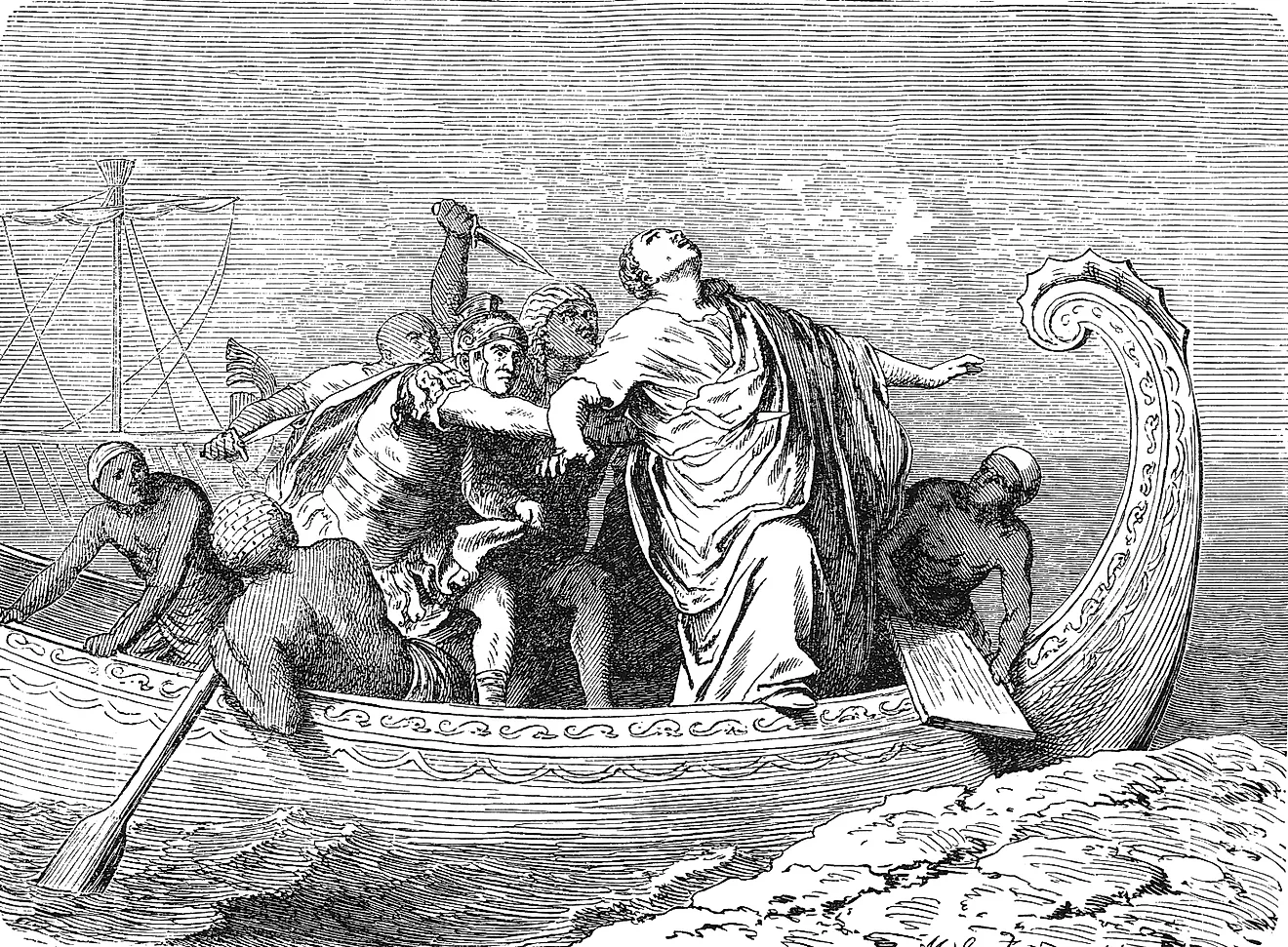
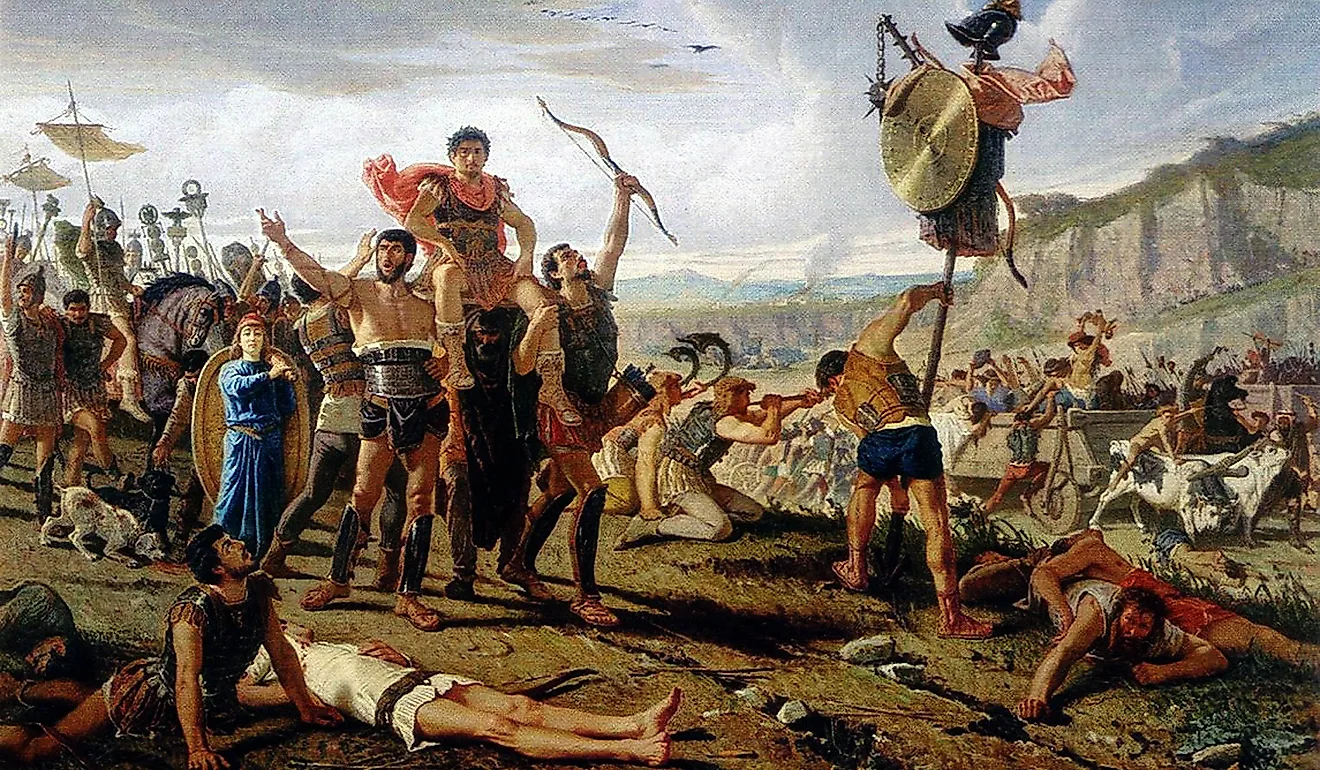
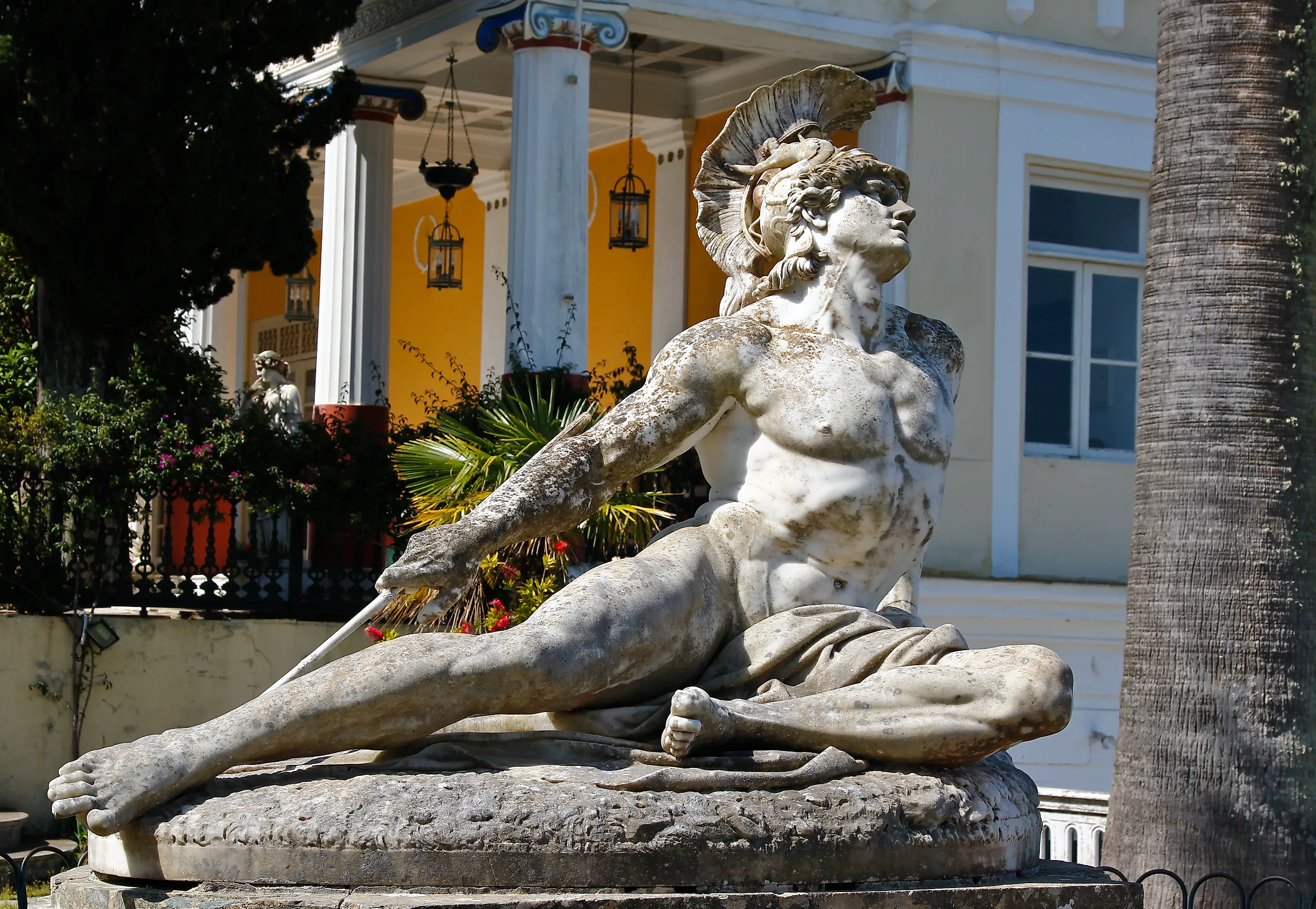
The turn comes when Patroclus, Achilles' closest companion, borrows his armor and leads the Myrmidons into battle to save the Greek line. Hector, Troy's greatest fighter, kills Patroclus and strips the armor from his body. Achilles, undone by grief, accepts new armor forged by the god Hephaestus (Book 18) and returns to combat with no intention of stopping. He kills Hector outside the walls of Troy and lashes the corpse to his chariot, dragging it around the city. He keeps the body for twelve days. The poem ends in Book 24 with King Priam, Hector's father, slipping into the Greek camp by night to beg for his son. Achilles agrees, returns the body, and grants Troy the time it needs to bury its fallen prince. His own death, foretold but never described in the Iliad, was covered in the lost Aethiopis, where Paris kills him with an arrow guided by the god Apollo.
Character Analysis and Symbolism

What makes Achilles tragic is not that he fails, but that he wins on terms he cannot live with. He has the prophecy. He has the choice. He picks the short, glorious life, then discovers that the system of honor he is fighting for can humiliate him at any moment, and that the friend he is fighting alongside can die wearing his armor. His rage in the second half of the Iliad is what happens when a man who has made peace with his own death is forced to watch someone else pay the price.
The encounter with Priam in Book 24 is the moment that complicates everything. The two men, the Greek who killed Hector and the Trojan father who lost him, weep together in Achilles' tent. Achilles serves Priam a meal and lets him sleep. He has spent the entire poem refusing to be reasoned with, and now he gives back the corpse he was using to wage psychological war. The poem does not call this redemption. It calls it the moment Achilles finally sees another man's grief as the same as his own.
Achilles' Cultural Legacy

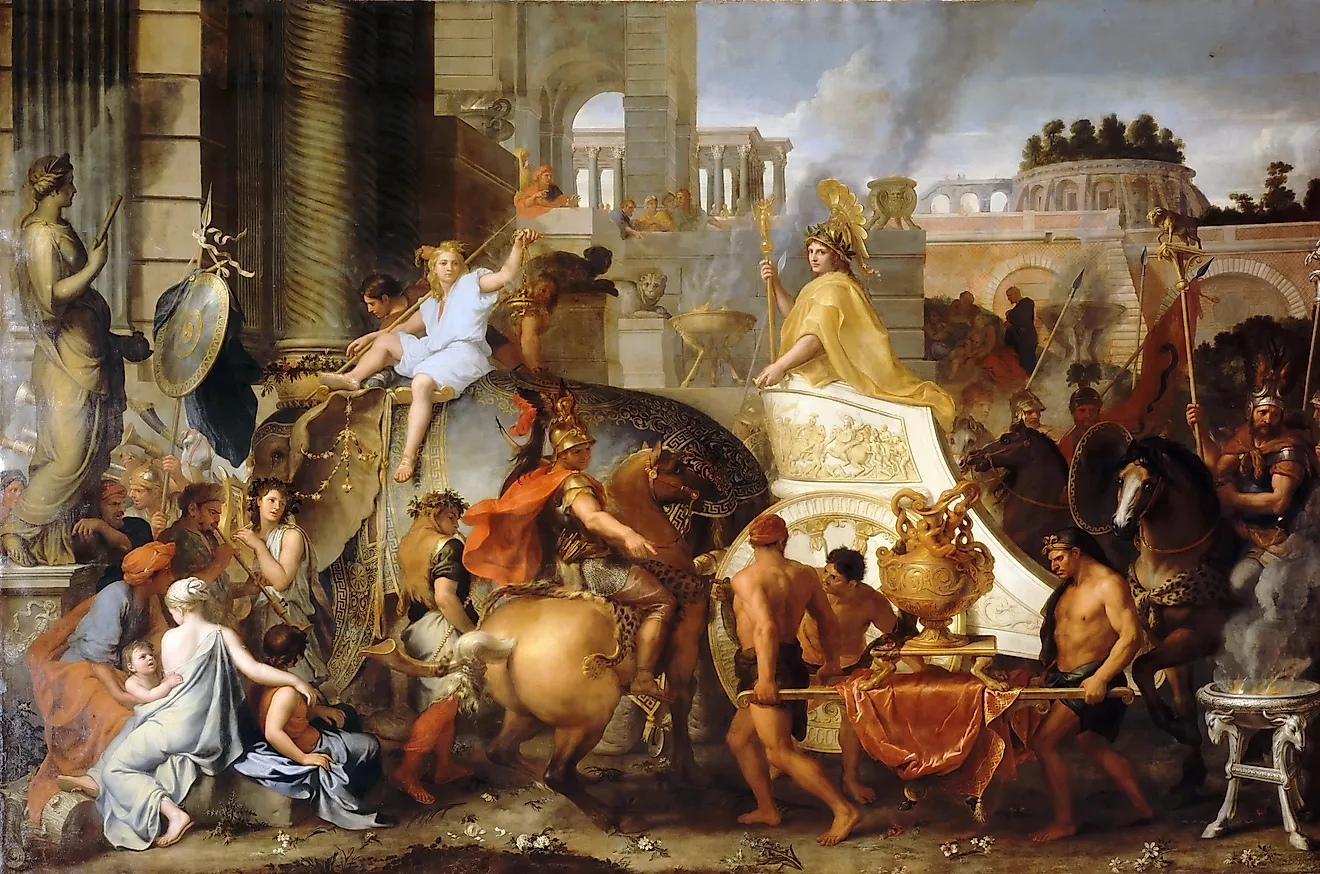
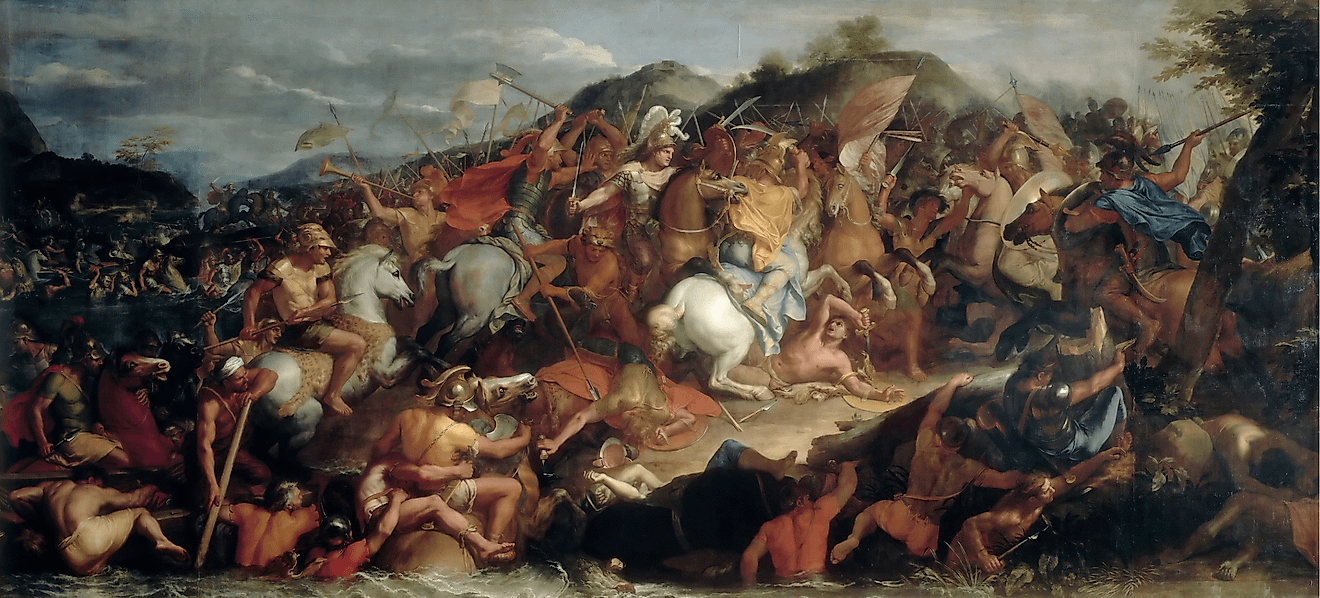
Alexander the Great is supposed to have slept with a copy of the Iliad under his pillow and built an altar at Troy to honor Achilles when he crossed into Asia. From Alexander forward, the figure has stayed in continuous circulation. Aeschylus wrote a now-lost Achilles trilogy in the fifth century BCE; Euripides put him at the center of Iphigenia in Aulis. Virgil's Aeneid uses him as the shadow over Aeneas's flight from Troy. Dante places him in the second circle of Hell in Inferno V, alongside other figures undone by lust. Shakespeare's Troilus and Cressida, written around 1602, presents Achilles as a sulking, calculating prince rather than a romantic hero, a sharp pivot from the medieval and Renaissance traditions.
Modern adaptations push in both directions. Wolfgang Petersen's 2004 film Troy, with Brad Pitt as Achilles, scrubs out the Olympian gods and plays the conflict as straight ancient warfare. Madeline Miller's 2011 novel The Song of Achilles, which won the Orange Prize for Fiction in 2012, retells the relationship with Patroclus from Patroclus's point of view. The Supergiant Games title Hades (2020) places Achilles in the underworld as a mentor figure, training the player character on the path out. Achilles even appears as a side-quest figure in Assassin's Creed Odyssey (2018), which is set in Greece during the Peloponnesian War. Each version reaches for a different part of the same story: the choice, the rage, the friendship, the death.
Why Achilles Endures
The story is almost three thousand years old and still working. Some of that is the prose: Homer's poetry survives translation in a way most ancient literature does not. Most of it is the central problem Achilles is built around. He knows the cost of his choice in advance. He makes it anyway. He gets exactly what he was promised, and it ruins him. The figure has stayed compelling because that bargain (fame in exchange for a short life and a public reckoning) keeps showing up in different forms in every generation that picks up the Iliad. Achilles is the original answer to the question of what a hero pays.