How Big Was Alexander The Great’s Empire At Its Peak?
Alexander the Great built one of the largest empires the world has ever seen, and he did it in about a decade. At its peak, it covered roughly two million square miles, or five million square kilometers, stretching from the Balkans to northwestern India. Alexander was 32 when he died, and he had never suffered a decisive defeat in a major battle. What follows is how he got there and what that empire actually looked like on the ground.
Ten Years Of Conquest

Alexander became king of Macedonia in 336 BCE, right after his father Philip II was assassinated. He spent his first two years securing the home front, fighting off Balkan tribes in the north and putting down Greek revolts in the south. Then he turned east.
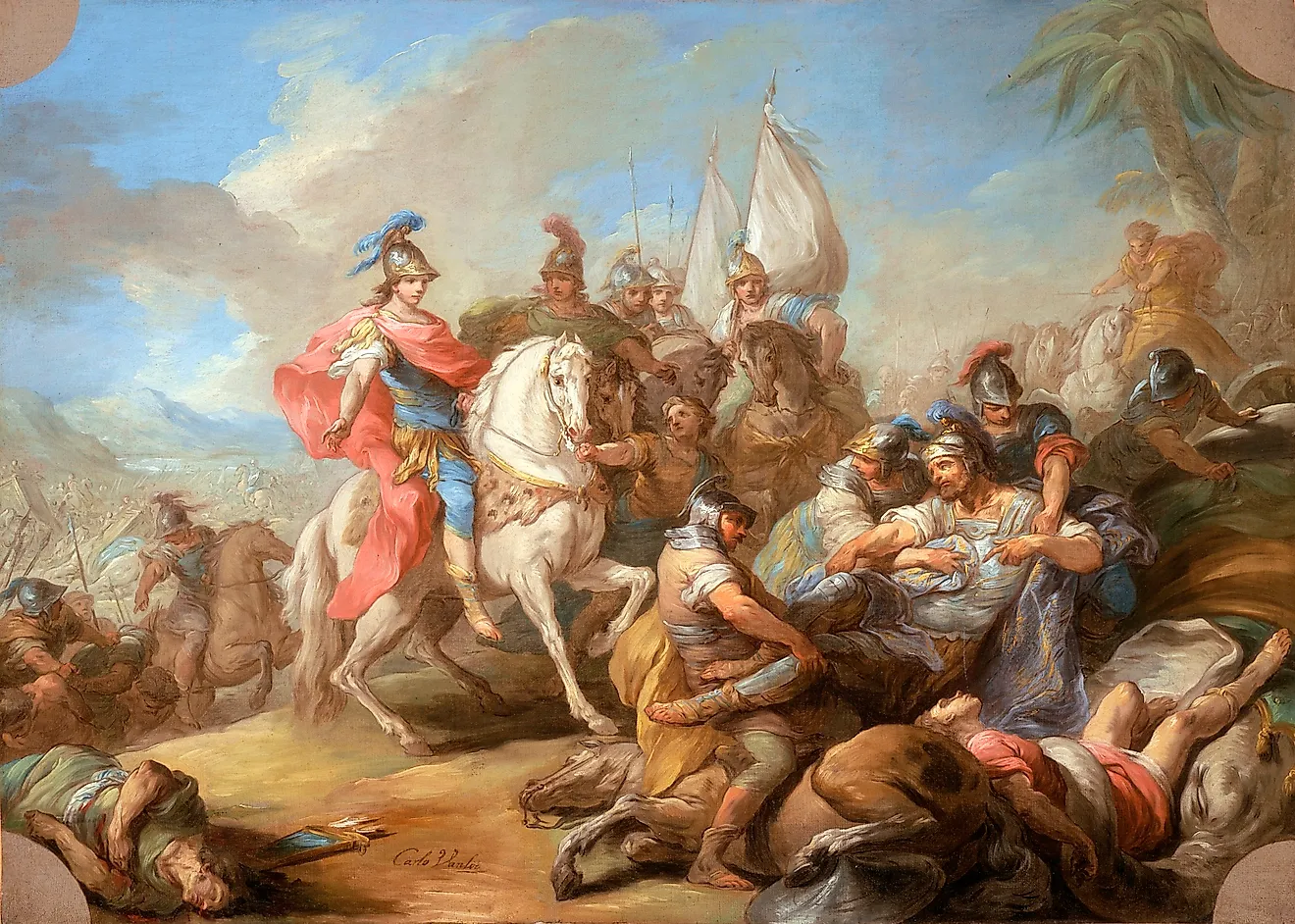
In 334 BCE, he crossed into Asia Minor to attack the Achaemenid Persian Empire. He took Anatolia, then Egypt, then Mesopotamia. The decisive battle came at Gaugamela in 331 BCE. By 330 BCE, Persia's king Darius III was dead and the empire was effectively Alexander's.
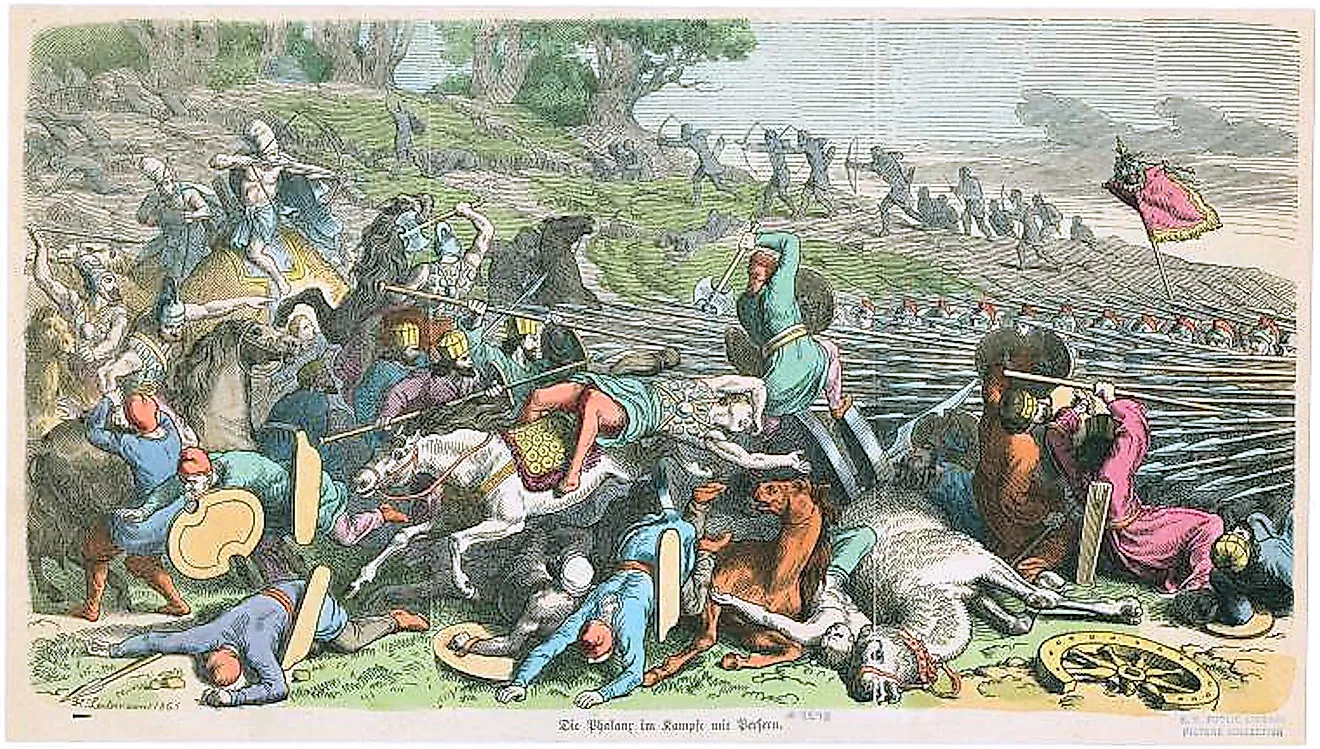
The easy part was over. In 329 BCE he pushed into Central Asia, attacking Bactria and Sogdiana in what is now Afghanistan, Uzbekistan, and Tajikistan. The terrain was brutal and local resistance was fierce. He still won. In 326 BCE he crossed into the Punjab and beat King Porus at the Battle of the Hydaspes, but his exhausted army refused to march any further. Alexander turned back. The empire would never be larger than it was at that moment.
Greece And Macedonia: The Military Engine

The empire was stitched together out of very different pieces. Macedonia and Greece ran the military side. Macedonia supplied most of the army, and the southern Greek city-states contributed troops, ships, and financial support. That early financial role faded once Egyptian and Mesopotamian wealth started flowing in.
Where Greece kept its grip was culturally. Koine Greek became the common language across the empire, and Greek architecture, philosophy, and city planning spread everywhere Alexander's armies went. That cultural layer helped create a shared framework across three continents.
Persia: The Economic And Administrative Heart

Persia was where the money was. The treasuries at Susa and Persepolis funded the later campaigns, and Mesopotamian agriculture provided a steady revenue stream. Instead of tearing down the Achaemenid system, Alexander kept most of it running. He preserved the satrapy system of provincial governors, the tax network, and the royal road infrastructure. Persian administrators kept their jobs.
The cultural fusion went just as far. Alexander took three wives from the former Persian Empire, wore elements of Persian royal dress, and organized a mass wedding at Susa in 324 BCE where roughly 10,000 of his Macedonian soldiers married Persian women. He also adopted proskynesis, the Persian practice of bowing before the king. That particular choice did not go over well with his Greek troops, but it showed how far he was willing to go to merge the two worlds.
Central Asia: The Heavily Garrisoned Frontier

Central Asia never really settled down. Even after Alexander technically conquered the region, local resistance kept flaring up, so he garrisoned it heavily. Dozens of new fortress cities, many named Alexandria, were planted across Bactria and Sogdiana to hold the territory. The region had no centralized Achaemenid-style bureaucracy to inherit, so Alexander improvised, running a patchwork of Macedonian officers, local rulers, and military governors. The payoff was strategic rather than economic. Central Asia sat on the overland trade routes between India and the Mediterranean, a role the region would hold for centuries.
Northwestern India: The Loosest Grip

India was the thinnest part of the empire. Alexander never pushed past the Punjab and Indus Valley, and he ruled through local kings rather than replacing them with Macedonians. King Taxiles (Ambhi) kept his seat at Taxila. Porus, after losing to Alexander at the Hydaspes, was reinstated and actually given more territory to administer. Since Macedonian forces never stayed long, the region's economy was never really integrated into the rest of the empire. When Alexander died three years later, his Indian holdings were the first to slip away.
Two Million Square Miles, Four Regions
At its peak, Alexander's empire spanned about two million square miles across Europe, Africa, and Asia, but it ran on four different systems at once. Greece and Macedonia supplied the army and the culture. Persia ran the bureaucracy and paid the bills. Central Asia held the frontier through military force. India was held only loosely, through deals with local kings. Alexander died in Babylon in 323 BCE at age 32 before any of it could really consolidate, and within a generation his generals had carved it into the successor kingdoms that would define the Hellenistic world for the next three centuries.