The Ancient African Kingdoms That Rivaled Rome
When historians sketch the ancient world's great powers, the map tends to center on Rome and its immediate rivals such as Persia, Parthia, and the Germanic tribes. Yet along Rome's southern frontier and across the Red Sea, three ancient African kingdoms built empires of comparable sophistication, military capability, and cultural depth. Carthage, the Kingdom of Kush, and the Aksumite Empire each, in their own era, rivaled Rome in power and influence.
Each of these kingdoms arose from distinct geographic and cultural roots, yet all three mastered the economic realities of their age. Whether it was the Mediterranean trade, the Nile corridor, or the Red Sea, these kingdoms understood that wealth and military power were inseparable, and they used both to forge civilizations that endured for centuries.
Carthage (c. 814-146 BCE)
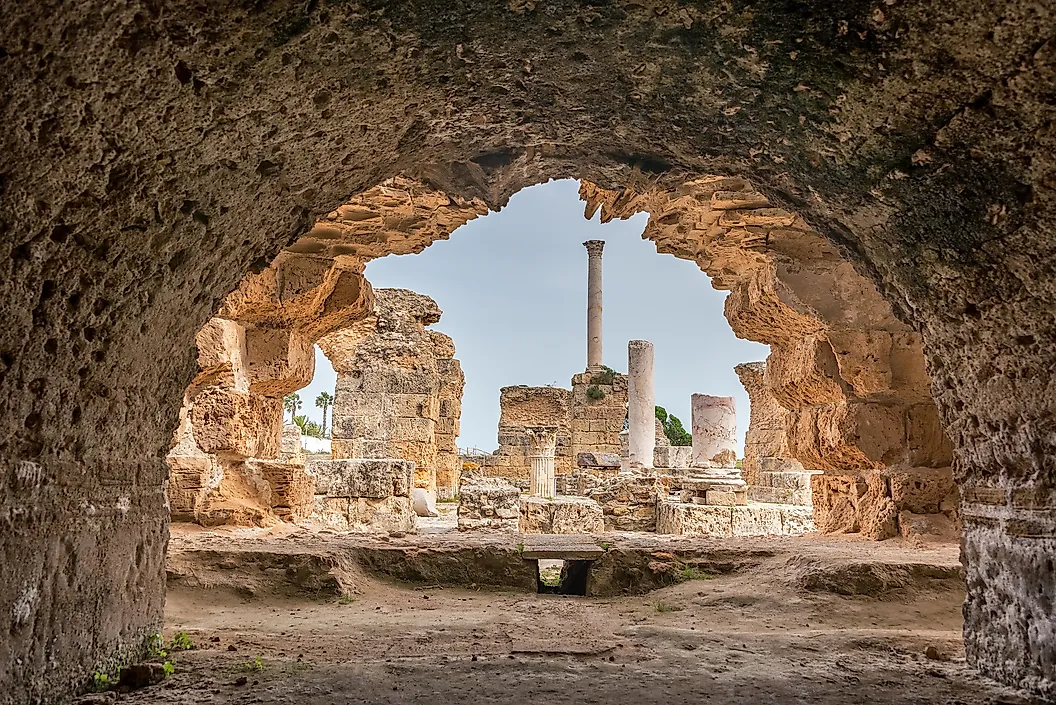
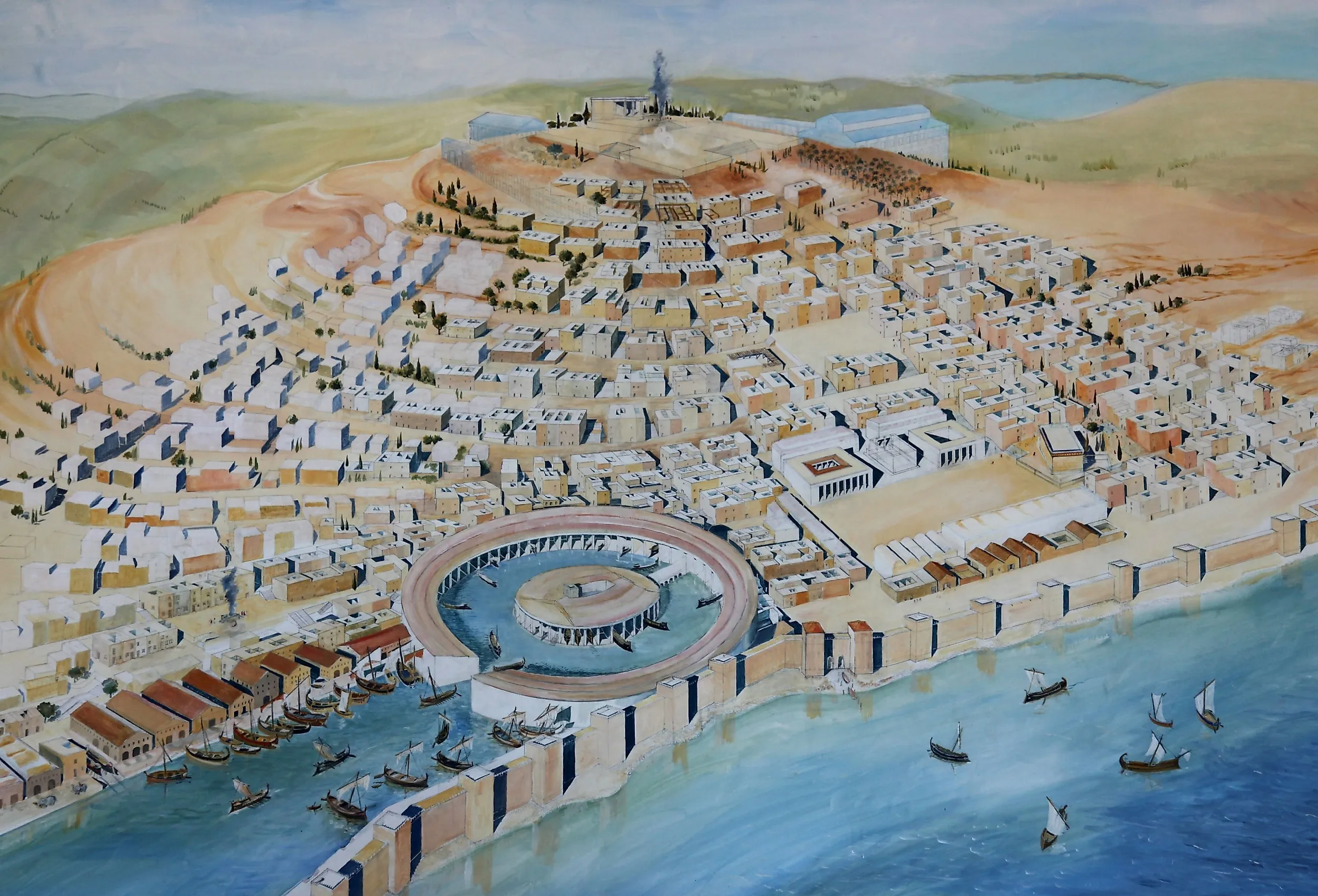
Founded on the North African coast in what is today Tunisia, Carthage began as a Phoenician trading colony linked to the city of Tyre in the Levant. The traditional founding date is 814 BCE, with archaeological evidence pointing to settlement by the late ninth or eighth century BCE. By the seventh century BCE, it had broken from its mother city, establishing its own colonies and expanding its territorial reach across North Africa, Sicily, Sardinia, and the southern Iberian Peninsula. Its government evolved from a monarchy into a republic governed by two elected magistrates called suffetes, supported by a senate of two to three hundred members. At its height, ancient sources described Carthage as possibly the wealthiest city in the world, commanding the western Mediterranean through an unrivaled naval force. The city traded in textiles, metals, wine, grain, glass, and enslaved people, and its merchants reached the Atlantic coast of Africa and Europe. A 509 BCE treaty with the young Roman Republic formally acknowledged Carthage's supremacy over the western Mediterranean sea lanes.
Carthage's confrontations with Rome took place during the three Punic Wars (264-146 BCE). In the Second Punic War, the Carthaginian general Hannibal Barca executed one of antiquity's most audacious military campaigns, crossing the Alps with war elephants and striking deep into the Italian peninsula. He annihilated Roman armies at the Trebia River, Lake Trasimene, and Cannae, where roughly 70,000 Roman soldiers died in a single afternoon. For fifteen years, Hannibal campaigned on Italian soil, and Rome came close to collapse.
The cultural legacy of Carthage outlasted even its physical destruction. Modern archaeology has revised longstanding Roman narratives, revealing a city of significant metallurgical innovation and agricultural productivity, rather than the barbaric foil of Roman propaganda. Carthage demonstrated that Africa could produce a civilization that Rome could not simply absorb.
The Kingdom of Kush (c. 1070 BCE-350 AD)
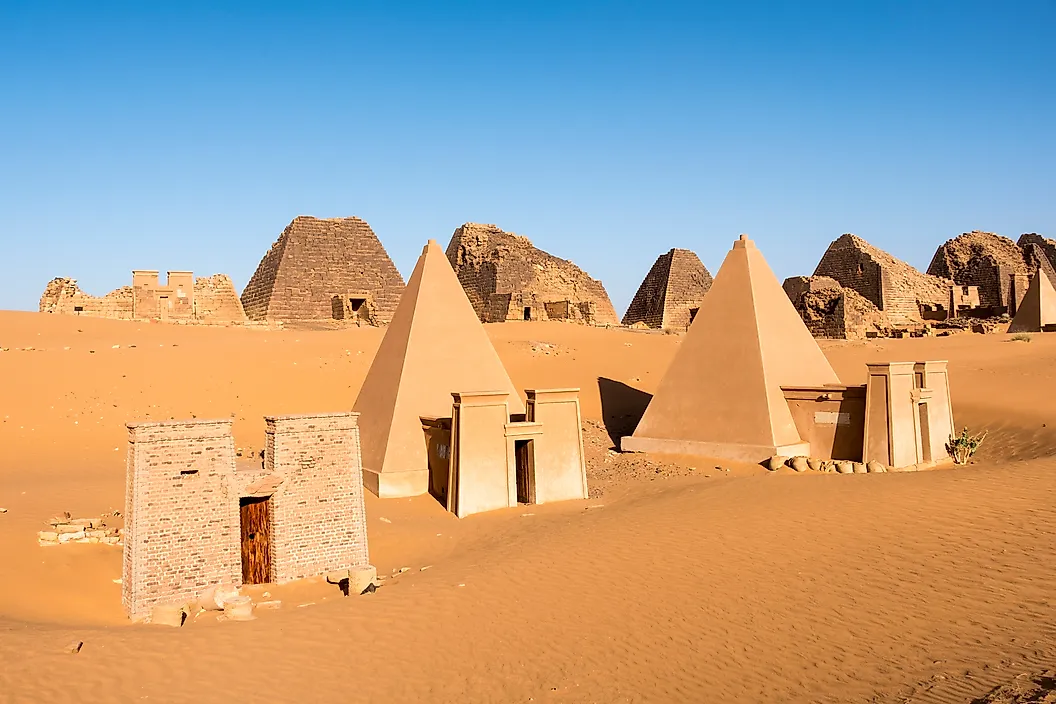
Established in the Nile Valley south of Egypt in what is now Sudan, the Kingdom of Kush had been a regional power for over a millennium before Rome arrived in Egypt. Known to Greeks and Romans as Nubia or Aethiopia, Kush built its own pyramids at Meroë, developed iron-smelting technology, traded in gold, ivory, and incense, and even ruled Egypt as the 25th Dynasty in the eighth century BCE. Its capital, Meroë, was recognized by Roman geographers as a metropolis. Kush maintained a tradition of female rule that was rare in the ancient world. These queens, called Kandakes, governed as independently as any male sovereign. When Rome seized Egypt in 30 BCE, it was one of these Kandakes who would define the relationship between the two powers.
When the Roman prefect Aelius Gallus imposed taxes on lands traditionally belonging to Kush, Kandake Amanirenas responded with force. In 24 BCE, exploiting a temporary withdrawal of Roman troops for Aelius Gallus's campaign in Arabia, she marched roughly 30,000 soldiers north and captured the Roman-occupied cities of Aswan, Philae, and Elephantine. Her forces plundered the garrisons and took Roman soldiers as slaves, including carrying off a bronze head of Augustus Caesar that was later buried beneath the steps of a Kushite temple.
Rome counterattacked under the prefect Gaius Petronius, who marched south and sacked the old Kushite religious capital of Napata, but Amanirenas refused to capitulate, and the war dragged on for four years. By 21 BCE, both sides were exhausted. Emperor Augustus, then settling affairs with the Parthian Empire in the east, granted peace terms that were broadly favorable to Kush, remitting the disputed tax and pulling the Roman frontier back toward Egypt. The peace held for nearly three centuries. Kush had done something few powers ever managed. It faced Rome on the battlefield and negotiated from a position of strength. The kingdom's broader legacy includes advanced iron production at Meroë that influenced metallurgical practices across sub-Saharan Africa for generations.
The Aksumite Empire (c. 100-940 AD)
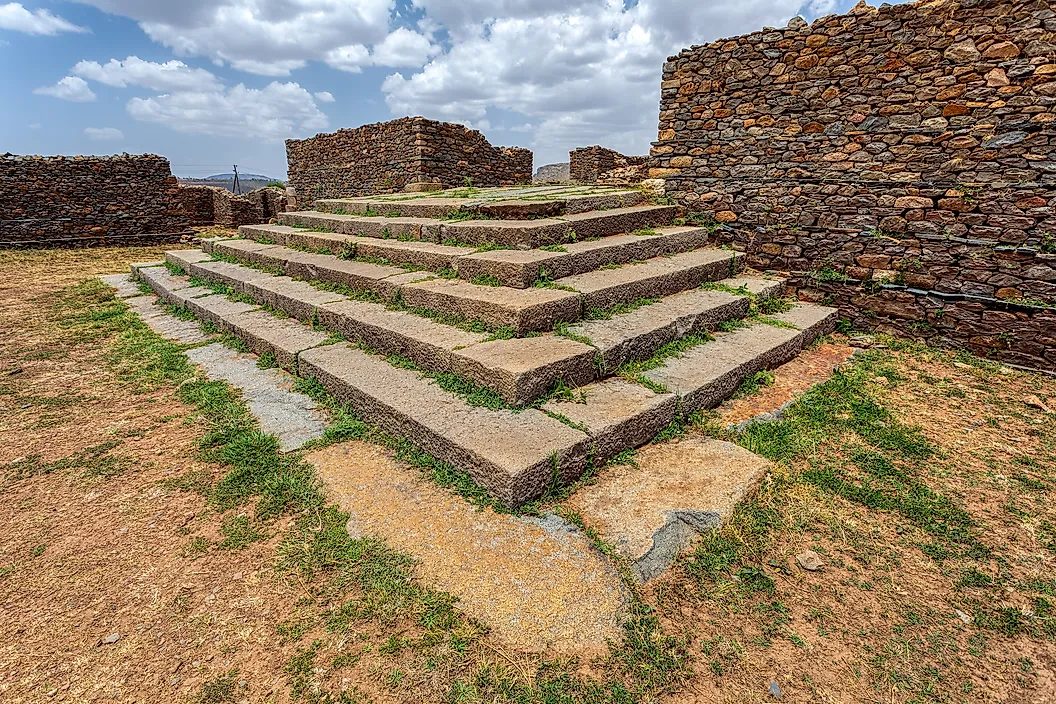
Arising in the highlands of what is now Ethiopia and Eritrea around the first century CE, Aksum grew rapidly into one of the ancient world's most consequential commercial powers. The port city of Adulis on the Red Sea sat at the intersection of trade routes linking the Mediterranean, the Arabian Peninsula, the Indian subcontinent, and the African interior. When Roman vessels dominated this corridor, Aksum served as an essential intermediary. When Roman commercial activity contracted in the Red Sea from the third century onward, Aksum stepped into the vacuum entirely, sending its own ships to Sri Lanka to purchase Indian silk and pepper for redistribution to Mediterranean markets. The kingdom was recognized by the third-century Persian prophet Mani as one of the four great powers of the world, alongside Rome, Persia, and China.
Aksum's economic sophistication was remarkable. Around 270 CE, King Endubis ordered the minting of gold, silver, and bronze coins calibrated to the Roman half-aureus standard. Gold coins bore Greek inscriptions for international traders; bronze coins carried Ge'ez script for domestic markets. This monetary bilingualism made Aksum fluent in the language of global commerce. The kingdom became Rome's primary supplier of ivory, a commodity in constant demand for luxury goods, furniture, and ceremonial objects across the empire.
In the mid-fourth century, King Ezana converted to Christianity and made it the state religion. This was both a spiritual and a strategic act as it aligned Aksum with a Christianizing Rome and deepened the diplomatic and commercial bonds between the two powers. Around 350 CE, Ezana also campaigned against the old Kushite capital of Meroë, a blow that helped bring the long Kushite kingdom to its end. By the sixth century, the Aksumite king Kaleb was coordinating with the Byzantine emperor Justin I on a military campaign in Yemen, underscoring that this African kingdom operated as a full partner in Mediterranean geopolitics, not merely a peripheral supplier.
Significance and Impact
Carthage, Kush, and Aksum represent three distinct but equally compelling expressions of African imperial power before 500 AD. Carthage challenged Rome's ambitions so effectively that its destruction required three wars and over a century of sustained effort. Kush demonstrated that a kingdom south of the Sahara could field an army that extracted favorable peace terms from the most powerful empire on earth. And Aksum built a commercial and diplomatic network so extensive that Roman writers placed it in the same category as Persia and China.
Their relative absence from popular histories of the ancient world says less about their importance than about the biases of the sources that survived. Read through African inscriptions, the testimony of Strabo and Ptolemy, Aksumite coinage, and the buried head of Augustus beneath a Meroitic temple, and a different ancient world comes into focus.