7 Small Towns In Missouri With The Best Downtowns
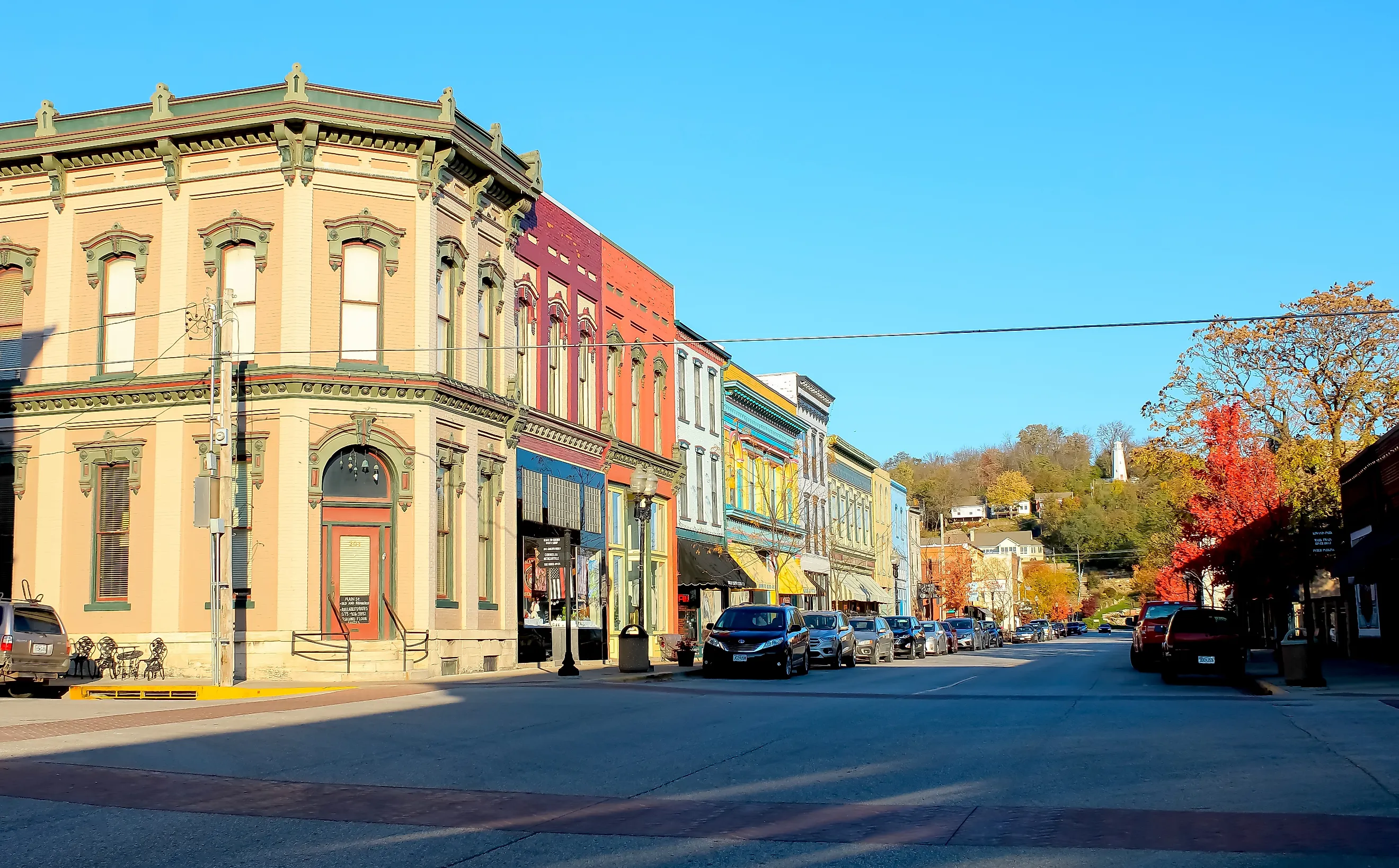
Missouri's best downtowns tend to belong to its smallest towns. These are places where the courthouse still anchors the square, the local deli has been in the same spot for decades, and a single main street can hold a Civil War museum, a winery, and a working theater all within a few blocks. Hermann's German heritage shows up in over 150 preserved 19th-century buildings. Hannibal's downtown is practically a Mark Twain exhibit in itself. And Arrow Rock's main street still serves food out of the same tavern that fed Santa Fe Trail travelers in the 1830s. These seven downtowns are among the state's most walkable and worth the trip.
Hannibal

Walking the streets of downtown Hannibal puts you squarely in the world of Tom Sawyer and Huckleberry Finn. Set along the Mississippi River, Hannibal's downtown core is shaped by the Mark Twain Boyhood Home and Museum, which comprises six historically significant buildings clustered on Main and Hill Streets. The complex includes the boyhood home itself, along with interactive exhibits on Twain's life, family artifacts, and first edition books.
Continue down Main Street to Finn's Food and Spirits, a bar and grill serving sandwiches, salads, and appetizers, with an outdoor patio that hosts live music on Sundays. At Nipper Park, the Mississippi comes into full view from downtown. From Main Street, turn left onto Broadway to reach paved sidewalks along the river with benches and open green space.
Carthage

Downtown Carthage is built around Carthage Square, with the Jasper County Courthouse sitting in the center. The Romanesque Revival building is one of Missouri's most recognizable landmarks. Inside, a wrought iron elevator from 1916 is still in use, and exhibits cover Route 66 history, Civil War military artifacts, and a mural depicting the history of Jasper County.
The Carthage Deli sits on the northwest corner of the square, where it has been a popular Route 66 stop for over 40 years, with 1950s decor and homemade soups, salads, and sandwiches. Head up South Main Street and turn right onto East Second Street to reach the Battle of Carthage Civil War Museum, which covers the July 1861 battle with artifacts, a diorama, and a wall-sized mural.
Hermann

With over 150 historic buildings, Hermann's downtown is a living record of the town's German immigrant roots. The Deutschheim State Historic Site preserves structures dating from 1840 to 1890, and guided tours offer a close look at daily life and traditions for the German settlers who built the town along the Missouri River Valley.
Head over to East First Street for Hermann Wurst Haus, which carries over 60 varieties of bratwurst and German sausage alongside craft beer and sodas. Hermann Riverfront Park, accessible from Wharf Street, has boat ramps, picnic tables, playground equipment, and a walking trail along the river with benches and views of the bluffs.
Ste. Genevieve

Where Hermann draws on German heritage, Ste. Genevieve is rooted in French colonial architecture, preserved through the Ste. Genevieve National Historical Park. The park tells the story of the oldest permanent European settlement in Missouri, established around 1735. Visitors can tour structures like the Amoureux House, built in 1792 using vertical cedar logs placed directly in the earth, a construction method known as poteaux-en-terre. It is one of only a handful of structures of this type still standing in the United States.
From the park, head down Market Street to the Old Brick House, one of the oldest brick buildings west of the Mississippi River, dating to approximately 1804. It served as a courthouse and school before becoming a restaurant, which it remains today, open for breakfast, lunch, and dinner. The Silver Sycamore Gallery of Fine Art, also downtown, displays paintings, pottery, and woodwork from local artists.
Arrow Rock

The Santa Fe Trail passed through Arrow Rock in the 1800s, and the town has held onto that history without letting go. The J. Huston Tavern on Main Street, widely cited as the oldest continually operating restaurant west of the Mississippi, has been serving food since 1834. It originally housed and fed travelers heading west, and over 180 years later it is still open for meals.
Head over to High Street, where the Lyceum Theatre has been staging musicals, dramas, and comedies since 1961 as Missouri's oldest professional regional theater. From High Street, turn right onto First Street to visit the George Caleb Bingham House. Bingham was a prominent 19th-century artist known for paintings of frontier river life, political scenes, and portraits, and his home is now open for tours.
Branson

Branson, in the Ozark Mountains, has a compact historic downtown centered on Commercial and Main Streets. The Branson Centennial Museum on South Commercial Street covers the history of Branson and Taney County through rotating exhibits. Up the block, the Main Street Flea Market draws browsers with booths stocked with vintage items.
Continue down Main Street to reach Branson Landing, a 95-acre waterfront retail and entertainment complex with over 100 stores and restaurants along a boardwalk. The centerpiece is the Branson Landing Fountain Show, which sends 120-foot water jets into the air, choreographed with fire cannons, light, and music.
Weston

Weston is a pre-Civil War town with a historic downtown district dating to 1837. The National Silk Art Museum, on Main Street inside the former Bank of Weston building, holds one of the largest collections of woven silk tapestries in the world, with pieces dating back two centuries or more.
Weston Wine Company, up the street from the museum, offers tastings and build-your-own wine flights, along with events like trivia and karaoke nights. Across the road, the Weston Historical Museum covers life in the surrounding Platte County from prehistoric times through World War II.
Missouri's Most Distinct Downtowns
What ties these seven downtowns together is that each one has held onto something specific: a literary legacy, a German immigrant past, a French colonial footprint, a Civil War battlefield, a Route 66 lunch counter. They are walkable, they are preserved, and they reward the kind of visit where you park once and let the streets do the rest.