The Rise and Fall of Route 66
Here is a fun fact to drop at your next barbecue: America's most famous road is technically dead. The federal government pulled Route 66 off the map in 1985, stripped its shields, and let the interstates swallow it whole. And yet people still fly in from around the world to drive a highway that, on paper, no longer exists. This year the Mother Road turns 100, and the nostalgia is cranked up to eleven. So how did a 2,448-mile ribbon of two-lane blacktop become a national legend, what killed it, and why will it not stay buried? Buckle up.
Where the Mother Road Runs

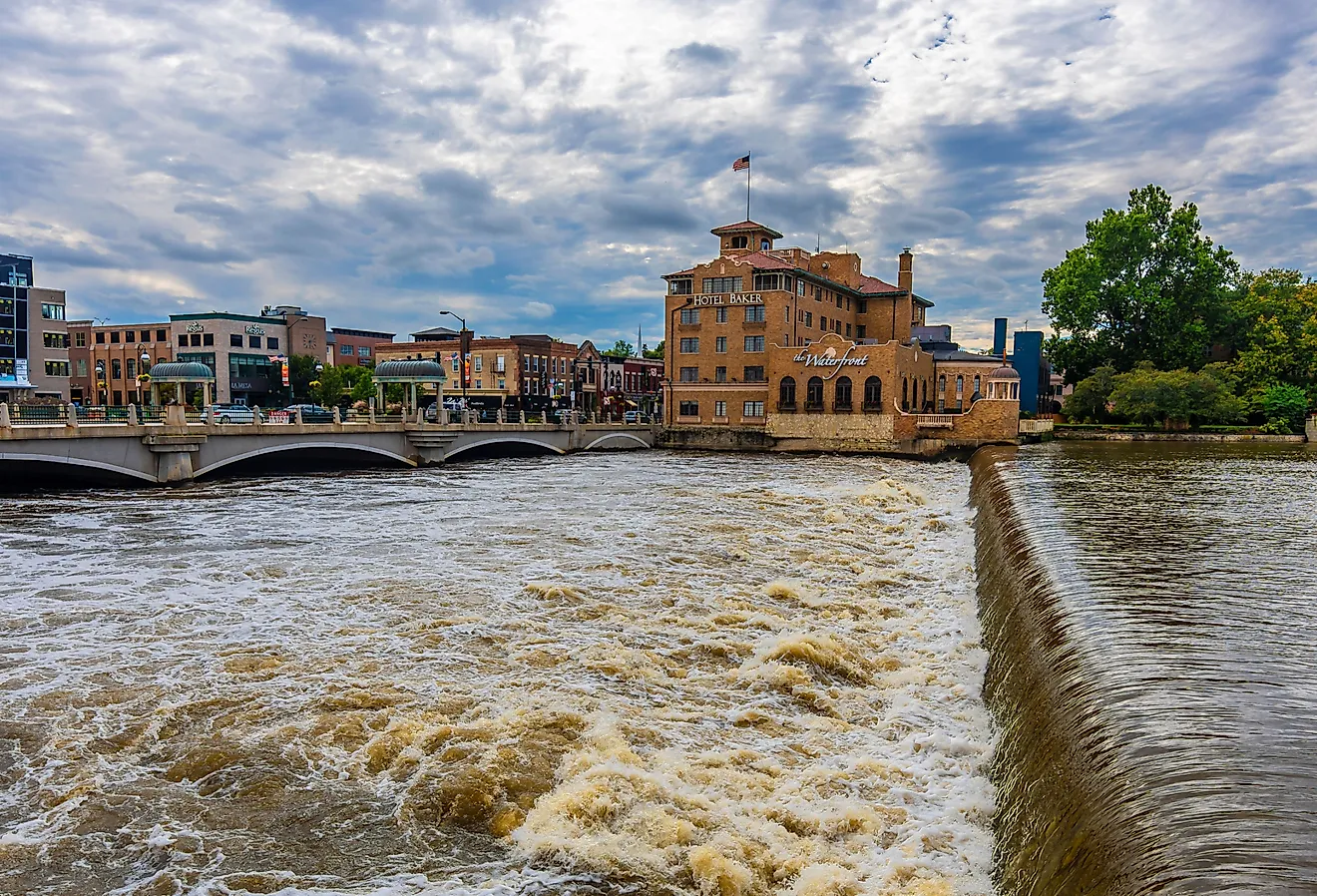
Route 66 was never the longest highway in America, and it was never the straightest. What it had was attitude. Commissioned on November 11, 1926, as one of the original routes in the new U.S. numbered highway system, it cut a lazy diagonal across the United States, linking Chicago with the California coast and threading eight states on the way: Illinois, Missouri, Kansas, Oklahoma, Texas, New Mexico, Arizona, and, yes, California, where it finally quits at the edge of the Pacific in Santa Monica. The number itself was almost an accident. A Tulsa businessman named Cyrus Avery, now remembered as the Father of Route 66, wanted to call it 60, lost a bureaucratic turf war with Kentucky, and grabbed 66 because nobody else had claimed it. Avery's road went up fast and rough; on opening day barely 800 of its miles were paved, the rest a teeth-rattling mix of gravel, brick, and wooden planks. It took until 1938 to surface the whole thing, making it the first fully paved U.S. highway, with nicknames stacking up along the way: the Main Street of America, the Will Rogers Highway, and the one that stuck, the Mother Road.
Born in the Dust

The road found its purpose in catastrophe. When the Dust Bowl turned the southern Plains into a choking brown wasteland in the 1930s, families loaded everything they owned onto wheezing jalopies and pointed them west on 66, chasing rumors of work in California's orchards. Roughly 210,000 people made that desperate run during the decade. John Steinbeck immortalized them in The Grapes of Wrath in 1939, and it was Steinbeck who pinned on the highway the name that outlived everything else, calling 66 "the mother road, the road of flight." That is the strange double life of Route 66. It was a road of misery long before it was ever a road of kicks, and the romance we slather on it today is built partly on the backs of people who drove it because they had no other choice.
Get Your Kicks: The Golden Age

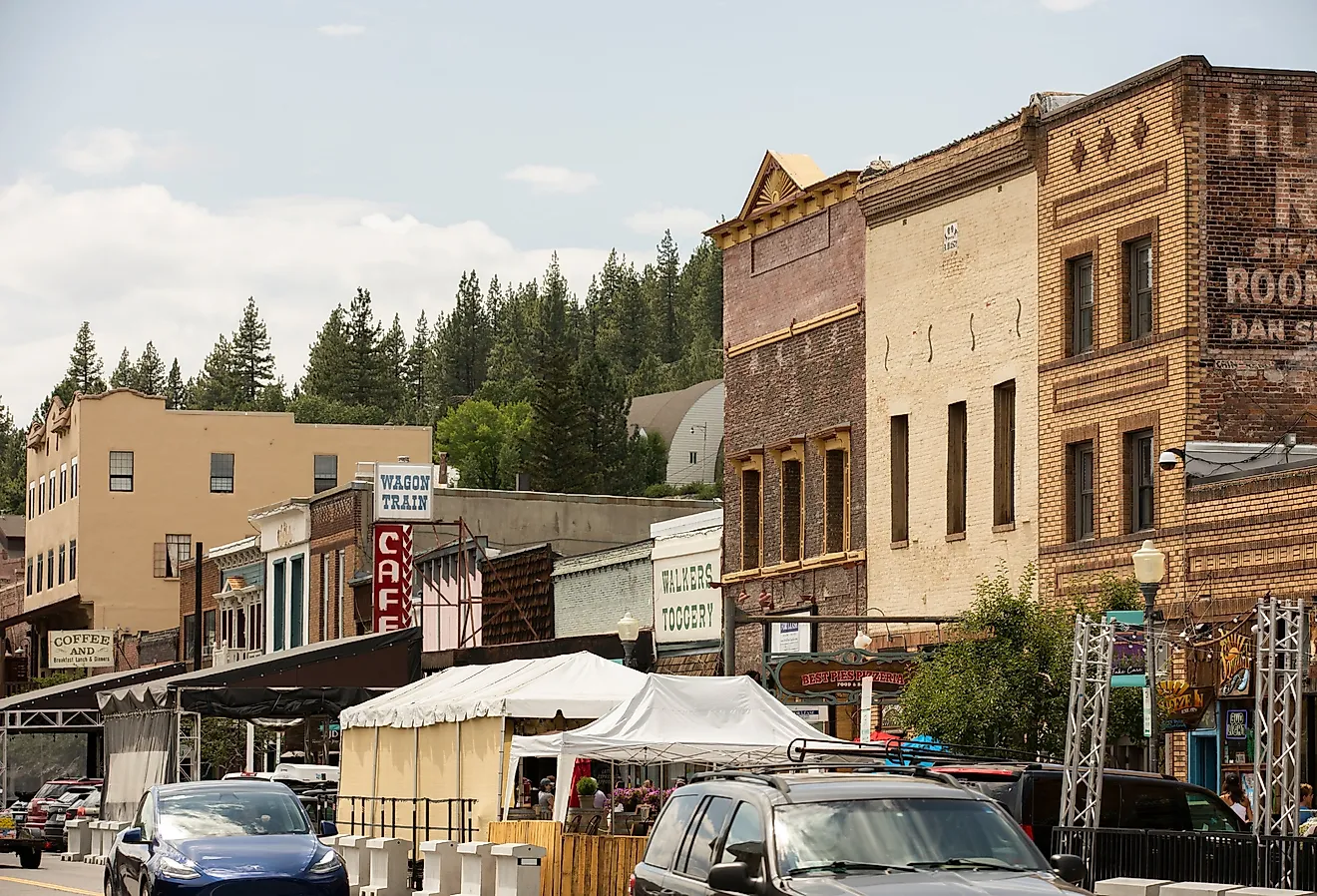
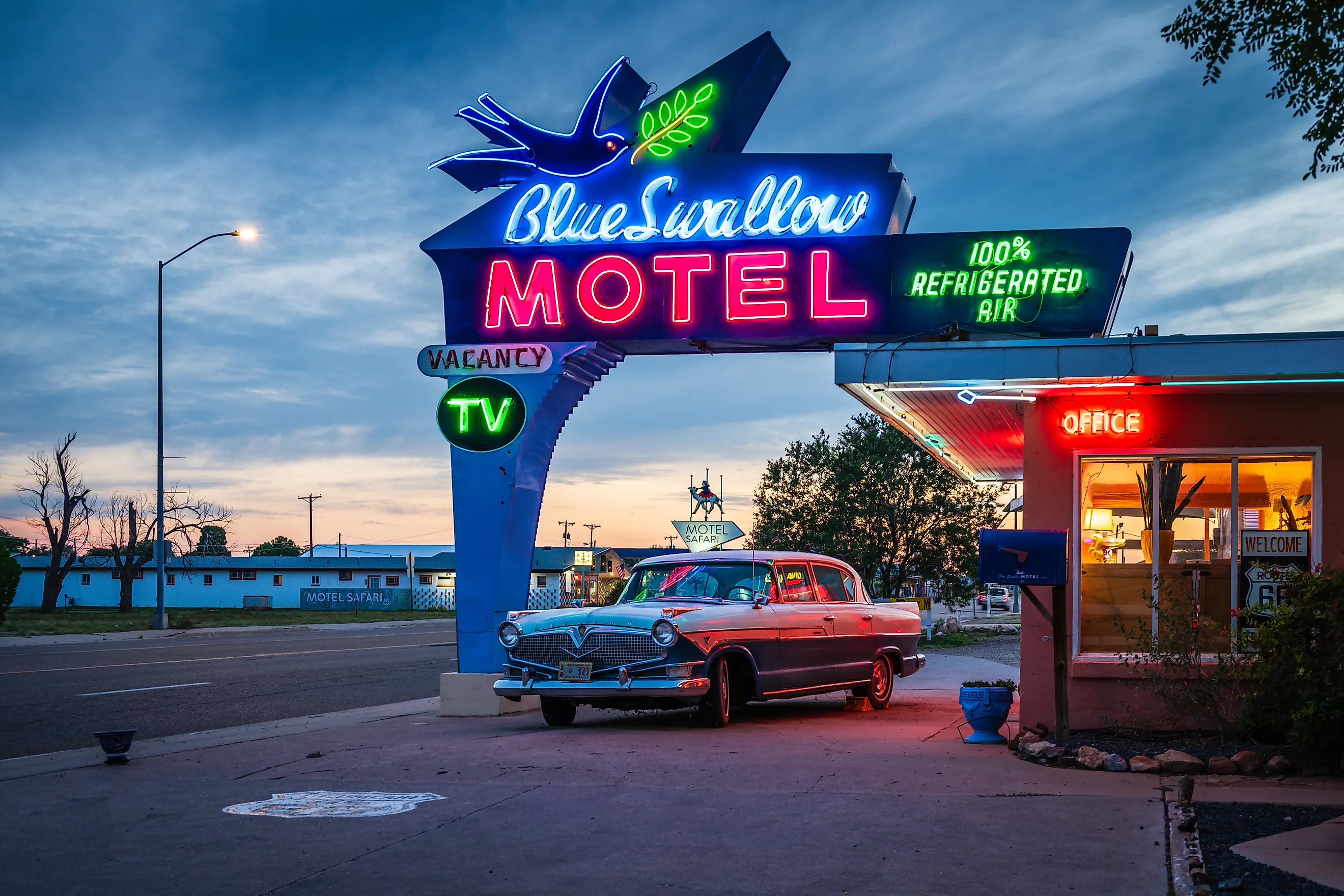
Then came the good years. After World War II, a newly mobile, car-crazy America hit the road for fun, and Route 66 became the country's vacation highway, the quickest year-round shot between the Midwest and Los Angeles. In 1946 a songwriter named Bobby Troup drove it west to chase a Hollywood career, and his wife Cynthia suggested he write a tune about the trip; the result, "(Get Your Kicks on) Route 66," was recorded by Nat King Cole that same year and has been covered ever since by everyone, Chuck Berry and the Rolling Stones included. All that traffic bred a whole roadside ecosystem of mom-and-pop motels, diners, and filling stations competing for eyeballs with bigger signs and stranger gimmicks. The survivors still glow: the neon-soaked Blue Swallow Motel in Tucumcari, New Mexico; the concrete teepees of the Wigwam Motels in Holbrook, Arizona, and Rialto, California; the ten Cadillacs planted nose-down in a Texas field at Cadillac Ranch; the grinning Blue Whale of Catoosa in Oklahoma; and the Art Deco U-Drop Inn in Shamrock, Texas. Hungry? Lou Mitchell's has fed travelers near the Chicago starting line since 1923, the Ariston Cafe in Litchfield, Illinois, has been at it since the road's earliest days, and the Big Texan in Amarillo still dares you to put away a 72-ounce steak in an hour for free.
How the Interstates Pulled the Plug

Route 66 was a victim of its own success. By the 1950s it was choked with traffic it was never built to carry, two lanes buckling under a nation in a hurry. In 1956 President Eisenhower signed the Federal-Aid Highway Act and launched the Interstate System, and the writing was on the wall. There would be no Interstate 66; instead the old road was carved up and paved over by five wider, faster freeways, namely I-55, I-44, I-40, I-15, and I-10, which bypassed the small towns 66 had fed for decades. One by one, the diners went dark and the motel vacancy signs stopped buzzing. The last town to lose its bypass fight was Williams, Arizona, in October 1984, and on June 27, 1985, officials made it official and decommissioned U.S. Route 66 entirely. After 59 years, the Mother Road was no longer a road at all, at least not according to the map.
Why It Won't Die

Here is the twist: killing Route 66 only made people love it harder. Almost as soon as it vanished, the nostalgia machine roared to life. A glossy CBS television series called Route 66 had already sent two young men chasing adventure across the country in a Corvette between 1960 and 1964, planting the highway in the national imagination. Decades later, Pixar's Cars (2006) built its whole sleepy town of Radiator Springs out of real Route 66 landmarks, the U-Drop Inn and the Wigwam Motels among them, and introduced the Mother Road to a generation that was not even born when it died. Preservationists got organized, states began signing stretches as Historic Route 66 in the 1990s, and more than 250 of its buildings and bridges have landed on the National Register of Historic Places. The deeper reason it endures is simpler. Route 66 sells the most American story there is: get in the car, point it at the horizon, and chase a better life or just a good time. National Geographic named it one of the top places to visit in 2026, and that is no accident, because this November marks its 100th birthday. The U.S. Postal Service has issued Route 66 stamps, the official centennial bash kicked off in Springfield, Missouri, the city that claims to be the road's birthplace, and towns up and down the line are throwing a year-long party for a highway that technically retired in 1985.
Driving It Today

So can you still drive it? Mostly, yes. Roughly 85% of the original alignment remains drivable in some form, though it now hides under a patchwork of business loops, state highways, county roads, and the occasional crumbling stretch of original 1930s concrete. Expect two lanes, expect potholes, and expect to share the experience with desert heat, sudden snow, and wind that shoves your car around; this is not a manicured theme park, and that is the entire point. The payoffs are everywhere. Kansas gets only 13 miles of the route, but it guards the restored Rainbow Bridge over Brush Creek, a graceful single-span arch near Riverton. New Mexico hands you the deep-blue artesian Blue Hole at Santa Rosa and the road's high point at the Continental Divide, a touch over 7,200 feet. Arizona holds the longest original stretches and the only national park the route runs straight through, the Petrified Forest, with its fossilized logs and the banded badlands of the Painted Desert. And at the very end, in Santa Monica, an unofficial End of the Trail sign on the pier gives road-weary drivers a place to take the photo and watch the sun drop into the Pacific.
Still Worth the Trip

Route 66 is a ghost that refuses to act like one. It has no official mileage, no shields of its own, and no spot in any modern road atlas, yet it keeps pulling in travelers from every continent who want to feel something the interstate cannot give them. A hundred years after a Tulsa booster grabbed a spare number off a list, the Mother Road still means exactly what it always did: the open road, the long shot, the trip that matters more than the destination. Gas up, roll the windows down, and go find out why.