9 Small Towns in Maryland with the Best Downtowns
Some of Maryland's most unforgettable downtowns were shaped by fire, war, and the Chesapeake Bay itself. What rose from the ashes of an 1895 fire in Berlin and a British attack on St. Michaels in 1813 still defines those streets. Havre de Grace's downtown sidles up to a promenade that leads past public art and a lighthouse from 1827. Cambridge's downtown dives deep into the history of Harriet Tubman. Cumberland's core runs on rail-era scale while Annapolis tops its 18th-century capitol with a 94-foot wooden dome. The nine best downtowns ahead each show off a distinct piece of Maryland.
Berlin

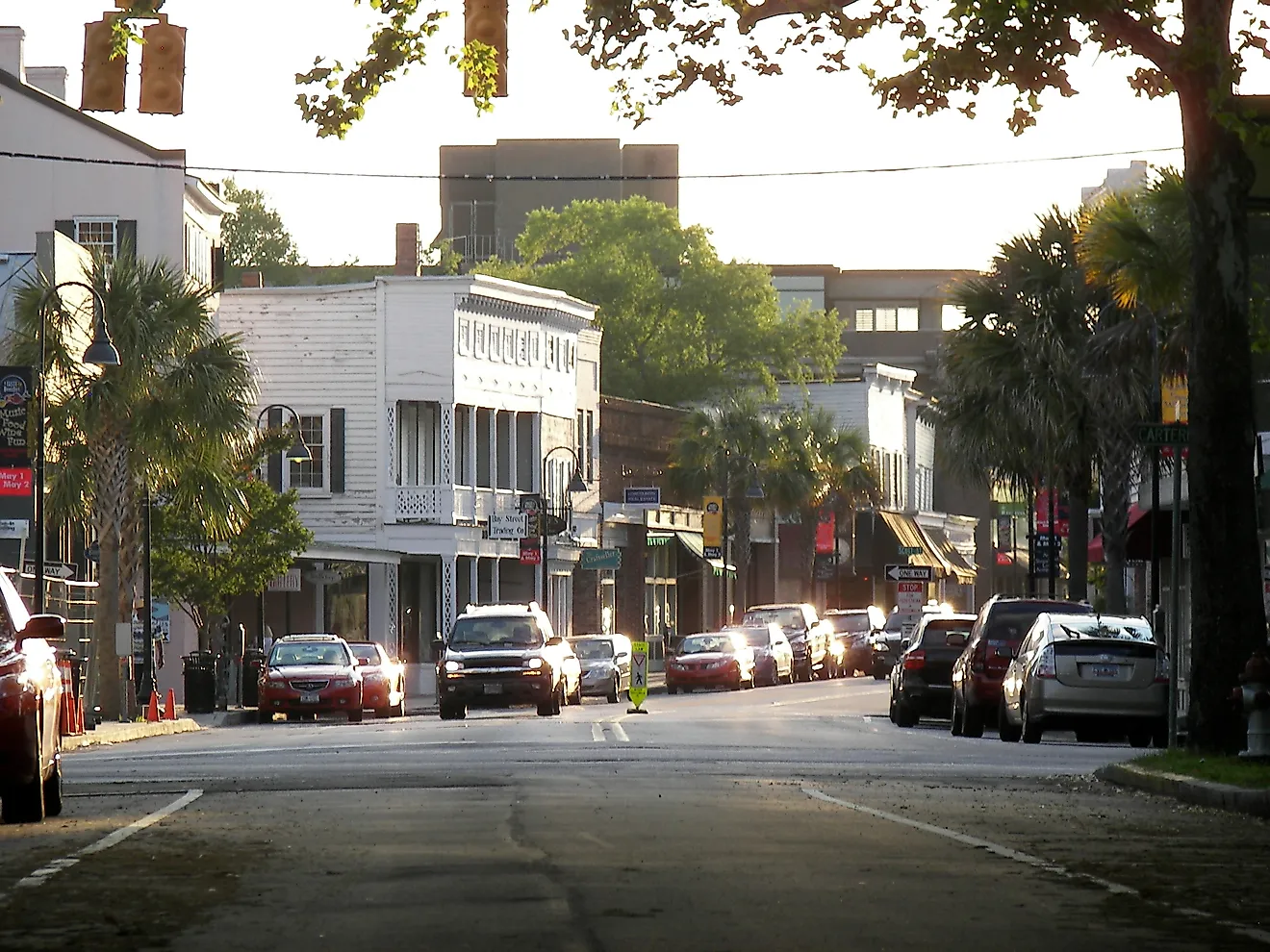
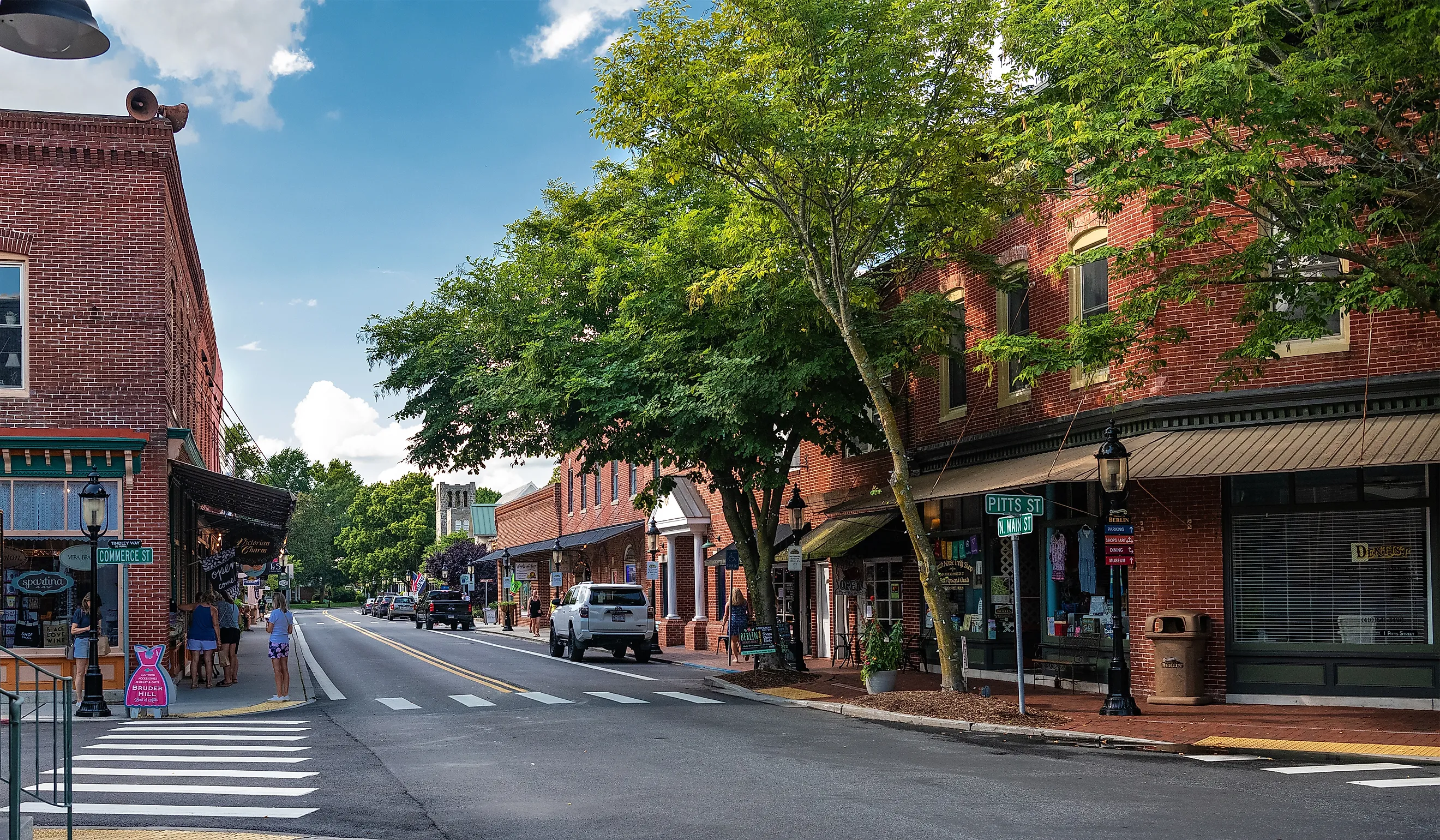
Nine miles inland from Ocean City, Berlin built one of the most recognizable downtowns on Maryland's Eastern Shore almost by accident. An 1895 fire wiped out much of the commercial core, and the rebuild left behind a dense run of Queen Anne, Italianate, and Second Empire storefronts that still line Main Street today. Nearly 50 buildings in the downtown commercial district are on the National Register of Historic Places, which explains why Hollywood turned the blocks into movie sets for Runaway Bride and Tuck Everlasting without needing much alteration.
The Atlantic Hotel is at the center of downtown, with its wraparound porches and 1890s brick façade. The hotel was rebuilt in brick after the 1895 fire, when owner Horace Harmonson replaced the earlier hotel with a three-story brick building that reopened within six months. A few doors down, The Globe went from being a 1910s theater to one of downtown's most active nightlife spots. Oaked at The Globe kept the historic bones of the building intact while adding cocktails, live events, and rotating gallery exhibitions inside the old performance space. Visitors to the downtown core in early summer get to witness each of these brick storefronts with the Berlin Bathtub Races in the foreground. The annual tradition brings a lively energy to downtown Berlin with makeshift wheeled bathtubs flying down Main Street in front of cheering crowds.
Havre de Grace

Downtown Havre de Grace looks like part maritime outpost and part Victorian harbor town. Brick commercial blocks and painted late-19th-century buildings stand along the waterfront. At the south end of downtown, the 1827 Concord Point Lighthouse stands at the mouth of the Susquehanna River as it spills into the Chesapeake Bay. The lighthouse typically opens to the public on seasonal weekends, weather permitting, and offers guests wide views of downtown and the surrounding waters. From there, the Havre de Grace Promenade follows the water past carved bird decoys, public art, and Millard Tydings Memorial Park, where seasonal community events often take over the waterfront setting. While most restaurants cluster farther north along Washington Street and adjacent blocks, The Promenade Grille faces the water directly on the promenade.
Cumberland

In downtown Cumberland, church steeples, Richardsonian Romanesque stone buildings, and late-1800s commercial blocks stack tightly along the Allegheny foothills. Baltimore Street, once known as Cumberland's pedestrian mall, has been remade into a flexible downtown streetscape with wide sidewalks, landscaping, gathering areas, and a slow one-way lane for vehicles and bicycles. This downtown core has a more built-up feel than most Maryland small towns, shaped by rail-era scale and distinct dark brown and burnt-red bricks. A few blocks downhill, downtown Cumberland collides directly with some of the most important transportation infrastructure in American history. Canal Place Historical Park marks the western end of the 184-mile C&O Canal Towpath, where canal basins, rail lines, bridges, and trail access converge at the edge of downtown. Nearby, the 1913 Western Maryland Railway Station remains one of the key structures in the district, with the Western Maryland Scenic Railroad departing from it and heading through the Cumberland Narrows into the Allegheny Mountains.
Ocean City

While other Maryland downtowns are built on their history, Ocean City is a resort town through and through. Therefore, its downtown primarily operates as a resort strip, running between the Atlantic Ocean and the Isle of Wight Bay with a dense, continuous line of boardwalk activity. The Ocean City Boardwalk stretches nearly three miles along the oceanfront, functioning as the main downtown corridor and the route to some of this Maryland town's best restaurants and biggest attractions. It dates back to early 20th-century construction when a permanent wooden promenade replaced earlier seasonal walkways, and it still carries long-running staples like Thrasher's French Fries, established in 1929, and Fisher's Popcorn, established in 1937, alongside arcades, souvenir shops, and food stands facing the Atlantic. Trimper Rides of Ocean City sits at the southern end of the boardwalk and traces its amusement-park history to 1893, making it one of the country's oldest family-operated amusement parks. The complex mixes modern rides and games with classic attractions, including its 1912 antique carousel and indoor kiddie rides.
Chestertown

Founded in 1706 along the Chester River, Chestertown's National Historic Landmark district is noted for its concentration of 18th-, 19th-, and early-20th-century buildings, including more than fifty Georgian-style town houses. Many of them were built in Flemish bond brick during the town's shipping boom in the 18th century, when Chestertown ranked as Maryland's second-largest port. Instead of isolated landmarks, entire rows of Georgian storefronts and merchant buildings remain packed into the downtown, stretching between Fountain Park and Water Street. Bad Alfred's fills a former garage and filling station with house-made spirits, local craft beer, and wood-fired pizza. Closer to the river, the Garfield Center for the Arts on High Street sits inside a restored 1920s theater with its original marquee. The building first opened as the New Lyceum Theater before later becoming the Garfield Theater, and today its stage hosts live plays, concerts, film screenings, and regional productions. At Fountain Park, the Chestertown Farmers Market keeps the square lively on Saturday mornings, echoing a market tradition in town that dates back to an act of the Maryland General Assembly in 1762.
Annapolis

Despite being the capital of Maryland with a population of just over 40,000 people, Annapolis's downtown still feels intimate. The layout follows an 18th-century baroque design, with radial streets connecting civic buildings at higher ground to the harbor below, keeping the entire district walkable between the Maryland State House and the Chesapeake Bay waterfront. The State House is the oldest state capitol still in continuous legislative use in the United States, and for a short period in the 1780s, it even functioned as the national capital. The building is topped with a 94-foot wooden dome, the largest all-wooden dome of its kind in North America, constructed without the use of nails. The U.S. Naval Academy Museum remains one of Annapolis's major cultural stops, though visitors should check current Naval Academy access rules before planning a visit. Just up from the harbor, the brick lanes and sidewalks of Main Street are host to many designer shops as well as local stores and restaurants such as the highly rated Café Normandie.
St. Michaels

Talbot Street runs straight toward the Miles River in downtown St. Michaels, with narrow side streets feeding directly into marinas, docks, and former shipbuilding properties. The Chesapeake Bay Maritime Museum, where the downtown edge opens into an 18-acre harbor campus packed with floating oyster dredgers, wooden workboats, and a functioning shipyard, is just two blocks from Talbot's restaurants and ice cream parlors. Here, crews still restore Chesapeake vessels on-site, so visitors can watch planks being steamed, shaped, and fastened a few feet from the water. On Mulberry Street, the privately owned Cannonball House remains one of St. Michaels's best-known War of 1812 landmarks, tied to local lore from the British attack of August 10, 1813. More than 200 years later, it remains set among Mulberry Street's historic homes.
Cambridge

Fire has repeatedly reshaped Cambridge's downtown, most notably the July 30, 1892 blaze that destroyed 15 buildings, including hotels, a bank, and a furniture store, followed by another major fire on July 31, 1910, that began on Race Street. The rebuilding that followed left behind a core of late-1800s and early-1900s brick buildings that still line parts of the downtown along the Choptank River. High Street and Race Street carry much of that rebuilt streetscape into today's downtown. The Harriet Tubman Museum and Educational Center at 424 Race Street continues to interpret Tubman's life, slavery, the Underground Railroad, the Civil War, and Dorchester County's ties to that history. A half-block down from the museum, visitors can find some of Cambridge's highest-rated restaurants, such as Vintage 414, showcasing just how well-rounded this Maryland downtown truly is. High Street and the surrounding blocks maintain an active brick commercial district where restaurants and storefronts operate inside rebuilt post-fire architecture, including the Dorchester Center for the Arts. The Center features year-round art exhibits and events, including stained glass and pottery classes.
Easton

Easton's downtown clusters around the Talbot County courthouse square, with nearly 900 buildings recorded in the Historic District tied to its 1710 colonial-era beginnings. Federal Street, Dover Street, and the surrounding blocks carry most of the activity, with civic buildings and storefronts mixed into short stretches of preserved architecture. A prime example is The Avalon Theatre, which was built in 1921 and opened in January 1922 as the New Theatre, soon billed as the "Showplace of the Eastern Shore." It was later redesigned in an Art Deco style during ownership under the Schine Chain Theatres, closed in 1985, and reopened in 1989 after restoration. On the surrounding streets, visitors can explore an array of award-winning restaurants and shops, including Vintage Books, which has everything from collector's items to coffee table books. Nearby, the Tidewater Inn traces its hospitality roots to 1712 and today features 86 renovated guest rooms and suites, event venues, Terrasse Spa, and Hunters' Tavern for a night out.
Maryland Downtowns in Brief
These Maryland downtowns don't follow one pattern. Some grew from ports, others from rail junctions or courthouse squares, and a few were rebuilt after fires that reshaped entire main streets in places like Berlin and Cambridge. Ocean City's boardwalk runs straight along the Atlantic, while Chestertown holds a grid of 18th-century brick storefronts along the Chester River. What stands out across them is how different "downtown" actually looks across each place, whether it's rail lines in Cumberland or waterfront promenades in St. Michaels and Havre de Grace.