10 Small Towns in Alabama with the Best Downtowns
Small towns in Alabama center around historic downtowns rooted in courthouse squares and railroad corridors. Brick storefronts and early commercial blocks define centers like Fairhope. Eufaula carries streets of antebellum mansions and cast iron landmarks across a historic district. Opelika developed as a railroad hub with a compact downtown known for heritage brick architecture. Each small town below has a downtown that captures Alabama's character through architecture and long-standing civic spaces.
Fairhope

Centered around Fairhope Avenue and Section Street, Fairhope's downtown is rich with historic storefronts, independent bookshops, and antique-filled boutiques. The French Quarter, located just off Section Street near Fairhope Avenue, features cobblestone walkways and a vintage town clock. Page & Palette, open since 1968, holds decades of local literary life where people can browse regional titles or settle in at the attached Latte Da coffee shop. A few minutes away, Aubergine Antiques on De La Mare Avenue draws browsers through warm rooms thick with collectibles and curiosities.
The western edge of downtown opens onto a waterfront. The recently rebuilt Fairhope Municipal Pier stretches over 1,400 feet into Mobile Bay, where people can fish or walk its full length for wide bay views. Osprey, herons, and brown pelicans circle overhead, placing the pier on the Alabama Coastal Birding Trail. The surrounding Fairhope Municipal Park holds a rose garden, a duck pond, and a sandy beach.
Opelika

Downtown Opelika is a stretch of Victorian brick buildings with a deep railroad heritage running through its core. The restored storefronts along North Railroad Avenue now house independent businesses that give the old walls new life. A couple of blocks away on South 8th Street, Café One Twenty Three occupies a restored storefront. The cafe serves Southern American cuisine with classic French influences. The Opelika Depot, a sturdy red brick structure that served rail passengers in the 1800s, still commands the streetscape with weathered authority.
Downtown Opelika has quietly built one of the most spirited craft beverage scenes in small-town Alabama. John Emerald Distilling Company, housed in a restored cotton warehouse on North Railroad Avenue, produces Alabama's first legal whiskey since Prohibition, with tours and tastings available on site. Red Clay Brewing Company and Resting Pulse Brewing Company add to the mix, giving people a full afternoon of locally crafted drinks within easy walking distance of each other.
Eufaula

Eufaula's downtown is a grand parade of antebellum architecture, with over 700 historic structures spread across the Seth Lore and Irwinton Historic District. Shorter Mansion, originally built in 1884 by Eli Sims Shorter II on North Eufaula Avenue and later reconstructed in its current Greek Revival form by 1906, presents 17 free-standing Corinthian columns and invites visitors to tour its rooms filled with antiques and artifacts from the town's storied past. Nearby on West Barbour Street, Fendall Hall holds three rooms with Victorian-era murals painted in the 1880s. The cast iron Broad Street Fountain rises 14 feet above the intersection of Broad Street and Randolph Avenue.
The Yoholo Micco Creek Indian Trail gives downtown Eufaula a natural edge of quiet beauty. The 3.2-mile paved path begins in the heart of the historic district and winds past old hardwood forests. A restored railroad trestle crosses over Lake Eufaula, offering water views along the way. Hikers and cyclists share the trail, while bird watchers peel off into clearly marked woodland paths through bird-rich forest.
Cullman

Downtown Cullman carries the architectural bones and German heritage of a town founded in 1873 by Bavarian immigrant Colonel Johann Gottfried Cullmann. Historic brick buildings crowd the Warehouse District, now alive with local boutiques, colorful murals, and coffee spots. The Cullman County Museum sits in a reconstruction of Colonel Cullmann's original home and features exhibits that cover Native American history, pioneer life, and the Civil War. Steps away, the timber-framed Festhalle Market Platz, the largest timber-frame structure in Alabama, hosts a weekly farmers market and the city's community festival calendar.
Depot Park, a green downtown gathering space, gives Cullman its most festive outdoor stage. Each fall, the park transforms for Oktoberfest, drawing large crowds with craft beer, bratwurst, and live German music. Every winter, the Christkindlmarkt fills nearly nine acres with handcrafted wooden vendor stalls, roasted chestnuts, and warm Glühwein.
Wetumpka

Downtown Wetumpka sits at the edge of the Coosa River, where old brick storefronts, creative galleries, and river-facing streets climb uphill from the water. The East Wetumpka Commercial District, listed on the National Register of Historic Places, rises from the riverbank through walkways and elevation changes that make the streetscape unusually elegant. The Kelly Fitzpatrick Center for the Arts on Hill Street holds rotating exhibitions of local and regional artwork, with wide views of the river from its windows.
The Coosa River gives downtown Wetumpka a striking beauty. The Bibb Graves Bridge, a graceful five-arch concrete structure built in 1931, is walkable and carries pedestrians directly into the heart of downtown. Just below it, Gold Star Park threads walking trails along the riverbank past pedestrian bridges and picnic areas. People can fish from the riverbank, watch birds along the wooded trail, or kayak the calm stretch of the Coosa River that skirts the park's edge.
Abbeville

Downtown Abbeville features a 1950s streetscape, where glowing vintage neon signs light up old brick storefronts along Kirkland Street after dark. The restored buildings hold window displays of weathered tin signs and mid-century memorabilia that transport passersby to a bygone era. The Henry County Courthouse presides over the square, while the Bethune-Kennedy House, the oldest building in town, stands nearby with its distinctive double-door design. People can browse Town Square Shoppes for pottery, gifts, and candles, or simply walk the avenue and take in its open-air collection of mid-century memorabilia.
The downtown pairs its retro streetscape with a warm, food-centered community spirit that pulls people off the sidewalk and through the door. Huggin' Molly's on Kirkland Street serves malts, milkshakes, and Southern diner fare from a salvaged early 20th-century soda fountain. The restaurant is a heavily themed 1950s-style diner built around a beloved local legend of a friendly 7-foot ghost named Huggin' Molly, who roams the streets at night hugging children who stay out past dark. The diner's atmosphere, from the vintage decor to the checkered floors, honors that story. Nearby is Ruby's, a beloved downtown spot serving Southern soul food inside a warm, historic home.
Tuscumbia

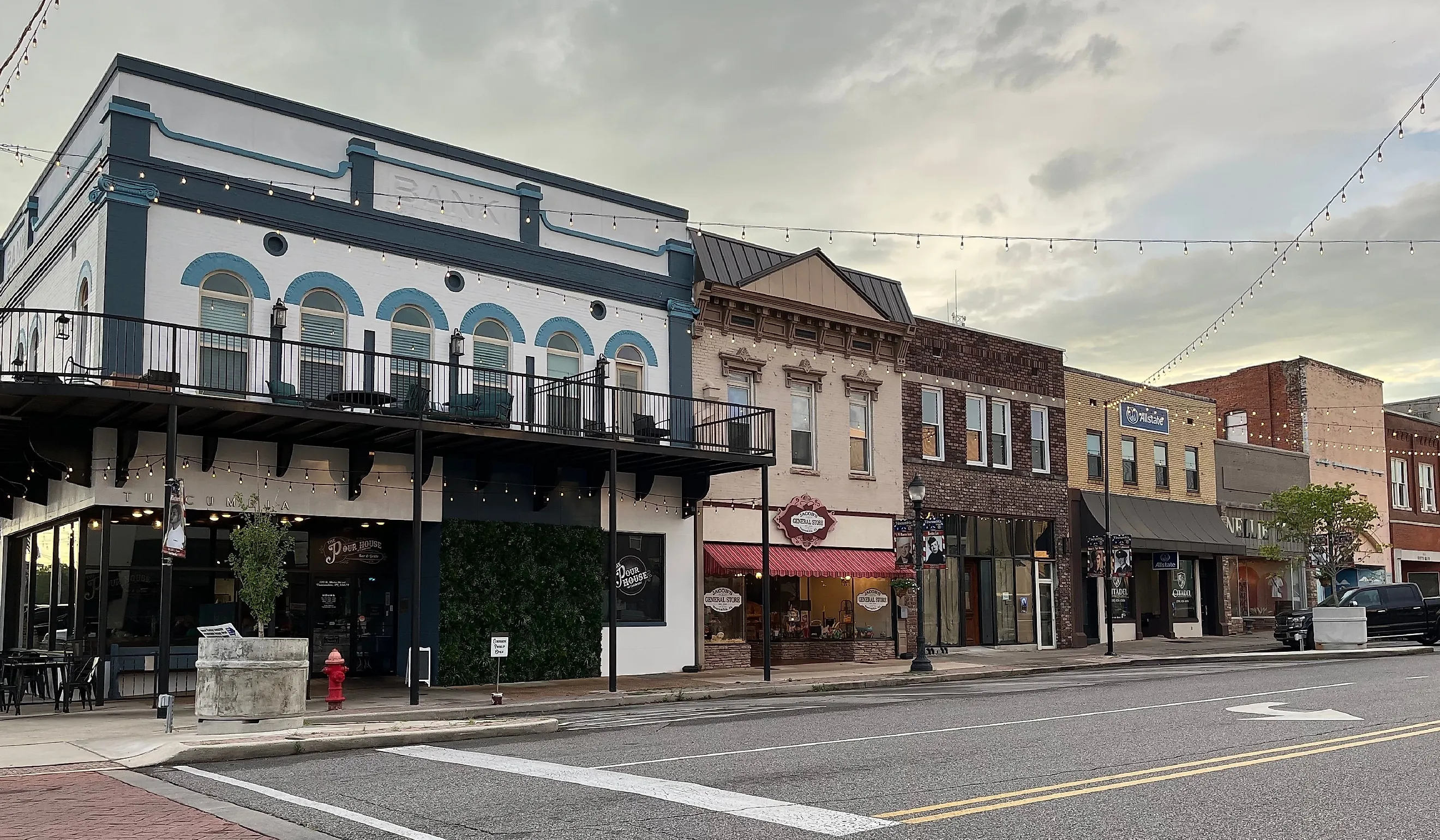
Downtown Tuscumbia opens onto Main Street where antebellum architecture and a spring-fed park come together, giving the district a leisurely feel rooted in both history and nature. The Colbert County Courthouse presides over the northern end of Main Street with quiet authority, its 1881 facade setting the tone for the entire district. Just down the street, the William Winston House on North Common Street is a grand Georgian-style antebellum home on the National Register of Historic Places. The history continues at Palace Ice Cream and Sandwich Shop, which has served locals from the same marble soda fountain counter since 1906.
Spring Park gives the southern end of downtown a sweep of natural beauty that makes it the district's most memorable setting. At the heart of the park, Coldwater Falls spills dramatically into a landscaped basin. Children can ride the carousel, cool off at the splash pad, or board the narrow-gauge train that loops through the grounds. A short walk away from the park is Ivy Green, the 1820 birthplace of Helen Keller. Self-guided tours take visitors through original family furnishings and personal artifacts.
Montevallo

Shaped by the energy of a university town, Montevallo's downtown is a creative, walkable district of historic buildings, independent shops, and art galleries. Main Street holds a mix of handcrafted jewelry shops, art supply stores, local bakeries, and intimate cafes, all set inside buildings dating to the late 1800s. The Montevallo Arts Collaborative at Parnell Memorial Library and the Poole Art Gallery at the University of Montevallo's Center for the Arts display rotating exhibitions where people can take in the work of local and regional artists.
Orr Park, just steps from downtown along Shoal Creek, is an outdoor space made extraordinary by a decades-long tradition of tree carving. Since the early 1990s, local artist Tim Tingle has carved more than 50 faces, animals, mythical creatures, and folk characters into the ancient cedar trees lining the park's walking trail. People can wade in the creek, spread a blanket in the shade, or simply wander and discover a new carving around every bend.
Monroeville

Designated Alabama's Literary Capital in 1997, Monroeville's downtown courthouse square carries the weight of American literary history in many of its buildings and walkways. The Old Monroe County Courthouse, where Harper Lee's father practiced law, now houses the Monroe County Museum. Its 1930s courtroom has been restored to the exact setting that inspired the fictional trial in To Kill a Mockingbird. People can tour the museum or walk the Literary Capital Sculpture Trail with its 14 bronze sculptures. They can also follow the Birdhouse Trail, a creative outdoor installation of 25 unique birdhouses spread across the downtown area.
The downtown square is a slow-moving gathering place lined with classic storefronts and shaded public spaces. The Monroeville Downtown Historic District holds over 60 structures reflecting Classical Revival, American Craftsman, and other early 20th-century architectural styles. Veterans Memorial Park offers shaded benches and quiet green space at the edge of the square. People can sit and reflect in a downtown that has meant so much to American literature.
Sheffield

Downtown Sheffield lines the banks of the Tennessee River with a lively stretch of storefronts, arts venues, and historic landmarks that reward an afternoon of unhurried exploration. The Ritz Theatre anchors the district's cultural life with performances and live shows, while Home Grown Art draws visitors through a rotating collection of local paintings and works. The Old Railroad Bridge, the oldest railroad bridge site in Alabama (originally built in the 1830s by the Tuscumbia, Courtland and Decatur Railroad), offers wide panoramic views of the Tennessee River and a tangible connection to the town's deep industrial past.
The Tennessee River gives Sheffield's downtown a natural edge that extends well beyond the bridge. Pickwick Lake, formed along the river a short drive from the district, draws anglers, kayakers, and boaters to its calm, wide waters. Its banks are equally inviting for picnics and leisurely afternoons. For dining, The Vault and Red Clay Table are the downtown's standout culinary destinations.
See Alabama Through Its Downtowns
Alabama's most memorable small towns often have downtowns rich with history, architecture, and natural attractions. Eufaula's antebellum streets have stood since before the Civil War. Monroeville's courthouse square carries one of America's great literary legacies. Wetumpka's five-arch bridge and riverside trails give its streets a beauty rooted in the natural world. Each town expresses Alabama's story one walkable downtown at a time.