5 International Destinations That Are Still Affordable In 2026
A bowl of pho in Hanoi still costs about two dollars. A guesthouse room in Tbilisi runs around fifteen a night, breakfast often included. A flaky byrek in Gjirokastër is barely one. International airfare keeps climbing, but the on-the-ground cost of a trip varies enormously by where you land, and a handful of countries still let a daily budget stretch the way it did a decade ago. The five destinations below, spread across Southeast Asia, the Balkans, the Caucasus, and South America, remain among the best-value international trips in 2026.
Vietnam

A backpacker can still move through Vietnam on $30 to $50 a day in 2026, and a couple sharing rooms usually spends less per head. Street bowls of pho and banh mi run a dollar or two, sleeper buses between cities cost $10 to $15, and the Reunification Express railway links Hanoi and Ho Chi Minh City for a fraction of a domestic airfare. The dong trades around 25,000 to the US dollar, and a $25 e-visa covers most stays. Even the splurges stay reasonable: an overnight cruise on Ha Long Bay, where limestone karsts rise straight out of the Gulf of Tonkin, runs roughly $120 to $180 including meals and kayaking.
The country rewards the slow traveler. Hoi An's Ancient Town, a UNESCO World Heritage Site since 1999, preserves a lantern-lit trading port active from the 15th through the 19th century on the Thu Bon River. The rice terraces around Sa Pa climb the hills of the far north near the Chinese border, and the beaches of Da Nang and the old imperial capital of Hue sit along the central coast. Museum and historic-site entries rarely top a few dollars, which keeps even a packed itinerary cheap.
Albania

Albania delivers Adriatic and Ionian coastline at roughly 30 to 50 percent less than Greece or Croatia next door. A budget traveler manages on about €30 to €50 a day and a mid-range one on €50 to €80, and the gap shows up everywhere: a byrek pastry costs around a euro, a sit-down seafood meal €10 to €15, a coffee well under a euro. The lek is the local currency, though euros are widely accepted at hotels and tour desks. The Riviera towns of Sarandë, Himarë, and Ksamil anchor the beach scene, with the Sarandë-Corfu ferry crossing to Greece in about half an hour.
The interior holds the country's UNESCO heritage. Albania has two Ottoman-era towns on the World Heritage list: Gjirokastër, the hillside "stone city" of turreted 17th-century houses below a 12th-century fortress, and Berat, the "city of a thousand windows" stacked up its riverbank beneath a still-inhabited citadel. The Blue Eye, a deep karst spring that pushes cold water up through a seemingly bottomless pool, sits inland from Sarandë, and the archaeological park at Butrint preserves Greek, Roman, and Byzantine ruins on a wooded peninsula to the south.
Colombia

Colombia's peso trades around 3,700 to the US dollar in 2026, which puts daily costs roughly 50 to 70 percent below North America or Western Europe. Budget travelers spend $20 to $40 a day and mid-range visitors $80 to $120. Medellín, once defined by its cartel era, now runs the only metro system in the country, along with the Metrocable gondolas that climb to hillside neighborhoods like Comuna 13. A one-way metro ride costs under a dollar, and a plate of street food runs $2 to $6.
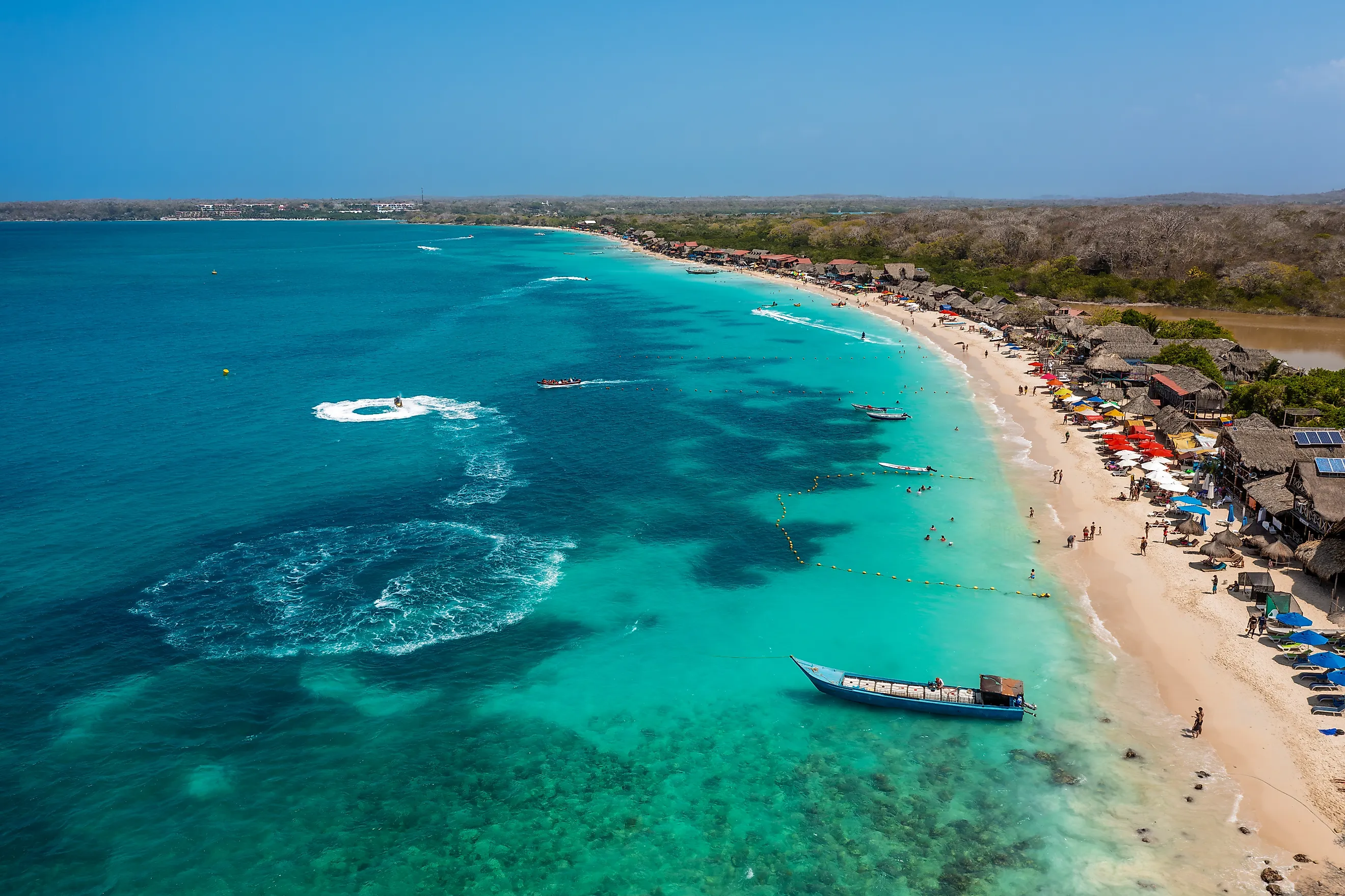
Beyond the cities, the Zona Cafetera (coffee region) centers on the town of Salento and the Cocora Valley, where the Quindío wax palm, the national tree and the tallest palm species on earth, grows past 150 feet. The colonial town of Villa de Leyva keeps one of the largest cobblestone plazas in South America. On the Caribbean coast, the walled city of Cartagena (a UNESCO World Heritage Site) and the beaches of Tayrona National Park near Santa Marta round out a trip, though coastal prices run higher than the interior.
Indonesia

Bali's tourist strips have grown expensive, but Indonesia spreads across more than 17,000 islands, and the value returns the moment you leave them. Budget travel runs $25 to $50 a day across most of the archipelago, with street-food warungs serving full meals for $1 to $4 and Java's trains crossing the island for $5 to $30. The rupiah trades around 16,000 to the dollar, and a 30-day visa on arrival covers a standard trip. Domestic flights between islands, often the biggest single cost, drop to $40 to $70 when booked a few weeks ahead.
Yogyakarta, on Java, sits within reach of two of Southeast Asia's great temple complexes: Borobudur, the ninth-century stepped monument that is the largest Buddhist temple in the world, and the Hindu spires of Prambanan, both UNESCO World Heritage Sites. Lombok, east of Bali, offers the Gili Islands and the volcano Mount Rinjani. Farther east, Flores is the jumping-off point for Komodo National Park and its monitor lizards, and for the three colored crater lakes of Kelimutu.
Georgia
Georgia makes wine the way it has for 8,000 years, fermenting grapes in egg-shaped clay qvevri buried in the ground, a method UNESCO added to its intangible-heritage list in 2013. The country sits where Europe meets Asia in the Caucasus, and it stays one of the region's best values: budget travel runs $30 to $45 a day, the lari trades near 2.7 to the dollar, and many nationalities enter visa-free for up to a year. A plate of khinkali (soup dumplings) costs a couple of dollars, and a glass of local wine about the same.
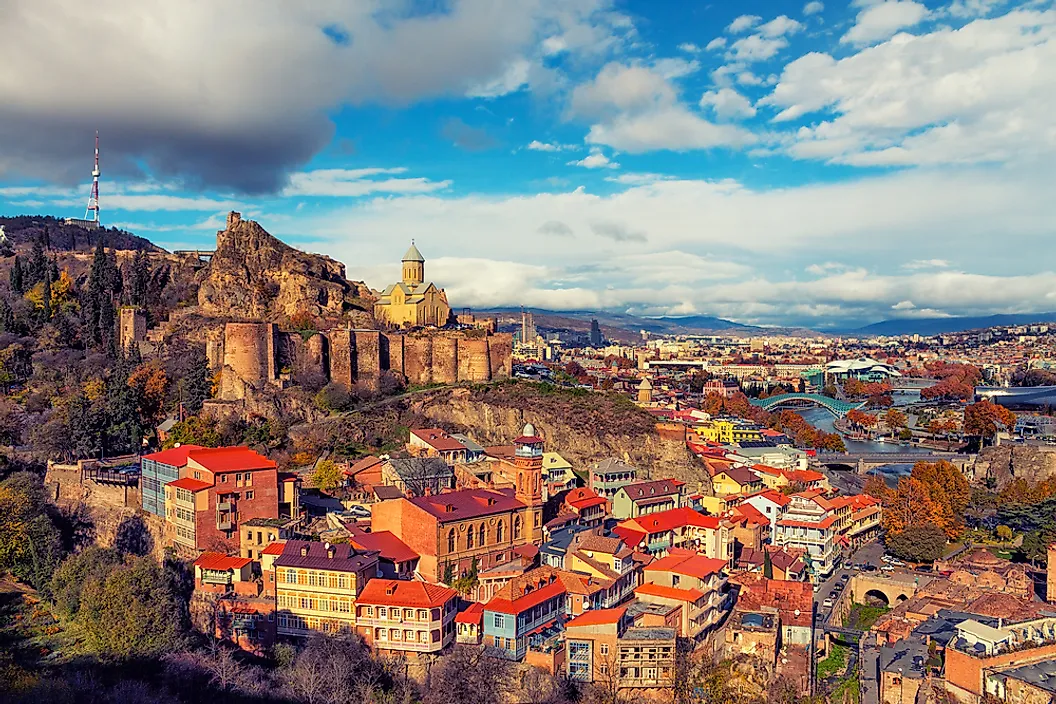
The capital, Tbilisi, sits on the Kura River and pairs a restored old town of carved wooden balconies with the domed brick sulfur baths of the Abanotubani district below the Narikala fortress. Marshrutka minibuses run cheaply into the high Caucasus, where the Gergeti Trinity Church stands alone below Mount Kazbek near Stepantsminda. The Kakheti region east of the capital is the heart of the wine country, and Mtskheta, the ancient royal capital just north of Tbilisi, holds cathedrals on the UNESCO World Heritage list.
Where The Money Still Goes Far
The five countries split across four regions, and each makes its case differently. Vietnam and Indonesia hold down the Southeast Asian end, where street food and overland transport cost almost nothing and the daily floor sits near $25 to $30. Albania undercuts its Adriatic neighbors by a third to a half while offering the same coastline and the same Ottoman towns. Georgia turns 8,000 years of winemaking and the Caucasus high country into a trip that rarely tops $45 a day. Colombia rounds out the Americas, where a strong peso keeps Medellín, the coffee region, and the Caribbean coast within reach. Airfare is the one cost none of them can lower, but once the wheels touch down, a budget goes further in all five than almost anywhere in Western Europe or North America.