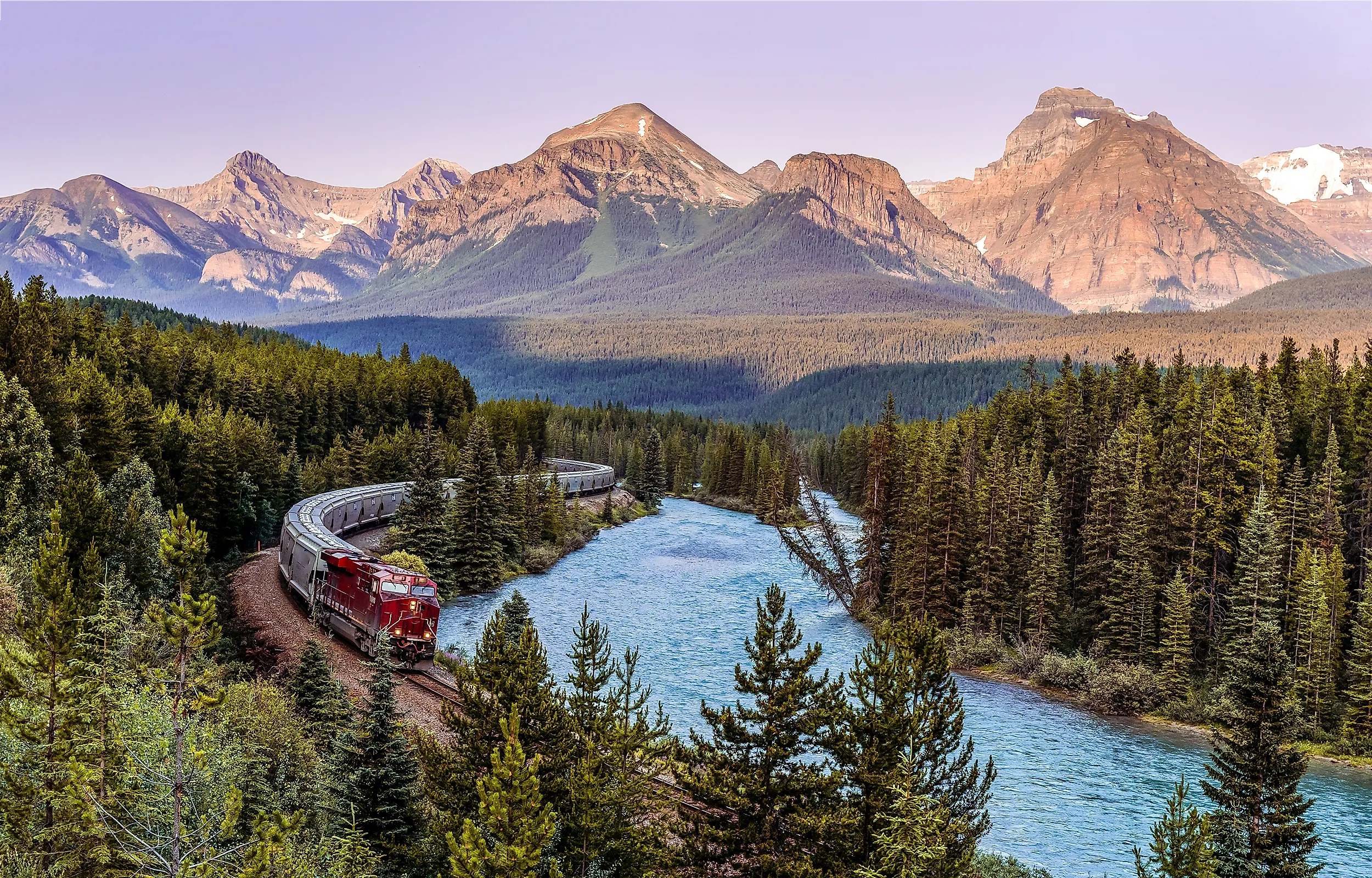
Riding The Rails Across Europe: A Haphazard Adventure
I had just walked across Spain, and now I had a problem worth having. Bucharest was waiting for the holidays, but my tourist visa needed three weeks to reset, and I had a whole continent to kill time on. I could hole up near the Spanish coast and fly east when the clock ran out, or I could claw my way to Romania by bus and train, one impulsive leg at a time. The trains and buses were pricier, much more on that later, but they had a Kerouac-shaped pull I could not shake. So instead of mapping out the whole Galicia-to-Bucharest route in advance, I let the timetables decide and booked each stretch the morning I felt like leaving. What follows are the highlights, and the misfires, of a deliberately unplanned crossing.
San Sebastián, Spain

Heading east meant first heading backward. To rejoin France I had to retrace part of the Camino, which was no hardship at all, since it gave me an excuse to revisit a few favorite stops. I decompressed for a few days in Santiago de Compostela, doubled back to the hilltop streets of Astorga, then spent a night toasting the ghost of Hemingway at Café Iruña on the squares of Pamplona. From there I aimed for San Sebastián, or Donostia in Basque, where the surf rolls in beside plates of seafood pintxos. The weather had other ideas. Rain came in fits, so I booked a second night and learned to read the sky, ducking into a bar the moment the clouds opened and slipping back out when they cleared. In a city this thick with cafes, you are never more than a few steps from shelter, or from your next small plate.
Bayonne, France

An hour's bus ride carried me from the Spanish Basque Country to its French twin across the border. Bayonne sits where the Nive meets the Adour, a small medieval city I already knew, having passed through a month earlier on my way to St.-Jean-Pied-de-Port, the trailhead of the Camino Francés. The rain was just as relentless as it had been then, pinning me to the few blocks around the station. I did not mind. Some cities you blitz through to tick a box; others the weather chooses for you, and you settle in.
After checking out, I ducked into the café-laundromat on the corner, Le Spot du Linge, and ordered hot soup with red wine while I waited for the evening train to Toulouse. The owner, a flinty middle-aged Frenchwoman, started teasing me for my nonexistent French. When I bragged that I at least spoke some Spanish, she switched languages mid-sentence and ran circles around me in that one too. I won her over eventually, with patience and repeat orders, and probably by being the most entertaining thing to walk through her door on a slow, gray day. People call the French rude. I think they are just un-American.
Montpellier, France

Toulouse never had a chance with me, and I do not entirely blame the city. I rolled in late, hiked through some sketchy blocks to reach an even sketchier hostel, and yes, it was still raining. Bad first impressions are part of the improvised-travel gamble, and this one sent me straight to the morning train. Montpellier paid me back for it. The city felt safe, the JOST hostel was one of the best I have ever crashed in, and the place carried its size with an easy elegance. I extended my stay on the spot and got rewarded with clear skies and a Christmas market unspooling across the Esplanade Charles-de-Gaulle.

A note on the trains: Something has flipped in recent years. Surging demand has pushed train prices way up, while the airlines' scramble to recover from the pandemic has made flying around Europe oddly cheap, often cheaper than the train for the very same route. At a moment when we are all "encouraged" to cut emissions, it stings to watch the train become the luxury option. Buses are still reasonable, so I leaned on them more than I meant to. Maybe supply just has not caught up with demand yet. Fingers crossed.
Marseille, France

With a deadline looming and a continent to cross, I had to ration my stops. The plan was Marseille or Nice before crossing into Italy, but the receptionist in Montpellier raved about both, so I caved and squeezed in the pair. Then came the twist. Standing at the top of the long staircase outside Marseille's Saint-Charles station, looking down at the city's frantic streets, it hit me: I had been here before, back in 2015, and had completely forgotten. I would like to think forgetting an entire French port city is what officially makes a person well traveled. Either way, I had 24 hours, and I meant to use them.
My legs were still recovering from 800 kilometers (500 miles) of Camino, but every one of these cities relit the urge to walk. Marseille's Vieux-Port did it harder than most. I traced both arms of the harbor, out to the Palais du Pharo on the south side and back around to Fort Saint-Jean on the north, timing it so I caught the sunset bleeding pink and orange over the water from the fortress walls. Order matters on a walk like that.
Nice, France

To round off the south of France, I gave myself two more days on the Riviera, in Nice. Between the Old Town, the long pebble beaches, and the Maritime Alps rising behind it all, it was easy to see why the place was busy even in the so-called off season. I walked the full length of the seaside promenade, climbed the stone steps to the hilltop park at Colline du Château, where the red roofs and pastel layers get richer with every switchback, then dropped into the center, where open-air markets give way, block by block, to shopping so high-end it skips the price tags. The wordplay is unavoidable, so I will just say it. Nice is very, very nice.

A note on tickets: Buy them at the station. Online works for simple local routes, but cross-border trips invite chaos. France's SNCF happily sold me a bundle into Italy, then refused to let me print the Trenitalia leg. The station kiosk sent me to the ticket office. The office said it only printed domestic tickets and sent me back to the kiosk. A reluctant employee by the kiosk told me to just print it once I reached Italy. Italy then told me I should have printed it back in France, since I had bought it through SNCF, and that this happens all the time. I bought a second ticket on the spot and called it tuition.
Genoa, Italy

France ate up so much of my schedule that Italy had to be ruthless. The classic Eurotrip of my twenties had already covered plenty of pastaland, but Genoa was new to me, and it turned out to be the high point of the whole crossing. Picture Nice with the shine scraped off and grit left in its place. Italy's largest port wears its character openly, and it hits a completely different set of notes.
There are no skyscrapers here, yet the old-town alleys run so narrow and dim that the walls feel like they climb to the sky and swallow you whole. Get your bearings on the UNESCO-listed Via Garibaldi, a parade of palaces worth the trip on its own, then peel off down any side street and let the maze take over. Even Google Maps gives up and spins, so plan to wander in circles, which is the point. Eventually the labyrinth spits you onto the waterfront, where roads stack on roads and parking lots and machinery interrupt the view. Then the pastel facades, the crowded quays, and the bobbing boats pull it all back into something you cannot help but love.
Rijeka, Croatia

I was not ready to bolt out of Italy, and I had had enough of multi-transfer border days, so I broke the trip with a night in Milan and another in Trieste on the Adriatic. Milan was a pure layover. Trieste got a full day and gave back a pleasant, faintly forgettable port, though my fatigue was partly to blame. Weeks of hostel "sleep" and erratic timetables had caught up with me, and my head was already in Croatia.
Crossing into my 39th country fixed that on the spot. My backpack felt lighter, and even the steep, moss-slick staircases up to my Rijeka hostel could not slow me down, not with Trsat Castle watching over the climb and Kvarner Bay opening wider behind me with every step. This is exactly why I walk. Step out of a central station and you get a city at its most honest, the downtown a mile or two ahead, the odd corners and quiet surprises waiting in the gap between the platform and your bed. Every place has a pulse. You just cannot feel it through a windshield.
Zagreb, Croatia

Croatia, I decided, is where Eastern and Western Europe shake hands. It is pretty and tourist-friendly like the west, but gritty and a little untamed like the east, a place where people still smoke indoors and nobody cleans the bus between runs, yet everything is cheaper, livelier, and entirely its own. Zagreb is the city other travelers wave off and tell you to skip. Skip the skipping, and give it a day or two. With the holiday lights up, it had me fast: mulled wine and a plate of cabbage at the outdoor Christmas market, roasted chestnuts from a street cart, then a walk through Tunnel Grič, a WWII air-raid shelter reborn as an art space. The first stretch is exactly the bare concrete bunker you would expect. The second suddenly blooms into a glowing, multi-sensory installation called "Polar Dream." That whiplash between the two is the whole country in a single tunnel.
Budapest, Hungary

By Budapest, I had accepted that some cities simply refuse to fit inside a phone. The big, blocky buildings do not pop in a close-up, and their collective scale fizzles from far away. Standing on a bridge over the Danube, looking across to the equally grand far bank, I kept getting floored by the view and then let down by the photo of it. I have made peace with that. It just means there will always be a reason to go see things in person instead of scrolling past them.
And the thing to actually do in Budapest is soak. The thermal baths run expensive by the standards of a Canadian raised on wild hot springs, but the mix of grand architecture, deep history, and a whole city bathing together is worth every forint. When in a former Roman settlement, after all.
Bon Voyage!
The first half of this trip was pure improvisation, steered only by the need to keep going east. Most mornings I would punch a name from the map into my phone, or scan the prices on the station kiosk, and follow whatever my gut did in response. The results were gloriously uneven. Sometimes I overpaid to reach somewhere flat. Other times I stumbled into a last-minute deal and a city I will dream about forever. The eastern leg planned itself, since the routes thinned out the farther I went. I needed Budapest to reach Bucharest, where a grubby night train already had my name on it, and only so many places sat within range of Budapest. I came to love both kinds of freedom, the open kind and the kind that chooses for you.

For all its faults, the European train still beats the alternative. There is no bag to check, no security line, and you can walk to the platform instead of paying a cab to the airport. Prices have gone berserk, true. But there is still something romantic about it. You can stare out the window, talk to whoever shares your berth, get up and stretch your legs, hop off at any stop for a snack or a smoke. You can watch the world roll past, and not feel punished for wanting to see it.