The State Parks With The Best Rock Climbing
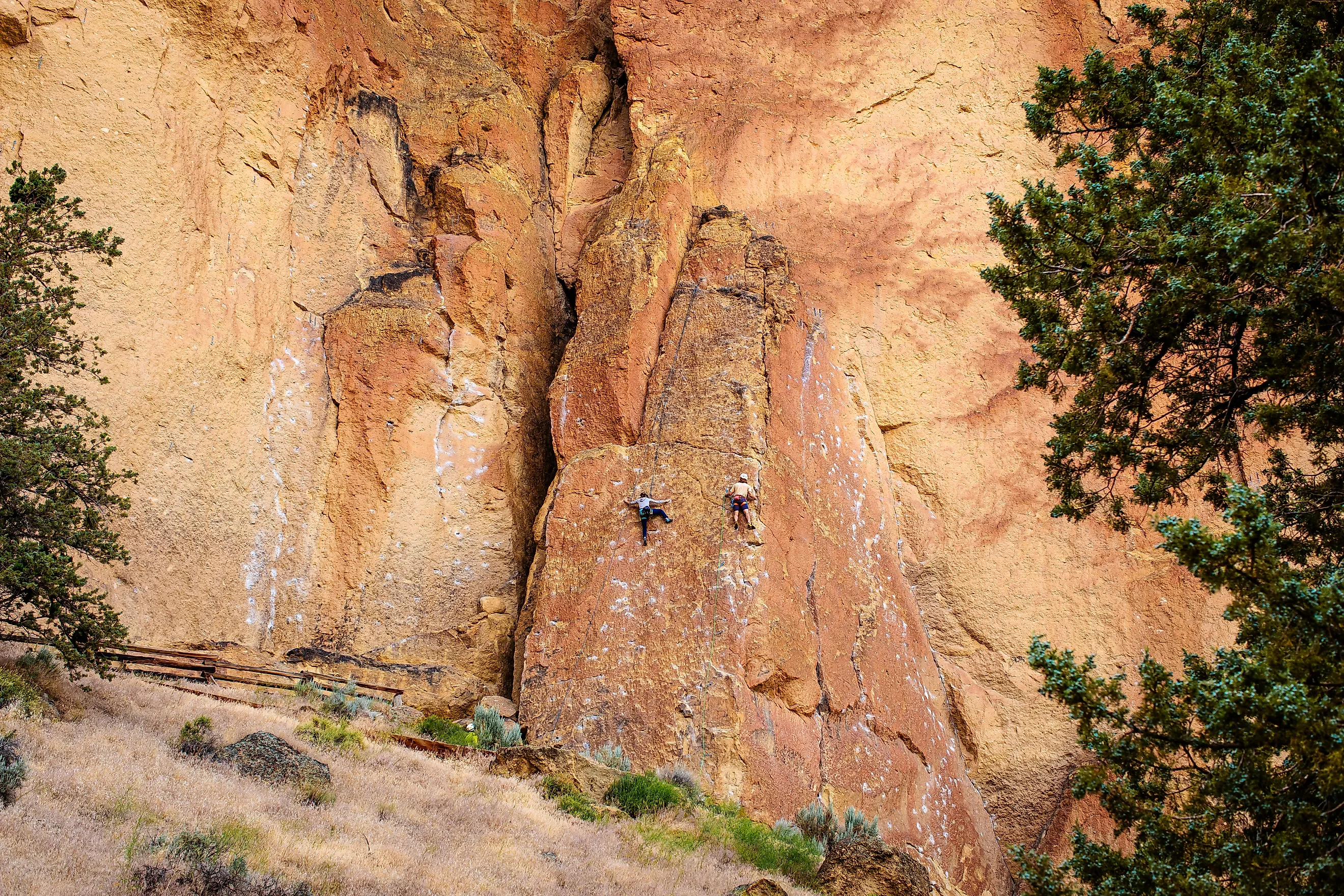
More than 1,000 bolted routes rise above the Crooked River at Smith Rock State Park in Oregon. Hundreds of miles away, climbers at Wisconsin's Devil's Lake work their way up quartzite cliffs above the water. Neither trip requires entering a national park. Some of the country's most interesting climbing terrain falls within state park boundaries, whether the boulders of Hueco Tanks in West Texas or the sandstone formations in California's Santa Cruz Mountains. Many of these parks also sit within a reasonable drive of major cities, making a weekend on the rock easier to arrange than a cross-country national park vacation. Just check the rules first. A route that is open at one park might require a permit, guide, or seasonal access at another.
Smith Rock State Park, Oregon

Climbers could spend days at Smith Rock without repeating a route. Oregon State Parks counts several thousand climbs here, including more than 1,000 bolted routes. The rock walls rise above the Crooked River in central Oregon's high desert, northeast of Bend.
Climbing dominates much of the park's reputation, but the canyon is not reserved for people carrying ropes. Hiking and mountain biking trails cross the landscape, including routes that descend toward the river and climb into the surrounding hills.
One complication comes from above. Golden eagles and prairie falcons nest around Smith Rock, and Oregon State Parks restricts access to some climbing areas during nesting season. Restrictions generally affect designated areas from approximately January 15 to August 1. Signs at the park identify closed routes, and current notices are worth checking before choosing a wall.
Climbers who want to stay overnight can use the park's walk-in bivouac area when it is open. Bend is also close enough for those who would rather trade a campsite for a restaurant and a bed after a full day on the rock.
Hueco Tanks State Park & Historic Site, Texas

Showing up at Hueco Tanks without a plan can mean missing the climbing entirely. Texas Parks and Wildlife limits self-guided access to North Mountain to 70 people at a time, and the area regularly reaches capacity during the November through March climbing season and on weekends and holidays.
There is good reason for the limits. Hueco Tanks protects pictographs, petroglyphs, and other archeological resources alongside rock formations that Texas Parks and Wildlife describes as having "world-class" climbing. The rounded rocks contain the pockets and overhangs that have made the park particularly famous among boulderers.
North Mountain is the park's self-guided area. Access to other sections requires a guide, and individual climbing areas can close when activity could threaten cultural resources. Texas Parks and Wildlife maintains a current list of those closures.
Hueco Tanks sits about 32 miles northeast of downtown El Paso, according to Texas Parks and Wildlife. Reservations make sense here, especially for climbers planning a winter trip when demand for North Mountain access is high.
Devil's Lake State Park, Wisconsin

Wisconsin does not maintain a developed climbing facility at Devil's Lake. Climbers go anyway.
Quartzite cliffs rise above the lake, creating one of the Midwest's better-known places to climb. The Wisconsin Department of Natural Resources does not issue climbing permits, reserve routes, or maintain the cliffs for the activity. Anyone who climbs does so at his or her own risk.
The warning is more than routine park language. Loose rock can occur, and the department reports climbing accidents and injuries each year. The agency says most involve inexperienced visitors who do not understand standard safety precautions or people who have consumed alcohol.
Experienced climbers get a substantial amount of rock without leaving the Midwest. A day at the cliffs can also include time beside Devil's Lake itself, while the park's campgrounds make it possible to stay overnight rather than drive home after climbing.
Castle Rock State Park, California

A rainy Thursday can ruin Saturday's climbing plans at Castle Rock State Park. California State Parks recommends waiting two or three days after heavy rain because water weakens the Vaqueros sandstone found at Castle Rock and Goat Rock. Climbing too soon can damage holds that took far longer than a weekend to form.
The sandstone has drawn climbers for nearly a century. Weathering created tafoni across the formations, leaving honeycomb-like pockets and other textures in the rock. Climbers use the area for bouldering as well as roped climbing.
Not every promising piece of rock is fair game. California State Parks prohibits climbing and other off-trail activity within the San Lorenzo Headwaters Natural Preserve. New bolts and replacement bolts require park approval, and other temporary restrictions can protect nesting birds or damaged areas.
Castle Rock sits in the Santa Cruz Mountains, giving Bay Area residents an alternative to spending much of a weekend driving toward California's better-known Sierra Nevada climbing destinations. Checking recent rainfall may be more important than checking traffic before heading out.
Minnewaska State Park Preserve, New York

Climbers heading to Minnewaska have one primary destination, Peter's Kill.
About half a mile of quartz conglomerate cliffs forms the park's designated technical climbing area. Single-pitch routes cover several difficulty levels, and New York State Parks describes the bouldering at Peter's Kill as some of the best in the Northeast.
A climbing pass is required. Visitors can purchase a daily or seasonal pass and must sign an annual acknowledgement of risk. Climbers use removable protection, and the rules prohibit adding pitons, bolts, or other new fixed anchors. Existing fixed anchors remain in some high-use areas.
Technical climbing generally runs from April through December when conditions permit. The rest of the preserve spreads across the Shawangunk Mountain Ridge, where forests, waterfalls, rock ledges, and three sky lakes make it easy to spend more than a few hours at Peter's Kill.
Interstate State Park, Minnesota

The handhold in front of a climber at Interstate State Park can be part of a rock formation roughly 1.1 billion years old. Ancient lava associated with the Midcontinent Rift cooled into basalt, leaving the cliffs that now rise beside the St. Croix River.
The Minnesota side of Interstate has several established climbing areas, including Tourist Rock. Cracks and faces in the basalt support routes across a broad range of difficulties, while bouldering areas give climbers another option. State climbing materials list routes from 5.0 through 5.13 on the Yosemite Decimal System.
Minnesota requires climbers to carry a free annual permit. Permanent anchors are prohibited, and the park does not install permanent climbing protection.
The same basalt holds another reason to look closely at the rock. Glacial water later carved hundreds of potholes into it. One formation, known as the Bottomless Pit, reaches about 60 feet deep.
Rocks State Park, Maryland

A 190-foot rock outcrop above Deer Creek gives Maryland climbers a serious objective without sending them into the Appalachian high country. The King and Queen Seat is the main climbing draw at Rocks State Park in Harford County.
Maryland's Department of Natural Resources lists climbs ranging from eight to 115 feet, with ratings from 4 to 5.12. Some vertical faces on the formation reach 94 feet.
There are several approaches. Climbers can reach the formation by taking the Red Trail from the Rock Ridge Picnic Area, the White Trail from the park office, or the Purple Trail from the Rapids parking lot. Novices should not mistake the short approach for easy climbing. Maryland officials encourage inexperienced climbers to seek professional training before attempting the King and Queen Seat.
Summer visitors have another detail to remember. Rocks State Park requires reservations on weekends and holidays from Memorial Day weekend through Labor Day.
Johnson's Shut-Ins State Park, Missouri

Summer is not climbing season at Johnson's Shut-Ins State Park. Missouri saves its two designated technical climbing cliffs for the cooler part of the year, permitting climbing and rappelling from the day after Labor Day through the Friday before Memorial Day.
The cliffs stand west of the East Fork of the Black River. Climbers need a permit, and Missouri limits access to 25 permits per day and 175 per week across the two areas.
There are equipment restrictions as well. Solo climbing is prohibited. Climbers cannot use bolts, pitons, or other anchors that damage the rock, and suitable trees or solid rock faces must serve as anchors.
The seasonal schedule creates two very different versions of Johnson's Shut-Ins. Summer crowds come for water rushing between the park's narrow rock channels. Once those busiest months pass, permitted climbers can turn their attention to the cliffs above the river.
Climbing Closer To Home
Climbing at a state park requires more homework than simply finding a promising wall on a map. A January trip to Smith Rock can coincide with raptor restrictions, while the same month falls squarely within the technical climbing season at Johnson's Shut-Ins. Minnewaska requires a climbing pass, and Hueco Tanks can reach its North Mountain capacity before an unprepared visitor arrives.
The payoff is considerable. Smith Rock has enough routes for a dedicated climbing vacation, Devil's Lake puts quartzite cliffs in the Midwest, and Castle Rock brings sandstone climbing within reach of the Bay Area. Depending on where home is, one of the country's better climbing trips may require a few hours in the car rather than a flight and a national park reservation.