The Ocean Creatures That Can Kill You Without Teeth
When a human enters the ocean, they enter a vast, beautiful, and dangerous world full of creatures built for survival. Nature has given these animals a wide range of defenses to protect themselves in a world of hungry predators. Some of these animals use toxins, others venom, and some even deploy saliva more potent than cyanide to take down an opponent or hunt for food. In almost all cases, a human death is not from an outright attack, but from an unfortunate and unintended close encounter where the animal feels threatened enough to deploy its last and best defense. The following are sea creatures that can, but would prefer not to, kill a person.
Portuguese man o' war

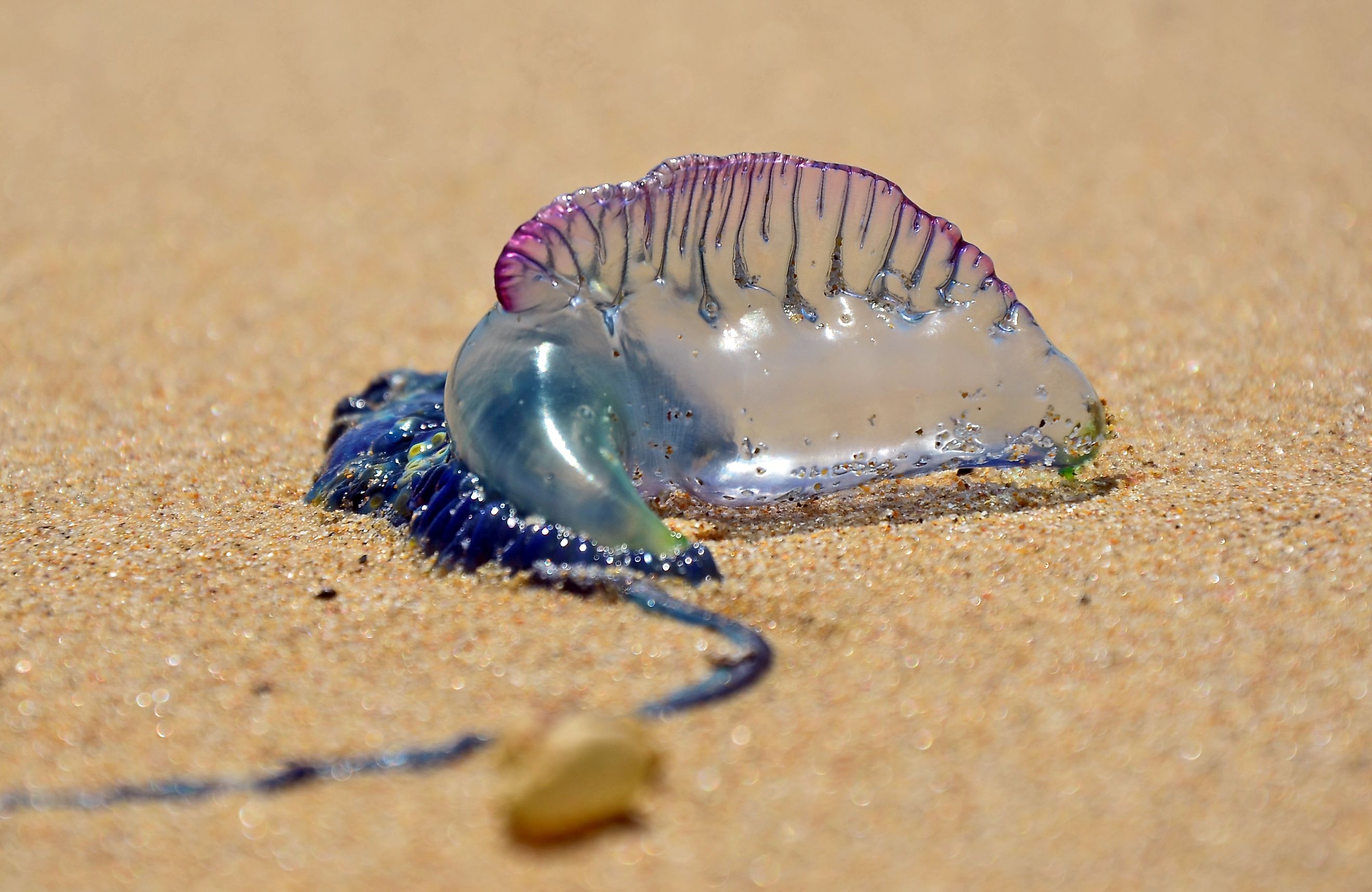
This jellyfish is common off the Atlantic coast, especially near Florida and in the Gulf of Mexico. They live at the surface of the water, and their movements are at the mercy of wind and currents, which can sometimes leave thousands of these creatures in a small area. Portuguese man o' war have long tentacles used to catch fish, sometimes stretching out to 165 feet (30 feet is more common) that contain a potent venom that causes excruciating systemic pain to any lifeform that comes in contact with it. These severe stings shock the body causing respiratory distress and cardiovascular collapse, leading to drowning, allergic reaction, or a heart attack if help is not nearby. While more than 10,000 people are reportedly stung by Portuguese man o' war annually, only a handful die.
California scorpionfish

Hiding perfectly camouflaged on the seafloor from tidal pools to a depth of 500 feet, primarily on the Pacific coast from Southern California down to Baja, these fish are an accident waiting to happen for unsuspecting ocean goers. With a row of sharp, venomous spines along its dorsal, anal, and pelvic areas, stepping on this fish will unleash a painful toxin that causes severe hypotension, respiratory distress, and shock. Though the ensuing excruciating pain and extreme swelling itself won't kill a person, the shock and disorientation can lead to drowning. If the spines break off and embed themselves, they can introduce bacteria which can lead to a deep infection or tissue damage.
Stingray

Stingrays defend themselves by whipping a serrated, venomous tail barb into their victim as fast as a lightning strike. It's a defensive move used as a last resort or if surprised as stingrays are non-aggressive creatures, but lethal if the barb punctures a vital organ. In the US alone there are a reported 750 to 2,000 stings reported annually, though fatalities are rare. In modern history there have been fewer than 20 stingray-related deaths, the most notable being Australian wildlife expert Steve Irwin. The southern stingray lives in shallow coastal flats, bays, and estuaries down to 130 feet in the coastal waters of the Atlantic from New Jersey down to the Gulf of Mexico while its cousin, the California round stingray, is abundant along the beaches of Southern California down through Mexico.
Lionfish

Native to Indo-Pacific waters, the lionfish has become heavily invasive in the Caribbean and western Atlantic Ocean, posing a threat to swimmers. Found in coastal shallows to a depth of 400 feet, lionfish possess venomous, elongated dorsal, anal, and pelvic spines that, like the scorpionfish, cause blinding pain, respiratory distress, and temporary paralysis, which can lead to drowning for a swimmer or diver. Though a lionfish sting will not kill a person directly, it is an agonizing medical emergency that results in throbbing pain that can last for days, bacterial infection, nausea, dizziness, and vomiting, and potential severe allergic shock.
Stonefish

Far from US waters, the highly potent stonefish, recognized as the world's most venomous fish, lives in coral reefs, intertidal zones, and rocky coastal areas of the Indo-Pacific, including northern Australia, Southeast Asia, Pacific islands, and the Indian Ocean, though its range has spread recently into the far eastern Mediterranean Sea and Suez Canal. Unlike the lionfish and scorpionfish, the neurotoxins and cytotoxins are strong enough to kill a person directly. These fish have 13 needle-like dorsal spines that inject these toxins when stepped on or harassed. The venom causes instant tissue death, extreme pain, paralysis, shock, and heart failure. Fortunately, a highly reliable anti-venom was developed in 1959, reducing fatalities as hospitals and first responders in places with stonefish often keep them handy.
Blue-ringed octopus
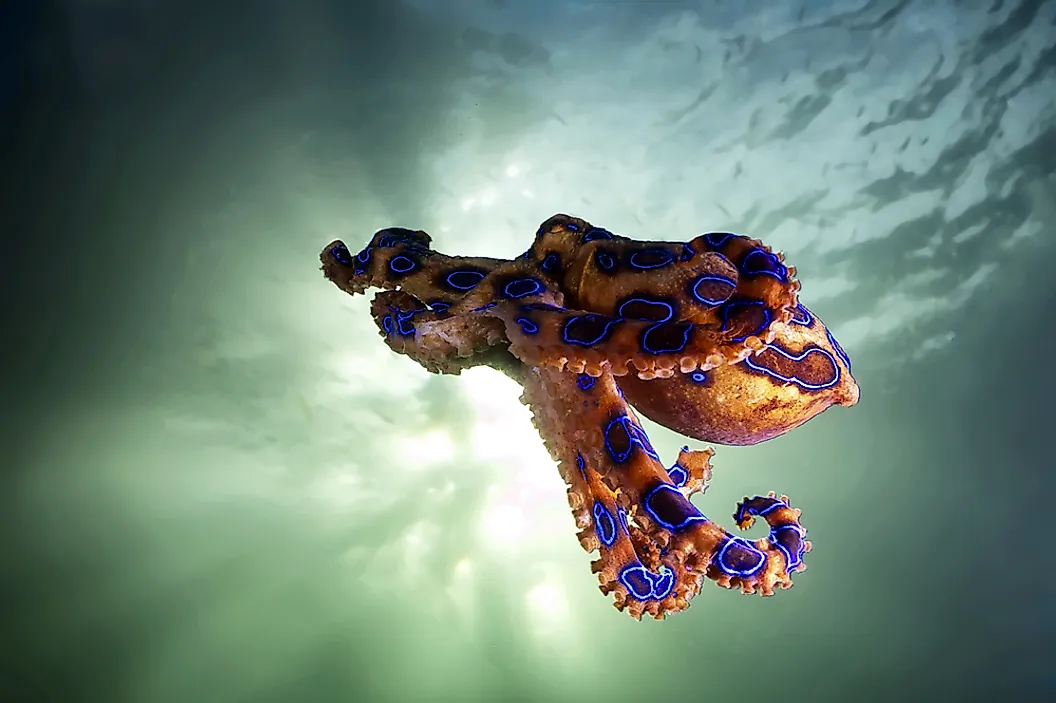
Oceangoers in the contiguous US don't need to worry about the blue ringed octopus, but they can be found in the Pacific waters surrounding the US territory of Guam and other nearby western Pacific islands. Inhabiting tide pools and shallow coral reefs in the Pacific and Indian oceans to a depth of 60 feet, blue ringed octopuses carry in their saliva a massive dose of tetrodotoxin, a neurotoxin 1,000 times more powerful than cyanide. It is delivered via a tiny, painless peck from their beak, paralyzing human breathing muscles and causing suffocation within minutes. One octopus can carry enough tetrodotoxin to kill 26 adult humans. However, they are extremely shy and docile creatures, preferring to flee rather than attack. Tiny, about the size of a golf ball, they are also highly reclusive and spend their days hiding and will only peck at a human if actively handled, cornered, or stepped on. Prior to pecking, a blue-ringed octopus will give a visual warning with their signature iridescent blue rings pulsing and glowing. Documented human deaths are rare, with only a handful recorded in modern history.
Geography cone snail

Though a single cone snail has enough complex conotoxins to kill up to 700 people, these tiny, nocturnal bottom-dwellers spend their lives buried under beach sand, under coral shelves, or beneath rocks. To hunt, they deploy a venomous, harpoon-like radula to paralyze small fish and marine worms for food. There have only been 30 to 40 documented fatalities attributed to cone snails, almost exclusively due to people actively picking them up to collect its pretty shell, unaware of the danger inside. The snail's venom contains a powerful, built-in numbing agent, which makes the prick feel completely painless. Unaware they've been exposed to the toxins, systemic muscle weakness sets in later. There is no anti-venom for a cone snail sting, but a mechanical ventilator can be used to keep the patient breathing until the body naturally breaks down and flushes the toxin out, which takes 24 to 48 hours. Cone snails live in tropical coral reefs of the Indo-Pacific region.
Box jellyfish

A list like this would be remiss without including the Australian box jellyfish, considered the most venomous marine animal on Earth. Unlike other high-threat creatures like the stonefish or blue-ringed octopus, the box jellyfish possesses speed, stealth, and a toxin that kills faster than almost any other substance in nature. Their tentacles contain thousands of nematocysts that inject a highly potent cardiotoxin. A sting can trigger a rapid shutdown of a person's cardiovascular system, leading to cardiac arrest and death within minutes. Because they live in shallow coastal waters to a depth of just 20 feet and are nearly transparent in the water, chances of encounter with a swimmer or diver are high. These potent creatures are found in the waters of north Australia and the Indo-Pacific. Globally, an estimated 40 to 100 people are killed by box jellyfish annually, making them vastly more lethal than sharks, stingrays, and sea snakes combined.
Don't fear the deep
Contrary to human imagination, the ocean is not full of creatures waiting for a human to trespass into its watery environment so they can attack. The blue-ringed octopus, though potentially deadly, is docile and reclusive, preferring to live its days in peace, while the stingray will only strike when surprised or threatened. Even the deadly box jellyfish, which accounts for more deaths than virtually every other sea creature combined, does not seek out humans to attack. In all cases, the venom, toxins, and poisons deployed by these animals are used to catch food, and, in rare cases where humans carelessly come in contact, defend themselves.