How Hudson Bay Compares To The Great Lakes
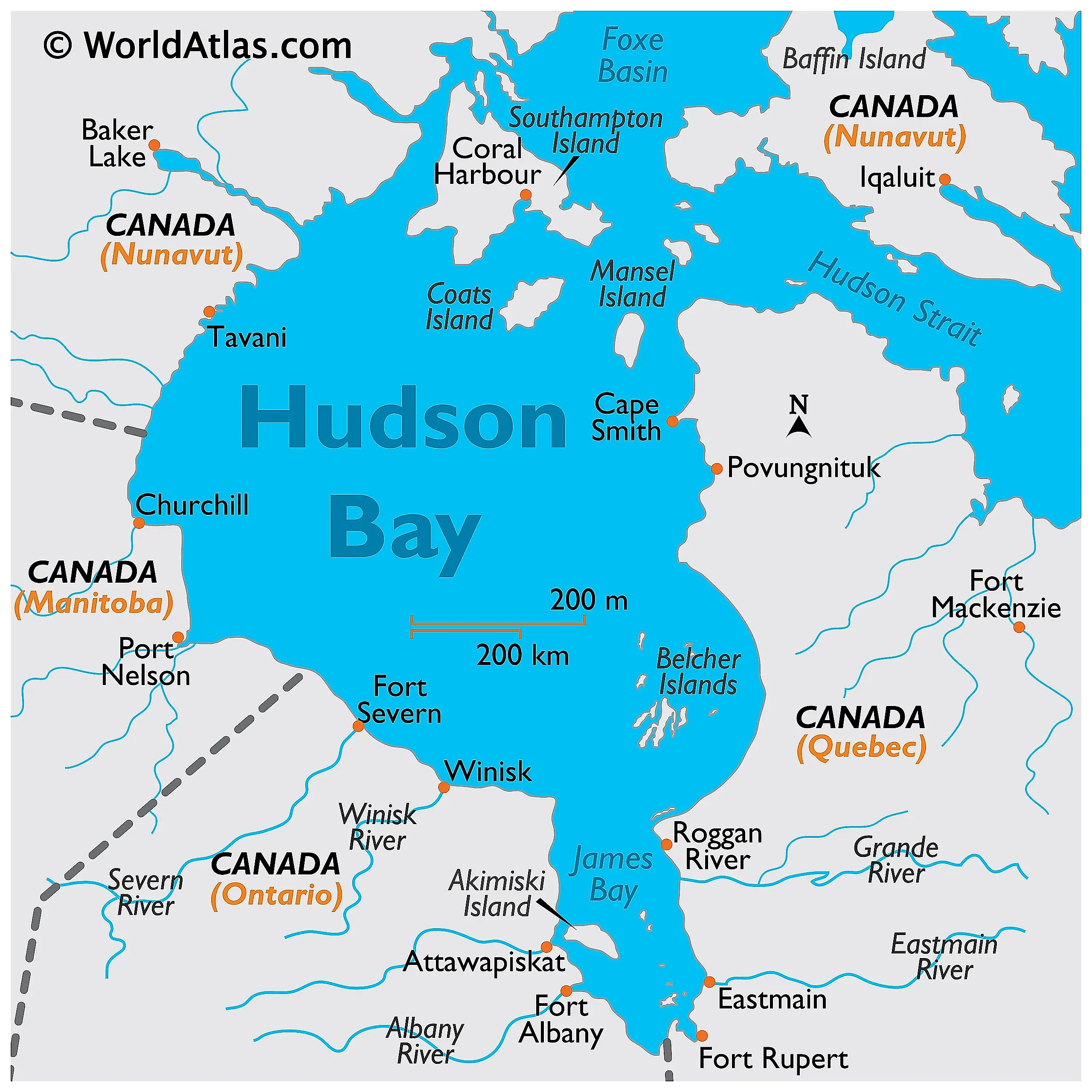
Hudson Bay is five times the area of all five Great Lakes put together, and Lake Superior is deeper than it. Not deeper than part of it. Deeper on average, by 47 meters, and deeper at the bottom by 136. An inland sea covering 1,230,000 square kilometers is out-plumbed by a lake in Minnesota, which tells you most of what you need to know about Hudson Bay. It is enormous in two dimensions and embarrassing in the third.
On Area It Is Not A Contest

This is the one category where the bay simply wins and keeps winning.
Hudson Bay covers 1,230,000 square kilometers. Superior, the largest Great Lake, manages 82,100, which makes the bay 15 times bigger. Michigan is beaten 21 times over, Huron 21, Erie 48 and Ontario 65.
All five Great Lakes combined cover 244,360 square kilometers, so the bay is five times the lot of them. It is 1,370 kilometers long and 1,050 wide, which is roughly the distance from London to Rome in both directions.
Then Superior Humiliates It

The depth comparison is where a sea loses to a lake, which should not be possible and is.
Hudson Bay averages 100 meters and bottoms out at 270. Lake Superior averages 147 and reaches 406. The lake is deeper on both measures by comfortable margins.
Wikipedia makes the point against a different opponent and it lands just as hard: the Bay of Bengal averages 2,600 meters. Hudson Bay is a sea in name and a puddle in profile.
It Barely Beats Lake Huron

Narrow the comparison to maximum depth and the bay scrapes past most of the group, which is not the triumph it sounds like.
Hudson Bay's 270-metre maximum beats Huron at 229, Ontario at 244 and Erie at 64. It loses to Michigan at 281 and to Superior at 406.
So the second largest bay on Earth is deeper than three Great Lakes and shallower than two. For a body of water with a quarter the surface area of the contiguous United States, finishing third in a field of six is a poor afternoon.
Volume Is Where Size Finally Tells

Multiply a vast surface by a modest depth and you still get a great deal of water.
At roughly 123,000 cubic kilometers, Hudson Bay holds about five and a half times the 22,684 cubic kilometers in all five Great Lakes. Superior alone holds 12,100, so the bay holds ten Superiors.
But note the ratio. The bay has five times the area and five and a half times the volume, which means it is barely more efficient per square kilometer than a lake system it dwarfs.
None Of It Counts Anyway

There is a disqualification here that the whole comparison has been politely ignoring.
Hudson Bay is salt water, an inland marginal sea of the Arctic Ocean, with surface salinity between 28 and 31 practical salinity units. The Great Lakes hold roughly a fifth of the world's surface fresh water.
So the bay wins on volume with water nobody can drink, which is the same result the Great Salt Lake produced at a much smaller scale. Being bigger is not the same as being useful.
It Is Frozen For Half The Year

Availability is a category the Great Lakes also take, and not narrowly.
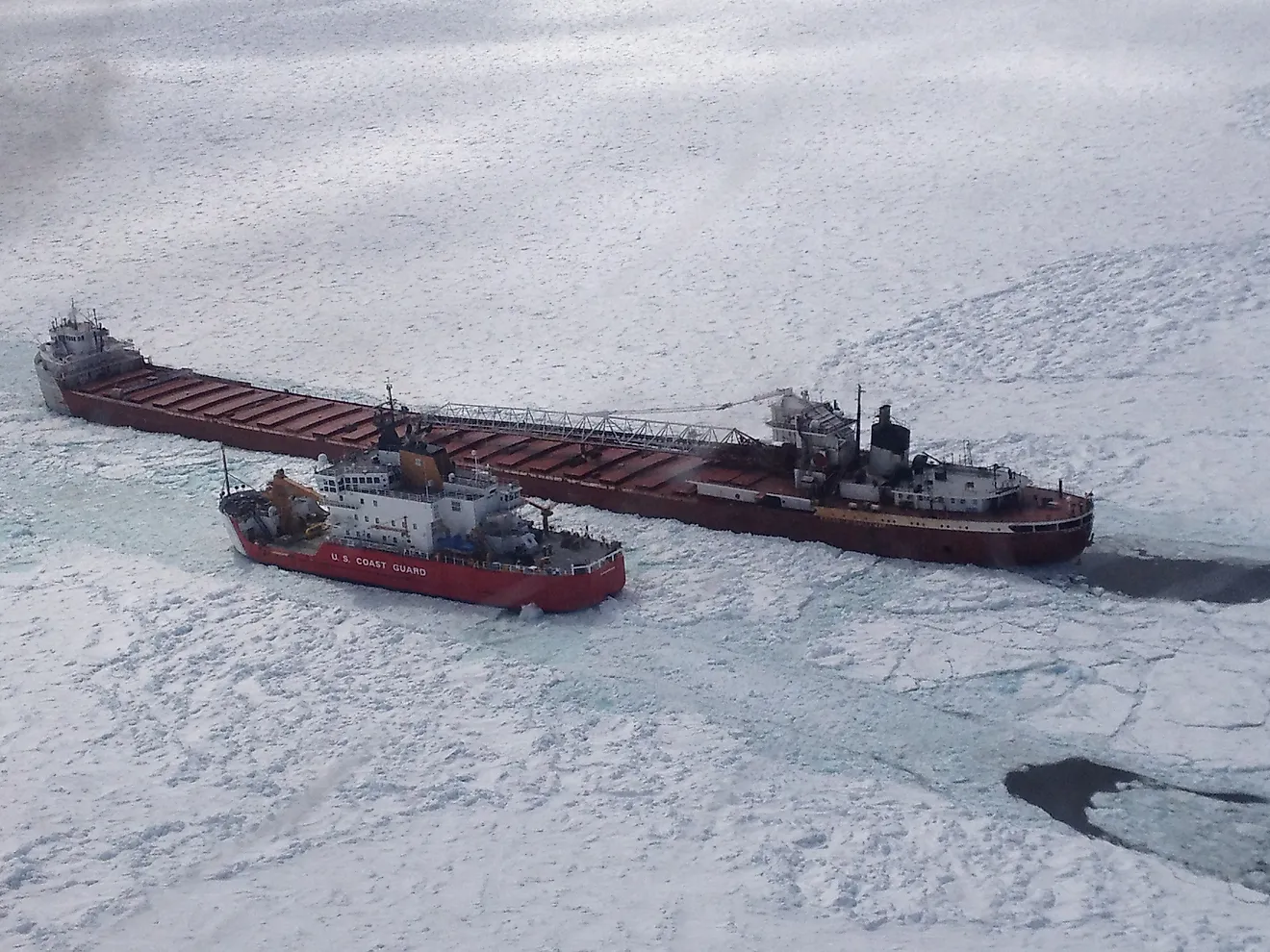
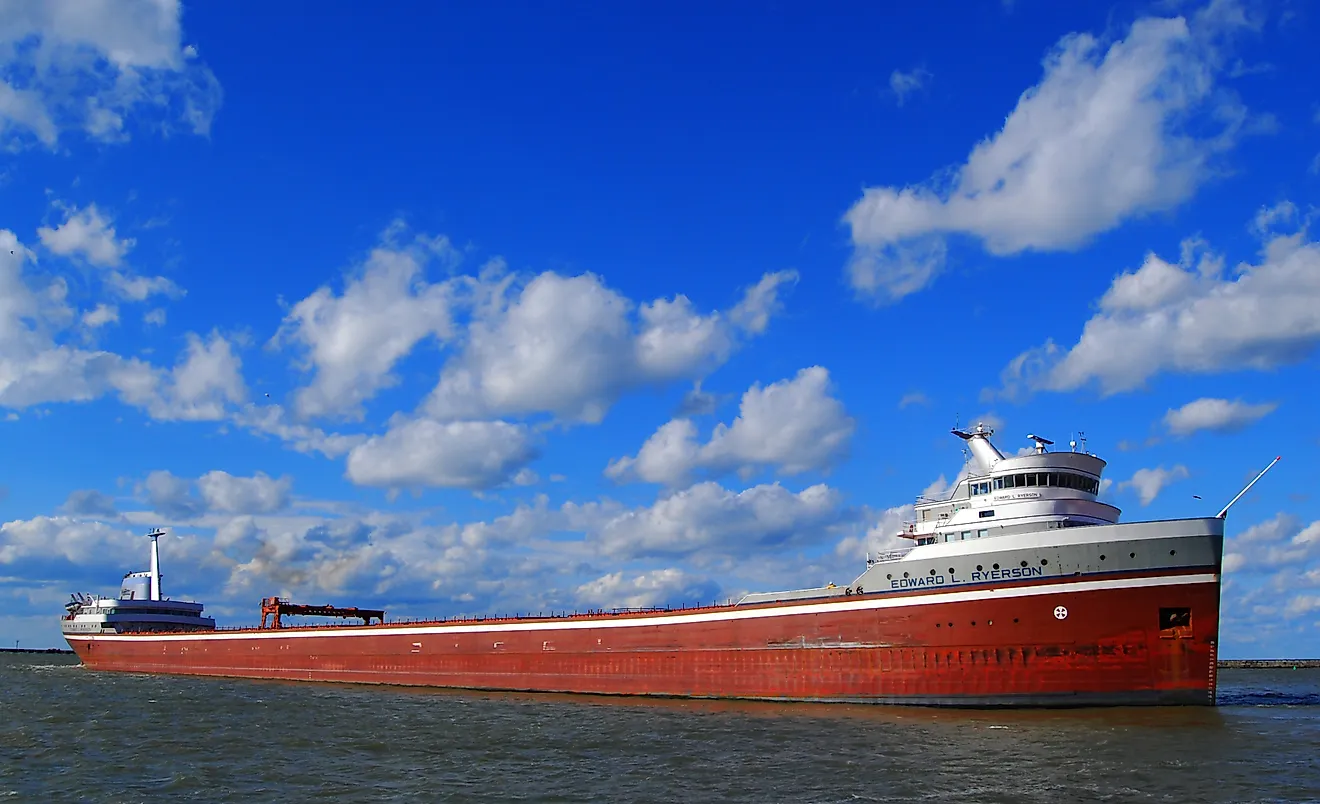
Hudson Bay freezes from the middle of December to the middle of June, with the ice season exceeding 240 days in the northern reaches and pack ice reaching one and a half to two meters thick. The Great Lakes ice over partially and inconsistently, and shipping runs most of the year.
Six months of the largest bay in North America is a solid surface. Polar bears walk on it, which is a sentence no Great Lake can offer.
The Drainage Basin Is Continental
One number genuinely puts the Great Lakes in their place, and it is not the bay itself.
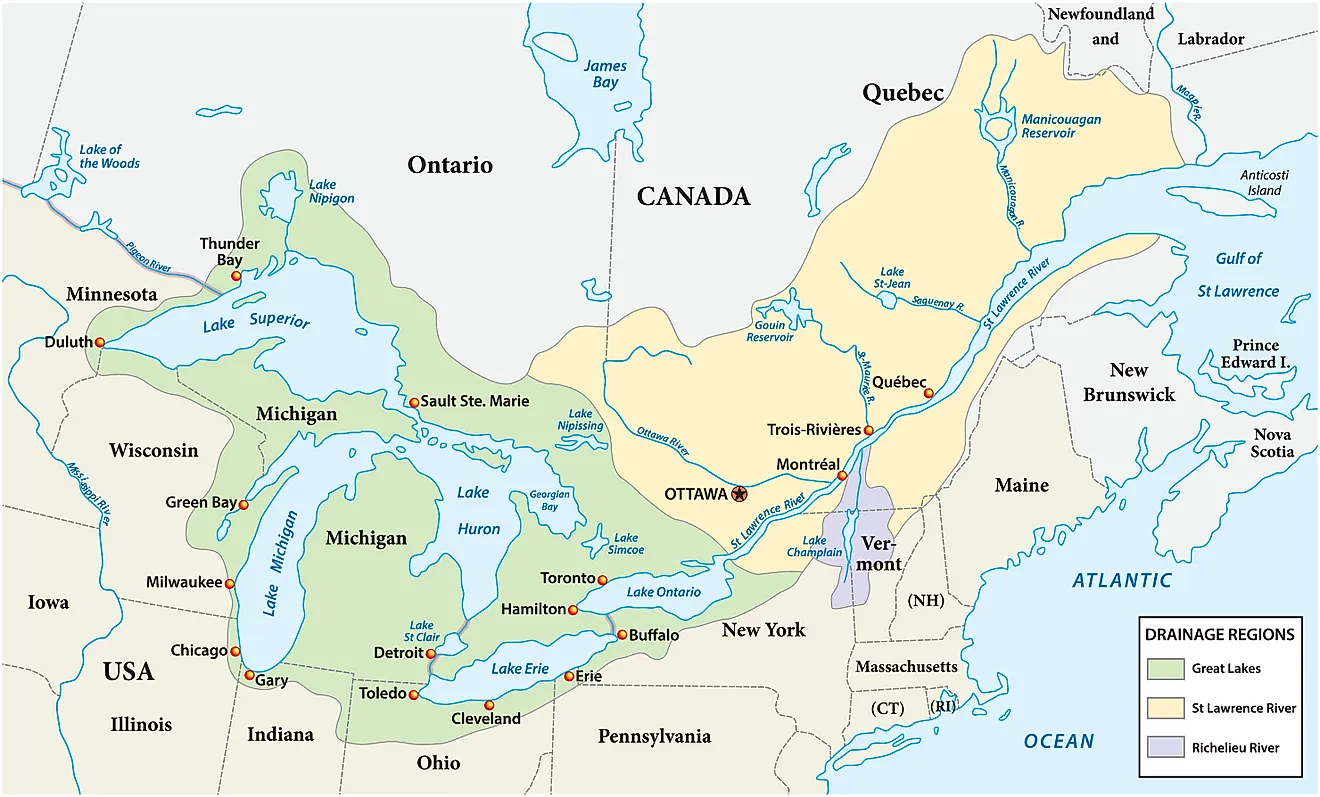
The Hudson Bay drainage basin covers 3,861,400 square kilometers, taking in all of Manitoba, parts of Alberta, Saskatchewan, Ontario, Quebec, Nunavut and a slice of the United States. That is roughly five times the Great Lakes basin.
A fifth of Canada drains into it. The bay is the plughole of a continent, which is the only sense in which it is genuinely more impressive than the lakes.
It Has Less Gravity Than Everywhere Else
Here is the fact no Great Lake can match, and it took satellites to confirm it.
When Earth's gravitational field was mapped in the early 1960s, an area of below-average gravity was found over the Hudson Bay region. The leading explanation was that the crust remains depressed from the weight of the Laurentide ice sheet, though GRACE satellite data later suggested that cannot account for all of it.
You weigh very slightly less at Hudson Bay than almost anywhere else on the planet. The Great Lakes have nothing remotely comparable and have stopped pretending otherwise.
The Land Is Still Standing Back Up

The reason the bay is shallow is also the reason it is shrinking, slowly, in a way no lake is.
Hudson Bay sits in a depression gouged into the Canadian Shield by the Laurentide ice sheet, and the crust is rebounding now the weight has gone. Uplift reaches up to 1.1 centimeters a year in the southeast of the bay.
A centimetre sounds trivial against a 100-metre average depth, and over ten thousand years it is 110 meters. Hudson Bay is rising out of itself.
The Scoreboard

Hudson Bay beats all five Great Lakes combined on area by five times and on volume by five and a half, with a drainage basin five times larger again. It also loses to Lake Superior on average depth by 47 meters and on maximum depth by 136, which for a sea against a lake is genuinely humbling.
It is frozen half the year, its water is undrinkable, and it is slowly being pushed up out of the hole it sits in. In exchange it has polar bears, 1,500 islands, a fifth of Canada draining into it, and measurably less gravity than anywhere else on Earth. The Great Lakes are more useful. Hudson Bay is weirder, and it is not close.