The Largest Octopus Ever Found Off The US Coast
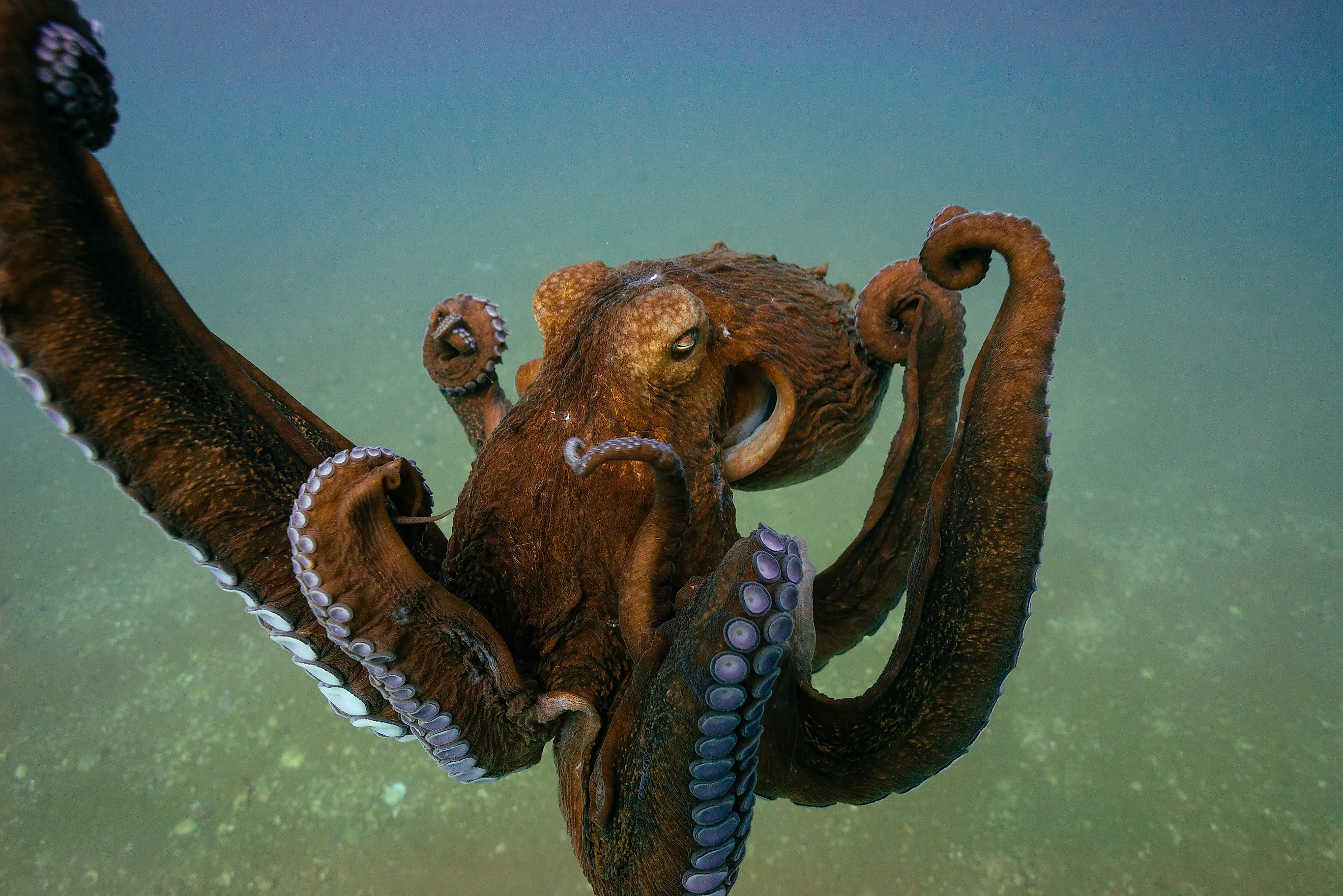
The giant Pacific octopus (Enteroctopus dofleini) is the largest found off the United States coast and the largest octopus species in the world. Typically, adults weigh anywhere from 22 to 110 pounds. While some unsubstantiated reports of individuals weighing hundreds of pounds exist, the vast majority do not weigh over 150 pounds.
These animals thrive in the cold, nutrient-rich waters of the Pacific, where they range up the entire West Coast. They grow rapidly into the largest octopus species on Earth, reaching maturity within two years.
Using traps and recording data from fishing ships, scientists are actively tracking the length and weight of this elusive species to find the upper limit on this cephalopod's size.
A Coastal Range from Alaska to Southern California

Their range covers Southern California, the Puget Sound of the Pacific Northwest, and the Gulf of Alaska. Southern California marks the southern end of the giant Pacific octopus's range in US waters, with their range extending just a bit further into Mexico's Baja California.
The species continues north along the entire West Coast into the Aleutian Islands of Alaska. Of about 300 octopus species worldwide, only eight live in Alaska, and the giant Pacific octopus outranks every one of them in size.
Depth extends the range vertically, with research expeditions and commercial operations documenting individuals diving down to depths of about 5,000 feet. While they most commonly occur up to 330 feet and in shallow, intertidal zones, these solitary animals can dive much deeper as they hunt deep-water crustaceans, mollusks, and fish around continental shelves and seamounts.
Verified Weight and Length Measurements of an Ocean Giant

While unverified reports claim individual giant Pacific octopuses weigh up to 600 pounds and have a 30-foot arm span, verified measurements fall far short of these numbers. Researchers use pots deployed in rocky habitats to capture, weigh, measure, and finally release the animals.
They also keep track of data reported by commercial fishing operations that incidentally haul up giant Pacific octopuses in their cod pots. According to the Alaska Department of Fish and Game, Canadian researchers recorded a 156-pound individual, one of the largest confirmed weights.

The 600-pound claim comes from one single report from a commercial diver in the 1950s accompanied by photographs of too poor quality to substantiate the claim. Even at smaller sizes, Enteroctopus dofleini is still the reigning heavyweight among octopuses, with eight arms that can span up to 16 feet and an average of 2,140 to 2,240 suckers.
A Life Measured in Seasons

Like the vast majority of octopuses, the life of the giant Pacific octopus is measured in only a few seasons. Their average lifespan is three to five years, which means they also reach their massive size rapidly. Eggs of this species incubate for 230 days, and hatchlings, only a little larger than a grain of rice, drift as plankton for up to 90 days.
After this initial stage of life as tiny individuals, they begin quickly gaining mass, consuming about two to four percent of their body weight each day. This species also experiences two distinct growth periods; a slow period from January to June and a faster period from July to December.

Most reach their full size after about two years, at which point they can reproduce. As terminal breeders, the giant Pacific octopus mates only once, and both males and females die soon after. The female uses the last of her strength to guard and aerate her eggs for about five to seven months, sometimes stretching up to ten months in the cold waters of Alaska.
She does not eat during this period, and uses her arms to blow fresh, oxygen-rich water over the strands of up to 100,000 eggs to keep them clean and free from pathogens and algae. Typically, right before or after the eggs hatch, the mother dies, and the next generation of giant Pacific octopuses drift out into the ocean.
Relentless, Nocturnal Hunters

To fuel their massive size and rapid growth, these cephalopods spend all night hunting for a range of prey hidden in rock crevices, reefs, kelp, and cracks within seamounts and oceanic shelves. They use their size and strong arms to snatch their meals and pry open shells.
In addition to using their sheer size, this species also emits a fluid that chemically softens shells resistant to prying apart or biting through. While they are the largest octopus species, these hunters are still at great risk of becoming another predator's meal. To avoid this, they often grab their prey and whisk it away back to the safety of their dens.

The size of this elusive creature does not prevent them from squeezing into tiny spaces. Like their relatives, because they have no skeleton, this octopus can fit into any hole that is at least as large as their beak (about two inches). This allows them to effectively hunt and hide as they can compress their large frame throughout their crevice-filled environment.
The World's Largest Octopus
The life of the giant Pacific octopus is one of contrasts and complexities; their habitats vary from shallow intertidal zones to the dark waters of the twilight zones.
Despite their massive size, they can fit their entire body through a hole the size of their beak, and they experience rapid growth condensed into a lifespan of only three to five years. Within this short span, hatchlings the size of a grain of rice reach arm lengths of 10 to 16 feet and can weigh in at up to about 156 pounds.
Between data reported by commercial operations and research conducted by marine biologists, a new, verified record could be set.