Why Great Lakes Freighters Are So Long And So Narrow
The Poe Lock at Sault Ste Marie is 1,200 feet long and 110 feet wide, and the longest ship ever built to use it is 1,013.5 feet. That leaves 186 feet of chamber nobody has ever filled, which seems like an oversight until you notice the width. The Paul R. Tregurtha's 105-foot beam clears the lock walls by about two and a half feet on each side. The length was never the constraint. The width was, and everything about a laker's shape follows from that one number.
Width Is Fixed By Concrete

A naval architect designing a laker starts with two numbers that cannot be negotiated.
The Poe Lock is 110 feet across and 32 feet deep. That caps beam and it caps draft, and no amount of clever design moves either figure. The MacArthur Lock next door is only 800 by 80, which rules it out for the largest ships entirely.
Every thousand-footer in the fleet is 105 feet wide. Not approximately. All thirteen of them, built by different yards across a decade, landed on the same number.
So Length Was The Only Way To Grow

With two dimensions locked, capacity could only come from the third.
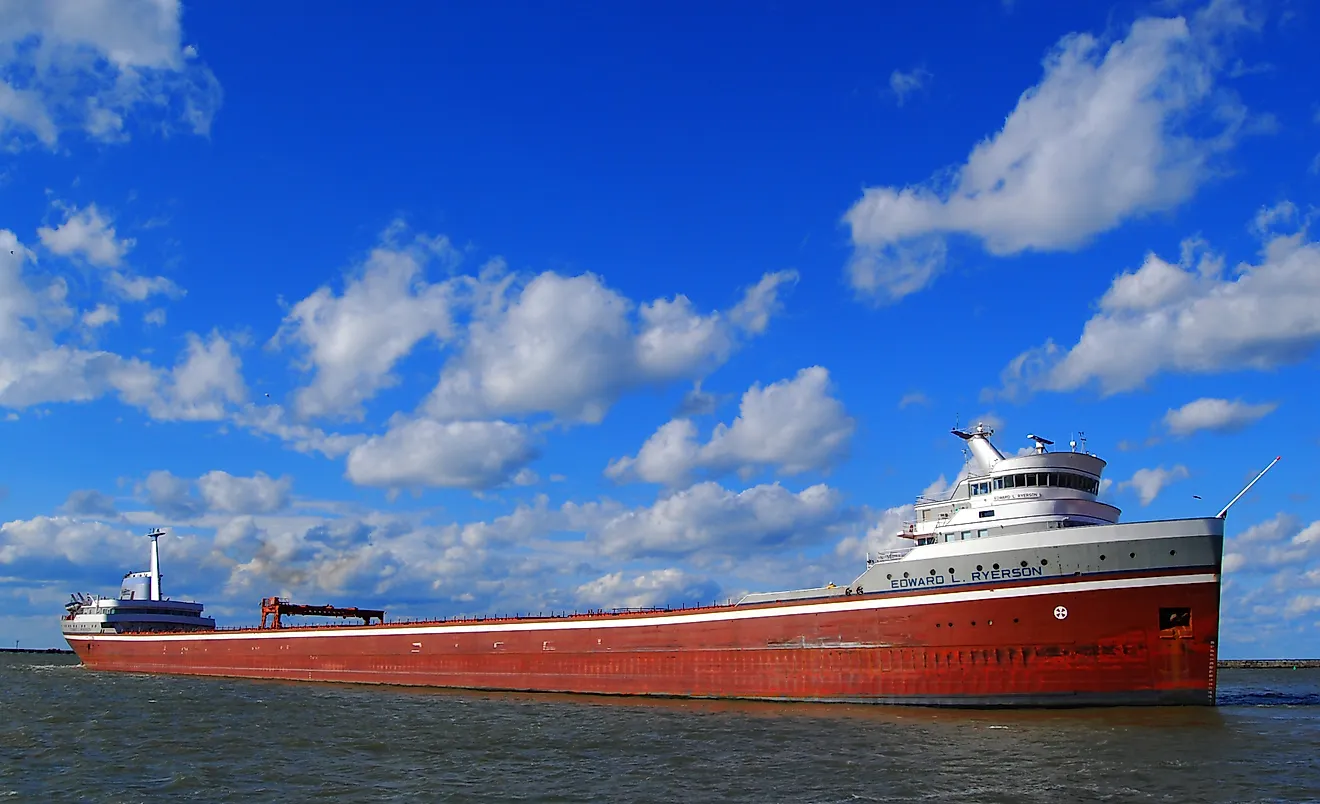
Cargo volume is beam times draft times length. Hold the first two constant and the only route to a bigger ship is a longer one. The result is a hull roughly 9.7 times longer than it is wide, where an ocean bulk carrier of similar tonnage runs closer to 6.5.
That ratio is the entire answer to the question. Lakers are long because they were forbidden from being wide.
The Hull Is Shaped Like The Chamber

Once the lock dictates the envelope, the efficient move is to fill it completely.
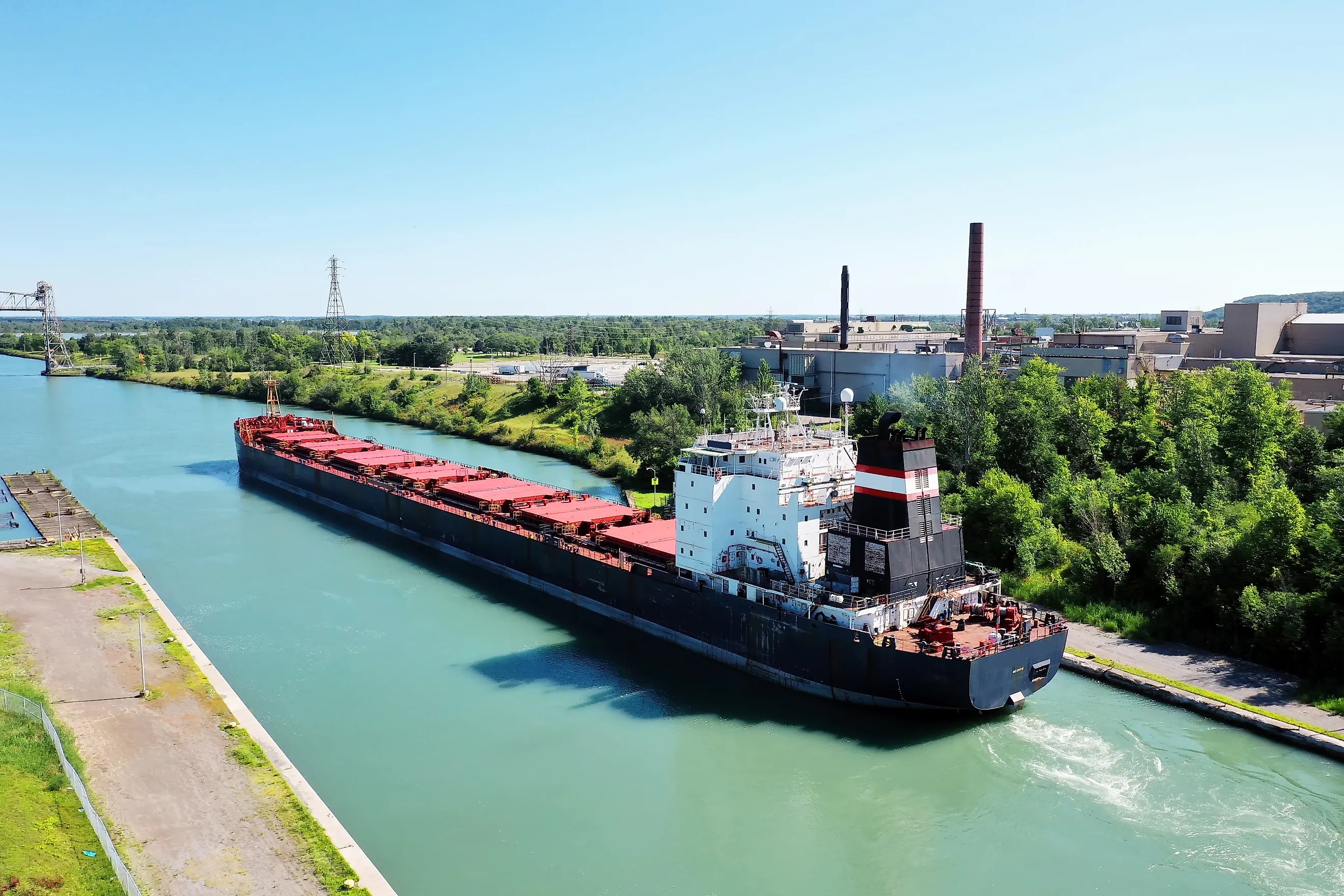
Lakers carry blunt bows and straight parallel sides for most of their length, because tapering the hull the way an ocean ship does would waste permitted volume. A rectangular box fits a rectangular chamber.
Ocean vessels can afford finer lines because they are optimizing for speed across thousands of miles. A laker is optimizing for tons per lock cycle on a run of a few hundred.
Draft Is Capped Twice Over

Depth is limited by more than the lock sill, which is why lakers sit shallow for their size.
Connecting channels and harbor approaches across the system have their own controlling depths, and a ship drawing more than the shallowest point on its route simply cannot complete it. The Seaway standard allows 26 feet 6 inches.
Which means a laker cannot gain capacity by going deeper any more than by going wider. The hull is pressed flat from two directions and stretched in the one remaining.
The Welland Canal Traps Them

Building to the Poe Lock has a permanent consequence that the designers accepted knowingly.
The Welland Canal, which lifts ships around Niagara Falls, runs through eight locks 80 feet wide with a maximum permitted length of 740 feet. A thousand-footer exceeds the length limit by nearly 300 feet and the width limit by 27.
So the thirteen largest ships on the lakes are physically barred from Lake Ontario and the Atlantic for as long as they float. They were built for one lock and confined by another.
Salties Are Built To The Smaller Number

The system runs two fleets to two different standards, and the smaller one has the wider reach.
A Seawaymax vessel is limited to 740 feet by 78 feet, with air draft under 116.5 feet. Ocean ships built inside that envelope can sail from Turkey to Duluth, passing lakers far too large to ever reach salt water.
The limit cuts both ways, which is the detail people find hardest to believe. The big ships are the trapped ones.
Canadian Ships Chose Differently

One fleet on the same lakes decided the Welland limit mattered more than the Poe allowance.
Canadian operators build Welland Canal-sized vessels rather than thousand-footers, which keeps the Atlantic open to them. After Canada lifted a 25 percent tariff on foreign-built Canadian-flagged vessels in 2010, new orders followed and the first new Canadian lakers entered service in 2011.
Same lakes, same cargo, different constraint selected. The American fleet maximized capacity. The Canadian fleet maximized range.
The Lock Has Spare Length Nobody Used

The odd detail in all of this is that the ships stopped short of the only limit that was not binding.
The Poe allows 1,200 feet. The longest laker ever built reached 1,013.5. Nobody has ever constructed a vessel using the full chamber, despite length being the one dimension available to them.
Practical limits took over. A longer hull is a more flexible beam, harder to handle in the connecting rivers, and the Cuyahoga and similar approaches impose their own turning restrictions regardless of what the Soo permits.
Self-Unloading Made The Shape Work

A long narrow hull full of ore would be an awkward thing to empty without one further piece of engineering.
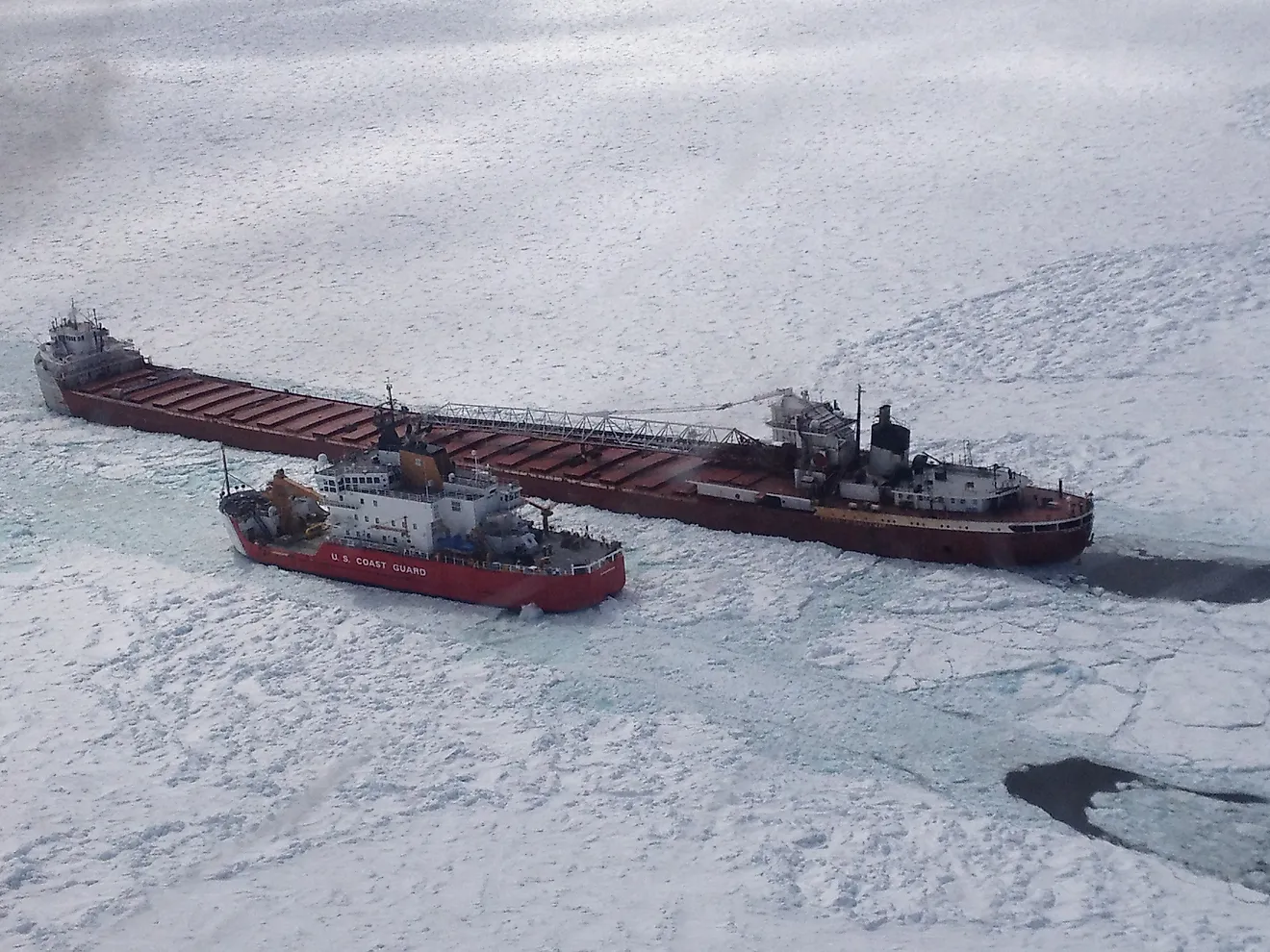
Lakers carry their own unloading booms and discharge without shore cranes. A ship can dock at a steel mill and unload in roughly 10 to 12 hours with a crew of about 20.
That capability is what lets the fleet serve terminals the length of the system, and it is why nearly every thousand-footer in service is a self-unloader rather than a straight-decker.
The Short Answer

Great Lakes freighters are long and narrow because the Poe Lock is 110 feet wide and 32 feet deep, which fixes beam and draft permanently, leaving length as the only dimension a designer can use to add capacity. The result is a hull nearly ten times longer than its width, with a blunt bow and straight sides to fill the chamber completely.
The cost of that choice is permanent confinement, since the Welland Canal's 80-foot locks will never admit a 105-foot ship. Thirteen vessels were built to exploit one lock and will spend their entire working lives above it. Two and a half feet of clearance on each side bought them the largest cargo capacity on the lakes and took the ocean away.