5 Most Snake Infested Rivers In Illinois
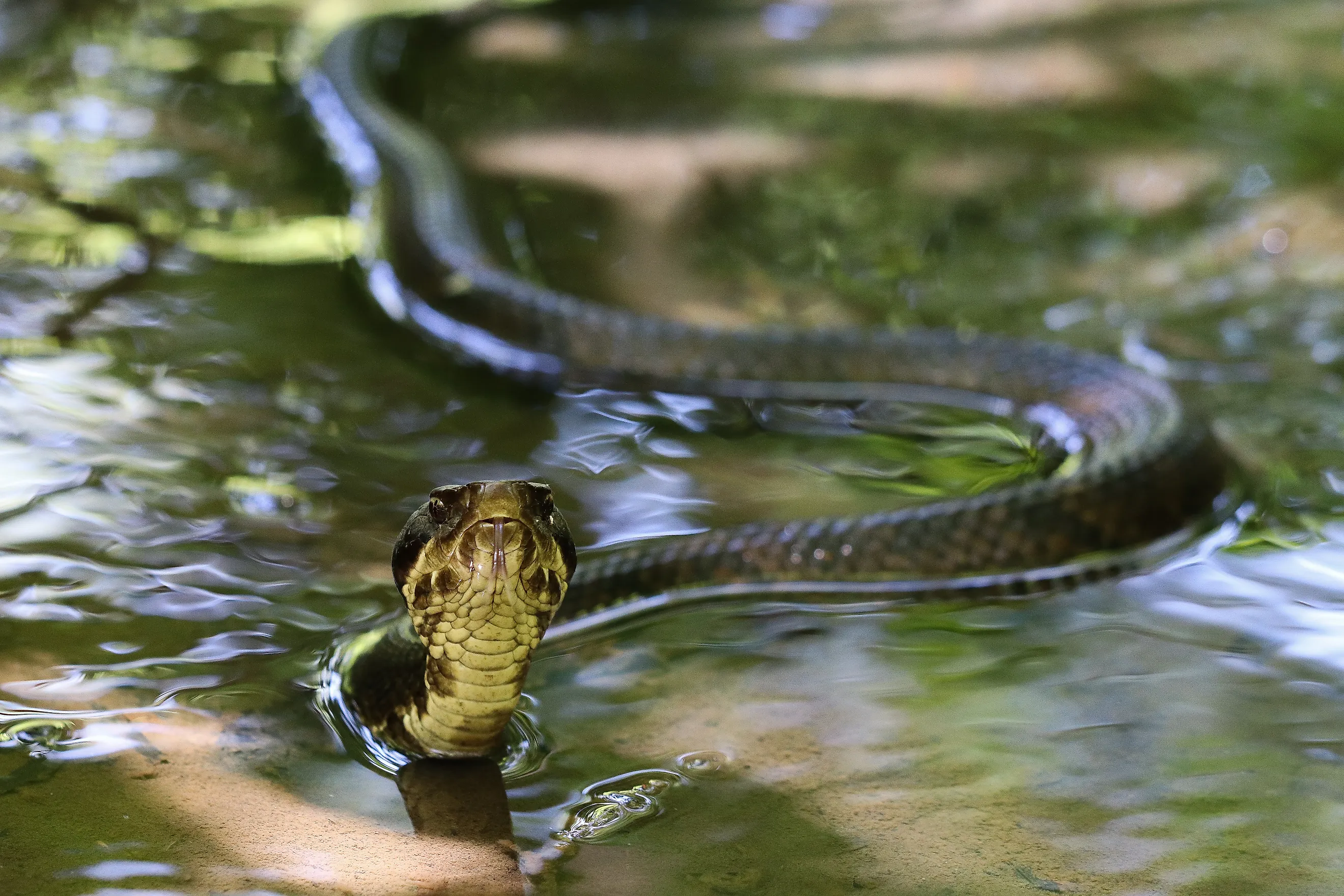
The busiest snake crossing in Illinois is a gravel road that closes to cars twice a year. Snake Road runs beside an old channel of the Big Muddy River, and the US Forest Service shuts it every spring and fall so snakes can safely cross between the bluffs and the swamp. The cottonmouth, the state's only venomous watersnake, is its most common traveler. Illinois claims four venomous snakes, but the cottonmouth lives only in the swamps and sloughs of the state's southern tip.
Most of the snakes you'll meet along Illinois rivers are harmless watersnakes, but the diamond-backed watersnake is so often mistaken for a cottonmouth that, according to the Illinois Natural History Survey, people kill large numbers of them. No agency counts snakes river by river, so here are five rivers where state and federal biologists document strong or unusual snake populations. It starts at Snake Road and follows the water south and east before ending in south-central Illinois, at the lake where the state's last wild massasauga rattlesnakes hold on.
Big Muddy River

The swamp at the base of Snake Road is part of the Big Muddy River's history. According to the Forest Service, LaRue Swamp traces the river's old meandering course before the Mississippi's Grand Tower bend cut across it. Limestone bluffs rise directly above the swamp, and reptiles spend the winter in their rock crevices and the summer in the water. Between the two runs Snake Road, a 2.5-mile stretch of Forest Road 345 inside the LaRue-Pine Hills/Otter Pond Research Natural Area of Shawnee National Forest.

The Forest Service first closed the road in 1972, for three weeks each season. Today, it is generally closed from March 15 to May 15 and from September 1 to October 30, though weather can shift the dates. Visitors may walk the road but not touch, herd, or collect snakes. The research area is home to about 59 percent of Illinois' reptiles, including roughly 35 snake species, and a Shawnee wildlife biologist has called the cottonmouth the most common snake seen during the migration.
Mississippi River

The Big Muddy ends in the Mississippi River, and the Mississippi's southern floodplain has produced some of the state's rarest snake records. Horseshoe Lake, an ancient oxbow of the Mississippi in Alexander County, grows bald cypress and tupelo in its sloughs, and the state's Horseshoe Lake Nature Preserve lists the cottonmouth among its notable reptiles. The lake is also the only Illinois site for the state-endangered southern watersnake, known from just eight specimens. The most recent date is 1951, and extensive searches by the Illinois Natural History Survey there have turned up no new encounters.

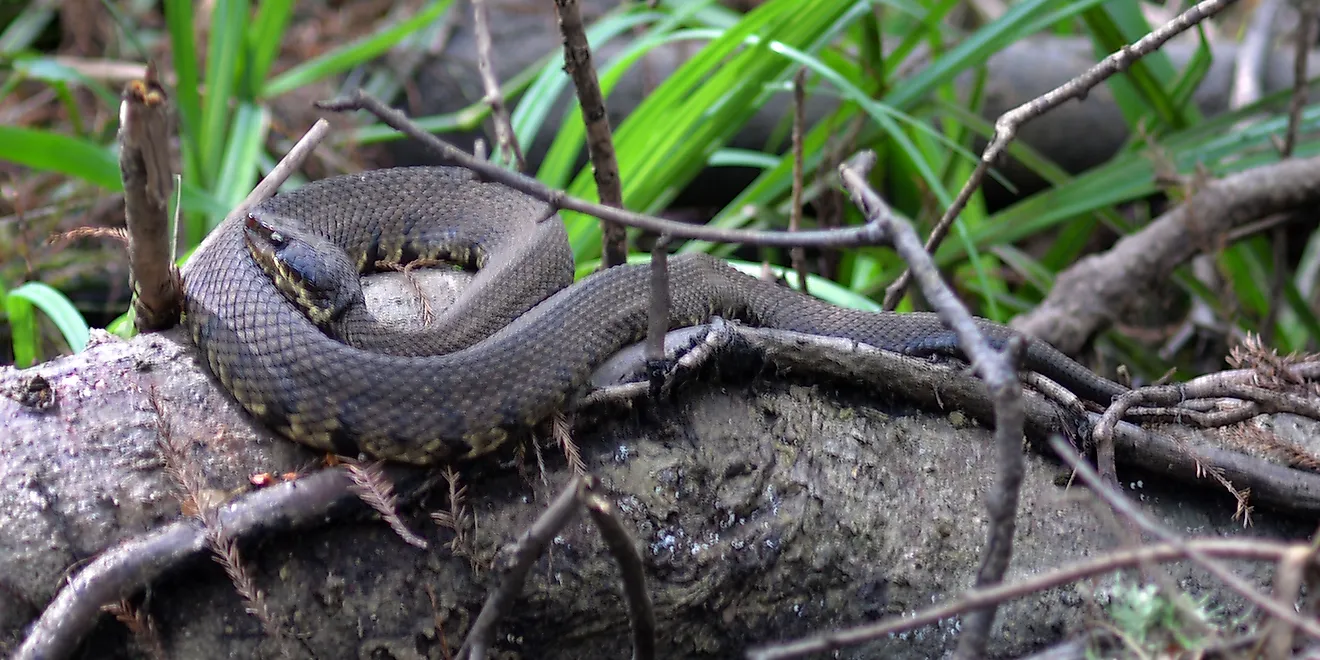
An angler on the Mississippi is far more likely to see a diamond-backed watersnake than a cottonmouth. The Illinois Department of Natural Resources maps it through the southern third of the state and up the Mississippi and Illinois river valleys. The Illinois Natural History Survey describes this stout fish-eater as one of the most pugnacious snakes in Illinois, and it often basks on limbs over the water, but it has no venom. Copperheads, which do, stay mainly on the bluffs above the river rather than in the water itself.
Cache River

East of Horseshoe Lake, the Cache River winds through a valley the Ohio River abandoned. The Illinois Department of Natural Resources says glacial floodwaters from the Ohio carved this floodplain, and when the Ohio shifted to its present course, it left the Cache to meander through the wetlands it had built. Cache River State Natural Area protects more than 1,000-year-old bald cypress, including the state champion, and its wetlands were designated a Wetland of International Importance under the Ramsar Convention in 1996.

This is cottonmouth country. The Illinois Natural History Survey places the snake in cypress-tupelo swamps, sloughs, and oxbow lakes in the extreme southern counties, and the state's natural area guide names the cottonmouth, copperhead, and timber rattlesnake as reclusive, non-aggressive residents. A disturbed cottonmouth usually stands its ground, vibrates its tail, or slowly crawls away, and it may gape to show the white mouth lining behind its name. The species is active from April through October, often at night in summer. The floating boardwalk at Heron Pond and the canoe trail through Buttonland Swamp both pass through it.
Wabash River

The lower Wabash River is home to a snake many people have never heard of. The plain-bellied watersnake comes in two forms in the state, the yellowbelly and the copperbelly. The copperbelly averages 30 to 48 inches and has a dark, often black back over a red or orange-red belly. Its northern population in Indiana, Michigan, and Ohio is federally threatened, but in Illinois it still lives in the southeastern counties, including Gallatin and White along the lower Wabash.

Finding one is harder. A 2011 survey for the Illinois Department of Natural Resources confirmed the presence of copperbellies in seven southeastern counties, yet it found only two in Gallatin County despite its bottomland forests and oxbow lakes, and none farther upriver in Wabash County. The survey suggested that dry, low-water conditions limited the count. Copperbellies favor seasonally flooded forest, swamps and grassy ditches, and probably need crayfish burrows and rocky slopes for winter. With an earlier state and federal conservation agreement expired, the survey described the snake's Illinois status as uncertain across much of its range.
Kaskaskia River

The Kaskaskia's snake story is about scarcity, not crowds. In south-central Illinois, the river was dammed in 1967 to create Carlyle Lake, flooding bottomland habitat. Illinois Natural History Survey biologists call the project one of the biggest threats to the eastern massasauga, a small, state-endangered rattlesnake. When the US Fish and Wildlife Service listed the massasauga as federally threatened in 2016, it said Illinois' last wild population lived at Carlyle Lake. The survivors cluster in wet prairies riddled with crayfish burrows, and a 2017 estimate put the largest remaining subpopulation at only 26 to 69 snakes.

Downstream, the river provides more suitable snake habitat. Kaskaskia River State Fish and Wildlife Area spreads more than 20,000 acres from Fayetteville to the Mississippi, with oxbows, sloughs, backwater lakes and bottomland timber along a channelized river. That stretch falls within the state's mapped range for the diamond-backed watersnake and the plain-bellied watersnake. The cottonmouth does not live here, so a dark, heavy snake on a log along the lower Kaskaskia is almost certainly a harmless watersnake.
Sharing Illinois Rivers With Snakes
Across all five rivers, the pattern holds. Venomous snakes are real but local, and the cottonmouth stays in the swamps of the far south. Everywhere else, the snake on the riverbank is most likely a watersnake that wants nothing to do with you and has no venom. Biologists can't say exactly how many snakes these rivers hold. What they can document is where the swamps, bluffs, and burrows still exist to support them, and on Snake Road, the evidence crosses the gravel every spring and fall.