The Great Lakes Ranked By How Cold They Get
The Great Lakes hold nearly a fifth of the world's surface freshwater, yet on their coldest days, the water can become dangerous within minutes. This ranking uses NOAA readings from the past five years to compare each lake by its average temperature on the coldest day of the year. Hypothermia can begin in as little as 15 to 30 minutes in water at or below 40°F, making these temperatures more than just trivia. The biggest surprise is what determines the order: depth matters most, but not in the way most people expect.
1. Lake Erie

Lake Erie records the coldest temperatures of the Great Lakes, with a median coldest water temperature of 32.414 degrees Fahrenheit. Based on five years of data from the average temperature on its coldest day, it has an average coldest temperature of 33.0368 degrees Fahrenheit.
- 2025: 32.36 degrees Fahrenheit
- 2024: 34.556 degrees Fahrenheit
- 2023: 33.494 degrees Fahrenheit
- 2022: 32.36 degrees Fahrenheit
- 2021: 32.414 degrees Fahrenheit
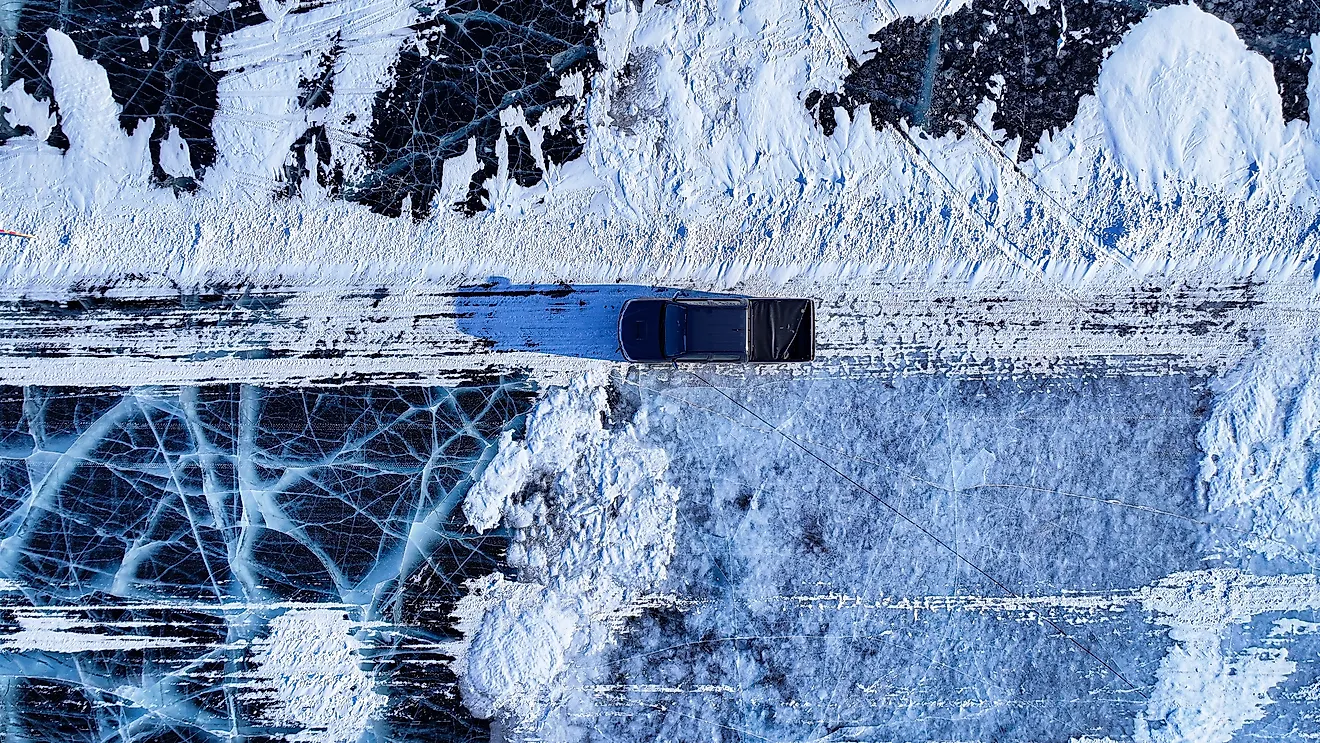
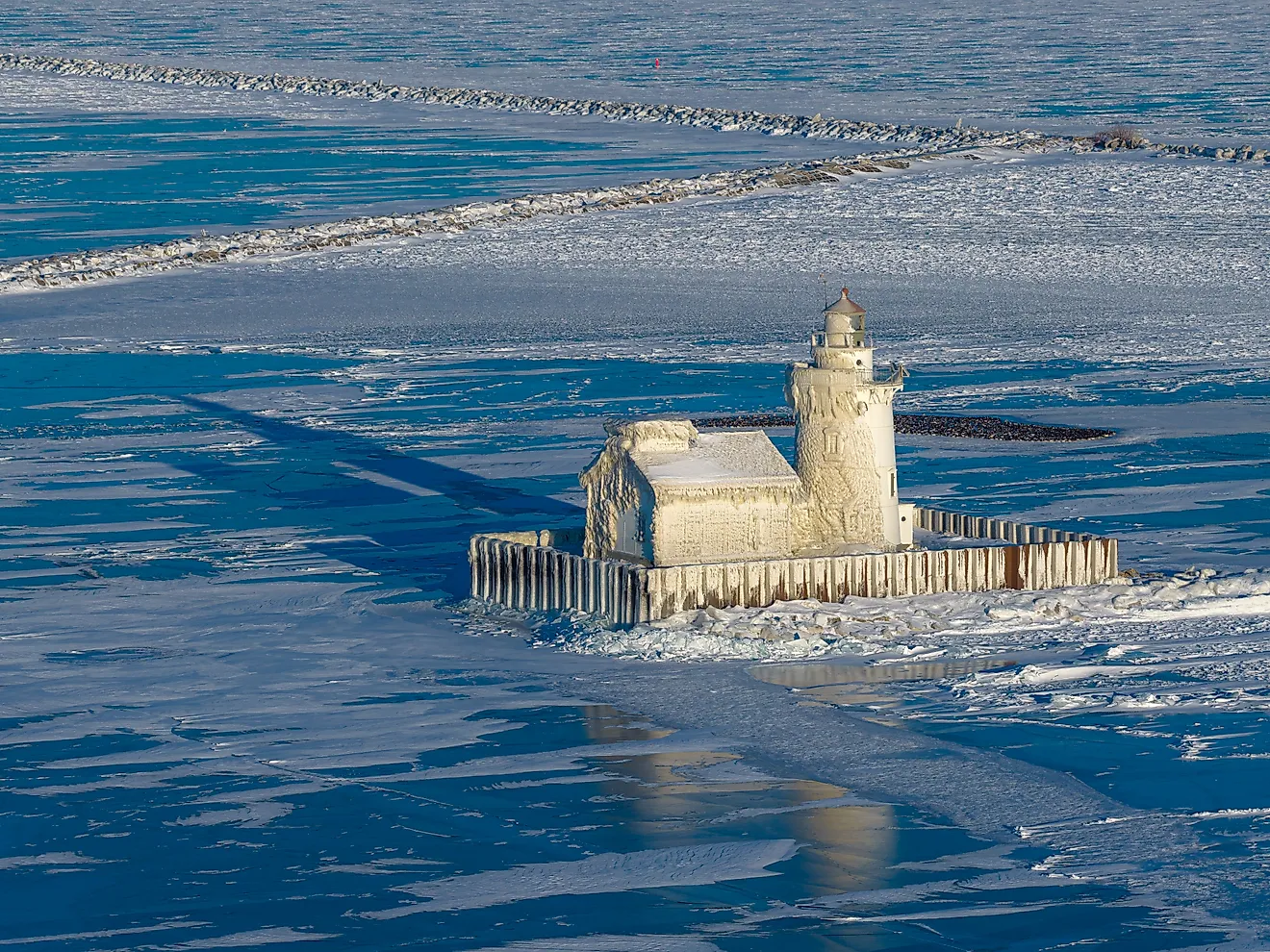
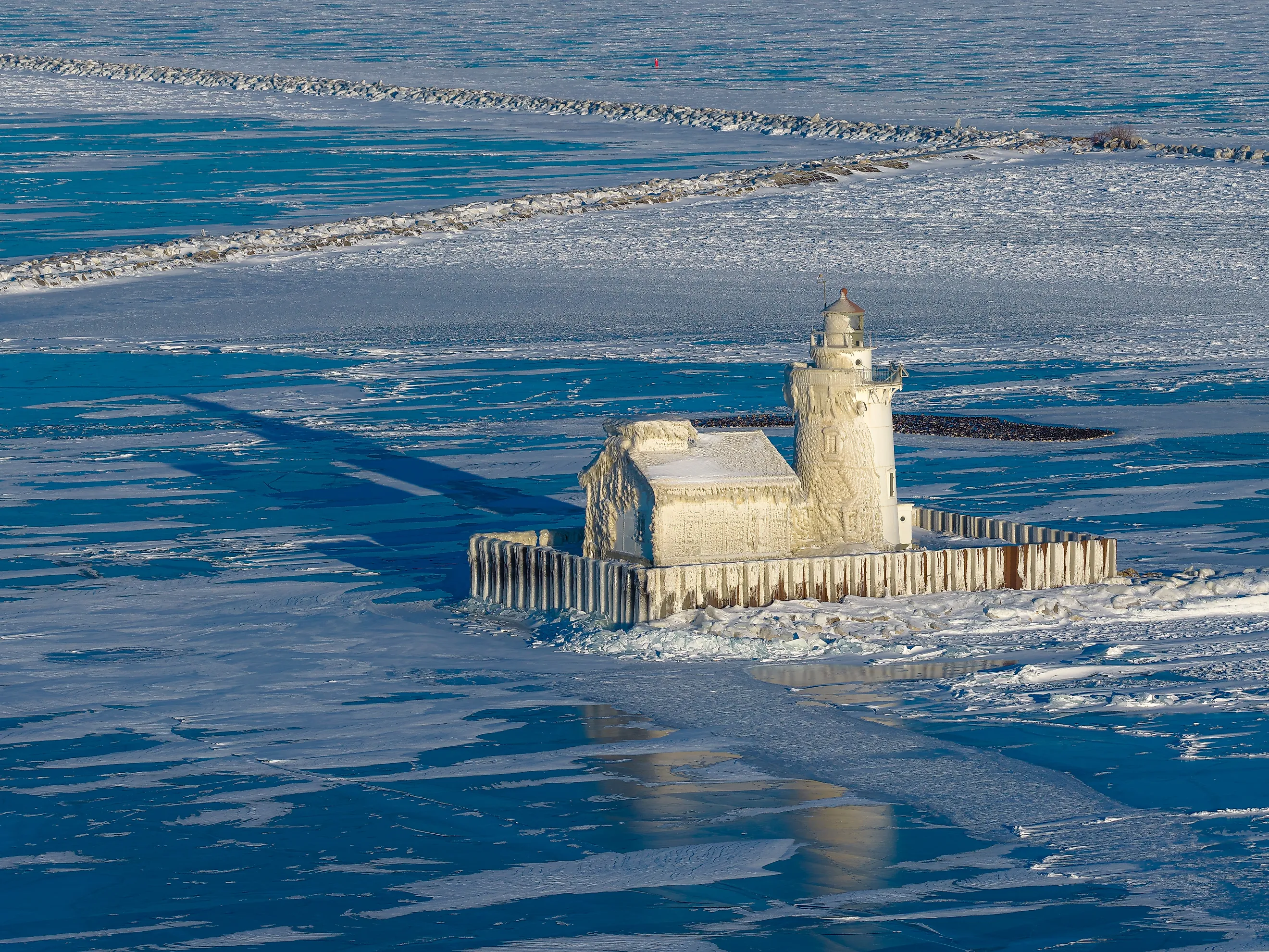
This cold burst is partly tied to Lake Erie's tendency to freeze over, with ice cover reaching as much as 80.2% in winter, according to The Weather Network. As the shallowest Great Lake, averaging 62 feet deep and reaching 210 feet at its deepest point, Lake Erie freezes more readily than the others.
Because of this shallow water and its low water volume of 116 cubic miles, Lake Erie is also the warmest of the Great Lakes overall, as it can absorb heat more easily, reaching temperatures of over 70 degrees Fahrenheit in the summer.
During the War of 1812, American forces defeated the British on the lake at the Battle of Lake Erie. Fought on September 10, 1813, nine American vessels fought against six British ones. Due to this victory, Americans were able to maintain control of Ohio, although Lake Erie would be split down the middle between America and Canada.
2. Lake Superior

Lake Superior is the coldest of the Great Lakes overall on an annual basis, but as far as its coldest days, it holds second place on this list, with a median coldest temperature of 33.548 degrees Fahrenheit and an average of 33.8072 degrees Fahrenheit based on this data of the coldest average temperature from the NOAA:
- 2025: 33.548 degrees Fahrenheit
- 2024: 35.438 degrees Fahrenheit
- 2023: 34.232 degrees Fahrenheit
- 2022: 32.468 degrees Fahrenheit
- 2021: 33.35 degrees Fahrenheit
Lake Superior's cold temperatures come from its depth, which averages 483 feet and holds the record for the deepest spot in the Great Lakes at 1,332 feet. It also holds more water than all the Great Lakes combined, with a water volume of 2,900 cubic miles. Due to its depth, the lake rarely freezes over completely, although it has a colder overall temperature year-round, only reaching around 55 degrees Fahrenheit in the summer.
Lake Superior was first seen by Europeans in 1622 by Etienne Brule. However, it wouldn't be referred to as Superior until 1647. Most of the French activity around here focused on fur trading, and they would control it until the French & Indian War, when the British took control of both the lake and the fur trade and later began mining for copper in the region, including at Isle Royale, the largest freshwater island in the world.
3. Lake Huron

Lake Huron's median coldest water temperature was 33.764 degrees Fahrenheit, calculated to an average of 33.8648 degrees Fahrenheit based on the following data points from the coldest day's average temperature over the last five years:
- 2025: 32.45 degrees Fahrenheit
- 2024: 35.654 degrees Fahrenheit
- 2023: 34.502 degrees Fahrenheit
- 2022: 32.954 degrees Fahrenheit
- 2021: 33.764 degrees Fahrenheit
Lake Huron is the second shallowest of the Great Lakes, with an average depth of 195 feet and a maximum depth of 750 feet. It is the second largest by surface area at 23,000 square miles, but it has less water volume than Lake Michigan with 850 cubic miles. Where it really stands out is its shoreline of 3,827 miles and 30,000 islands.
Lake Huron was the first of the Great Lakes to be explored by Europeans. A group of French explorers under Samuel de Champlain and Étienne Brûlé first saw this lake in 1615. Jesuits would attempt to establish a mission here in 1638, but it was driven out by the Iroquois 11 years later. Much like Lake Ontario, Lake Huron saw conflict in the War of 1812, particularly over a fort on Mackinac Island. This fort would trade hands between the US and the British twice during the war.
4. Lake Michigan

Over the last five years, Lake Michigan's average coldest day was 35.8124 degrees Fahrenheit, and the median was 35.186 degrees Fahrenheit. This was calculated from the following data points of average temperatures from NOAA:
- 2025: 34.988 degrees Fahrenheit
- 2024: 37.706 degrees Fahrenheit
- 2023: 36.446 degrees Fahrenheit
- 2022: 34.736 degrees Fahrenheit
- 2021: 35.186 degrees Fahrenheit
Lake Michigan is the second largest of the Great Lakes by water volume at 1,180 cubic miles and ranks third by depth and surface area, with an average depth of 279 feet and a surface area of 22,300 square miles, respectively. Due to its depth, it rarely freezes over completely, even during the winter months.
Lake Michigan's geography and violent storms have contributed to significant numbers of shipwrecks, with estimates putting it as high as 1,500 shipwrecks. Part of this comes from how busy ship traffic is on Lake Michigan, as well as its width. Lake Michigan is only 118 miles wide at its widest point, and when storms travel through from the west, they commonly smash ships against the shoreline or rocks, causing them to capsize.
5. Lake Ontario

According to NOAA, Lake Ontario's coldest day over the last five years accounted for the following average temperatures:
- 2025: 35.096 degrees Fahrenheit
- 2024: 38.012 degrees Fahrenheit
- 2023: 36.788 degrees Fahrenheit
- 2022: 35.618 degrees Fahrenheit
- 2021: 35.906 degrees Fahrenheit
This calculates to an average temperature of 36.284 degrees Fahrenheit and a median of 35.906 degrees Fahrenheit.
Lake Ontario is the easternmost of the Great Lakes, draining into the Atlantic Ocean via the St. Lawrence River. Lake Ontario has an average depth of 283 feet and a water volume of 393 cubic miles. It is the smallest of the Great Lakes by land area, accounting for 7,340 square miles.
This lake was fought over extensively between the British and the Americans during the War of 1812. The two nations built large numbers of ships for these engagements, which led to it being called the Battle of the Carpenters. In the end, the British won this battle by deploying the 112-gun ship HMS St. Lawrence on the lake in 1814.
Putting the Great Lakes into perspective
The Great Lakes are cold due to their size and depth. In fact, many have argued that the Great Lakes should be renamed as inland seas due to how large they are, with a total land area of 94,000 square miles (larger than 11 states). In addition, all of the Great Lakes are connected through straits, rivers, and waterways, making them all one large interconnected system. Beyond providing recreation and commercial activity, the Great Lakes have close to 20% of the world's freshwater, providing drinking water to 34 million people.
The Great Lakes are popular to visit for their beaches, fishing, and parks. However, for those visiting the Great Lakes during cold days, be cautious, as hypothermia can set in within 15 to 30 minutes in water at or below 40 degrees Fahrenheit.