How Many Locks A Ship Passes Between Lake Superior And The Atlantic
Sixteen. A ship sailing from Duluth to the Atlantic passes through sixteen locks across 2,342 statute miles, descending roughly 600 feet from Lake Superior to sea level. What surprises people is the distribution. The Soo Locks, by far the most famous of them, account for a single chamber and about 21 feet of the drop. Half the locks and more than half the descent happen in one 27-mile canal in Ontario that most Americans have never heard of.
The Breakdown Is Uneven

The sixteen split into three groups of very different sizes.
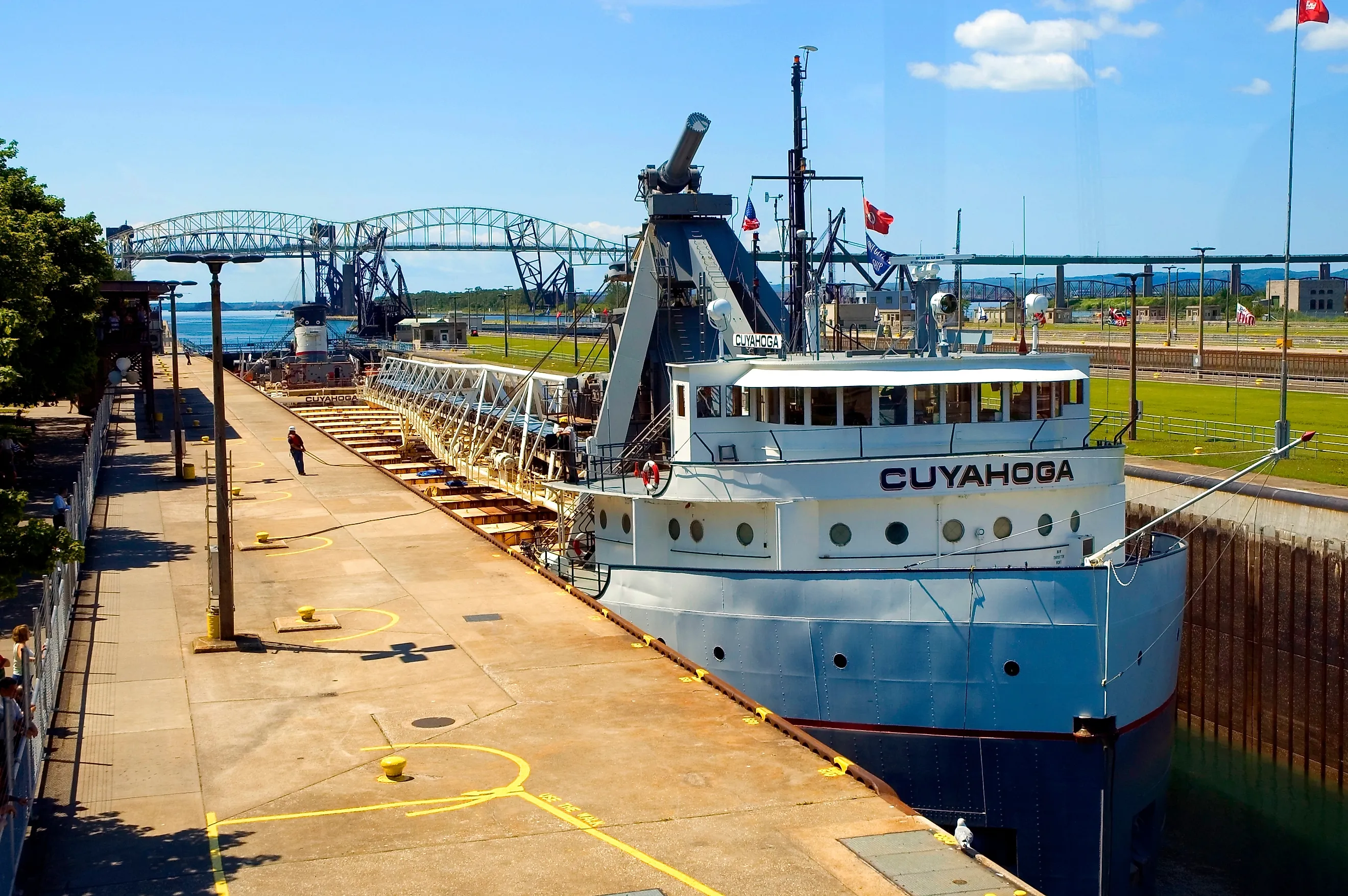
The Soo Locks on the St Marys River handle one lockage and about 21 feet. The Welland Canal uses eight locks for 326.5 feet. The Montreal to Lake Ontario section of the St Lawrence Seaway uses seven locks for 243 feet.
One, eight and seven. The Welland alone does roughly 55 percent of the climb with half the chambers.
The Soo Is The Smallest Step

The most photographed locks in the system are also the least consequential in elevation terms.
Lake Superior sits about 21 feet above Lake Huron, and the Soo Locks exist to bridge that single step around the rapids on the St Marys River. One lockage and the ship is on Huron.
Their importance is traffic rather than height. The Poe Lock is the only chamber in the system large enough for thousand-foot vessels, which is why a closure there matters more than the modest lift suggests.
Then Nothing For A Thousand Miles

Between the Soo and the Welland a ship crosses three Great Lakes without encountering a single lock.
Huron, the St Clair River, Lake St Clair, the Detroit River and Lake Erie are all naturally navigable at Seaway draft. Lakes Huron, Michigan and Erie sit at nearly the same elevation, so no lifting is required between them.
That is more than a thousand miles of open sailing in the middle of a lock-heavy route, which is why the locks feel so concentrated when they arrive.
The Welland Does The Heavy Work

Eight locks in 27 miles is the densest stretch of lifting on the continent.
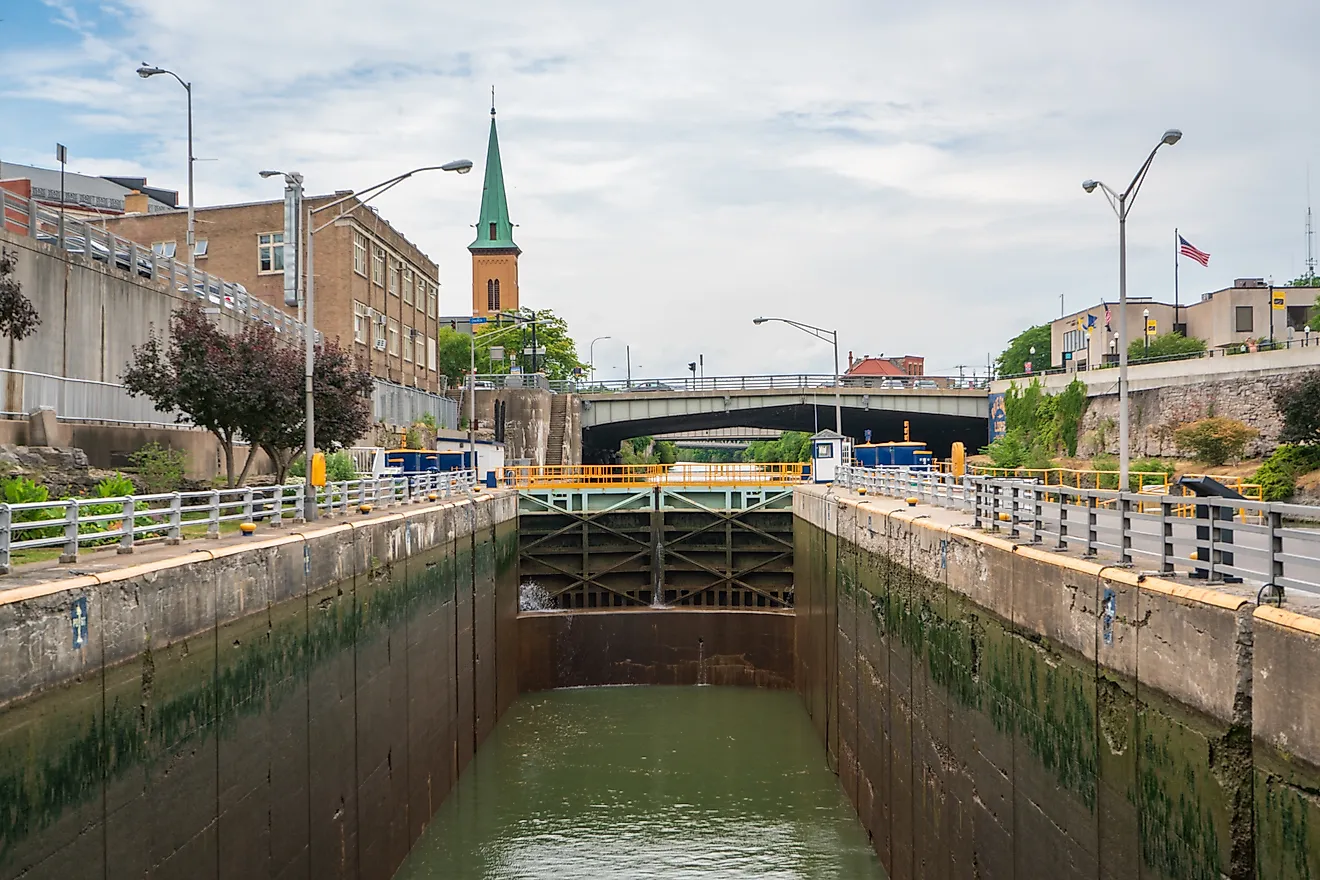
The canal runs from Port Colborne on Lake Erie to Port Weller on Lake Ontario, taking ships 326.5 feet down past Niagara Falls. Locks 4, 5 and 6 are twinned flights at Thorold, allowing traffic in both directions at once.
It is also the slowest section of the Seaway, averaging about 11 hours. Twenty-seven miles taking almost half a day is entirely down to the chambers.
Seven More Below Lake Ontario

The final group gets a ship from Lake Ontario down to tidewater at Montreal.
Completed in 1959, the Montreal to Lake Ontario section runs seven locks across a 186-mile stretch of the St Lawrence, overcoming 243 feet. Average transit is 24 hours upbound and 22 down.
Below Montreal there are no more locks. The river is tidal from there to the Gulf of St Lawrence and the Atlantic.
Every Chamber Is The Same Size

Fifteen of the sixteen are built to one specification, and that specification governs world shipping into the Great Lakes.
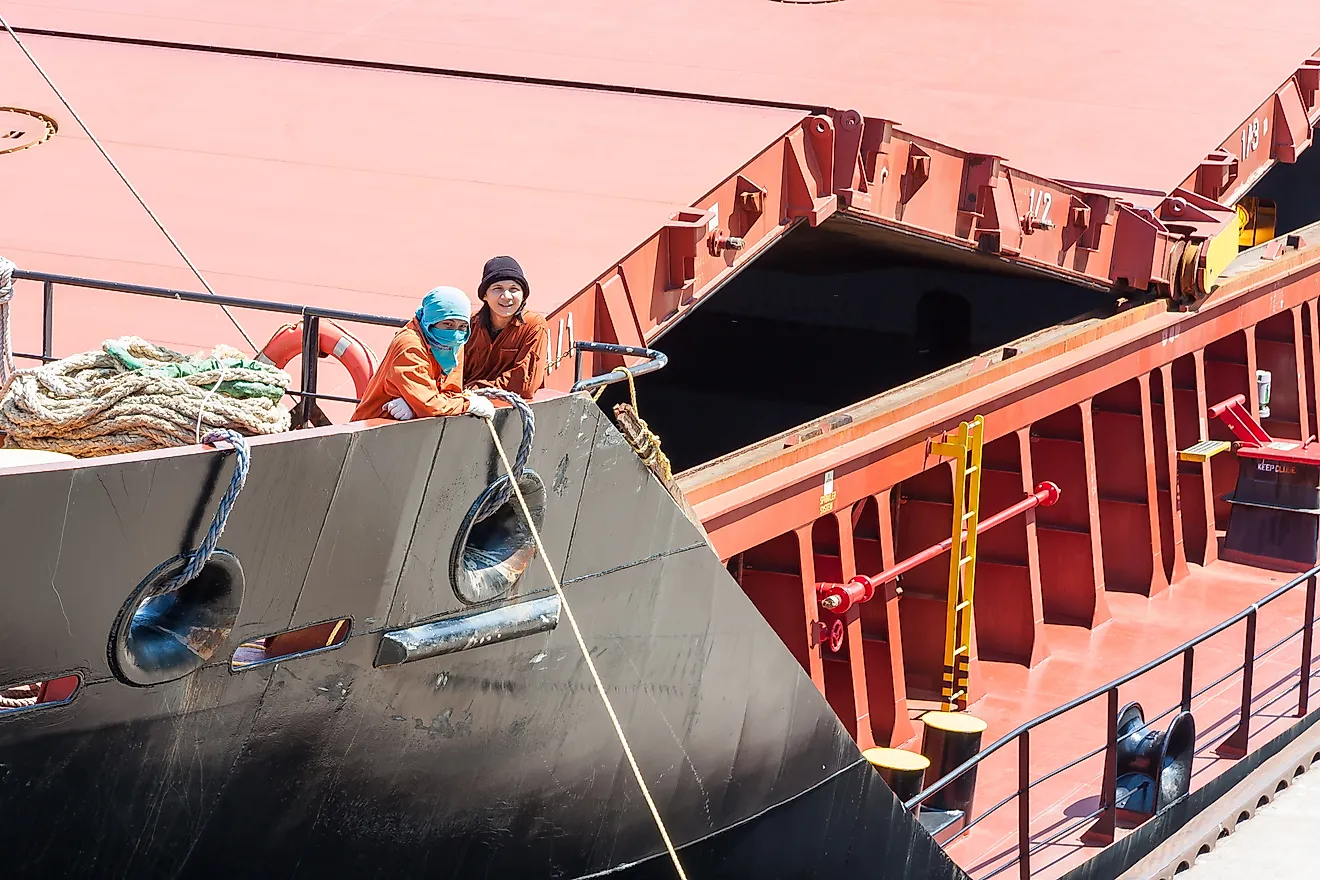
Each Seaway lock measures 766 feet long, 80 feet wide and 30 feet deep over the sill. A chamber fills with roughly 24 million gallons, or 91 million liters, in seven to ten minutes.
That works out at around three million gallons a minute. Anything too large for those dimensions cannot reach the ocean from the lakes, which is why the thirteen thousand-footers are confined above the Welland permanently.
Twelve Hours Of The Journey Is Lockage

The Seaway allows about 45 minutes for a vessel to get through one lock, which adds up.
Sixteen lockages at 45 minutes comes to roughly 12 hours, against a total Atlantic to Duluth passage of 8.5 sailing days. Lockage therefore consumes around 6 percent of the trip.
That figure excludes waiting for traffic ahead, which on the Welland is the main variable. The published transit range there runs from 7 to 15 hours depending on queuing.
Two Countries Operate Them

The system is binational in a way that is invisible from the deck.
The St Lawrence Seaway's locks are described as 13 Canadian and 2 American, with the Welland Canal entirely Canadian and the Montreal to Lake Ontario section split between the two. The Soo Locks are operated by the US Army Corps of Engineers.
A ship therefore passes under two separate lock authorities plus the Corps between Duluth and the sea, operating on one set of transit rules.
The Whole Thing Closes In Winter

None of these sixteen locks operates year round, and the two closures do not align.
The Soo Locks close in mid-January and reopen in late March. The Seaway opens in the third week of March and closes in late December.
Which means ocean vessels have to be out before the Seaway shuts, and lakers have to be in winter berth before the Soo does. The calendar is tighter than the lock count suggests.
The Short Answer

Sixteen locks lie between Lake Superior and the Atlantic: one at the Soo, eight on the Welland Canal and seven between Lake Ontario and Montreal, lowering a ship roughly 600 feet across 2,342 miles in about 8.5 sailing days.
The distribution is the interesting part. The Soo handles 21 feet, then a thousand miles pass without a single chamber, and then fifteen locks arrive in the last stretch. More than half the entire descent happens in a 27-mile canal in Ontario, bypassing a waterfall.