The Lakes That Supply New York City’s Water
New York City is home to approximately 8.6 million people, making it the most populous city in the United States, according to the United States Census Bureau's 2025 population estimates. The city operates one of the nation's largest drinking water supply systems, delivering approximately 1 billion gallons of water daily. Its water comes from a network of 19 reservoirs and three controlled lakes within a nearly 2,000-square-mile watershed spanning portions of the Hudson Valley and the Catskill Mountains. These reservoirs and lakes are organized into three primary water supply systems: the Catskill, Delaware, and Croton Systems. The following eight reservoirs are listed by their maximum water storage capacity, from largest to smallest, measured in US gallons.
Pepacton Reservoir

Pepacton Reservoir is one of four reservoirs in the Delaware Water Supply System, stretching along the southern edge of Catskill Park. It is located over 100 miles northwest of New York City. The reservoir entered service in 1955, following the completion of Downsville Dam in 1954. The dam was built on the East Branch of the Delaware River. At full capacity, the reservoir holds 140.2 billion gallons, making it the largest reservoir in New York City's water supply system. Under normal conditions, Pepacton Reservoir contributes more than 25% of the total daily water flow into New York City.
Ashokan Reservoir

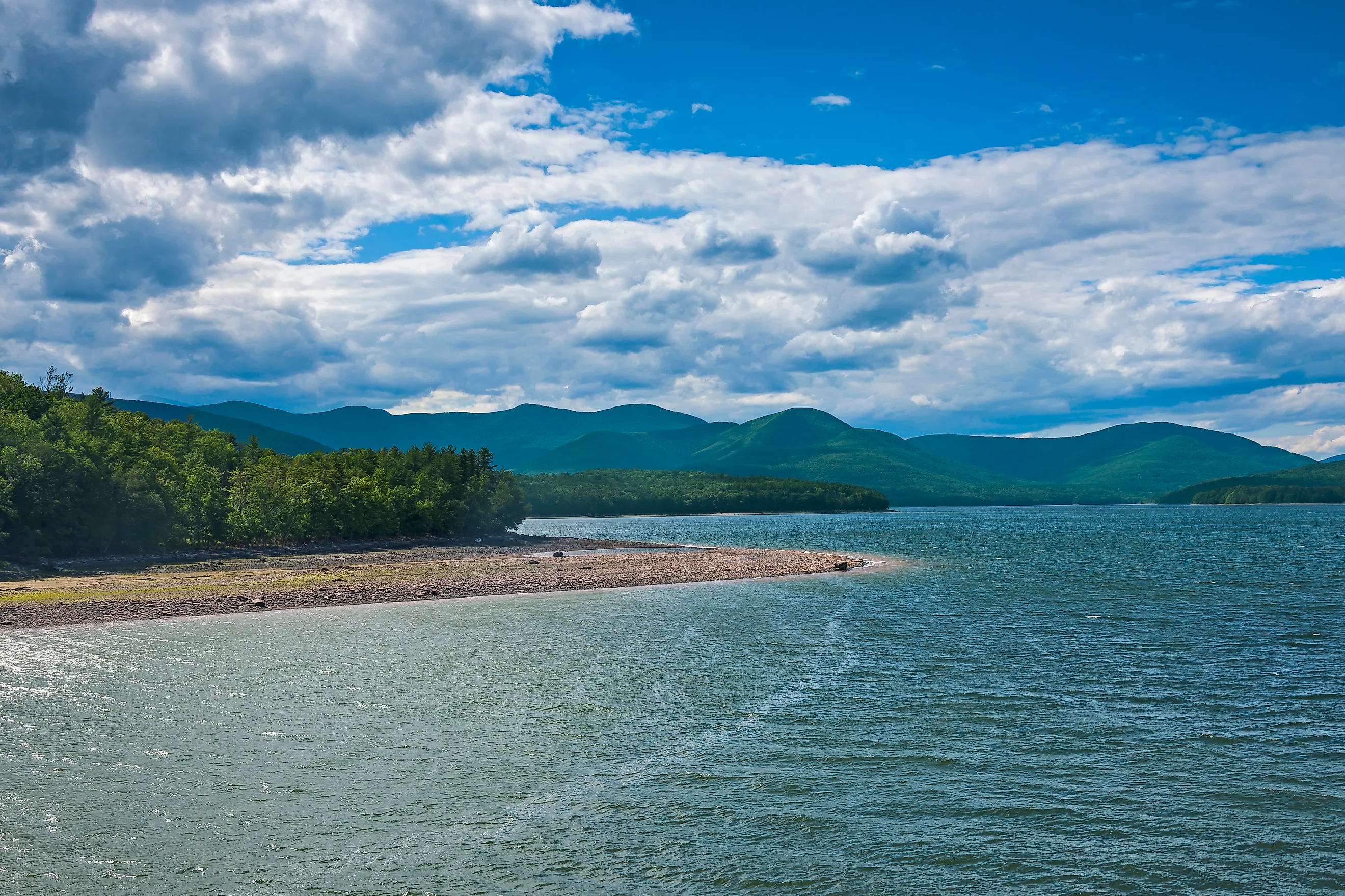
Ashokan Reservoir is one of only two reservoirs in the Catskill Water Supply System. It was placed into service in 1915 following the construction of Olivebridge Dam on Esopus Creek, which eventually flows northeast into the Hudson River. It is located 73 miles north of New York City and holds 122.9 billion gallons at full capacity. The reservoir comprises an East Basin and a West Basin, separated by a concrete dividing weir. Water enters the West Basin, where sediment settles, before moving into the East Basin. Depending on operating conditions, water can be withdrawn from either basin or from both, before entering the Catskill Aqueduct, which carries it southeast beneath the Hudson River. Ashokan Reservoir also receives water from Schoharie Reservoir, the second reservoir in the Catskill Water Supply System. Together, they supply approximately 40% of New York City's daily drinking water during non-drought periods.
Cannonsville Reservoir

Cannonsville Reservoir is on the western edge of Delaware County, approximately 120 miles northwest of New York City. As part of the Delaware Water Supply System, it was formed by the construction of Cannonsville Dam on the West Branch of the Delaware River, entering service in 1964. It can hold 95.7 billion gallons at full capacity. Cannonsville has the largest drainage basin in New York City's water supply system, with a watershed covering 455 square miles. Its watershed includes portions of 17 towns, all located within Delaware County.
Rondout Reservoir

Rondout Reservoir was placed into service in 1950 after the construction of Merriman Dam on Rondout Creek. The reservoir is located on the southern edge of Catskill Park, more than 65 miles northwest of New York City. It holds approximately 49.6 billion gallons at full capacity and serves as an important reservoir for collecting water within the Delaware Water Supply System, which normally supplies approximately 50% of New York City's drinking water. Despite having a relatively small watershed of 95 square miles, Rondout Reservoir receives water from its own watershed as well as from Cannonsville, Pepacton, and Neversink Reservoirs. Water collected at Rondout then travels toward Kensico Reservoir through the Delaware Aqueduct.
Neversink Reservoir

With the capacity to hold 34.9 billion gallons of water when full, Neversink Reservoir is the smallest of the four Delaware Water Supply System reservoirs. It was formed by the construction of the Neversink Dam on the Neversink River, which entered service in 1954. It is located more than 75 miles from New York City. Neversink is the highest-elevation of New York City's water supply reservoirs, with its spillway at approximately 1,440 feet above sea level. Water from Neversink Reservoir travels through the Neversink Tunnel to Rondout Reservoir, where it joins water from the other Delaware System reservoirs. From there, water moves through the Delaware Aqueduct toward Kensico Reservoir, where it can mix with water from the Catskill System before continuing to Hillview Reservoir in Yonkers, just north of New York City's boundary.
Kensico Reservoir

Located just 15 miles north of New York City, Kensico Reservoir is one of the closest major reservoirs in the city's water supply system. It was formed by the construction of Kensico Dam on the Bronx River and entered service in 1915. The reservoir can hold a maximum of 30.6 billion gallons of water. Most of its water comes from reservoirs west of the Hudson River through the Catskill and Delaware Aqueducts. Kensico Reservoir's main function is to receive water from the six Catskill and Delaware System reservoirs and make it available to meet fluctuating daily consumption demands. As a terminal reservoir, Kensico ordinarily holds water before it travels through aqueducts to Hillview Reservoir in Yonkers for distribution throughout New York City. Water from Kensico is subject to federal water quality requirements for coliform bacteria and turbidity before entering the distribution system.
New Croton Reservoir

With a capacity of 19 billion gallons, New Croton Reservoir is the largest reservoir in the Croton Water Supply System. It is also the final collecting reservoir through which water from the other 11 reservoirs in the Croton System passes on its way to New York City. It was formed by the construction of New Croton Dam on the Croton River and entered service in 1905, replacing the original Croton Reservoir. The original reservoir had been part of New York City's first upstate water supply, which entered service in 1842. New Croton Reservoir is approximately 22 miles from the city. Water leaving the reservoir travels through the New Croton Aqueduct to Jerome Park Reservoir in the Bronx before entering the city's distribution system.
Schoharie Reservoir

Schoharie Reservoir is the second reservoir in the Catskill Water Supply System, located near the intersection of Schoharie, Delaware, and Greene Counties. It can hold 17.6 billion gallons when full. The reservoir was formed by the construction of Gilboa Dam on Schoharie Creek and entered service in 1926. It is the northernmost reservoir in New York City's water supply system, located approximately 36 miles southwest of Albany and 110 miles from New York City. Despite its relatively small storage capacity compared with the city's other major reservoirs, Schoharie receives water from a 316-square-mile drainage basin. Water from Schoharie Reservoir travels through the Shandaken Tunnel into Esopus Creek, which carries it toward Ashokan Reservoir before it continues through the Catskill Aqueduct.
Billions of Gallons of Water for Millions of People
New York City's water supply depends on an extensive network of reservoirs, dams, aqueducts, and tunnels stretching across the Hudson Valley and Catskill Mountains. Pepacton Reservoir provides the greatest storage capacity in the system, while Ashokan and Rondout collect water from other reservoirs farther upstream. Kensico Reservoir receives water from the Catskill and Delaware Systems before it continues toward the city, while New Croton Reservoir serves as the final collecting reservoir for the Croton System. These interconnected facilities help deliver approximately 1 billion gallons of drinking water to New York City each day.