How James Bay Compares To The Great Lakes
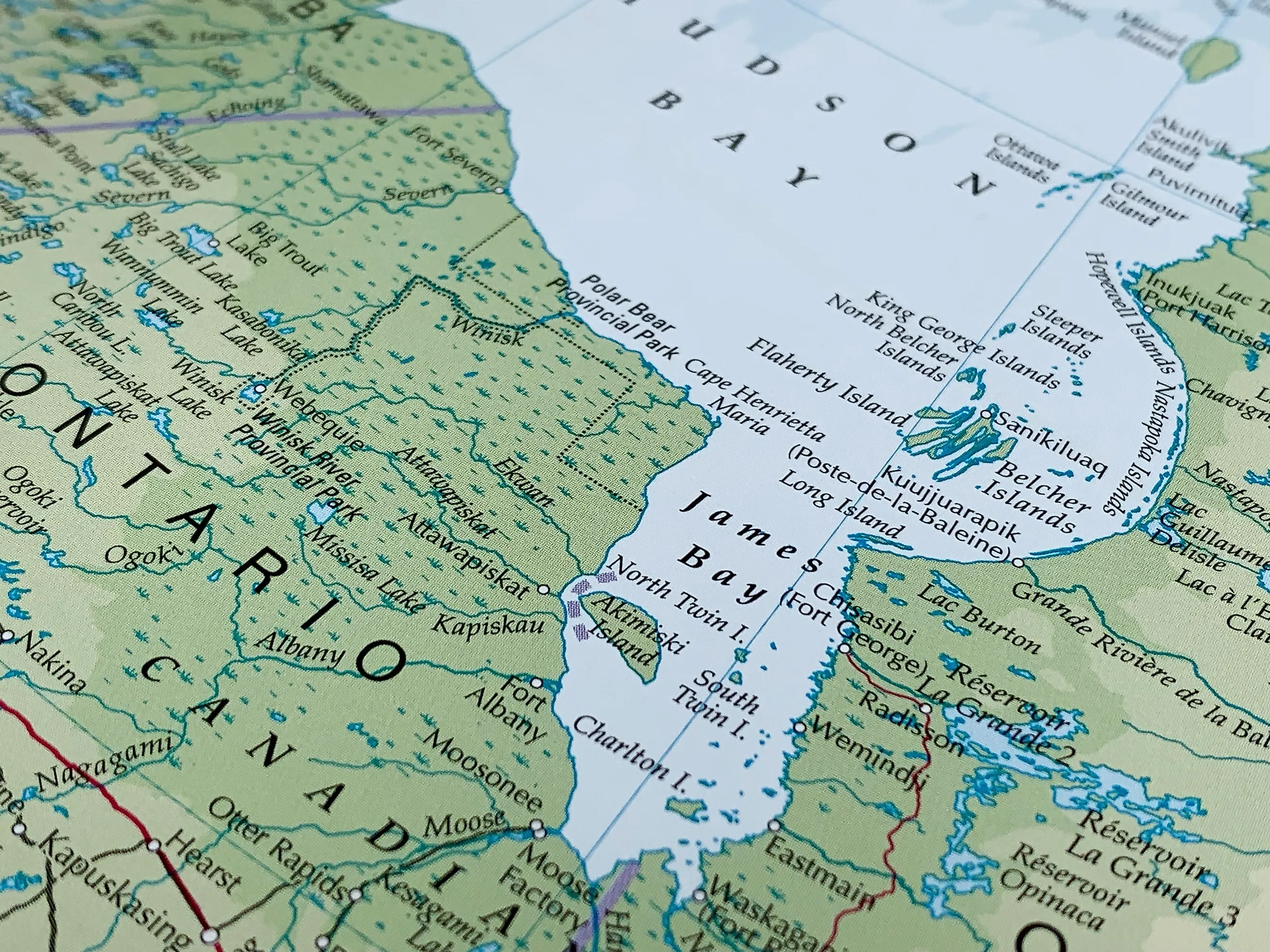
Somewhere north of the Great Lakes, close enough to be insulting, sits a body of water bigger than four of the famous five, and almost nobody ranks it, names sports teams after it, or writes songs about its shipwrecks. James Bay, the southern thumb of Hudson Bay shared by Ontario and Quebec, covers roughly 26,000 square miles of cold, murky, technically-ocean water, hosts the southernmost polar bears on Earth, and conducts its affairs in near-total obscurity while Lake Erie, which it could swallow whole, gets festivals. The comparison is overdue, occasionally humbling for both sides, and settles one question Canadians have quietly known the answer to for centuries: the Great Lakes are not the only enormous water in the neighborhood. They are just the ones with parking.
Size: Bigger Than Four Of The Five

Start with the number that should bother everyone in Michigan. At about 26,000 square miles, James Bay outmeasures Lake Huron (23,000), Lake Michigan (22,400), Lake Erie (9,900), and Lake Ontario (7,300), which means that if James Bay were a Great Lake, it would seed second. Only Lake Superior, at roughly 31,700 square miles, keeps the family honor, and Superior has never had to defend the title because nobody told it there was a challenger three watersheds north.
The gap on the map is smaller than the gap in fame. The bottom of James Bay reaches south of the 52nd parallel, within a few hundred miles of Superior's north shore; the two giants are separated mostly by spruce, muskeg, and the Arctic watershed divide, the quiet line across Ontario where rivers stop running to the St. Lawrence and start running to the sea. One side of that line produced Chicago, Toronto, and Gordon Lightfoot. The other side produced geese.
Depth: A Sea Wearing Water Wings

Here the lakes take their revenge. Superior plunges to 1,332 feet and averages nearly 500, cold enough and deep enough to keep its shipwrecks like a museum; the Great Lakes together hold about a fifth of all the fresh surface water on Earth, roughly 5,400 cubic miles of it. James Bay, for all its sprawl, is famously shallow, much of it under 100 feet and great stretches shallower still, a sea spread thin as paint across a tilted continental shelf. It is the rare body of water that is simultaneously bigger than Lake Michigan and, in places, a bad spot to dive off a boat.
The one Great Lake that can shake James Bay's hand as an equal here is Erie, which averages 62 feet and has made shallowness a personality. The difference is what the shallowness does: Erie uses its thin water to brew the nastiest chop on the lakes, while James Bay uses its own to host some of the largest coastal wetlands on the continent, a goose-and-shorebird empire of tidal flats and marsh that makes the bay one of the hemisphere's great bird layovers. Same flaw, different careers.
Salt, Tides, And Other Ocean Privileges

James Bay's trump card is its passport: it is, legally and oceanographically, the Arctic Ocean's southernmost waiting room. It has tides that actually move, it connects to the sea without a single lock or canal, and it has salt, though not much of it, because so many rivers pour in, the Moose, Albany, Rupert, Eastmain, La Grande, and dozens more, that the bay runs brackish, a sea that takes its salinity on the side. The Great Lakes, by contrast, are magnificently fresh and tideless, their "tides" measuring a couple of inches, which is less a tide than a shrug.
Ocean status comes with an ocean cast. Belugas summer in the bay and its river mouths by the thousands across the Hudson system, seals haul out where lakes would offer only driftwood, and the food web runs on marine rules. The Great Lakes' most exotic swimmers, by comparison, are invasive mussels and the sea lamprey, which is to say the lakes' marine wildlife program consists entirely of species they are actively trying to evict.
The Polar Bear Gap

No category is less close than this one. James Bay hosts the southernmost wild polar bears on the planet, bears that den on Akimiski Island and patrol the Ontario coast at about 52 degrees north, which is the latitude of London, England. There are commuters in Surrey living farther north than a wild polar bear. The bears ride the bay's winter ice to hunt seals, come ashore when it melts, and treat the whole enormous "technically a bay" as exactly what it is: the Arctic, delivered south by special arrangement.
The Great Lakes' counteroffer is black bears on the shoreline and a vigorous public discourse about lamprey control, which is respectable but loses the photo contest. To be fair to the lakes, their bear-free beaches support 35 million people swimming in peace, and there is something to be said for a coastline where the apex predator debate happens in a comments section rather than on the ice.
People: Thirty-Five Million Versus A Train

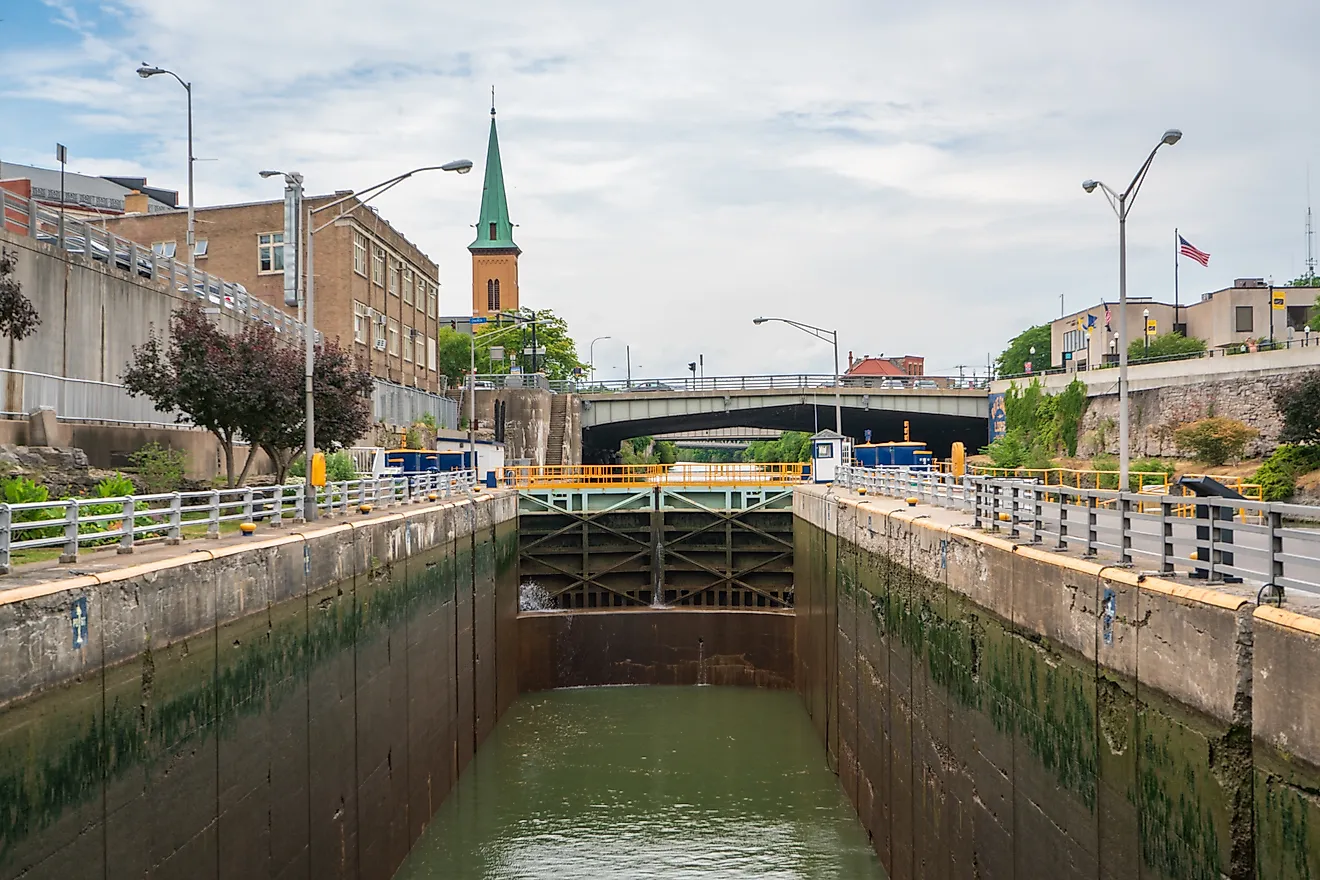
The Great Lakes basin holds some 35 million Americans and Canadians, plus Chicago, Toronto, Detroit, Milwaukee, Cleveland, and enough freighter traffic to justify an entire literature of its own. James Bay's coast holds a string of Cree and Inuit communities, Moosonee, Moose Factory, Attawapiskat, Waskaganish, Chisasibi, and others, whose combined population would fit in a mid-sized Great Lakes suburb, and almost none of which connect to the continental road network at all. The classic way in is the Polar Bear Express, the train from Cochrane, Ontario, to Moosonee, which remains one of the only scheduled ways to reach saltwater in Ontario without an aircraft.
What the thin population hides is deep tenure. The Cree of the James Bay coast have lived with this water for thousands of years, and when Quebec launched its colossal hydroelectric scheme in the 1970s, the result was the James Bay and Northern Quebec Agreement of 1975, often called Canada's first modern treaty, a document with more long-term consequence than most things ever signed beside the Great Lakes. The lakes got the people; the bay got precedent.
Commerce: Freighters Versus The Fur Trade
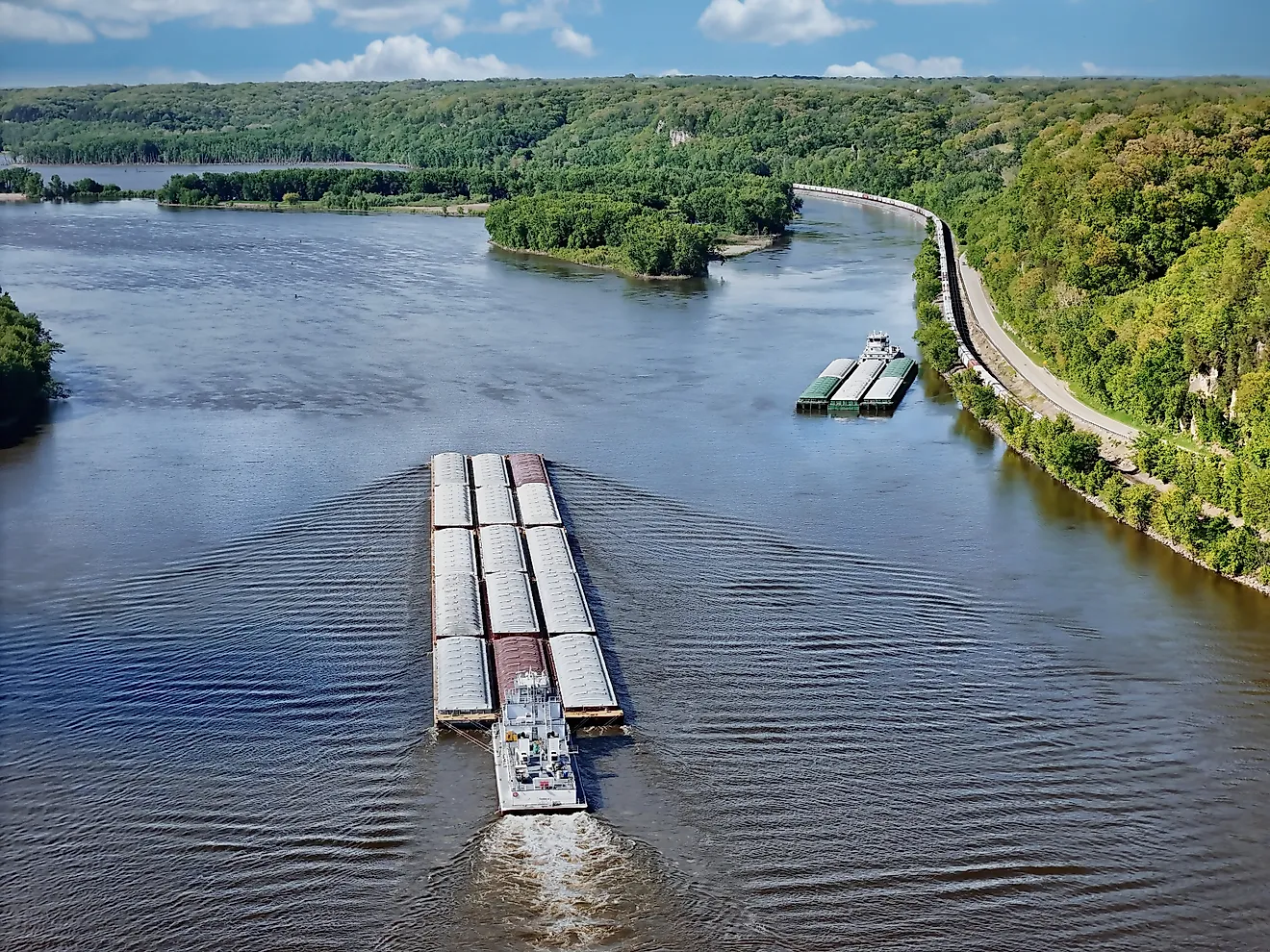
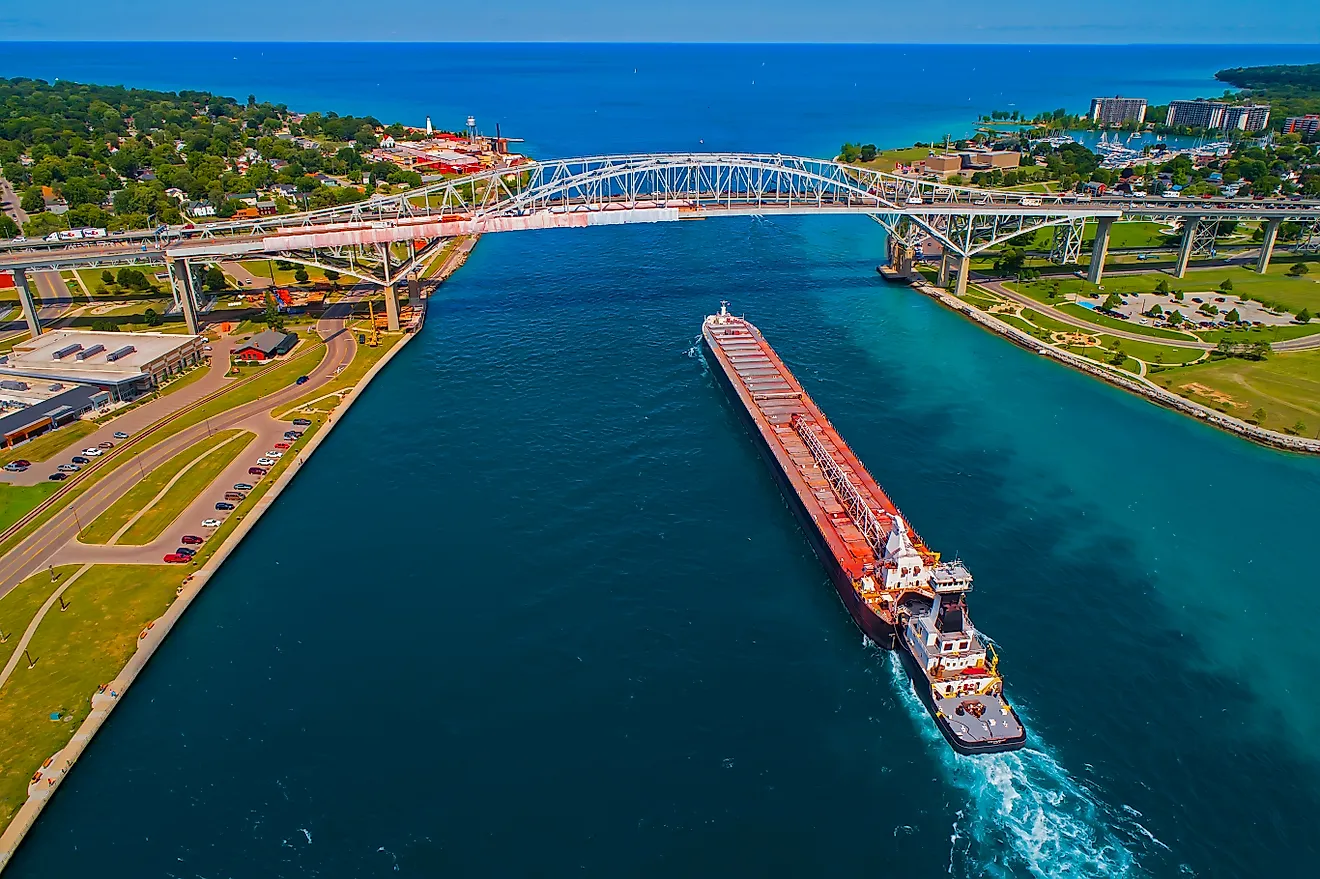
On water commerce, the lakes win the present and the bay owns the origin story. The Great Lakes float thousand-foot freighters hauling ore and grain through locks on a tight schedule; James Bay floats canoes, barges, and the occasional supply run, because a shallow, ice-choked sea with no road access is nobody's shipping lane. But rewind to 1668 and the ranking flips: the Hudson's Bay Company planted its first trading post at Waskaganish on James Bay's southeast shore, making this obscure coast the launch point of the oldest continuously operating company in North America. The bay was the continent's corporate headquarters while Chicago was still a portage.
And the bay found a modern cash flow the lakes cannot match: its rivers. Quebec's James Bay Project turned the La Grande River into one of the largest hydroelectric complexes on Earth, generating power measured in the output of entire countries and lighting a good share of the Northeast. The Great Lakes mine their water for drinking and shipping; James Bay's watershed got wired directly into the grid.
The Nunavut Asterisk And A Rising Floor
Two final oddities, because James Bay refuses to be normal. First, every island in the bay, including big Akimiski, a few hundred yards off the Ontario coast, belongs to Nunavut, a territory whose mainland sits far to the north, an administrative quirk that means a goose standing on an island and a goose standing on the adjacent beach are in different jurisdictions. The Great Lakes have border quirks too, but nothing that makes the map look like a filing error.
Second, the bay is slowly leaving. The land here, crushed under ice-age glaciers, is still rebounding upward at some of the fastest rates on Earth, roughly a meter per century, which means James Bay's shallow floor keeps rising and its shoreline keeps advancing seaward. Give it enough millennia and the bay will have quietly shown itself out, a fate the deep-socketed Great Lakes do not share. Even the namesake saw it coming, in spirit: Captain Thomas James, who probed the bay in 1631 looking for the Northwest Passage, froze through a catastrophic winter here and went home to publish an account of the voyage so miserable it became a bestseller. The bay has been underselling itself ever since.
The Verdict
Call it a split decision with asterisks. The Great Lakes take depth, fresh water, people, shipping, and cultural output by a landslide; James Bay takes size over four of five, tides, belugas, seals, hydropower, a 350-year-old corporate origin story, and every single polar bear. The fairest summary is that they are neighbors who chose opposite careers: the lakes became infrastructure, and the bay stayed wilderness, bigger than almost all of them and content to let the famous five keep the spotlight, the stadiums, and the songs. The bay, after all, has the bears, and the bears have never once checked the rankings.