The National Forests With The Most Cottonmouths
Cottonmouths are the most aquatic venomous snakes in North America, and the national forests where they thrive are threaded with slow, dark water. Farther south, cottonmouths spend their lives in cypress swamps, titi thickets, tidal creeks, and pocosin bogs, the same backwaters where paddlers follow canoe trails and hikers wade through wilderness. Where the snakes gather in each forest, and where people are most likely to meet them, depends on the kind of water that forest has.
Shawnee National Forest, Illinois
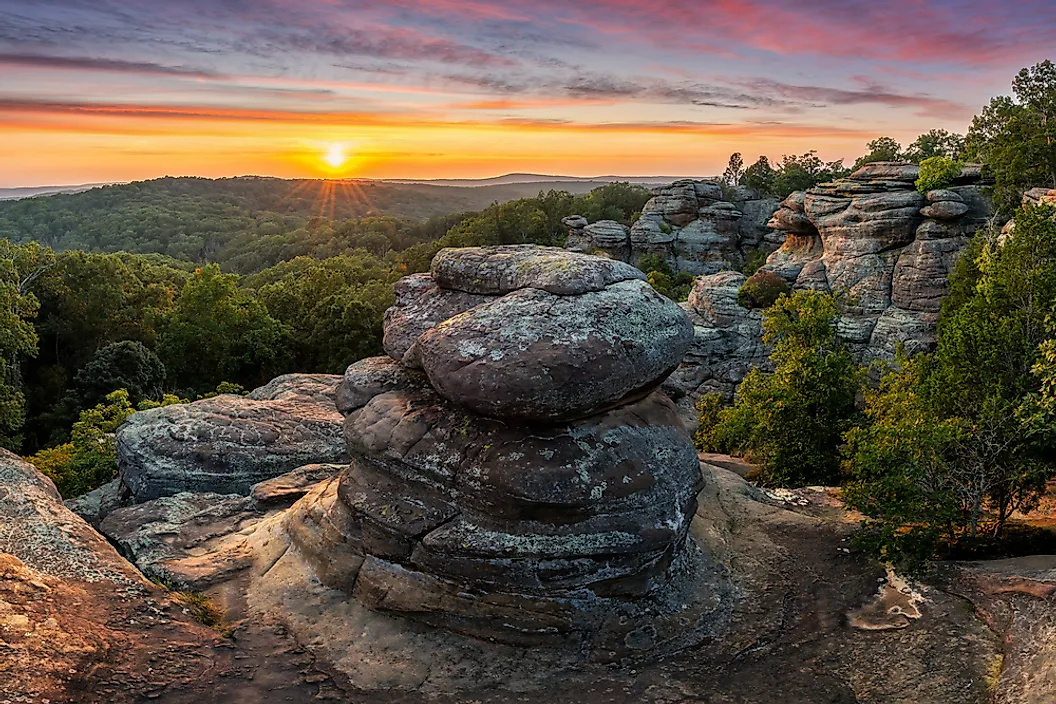
Northern cottonmouths in southern Illinois spend the winter in crevices along the limestone bluffs of the LaRue-Pine Hills, close to the northern edge of a range limited by cold winters. LaRue Swamp lies below the bluffs, fed partly by springs at the base of the cliffs, with Forest Road 345, a 2.5-mile gravel lane better known as Snake Road, running between the two. Each spring the snakes cross to reach the swamp, and the road is closed to vehicles while they do, usually March 15 through May 15, although the 2026 closure began early, on March 6.
Through the summer, the cottonmouths stay in LaRue Swamp, where young snakes use their yellow-tipped tails to lure frogs and lizards within reach. The swamp and its bluffs sit inside a research natural area that contains about two-thirds of the amphibian species known in Illinois, and about 22 snake species can be seen along Snake Road.
In the fall, the snakes make the trip back to the bluffs, and the road is closed again September 1 through October 30, a window that was extended to November 15 during a warm fall in 2024. During the closures, which date to 1972, people can still walk the road, though snake hooks and tongs are banned and handling any animal is prohibited.
Kisatchie National Forest, Louisiana

Saline Bayou, in the Winn Ranger District of Kisatchie National Forest, is a slow, swampy stream whose 19-mile scenic stretch was designated a National Wild and Scenic River in 1986. Bald cypress and cypress-tupelo swamp line the channel, the kind of Coastal Plain swamp where cottonmouths reach their greatest numbers, and motorboats are not allowed above Highway 126, which leaves that part of the bayou to paddlers. More than 70 fish species live in the bayou, along with turtles and alligators. Kisatchie Bayou, in the forest's Kisatchie Ranger District, is a clear, rocky creek with white sand beaches and rapids. Cottonmouths occur statewide in Louisiana and have been found on the forest's lands in Natchitoches Parish.
De Soto National Forest, Mississippi

Paddlers on Black Creek can choose a float as short as about five miles or commit to a 29-mile outfitter run between Brooklyn and Fairley Bridge that lasts about 14 hours. The creek's protected 21-mile stretch is Mississippi's only Wild and Scenic River, a deep, tea-dark waterway with vertical bluffs and white sandbars. Across De Soto National Forest, the northern cottonmouth is the reptile naturalists record most often, ahead of racers and gopher tortoises.
In Perry County, the Black Creek Wilderness is a broad hardwood floodplain filled with oxbow lakes and bald cypress, the same kind of still backwater that cottonmouths use across their range. About 10.8 miles of the 40-mile Black Creek Trail lie inside the wilderness, on mostly flat ground near the creek.
Apalachicola National Forest, Florida

Florida cottonmouths, raised to a full species in 2015 and able to take prey as large as baby alligators, live across Apalachicola National Forest, and many snakes in this part of the Panhandle also carry northern cottonmouth genes. They have been recorded at Leon Sinks, where the 2.8-mile Gum Swamp Trail circles a cypress and gum swamp, and in Bradwell Bay Wilderness, a broad, shallow basin of titi shrubs and blackgum where low ground is usually covered by one to four inches of water. At roughly 24,600 acres, Bradwell Bay is the second-largest wilderness in Florida, and the Florida Trail runs more than 12 miles through it, with sections that hikers often wade at waist depth in high water.
Osceola National Forest, Florida

Pinhook Swamp, a stretch of wet flatwoods and floodplain swamp at the northern end of Osceola National Forest, connects the forest with the Suwannee River and with Georgia's Okefenokee National Wildlife Refuge, about 407,000 acres just across the state line. By Florida's 2026 count, nearly 151,000 of the Pinhook project's planned 189,600 acres had been acquired for conservation. Roughly one in every four snakes reported from Osceola is a Florida cottonmouth, and the forest's wettest interior ground lies south of Pinhook in the 13,660-acre Big Gum Swamp Wilderness, a poorly drained swamp of cypress and gum. Ocean Pond, a two-mile-wide lake with a shallow sandy beach, gets more than 100,000 visitors a year, many of them anglers fishing for sunshine bass.
Francis Marion National Forest, South Carolina

In summer, much of Hell Hole Bay Wilderness is under 2 to 18 inches of standing water among bald cypress and tupelo, and the roughly 2,000-acre bay is known for numerous water moccasins, as cottonmouths are also called, according to the Forest Service. For most of the year a canoe trail 6 to 8 feet wide crosses the bay, and in the dry season the same route becomes a muddy hiking path.
Wambaw Creek, a tidal blackwater creek 20 to 80 feet wide, has a nine-mile canoe trail beneath large cypress and tupelo, with high water arriving about four and a half hours after Charleston's high tide. Wambaw Swamp Wilderness, at the creek's inland end, has no trails and little dry ground.
Croatan National Forest, North Carolina

Brice Creek is paddled as a round trip of about four hours from a single boat ramp in Croatan National Forest, and the forest's visitor brochure includes cottonmouths among its venomous snakes, beside advice to give snakes a wide berth. The forest's roughly 160,000 acres are bordered by water on three sides, including the Neuse and White Oak rivers, and the interior is a mix of pocosin shrub bog and lakes so shallow that Great Lake, at about 2,600 acres, is only 4 to 5 feet deep.
On a Forest Service species list for the Pond Pine Research Natural Area, a tract of pocosin near Great Lake, the cottonmouth is rated common, which matches state biologists' description of the snake as common across eastern North Carolina and, in a few places, the most abundant snake of any kind.
Telling a Cottonmouth From a Watersnake

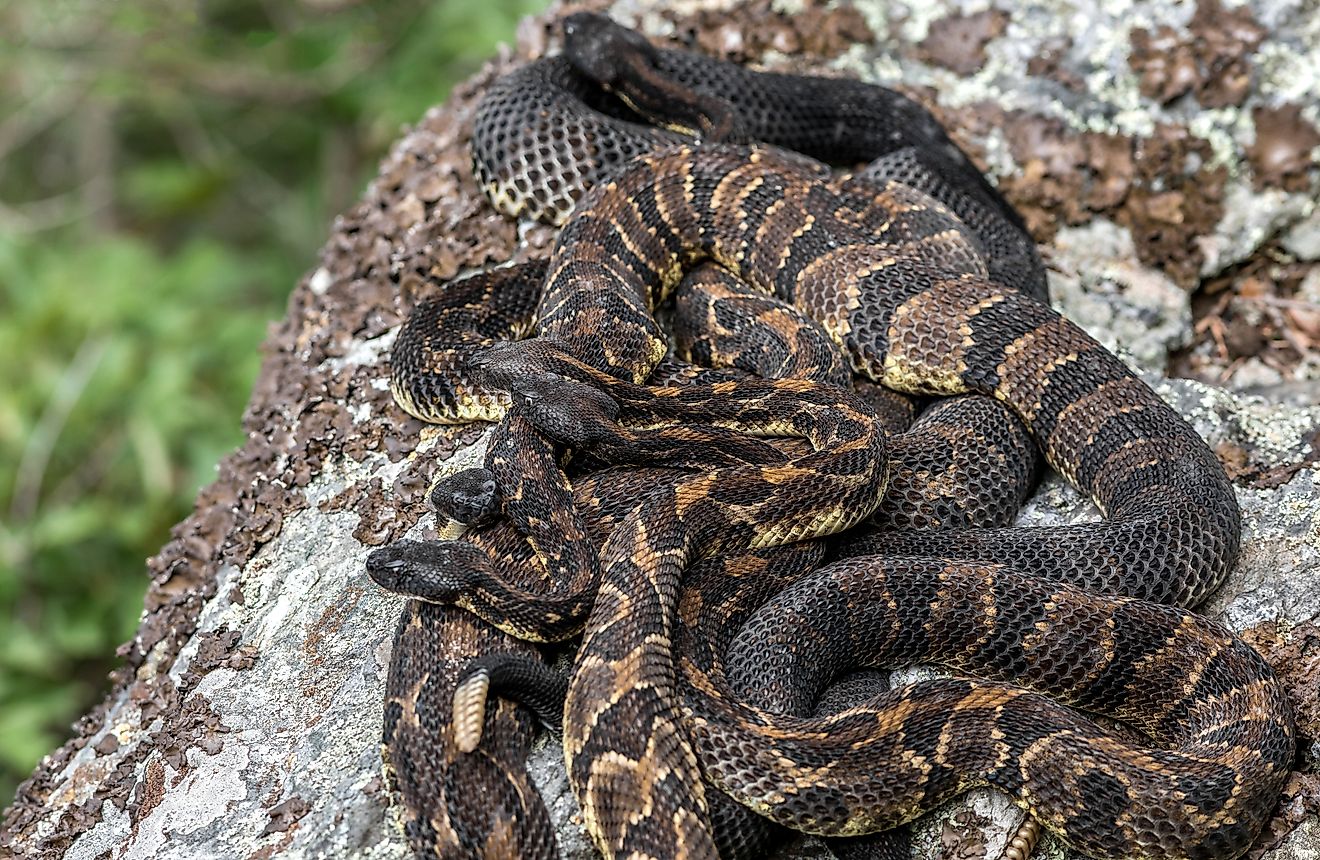
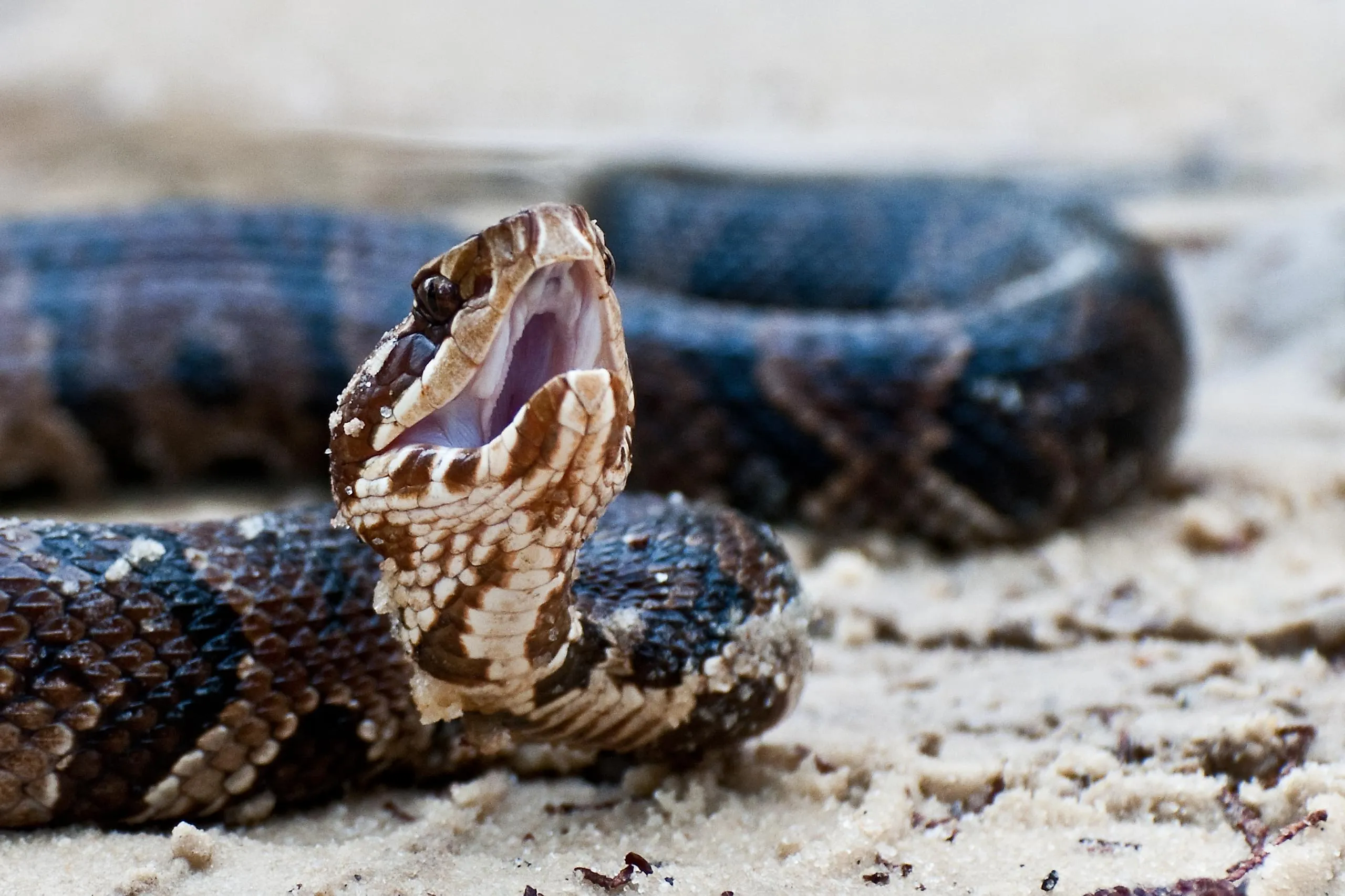
Across the cottonmouth's range, harmless watersnakes live in the same swamps and slow creeks and are often mistaken for cottonmouths. Posture in the water is one of the easier ways to tell the two apart on a creek like Black Creek, since a cottonmouth tends to float with its body riding on the surface while a watersnake swims with its body just below it. Seen from above, a cottonmouth's eyes are hidden under a heavy brow ridge, and its pupils are vertical, where a watersnake's are round. On the narrow canoe trail across Hell Hole Bay or the gravel of Snake Road, a snake and a person can end up a few feet apart, and a cornered cottonmouth often opens its mouth wide to show the white lining that gave the species its name. According to the Virginia Herpetological Society, that gape makes the snake more visible and is not an aggressive action, and cottonmouths do not chase people.