3 Of The Most Snake Infested Rivers In Massachusetts
Despite its dense population, Massachusetts has many rivers laced throughout the state, totalling 19 main systems and spanning over 8,000 miles. That is almost one river per snake, with 14 species of snake that call Massachusetts home. The state’s rivers are rich in biological diversity, recreational opportunities, and historical resources. Many of the state’s rivers were dammed for industrial uses, flood control, and to provide water supply for the growing population, but have since been restored to their natural condition, making them a favourable habitat for native snakes.
Connecticut River

The Connecticut River is the longest in New England, rising in the Connecticut Lakes in northern New Hampshire. It flows for 9 miles through New Hampshire, forming a border between New Hampshire and Vermont for 238 miles. It then crosses Massachusetts and Connecticut to empty into Long Island Sound after a total course of 407 miles.
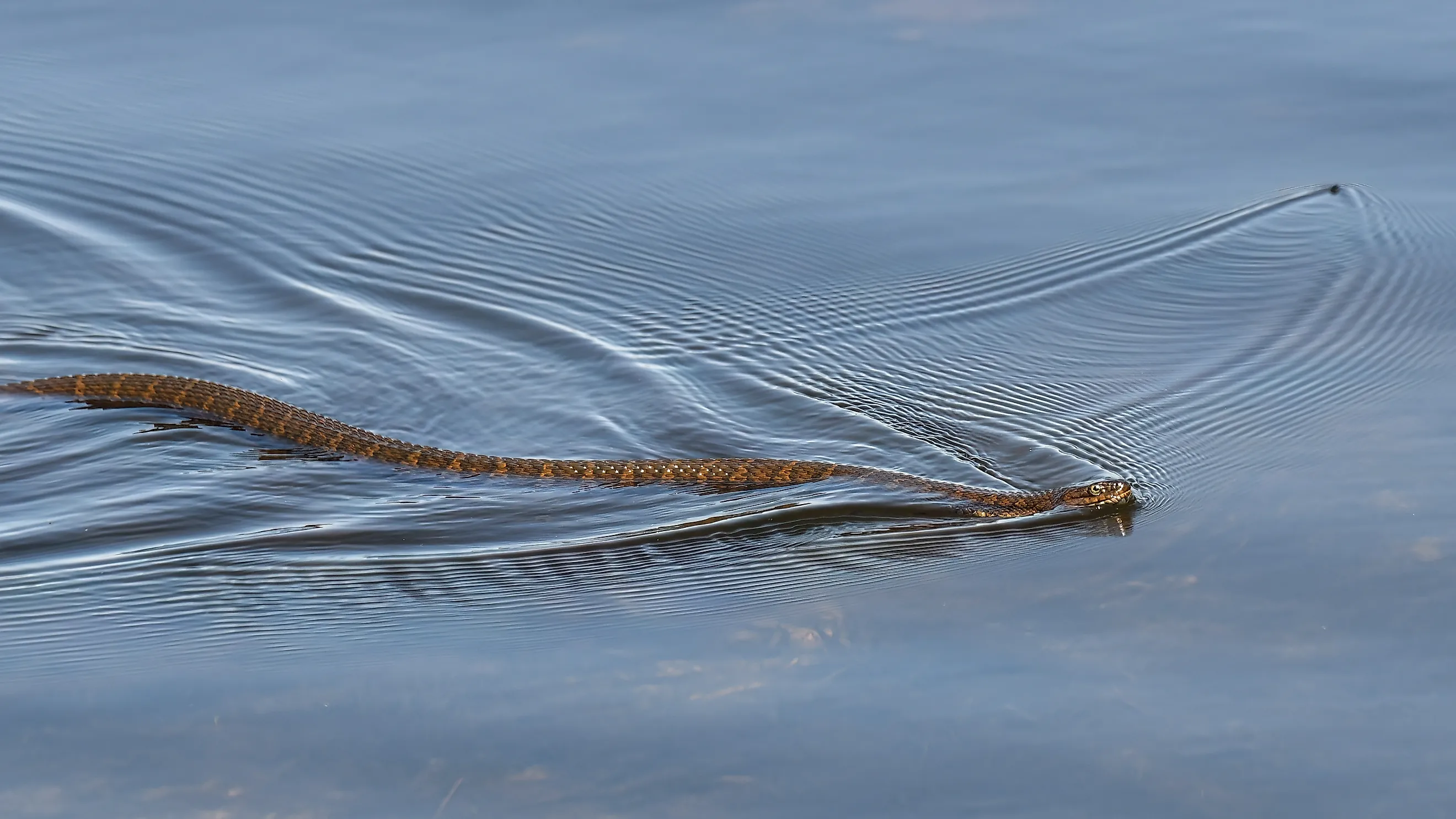
The most common snake found in the Connecticut River is the northern water snake (Nerodia sipedon). They inhabit the borders of almost every wetland habitat in the state, from mountain streams to salt marshes. They often bask along shorelines on exposed rocks or tree limbs, using the water to hunt for frogs and fish.

Massachusetts' largest snake, the eastern rat snake (Pantherophis alleghaniensis), which reaches lengths of 101 inches, is found sparingly throughout the state. It is limited to the Connecticut River Valley and a couple of other areas due to restrictions on the availability of hibernating sites in those areas. It favors these areas with southern exposure that receive maximum thermal benefit from the sun in winter and provide basking areas in early spring and late fall.
The eastern worm snake (Carphophis amoenus) also calls the Connecticut River Valley home. They inhabit areas with loose, sandy, and damp soils and move up and down soil columns in response to changes in moisture levels. In spring, when surface soils are more moist, they can be found under stones or logs. However, during summer or drought conditions, they retreat even further underground.
Housatonic River

The Housatonic River basin lies principally in western Connecticut and southwestern Massachusetts, with small sections extending into southeastern New York. The river rises in the Berkshire Hills, near Pittsfield, flowing south through Massachusetts, into Connecticut, and entering Long Island Sound after 149 miles. The Housatonic River supports natural scenery, recreational opportunities, historic value, and native flora and fauna.

Multiple species of snake occupy the Housatonic River Basin, including one of the state’s most widespread and commonly seen snakes, the garter snake (Thamnophis sirtalis). Although the snakes are resilient and capable of living in every terrestrial and wetland habitat in the state, they are most abundant in and around damp habitats. Since their diet consists of amphibians, fish, small mammals, earthworms, and insects, they typically remain near permanent water sources.
Merrimack River

The Merrimack River is the second-largest river in New England. It rises in the White Mountains of New Hampshire and flows southward into Massachusetts, then northeastward into the Atlantic Ocean after a total course of 110 miles. A section of the river known as the Lower Merrimack River, which originates in Merrimack, New Hampshire, but enters Massachusetts after flowing for only 15 miles.

The eastern hognose snake (Heterodon platirhinos) is restricted to the sandy plain of the Merrimack River, favoring the sandy, well-drained soils. These snakes will use the sandy soil habitat to lay their eggs between June and July, with the young snakes hatching between August and September. Since the eastern hognose snake’s diet primarily consists of amphibians, specifically toads, the Merrimack River provides an ideal habitat for them.
Snakes In Massachusetts
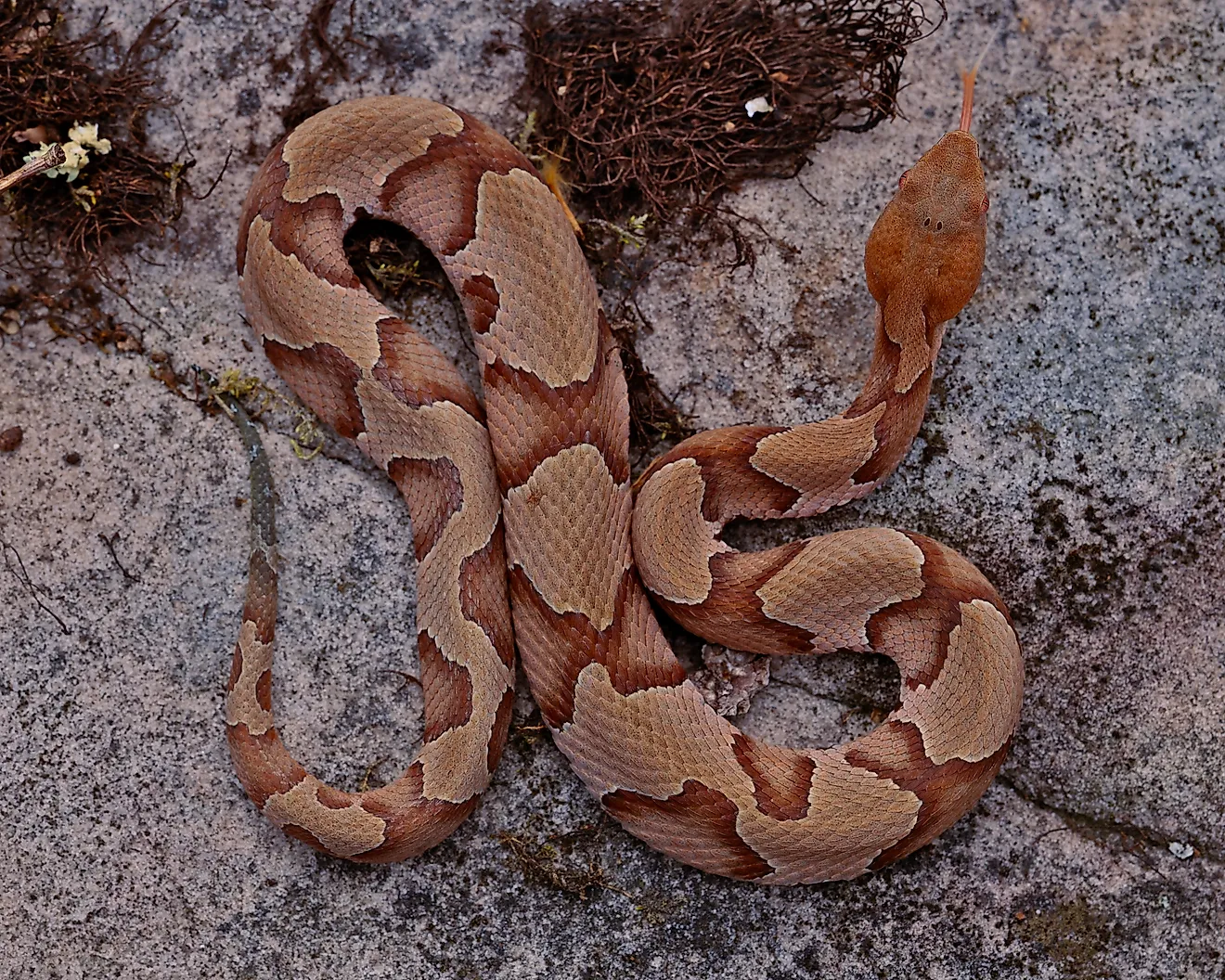
Although snakes are widespread in Massachusetts, with many calling the state’s rivers home, most of them are nonvenomous and harmless to humans. Even though the eastern ratsnake is the state’s largest, which can make it intimidating, it is actually quite docile in nature, and a popular choice among hobbyists in the pet trade. While Massachusetts is home to two venomous snakes, the timber rattlesnake (Crotalus horridus) and the northern copperhead (Agkistrodon contortrix), they are very rare and prefer rocky, forested hillsides rather than rivers.