The US Waters Where Orcas Live Year-Round
Sharks get the publicity, but killer whales, or orcas, are among the ocean's most formidable predators. Despite their common name, these marine mammals are actually dolphins. They are the largest members of the dolphin family, reaching lengths of up to 32 feet and weighing up to 11 tons. Adult orcas have no known natural predators, and some females can live for 80 to 90 years. Found throughout the world's oceans, orcas are particularly common in colder waters. Alaska's fjords and California's central coast are among the US waters where visitors can watch wild orcas, including areas where the animals are present year-round.
Kenai Fjords National Park, Alaska

Kenai Fjords National Park, near Seward, is dominated by the Harding Icefield, an enormous expanse of ice spanning approximately 700 square miles, including its outflowing glaciers. Much of the park's coastline is best explored by boat, and wildlife cruises offer chances to see orcas hunting and traveling through the surrounding waters. Three ecotypes occur in the region: resident, transient, and offshore killer whales. Residents primarily hunt fish, while transients, also called Bigg's killer whales, feed on marine mammals such as seals and porpoises. Although resident and transient orcas inhabit some of the same waters, they maintain separate social groups and are not known to interbreed in the wild. Offshore orcas are less frequently encountered and are known to feed on fish, including sharks. Orcas can be seen in any season, although summer boat excursions generally offer the most accessible viewing.
San Juan Islands, Washington

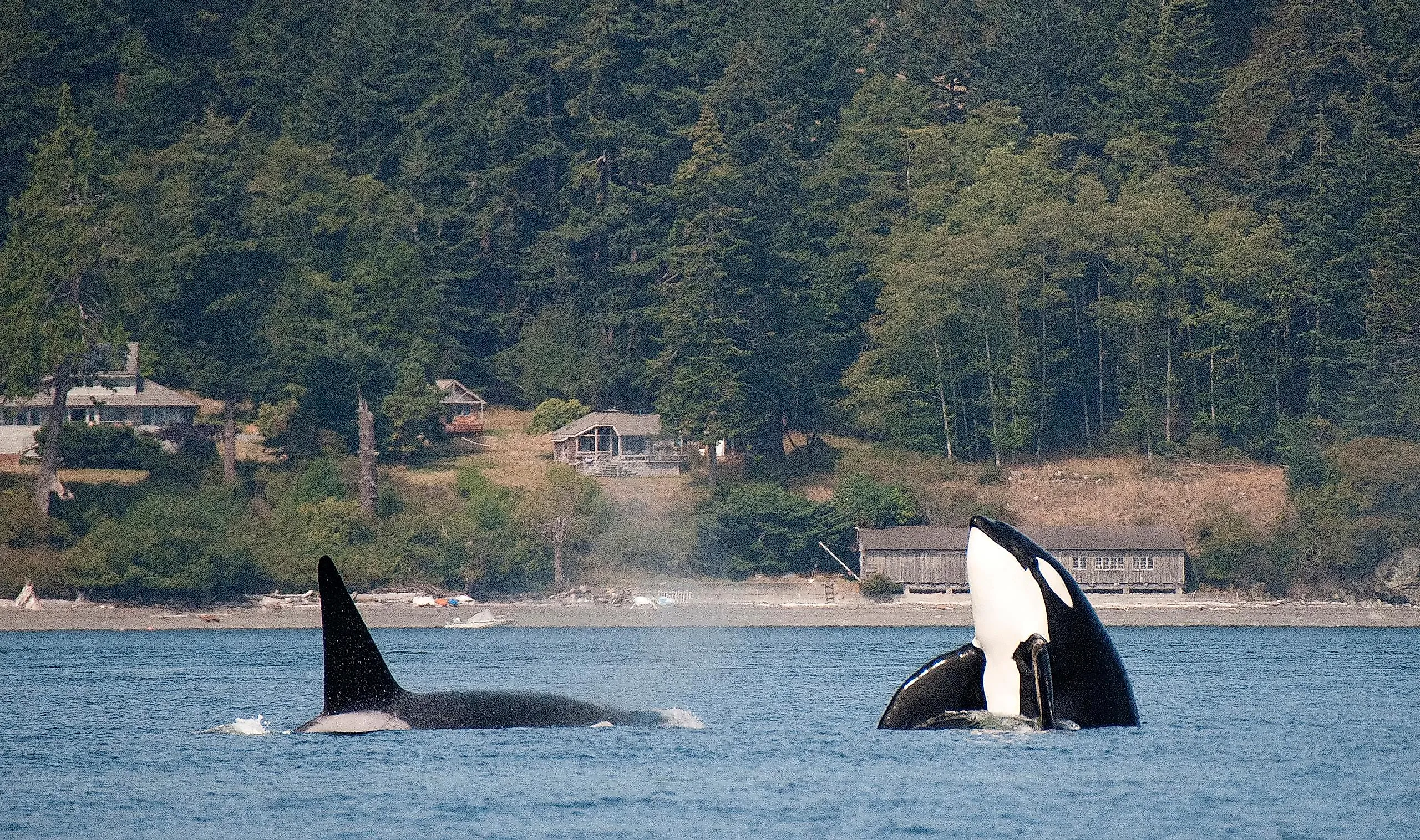
The San Juan Islands are among the best-known orca-watching destinations in the United States. Their surrounding waters are visited by both Southern Resident killer whales and transient orcas, although sightings vary by season and the movements of individual groups. Despite its name, Orcas Island was not named after killer whales. Its name derives from Horcasitas, part of the title of a Spanish colonial official. Visitors can join whale-watching excursions from the islands, including tours offered by Outer Island Excursions, which provides a seasonal whale-sighting guarantee in the form of a complimentary return trip rather than a cash refund.
Guided kayaking tours around San Juan Island also offer marine wildlife viewing, but kayakers must observe whale-protection regulations. Washington requires vessels to remain at least 1,000 yards from endangered Southern Resident killer whales and at least 200 yards from other killer whales. Resident orcas generally have more rounded dorsal fins, while transients tend to have straighter, more pointed fins, although identification requires additional characteristics.
Monterey Bay, California

Monterey Bay is an important feeding area for killer whales along California's central coast. Orcas occur in the region throughout the year, although sightings are less predictable than those of some other marine mammals. April and May are prime months, when migrating gray whales and their calves attract mammal-hunting transient orcas. Whale-watching operators, including Monterey Bay Whale Watch, offer excursions that may encounter these predators, but sightings are never guaranteed.
Transient orcas in Monterey Bay prey on marine mammals, including seals, sea lions, dolphins, and whales. Some groups have been documented hunting gray whale calves during the spring migration. Offshore killer whales also occasionally enter the region, although they are much less frequently observed. These animals often travel in relatively large groups and feed on fish, including sharks. Monterey Bay's combination of marine mammal migrations and productive coastal waters makes it an established destination for observing orcas in the wild.
Juneau, Alaska

Orcas can be seen at any time of year in the waters around Juneau, although sightings are less frequent than those of humpback whales during the main summer tourism season. May through August is generally the best window for whale-watching excursions, when boat access and viewing conditions are better. Both resident and transient killer whales occur in southeastern Alaska.
Resident orcas primarily feed on fish and travel in stable family groups, while transient orcas hunt marine mammals and typically move in smaller groups. Individual resident pods usually contain far fewer than 150 animals, although several pods may occasionally gather in larger aggregations. Transient groups commonly consist of only a handful of individuals. Because orcas travel considerable distances in pursuit of food, a group may appear repeatedly in an area before disappearing for weeks. This mobility makes sightings unpredictable, even in waters that killer whales frequent all year.
Bonus: Nantucket, Massachusetts

Orca sightings are relatively uncommon along the northeastern United States coast, making encounters off Nantucket especially notable. One of the region's best-known individuals is Old Thom, a male killer whale repeatedly observed in New England waters over many years. Unlike the stable family groups associated with many killer whale populations, Old Thom has often been seen traveling alongside Atlantic white-sided dolphins. His unusual association with another dolphin species has attracted scientific attention, although the reasons for the behavior remain uncertain.
Researchers have not established that Old Thom primarily eats fish, and his association with the dolphins alone does not provide evidence of his diet. He was reported approximately 10 miles off Nantucket in June 2026, adding to a long record of sightings in the region. Nantucket is therefore a destination for rare orca encounters, rather than a reliable year-round whale-watching location.
Killer whales inhabit every ocean, including tropical and subtropical waters, but many of their best-known populations occur in cooler regions of the North Pacific and North Atlantic. Alaska, Washington, and California offer well-documented places to observe these predators, while occasional sightings off Massachusetts demonstrate their wider distribution. Even in places with a year-round orca presence, their movements depend on food availability and other environmental conditions. A successful encounter is never guaranteed, but these coastal waters provide some of the most rewarding opportunities to see wild orcas in the United States.