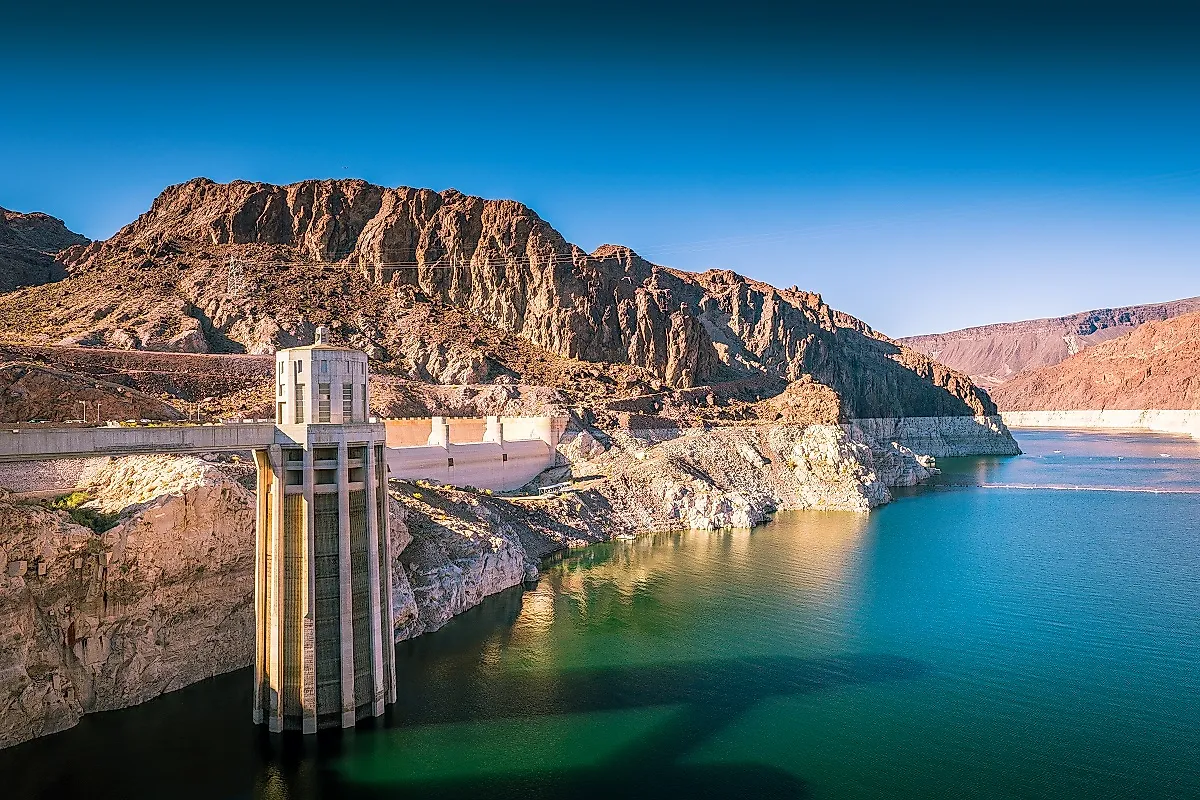
Hoover Dam Was Built For 2080 Megawatts, It Now Makes 1300
When Hoover Dam was finished back in 1936, its generators were built to crank out a mighty 2,080 megawatts of electricity, enough to light up a major city. These days, it manages a good deal less. At recent low-water marks the dam's capacity had slipped to around 1,567 megawatts, and as Lake Mead has kept falling it has slid further still. So here is where all those missing megawatts went, and no, it is not broken machinery.
The Missing Megawatts
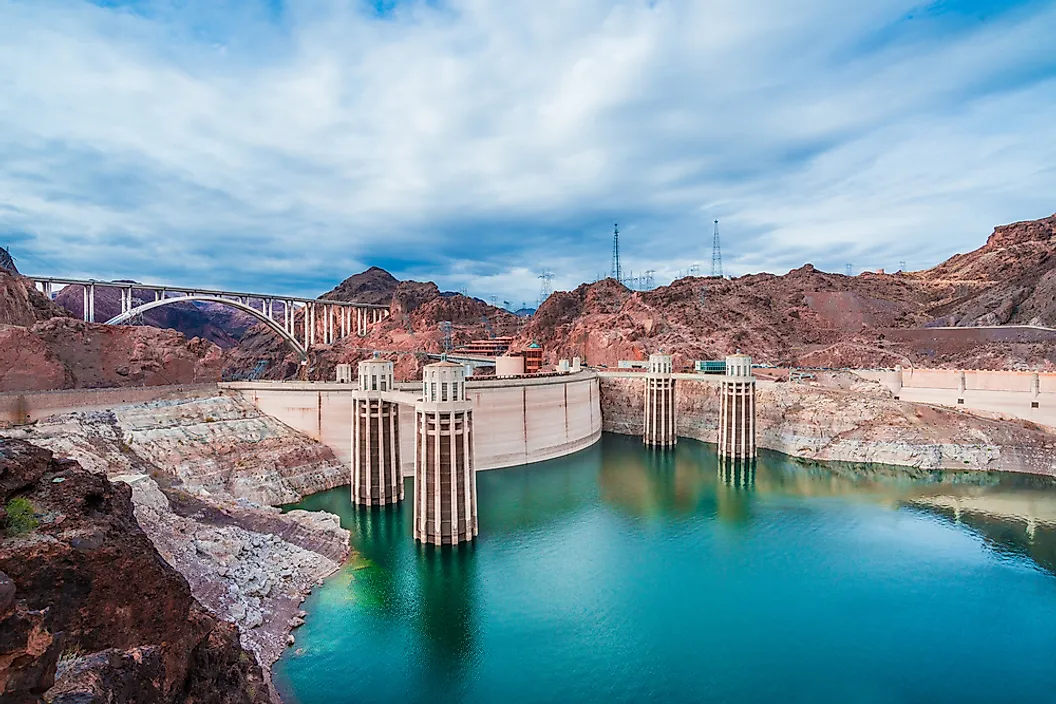
The headline numbers tell the whole story. Hoover Dam's 17 generators have a nameplate capacity of about 2,080 megawatts, the figure they were designed to hit when the reservoir behind them is brimming full. But the long Western drought has steadily chipped that down. By 2021, with Lake Mead at a then-record low, the Bureau of Reclamation pegged the dam's capacity at roughly 1,567 megawatts, a cut of about 25 percent. The lake has only fallen further since, dragging capacity down toward 1,300 megawatts. The turbines themselves are in perfectly fine shape. The problem is entirely upstream.
It's All About the Head

Hydropower runs on something engineers call "head," which is basically the height, and therefore the pressure, of all the water stacked up behind the dam. When Lake Mead is full, the water drops roughly 590 feet before it reaches the turbines, and all that built-up pressure spins them hard. As the lake level falls, that column of water gets shorter, the pressure eases off, and every turbine produces less. The Bureau of Reclamation's rule of thumb is blunt: Hoover loses about 5.7 megawatts of capacity for every single foot that Lake Mead drops.
Lake Mead Is the Reason
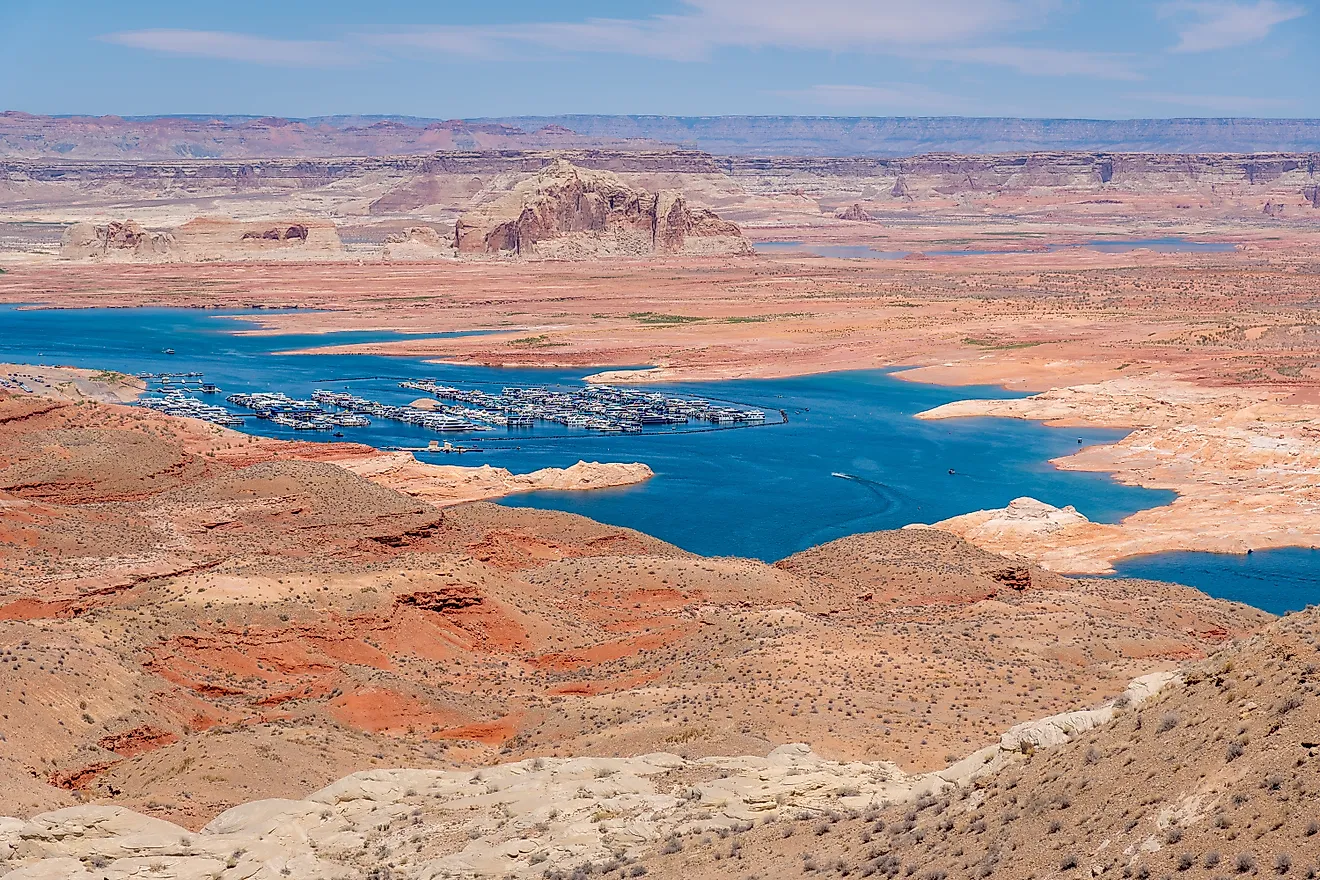
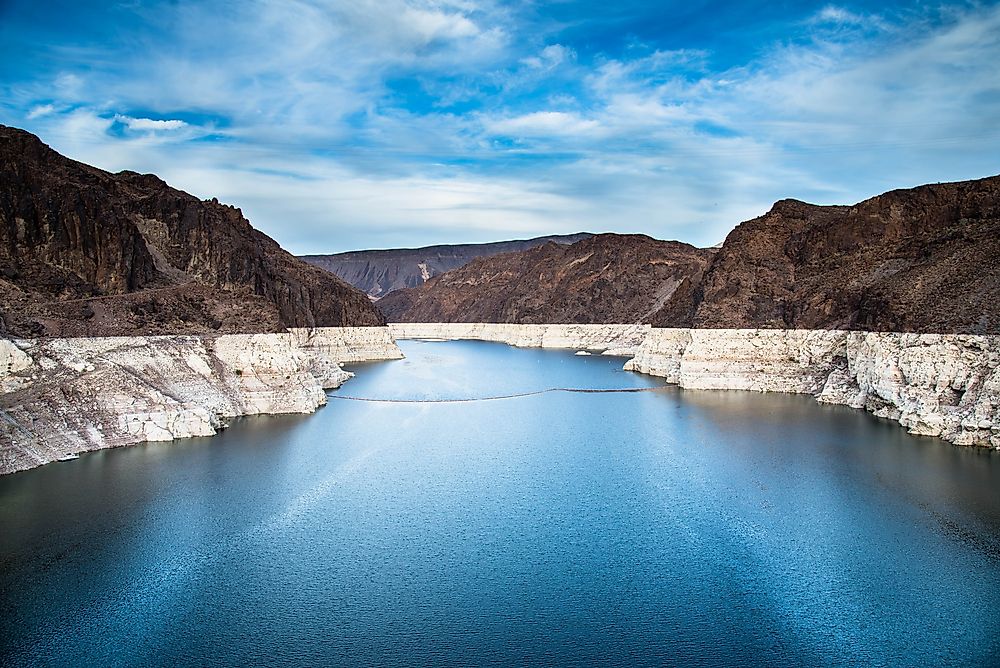
And Lake Mead has fallen a very long way. From a full pool of 1,229 feet, the largest reservoir in the country has dropped to around 1,037 feet, roughly a quarter full, hammered by the two-decade megadrought and by a Colorado River that has long been promised to more users than it can actually supply. Less water in the lake means both less head and less water to push through the turbines, which is exactly why Hoover's output today runs 40 to 50 percent below where it stood in 2000, the last year the reservoir was effectively full.
Engineers Fought Back
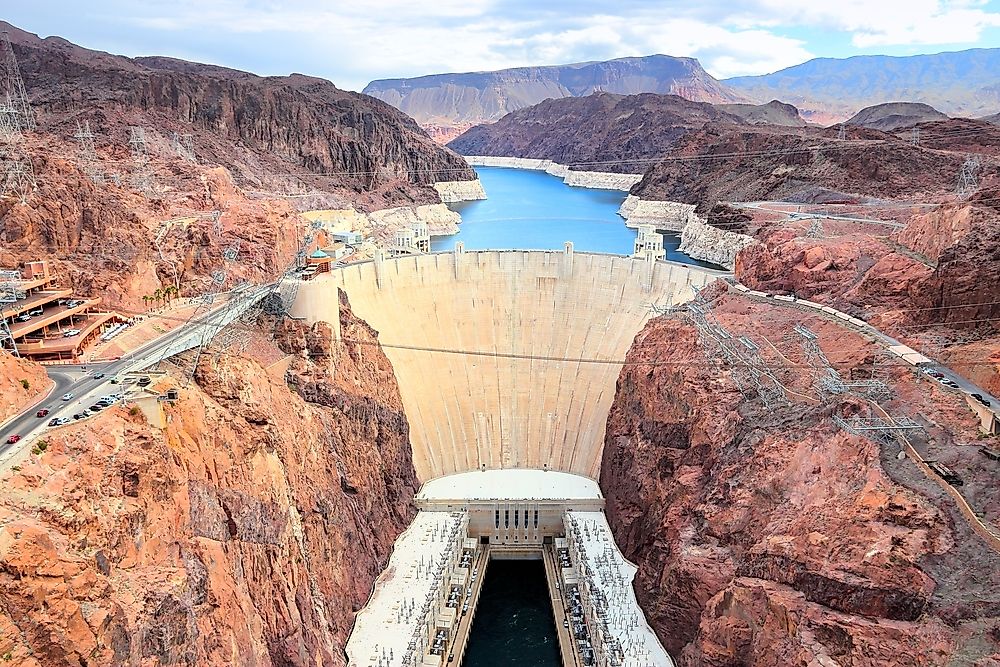
It would be even worse without some clever retrofitting. Reclamation spent around $42 million installing five "wide-head" turbines built specifically to keep generating efficiently at lower lake levels, down to about 950 feet, with more on the way. Those upgrades are the main reason the dam is still producing as much as it is. The looming danger lines are sobering, though. If Lake Mead slips below 1,035 feet, 12 of the 17 turbines can no longer operate, slashing capacity by around 70 percent in a single step. At 950 feet the dam stops generating entirely, and at 895 feet it hits "dead pool," where no water passes through at all.
Who Loses the Power
All of this matters because Hoover's electricity is already spoken for. The dam's power is divided among Nevada, Arizona, and California, with nearly a third of it going to Southern California's Metropolitan Water District alone, and on average it serves around 1.3 million people. Crucially, hydropower is cheap, clean, and can be dialed up almost instantly to meet spikes in demand. As Hoover's share keeps shrinking, utilities have to cover the gap with other sources that are often pricier or more polluting, which is precisely the kind of power the grid leans on hardest during a blazing Southwestern summer.