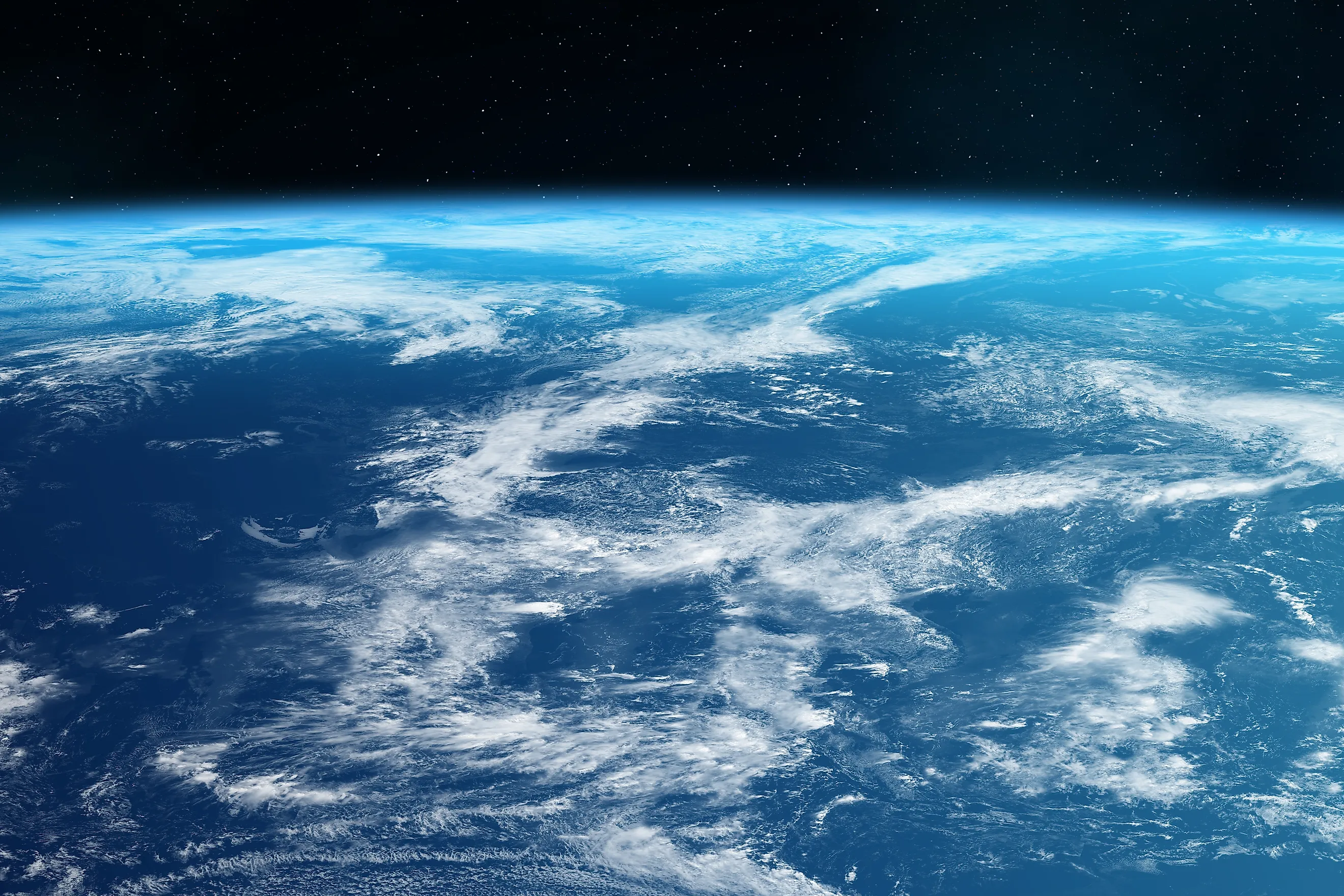
How Old The Ocean Actually Is
Humanity sometimes struggles to comprehend how the ocean is constantly changing, and what sort of effects that could have on all life. For billions of years, the ocean has been in a state of constant change not only in its shape and size, but in the life within it, which experiences periods of evolution and expansion interrupted by eras of extinction. Life on land has often followed these changes, emphasizing the importance of understanding how the ocean has changed, but this understanding is hindered due to the incredible timespan of these changes. It's often difficult for people to grasp how old the ocean actually is, and how its history might hold warnings for our own.
Precambrian - The Formation And Foundation

The Precambrian marked not only the formation of the oceans, but also the foundation of life as we know it, and the two are intrinsically linked. The Precambrian began with the Earth's formation about 4.5 billion years ago, but our ocean didn't come into existence until somewhat later. For its first stretch of history, Earth was awash in molten rock and was too hot for water to condense. Only after a period of cooling did it become possible for an ocean to form. Eventually, the Earth cooled enough that escaping vaporized water began to condense and settle, forming the ocean. Tiny zircon crystals from Western Australia suggest that liquid water was already present on Earth's surface by about 4.4 billion years ago, which makes the ocean nearly as old as the planet itself.
In this primeval ocean, the foundations of life as we know it began, although life in the Precambrian ocean differs greatly from even the deep-sea life we see today. Life began at least 3.5 billion years ago as single-celled prokaryotes, possibly feeding near hydrothermal vents. Eventually, the first photosynthesizing bacteria appeared, and the oxygen formed as a byproduct of their photosynthesis began building up in our atmosphere about 2.4 billion years ago. Around 1 billion years ago, the supercontinent Rodinia formed, surrounded by a single global ocean. As Rodinia broke apart after about 750 million years ago, new ocean basins opened, including the Pan-African Ocean and the vast superocean Panthalassa. By about 575 million years ago, complex lifeforms began to appear. The early ancestors of animals appeared at this time as soft-bodied, tubular organisms, and fern-like fronds formed entire forests beneath the ocean.
Paleozoic - Species Diversify And Die

Starting about 540 million years ago, the primeval ocean in the Paleozoic era experienced diversification both in its shape and in its ecosystems, growing closer to the ocean we know today. In addition, life began to diversify, but three of the five major mass extinctions struck during the era, the last and largest of them at its close, showing that life was still fragile. During the Paleozoic, the ocean repeatedly flooded the continents before receding, and the continents continued to shift, opening and closing oceans such as the Iapetus and Rheic oceans. Shallow coastal areas also began to develop, and this contributed to the boom in diversity and evolution occurring within it. During the Cambrian period, the earliest part of the Paleozoic era, which itself lasted until 252 million years ago, evolution exploded, and we see the earliest examples of many types of animals, including predators. Much of this was due to the increasing amount of oxygen in the atmosphere, as well as the climate warming. However, by the end of the Paleozoic, more than 90% of marine species died out in the Permian extinction, the largest extinction in history. It's believed that volcanic eruptions spewed CO2 and other toxic gases into the atmosphere, which made conditions untenable for life.
Mesozoic - Reign Of Reptiles

The Mesozoic era, the period most people think of when they consider Earth before humans, was a period of recovery once again punctuated by a mass extinction. Consisting of the Triassic, Jurassic, and Cretaceous periods, during which reptiles ruled as the dominant life form, the ocean recovered from the Permian extinction and even flourished as a warmer climate led to higher sea levels. While dinosaurs ruled the land, the ocean belonged to marine reptiles such as the plesiosaur and mosasaur. These reptiles are not considered dinosaurs because dinosaurs descended from a different ancestor. In addition, some groups we still see today, such as turtles and much of modern-day plankton, appeared in this era, and the effects of the Mesozoic era on life today are sometimes surprising. Much of the world's oil began as Mesozoic plankton, and it was during this period that the Atlantic Ocean began to form. Like the Paleozoic era, the Mesozoic ended in a mass extinction, the Cretaceous-Paleogene extinction event, also known as the K-T extinction. About 66 million years ago, a massive asteroid slammed into what is today the Yucatan Peninsula, and the resulting impact sent enough debris into the atmosphere to make photosynthesis impossible for a time, resulting in severe ecological disruption on both land and sea.
Cenozoic - Modern Mammals
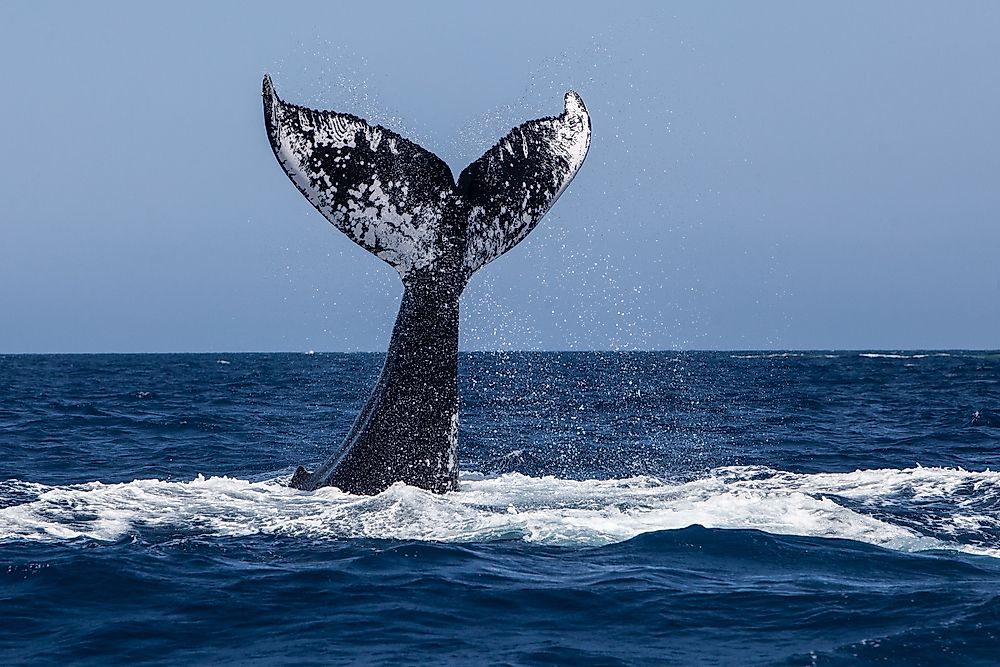
This brings us to the current era, the Cenozoic, which is marked by mammals, including humans, dominating the land, while marine mammals such as whales spread through the ocean. As the continents continued to shift, the ocean basins gradually took on their modern shape, forming the interconnected Atlantic, Pacific, Indian, Arctic, and Southern oceans. Changes did continue. About 34 million years ago, ocean temperatures plunged and currents shifted dramatically as Antarctica's ice sheets began to grow. Much later, about 3 million years ago, the rise of the Isthmus of Panama closed the seaway between the Pacific Ocean and the Caribbean, helping make the Atlantic saltier. Mammals diversified and adapted to the changes in the ocean. A prime example is whales. Some whales grew massive bodies after the onset of the ice ages concentrated their food into seasonal, nutrient-rich patches separated by long stretches of open water. Larger bodies allowed whales to survive their migrations between patches. Today, some scientists use the informal term Anthropocene for the age of humans, and this reflects an influence unique to the Cenozoic ocean, which is human influence. Scientists agree that human activity is warming the climate and the ocean, numerous species have been hunted to extinction, and some fear that humans may be a factor in the next great extinction event.
An Ocean Nearly As Old As Earth
Among all the planets found so far, Earth stands out for its surface ocean of liquid water, and that ocean has, for eons, served as the foundation for all life on Earth. It's no exaggeration to say that life came from the sea, but many don't realize how long a process that was, as we rarely think about how old the ocean is, or how it has changed over billions of years. Through the young Earth's cooling, the emergence of complex life, and its subsequent diversifications, the ocean has been the basis of life as we know it, and it remains so. If life in the ocean falters, so does life on land.