Why The Atlantic Is Saltier Than The Pacific
The Atlantic is saltier than the Pacific at every latitude between 30 degrees south and 60 degrees north, by roughly one to two parts per thousand. That sounds marginal and is not. The main reason is that the Atlantic is leaking fresh water to the Pacific through the sky: trade winds carry evaporated Atlantic moisture west across the Isthmus of Panama, which is only about 80 kilometers wide at its narrowest, and dump it in the Pacific. One estimate puts that airborne transfer at around 0.32 Sverdrups, which is more fresh water than the Amazon delivers. The Atlantic keeps the salt and loses the water.
Salinity Is A Ledger

The underlying principle takes one line. Evaporation removes water and leaves the salt behind, while rain adds water and no salt at all.
So the salinity of a basin is a running account of how much fresh water it has gained or lost relative to the salt it holds. More evaporation than rainfall makes it saltier. More rainfall than evaporation does the reverse.
Measured that way, evaporation minus precipitation over the Atlantic consistently exceeds the Pacific by about 0.4 Sverdrups, a figure that holds across datasets and across the whole range of latitudes involved.
The Isthmus Is The Leak
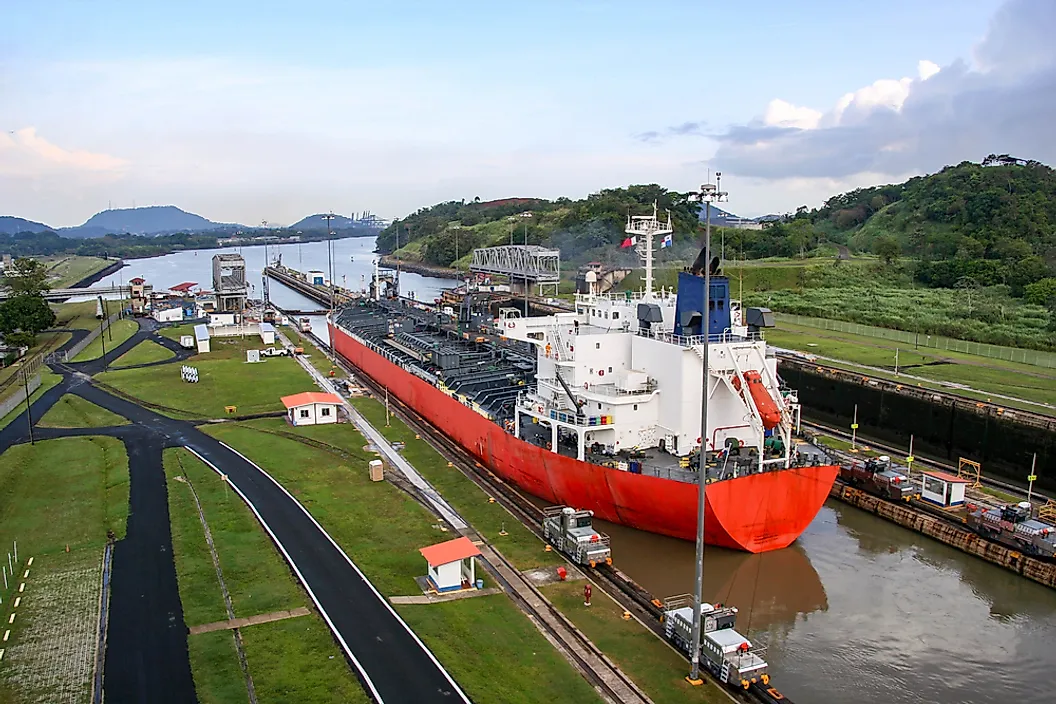
Where that evaporated Atlantic water actually goes is the part most explanations skip, and it is the most interesting bit. Trade winds blow east to west across the tropics. Central America is narrow and comparatively low, so moisture that evaporated off the tropical Atlantic and Caribbean crosses the land bridge in the atmosphere and falls as rain on the Pacific side. Estimates of that cross-isthmus flux run from roughly 0.1 to 0.2 Sverdrups, with some analyses putting the total Atlantic-to-Pacific vapor loss at 0.32.
A Sverdrup is a million cubic meters per second. The Atlantic is, in effect, running a continuous river into the Pacific through the air, and nobody can see it.
A Narrow Ocean Loses More
Basin geometry matters here too, and it compounds the Panama effect rather than being separate from it. The Atlantic is considerably narrower than the Pacific, which means a greater fraction of its area lies close to land and its moisture has a shorter distance to travel before escaping the basin altogether. Water evaporating from the middle of the Pacific has thousands of miles of ocean to cross and will probably rain back into the same ocean.
Mountain height plays into it too. Higher terrain reduces vapor transport from the Pacific back into the Atlantic, so the exchange runs predominantly one way.
The Mediterranean Adds Brine

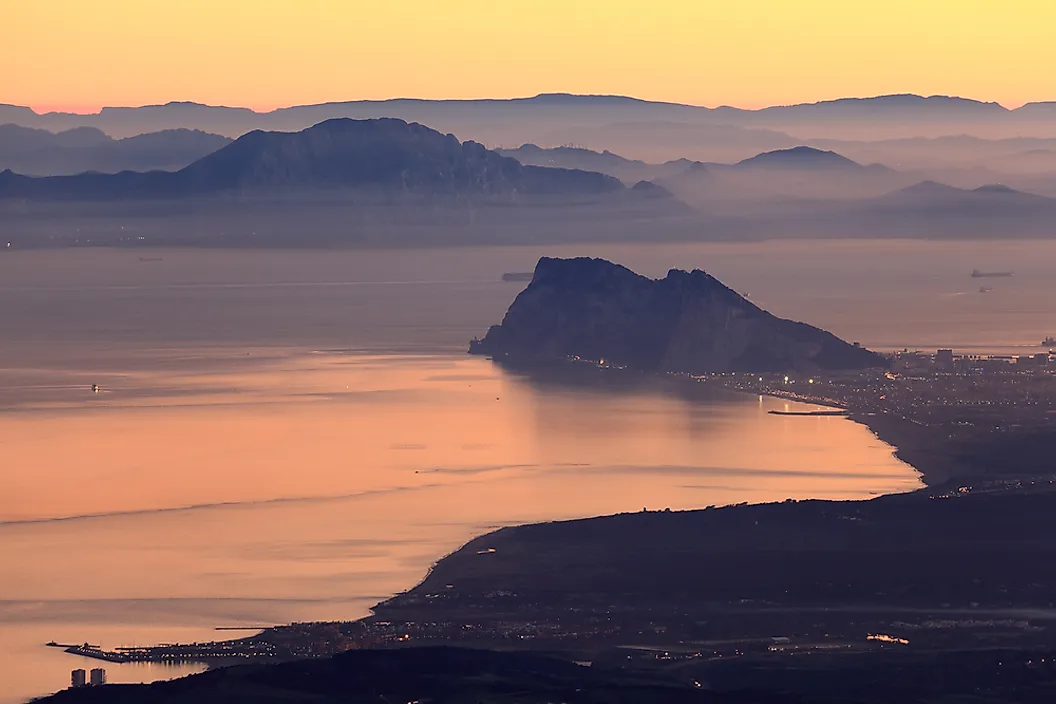
The Atlantic also has a side door through which unusually salty water arrives. The Mediterranean is an intensely evaporative basin ringed by arid land, and its water is saltier than the open ocean. At the Strait of Gibraltar, only about eight miles wide at its narrowest, that dense brine sinks and spills westward into the Atlantic at depth.
It is a slow input rather than a dramatic one, but it is persistent, and the Pacific has no equivalent feature anywhere on its margins.
This Is Why The Conveyor Belt Exists

Here is the consequence that makes this gap one of the more important facts in oceanography rather than a piece of trivia.
Salty water is denser than fresh water at the same temperature. When salty Atlantic surface water reaches the far North Atlantic and cools, it becomes dense enough to be gravitationally unstable and sinks to great depth, forming North Atlantic Deep Water. That sinking is the engine of the Atlantic Meridional Overturning Circulation, the system that carries warm water north and keeps northwest Europe habitable.
The North Pacific does none of this. Its surface water is too fresh to sink no matter how cold it gets, which is why there is no Pacific equivalent of the AMOC and no deep water formation anywhere in that basin.
The Pacific Is Physically Higher
One consequence of all that transferred fresh water is physical and measurable, and it surprises people. The fresher Pacific stands roughly 50 centimeters higher than the Atlantic. Fresh water is less dense, so the same mass of it occupies more vertical space, and the basin that receives the vapor sits taller than the basin that loses it.
That height difference is small in absolute terms and large in consequence, because it contributes to the pressure gradients that help drive flow between the oceans.
Warmth Makes It Worse
A feedback loop sits underneath the whole arrangement, and it reinforces itself. The AMOC carries enormous quantities of heat northward into the Atlantic. Warmer surface water evaporates faster. Faster evaporation makes the water saltier. Saltier water sinks more readily, which strengthens the AMOC, which carries more heat north.
This is why researchers have argued about causation for years. One position holds that higher Atlantic evaporation drives the AMOC. Another, put forward by Czaja in 2009, holds that the higher evaporation is largely a consequence of the AMOC's own heat transport. The honest answer is that both run together.
The Bering Strait Keeps The Gap Open
A small flow at the top of the world does more work than its size suggests. Relatively fresh Pacific water moves through the Bering Strait into the Arctic and onward toward the Atlantic, carrying under 0.1 Sverdrups of fresh water. Against the Atlantic's enormous overturning that is a minor term.
Against the Pacific's much weaker overturning it is proportionally far more significant, which means the same modest flow helps keep the Pacific fresh while barely denting the Atlantic. The asymmetry sustains itself.
Freshening Is The Thing To Watch

Because the whole system depends on the North Atlantic staying salty enough to sink, the obvious vulnerability is dilution.
An influx of fresh water, from melting ice or increased precipitation, can form a buoyant low-salinity lens at the surface. That lens stratifies the water column and can cap the deep convection that forms North Atlantic Deep Water, which is the mechanism behind most concern about AMOC weakening.
The salinity difference between these two oceans is therefore not a curiosity. It is the condition that allows one of the planet's major circulation systems to run at all.
The Short Answer
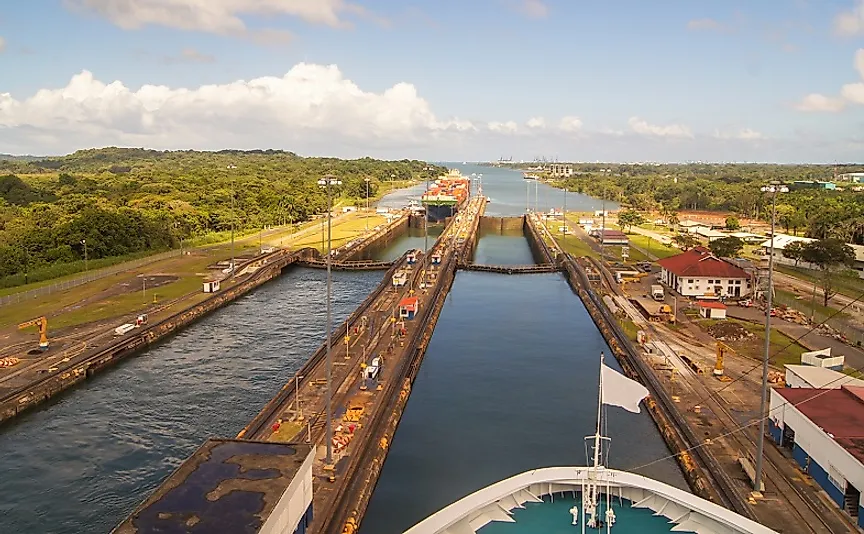
The Atlantic is saltier because more water evaporates from it than falls back on it, and because trade winds carry a large share of that evaporated water west over a narrow strip of Central America and deposit it in the Pacific. A narrow basin, a mountain barrier that blocks the return trip, and a steady spill of Mediterranean brine at Gibraltar all push in the same direction.
The payoff is that the North Atlantic is salty enough for its surface water to sink when it cools, and the North Pacific is not. One ocean runs a global conveyor belt and the other does not, and the difference between them is about one part per thousand.