The Deepest Point In American Waters
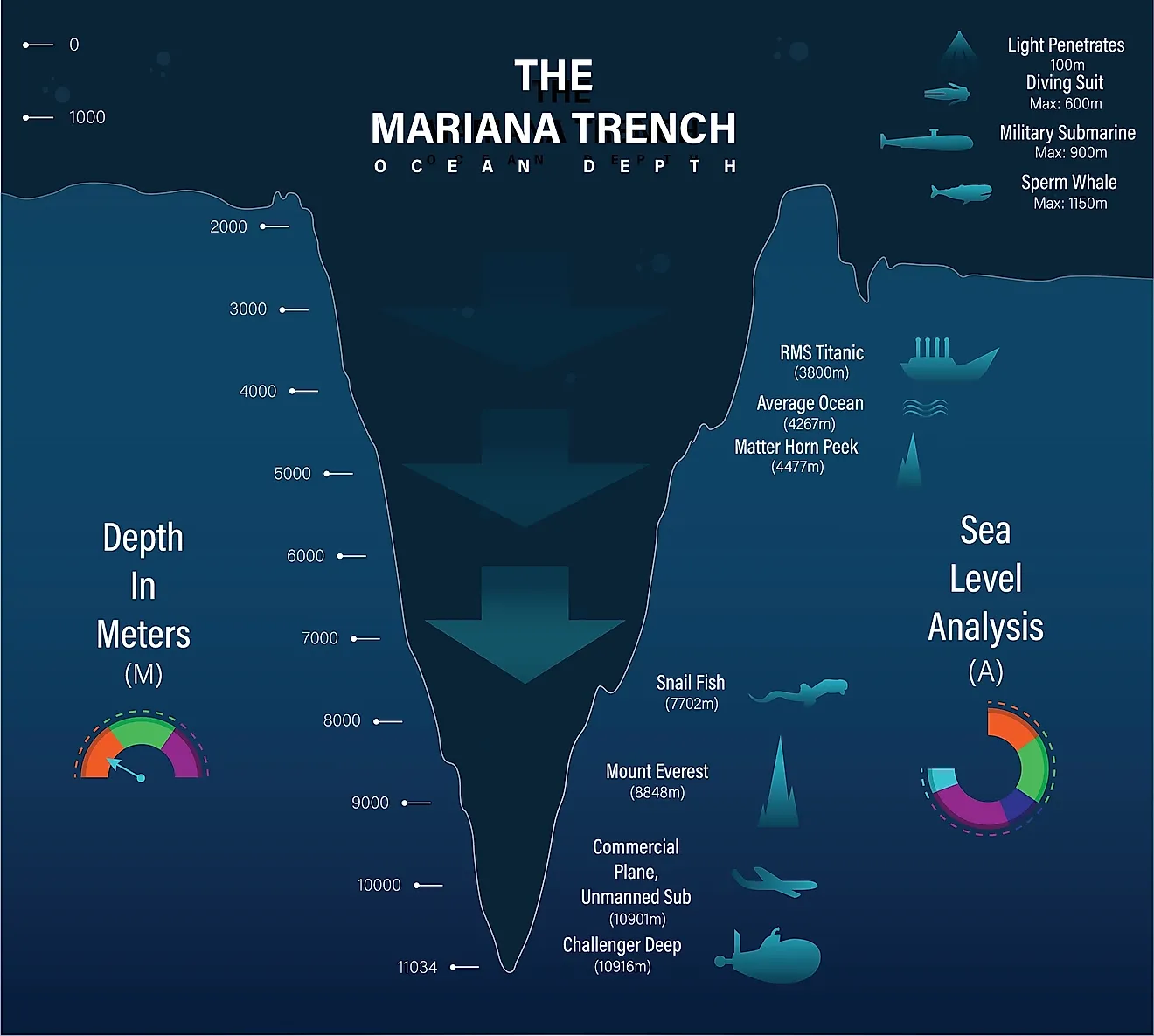
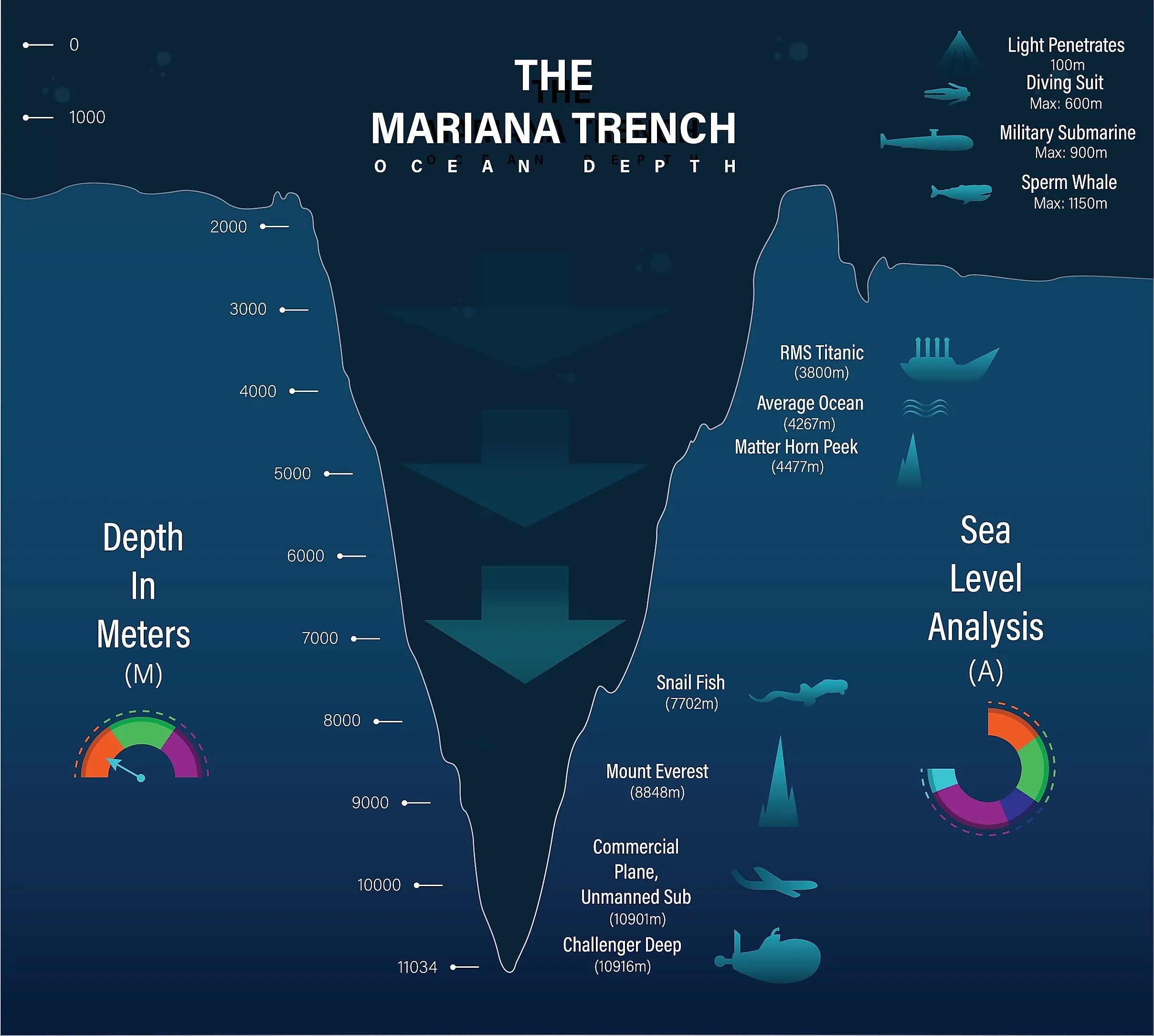
Sirena Deep is one of the most extreme environments known on Earth. It lies in the southern Mariana Trench about 90 miles south of Guam. There the Pacific seafloor descends to roughly 35,151 feet or 10,714 meters below sea level. The U.S. Fish and Wildlife Service identifies it as the deepest point within the Mariana Trench Marine National Monument and National Wildlife Refuge. At more than six and a half miles deep it lies in the hadal zone. The hadal zone is the portion of the ocean below about 6,000 meters.
Although Challenger Deep is deeper, Sirena Deep is scientifically important because it combines extraordinary depth with distinctive geology and isolated biological communities inside a federally managed U.S. marine area. Studying it helps researchers understand tectonic deformation and biological adaptation to pressure. It also sheds light on deep-sea nutrient cycling and the difficulty of measuring the planet's least accessible places.
Location, Depth, and Physical Scale

Sirena Deep lies near 12 degrees north latitude and 144 degrees east longitude. The 2024 management plan for the Mariana Trench Marine National Monument gives a maximum depth of 35,151 feet. That number is not perfectly fixed. Depth estimates depend on sonar resolution, water-column corrections, instrument calibration, and the exact point surveyed, so published values can differ.
Its physical scale is remarkable. If Mount Everest, which rises about 29,032 feet above sea level, were placed with its base at Sirena Deep, its summit would still be more than a mile underwater. Hydrostatic pressure at the bottom exceeds 1,000 times normal atmospheric pressure at sea level. Instruments and submersibles must therefore be engineered to survive forces that would quickly destroy ordinary equipment.
How Sirena Deep Formed

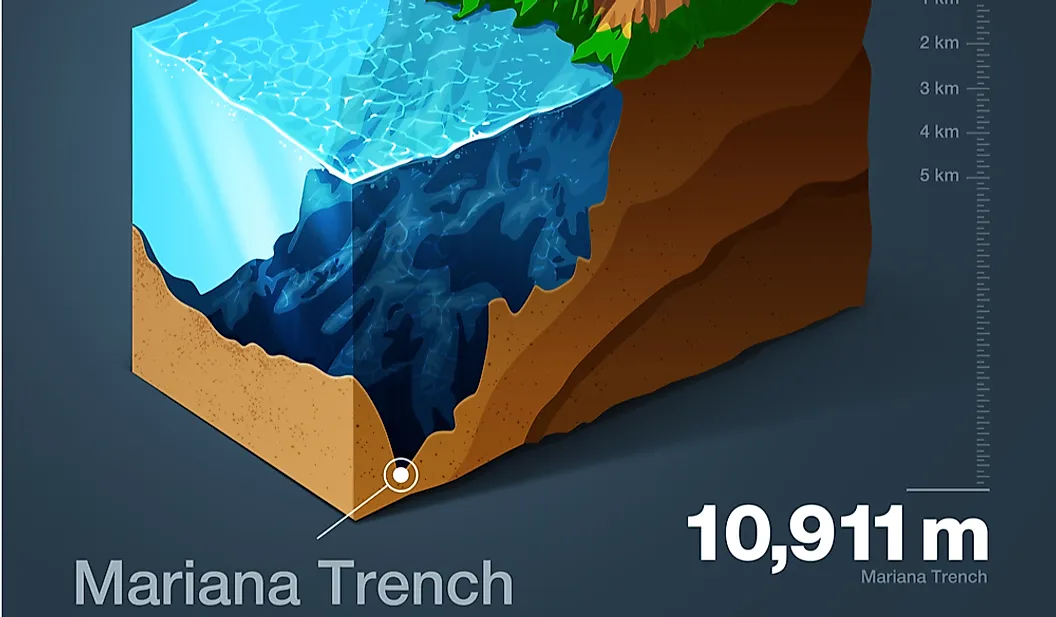
Sirena Deep is a product of plate tectonics. The Mariana Trench marks a convergent boundary where the old, dense Pacific Plate bends downward beneath the Philippine Sea Plate. The U.S. Fish and Wildlife Service estimates that the Pacific Plate is being subducted at roughly 1.2 inches per year. As the plate flexes and descends, it creates the long depression recognized as the Mariana Trench.
The trench is not a smooth channel. It contains basins, steep slopes, faults, ridges, and localized depressions. Sirena Deep occurs near the intersection of the trench axis and the East Santa Rosa Bank Fault. This structural setting helps explain its unusual depth and shape, and it means conditions can vary sharply even within the same trench system.
Discovery and Mapping
Sirena Deep was discovered in 1997 during seafloor mapping by the Hawaii Mapping Research Group and was initially called the HMRG Deep. Its discovery showed the value of high-resolution ship-based sonar. Satellite data can reveal broad seafloor structure indirectly, but multibeam sonar produces much finer maps of trench topography.
Later surveys refined the feature's position and depth. A 2019 review in Earth-Science Reviews showed why such revisions matter. Bathymetric records can remain uncertain because datasets differ in resolution and quality. Sirena Deep is therefore significant not only as a geological feature but also as a case study in the difficulty of identifying and measuring the deepest points in the global ocean.
Life Under Extreme Pressure

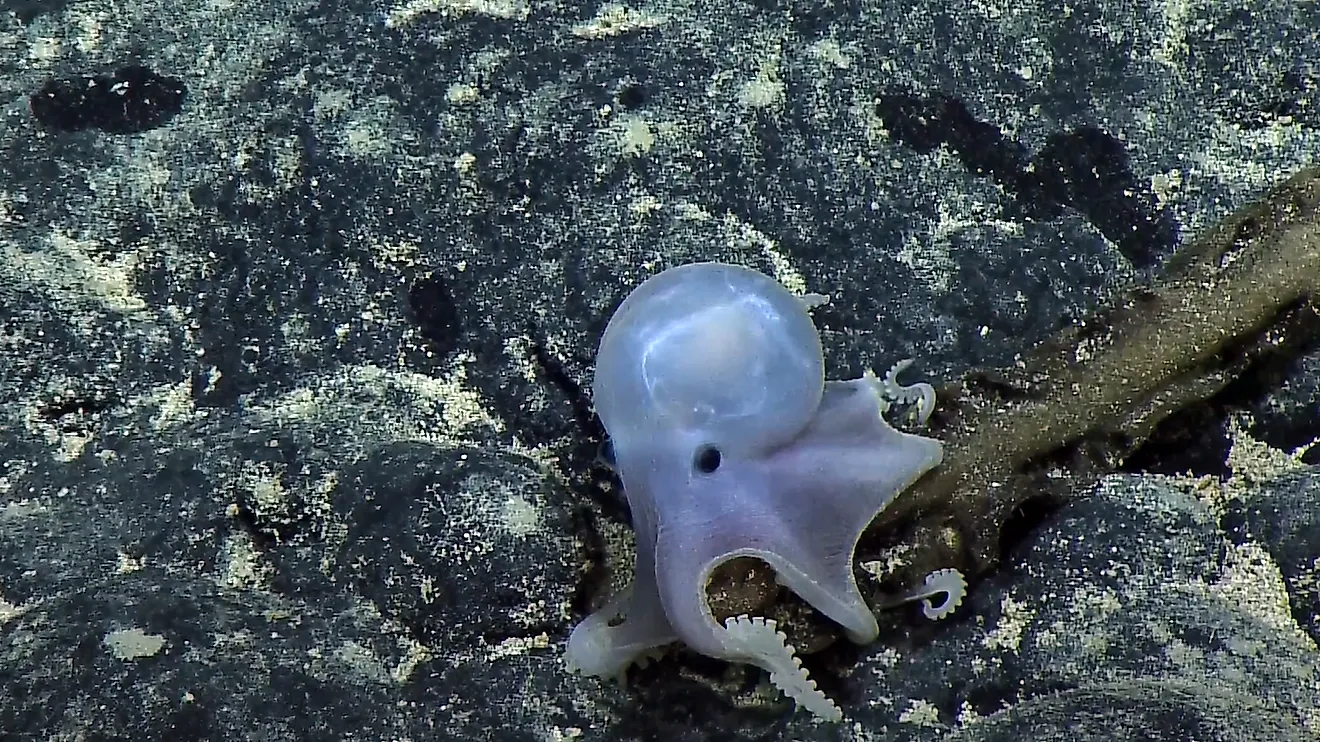
The bottom of Sirena Deep is cold, permanently dark, and subjected to immense pressure, but it is not lifeless. Mariana Trench research has documented bacteria, archaea, amphipods, and other organisms adapted to hadal conditions. With no sunlight available, food webs depend largely on organic material sinking from shallower waters, material carried downslope, and chemical processes in sediments and seawater.
A 2016 study in Frontiers in Microbiology compared microbial communities from Sirena Deep and Challenger Deep and found that the two sites were biologically distinct. Sirena Deep contained a notable Pseudoalteromonas-dominated bacterial community. The finding supports the idea that hadal depressions can function somewhat like ecological islands, where topographic separation and local conditions allow neighboring deeps to develop different communities.
Amphipods and Biological Adaptation

Amphipods, small crustaceans that act as scavengers, are among the most conspicuous animals found in hadal trenches. Research on amphipods from Sirena and Challenger Deeps suggests that survival may also depend on specialized microorganisms living in their digestive systems. Studies of Hirondellea gigas, for example, have identified gut bacteria with features suited to life in a high-pressure host.
Pressure can interfere with proteins and cell membranes, so hadal organisms require biochemical mechanisms that preserve cellular function. Scientists study pressure-adapted enzymes, membrane composition, and compounds such as trimethylamine N-oxide, or TMAO, which can help stabilize proteins. These adaptations make Sirena Deep useful for studying the biological limits of life.
Sediments and Deep-Ocean Chemistry

Trench floors act as collection points for material moving across the deep seafloor. Organic particles produced near the surface sink downward, while earthquakes and landslides can transport additional sediment into deep basins. The geometry of trenches can concentrate this material, making hadal sediments important sites for microbial activity and the cycling of carbon and nitrogen.
Research in the ISME Journal has described hadal trench sediments as hotspots of biogeochemical activity. A 2025 Cell study analyzing more than 1,600 sediment samples from the Mariana Trench, Yap Trench, and Philippine Basin reported thousands of microbial species, most previously undescribed. Such findings show that the deepest sediments are active ecosystems rather than inert deposits.
Human Exploration

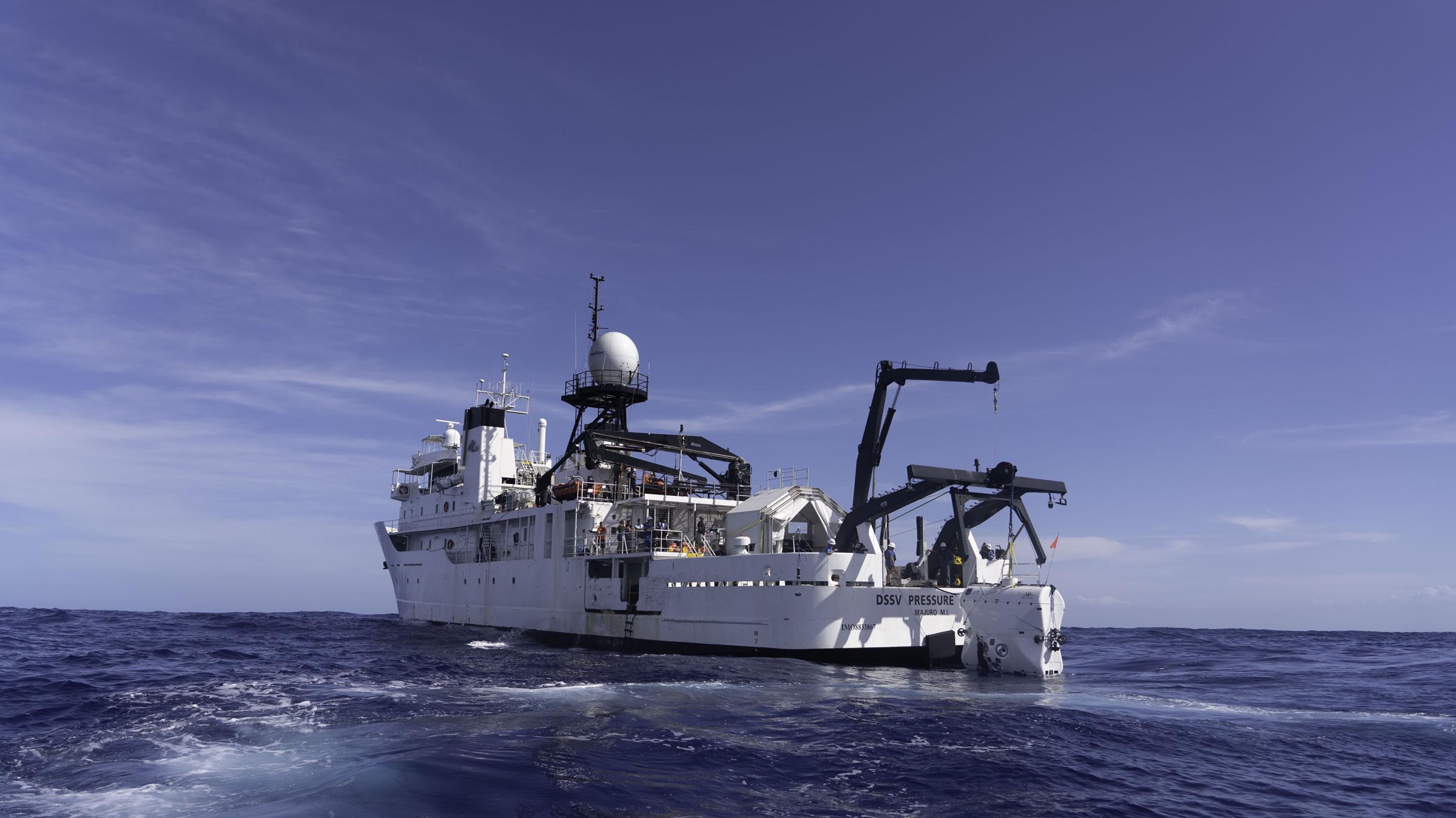
Reaching Sirena Deep requires full-ocean-depth technology. In 2019, Victor Vescovo and marine scientist Alan Jamieson made the first crewed descent to its bottom aboard the submersible Limiting Factor. According to the U.S. Fish and Wildlife Service, they spent 176 minutes on the seafloor and collected mantle-derived rock from the western slope of the trench.
Most hadal research relies instead on free-fall landers, autonomous instruments, sonar, sediment corers, water samplers, and remotely operated systems. Sonar maps the landscape, landers record animals, and samplers recover sediments and microbes for laboratory analysis. Combining these methods allows researchers to study Sirena Deep as a connected geological, chemical, and ecological system rather than simply a depth record.
Protection and Scientific Importance
Sirena Deep lies within the Mariana Trench National Wildlife Refuge and the trench unit of the Mariana Trench Marine National Monument, established in 2009. The protected trench unit includes submerged lands extending along the U.S. Exclusive Economic Zone associated with Guam and the Northern Mariana Islands. Its status recognizes the area's geological and biological importance and provides a framework for research and conservation.
Protection matters because hadal ecosystems are difficult to study and may recover slowly from disturbance. Their remoteness also does not make them immune to human influence. NOAA-supported exploration elsewhere in the Mariana region has documented marine debris thousands of meters below the surface, showing that pollution can reach environments once assumed to be effectively isolated.
Sirena Deep is far more than a very deep point on a map. It is a tectonic depression created by the ongoing descent of the Pacific Plate, a high-pressure habitat for specialized organisms, a sedimentary basin where important chemical processes occur, and a demanding natural laboratory for ocean technology. At about 35,151 feet deep, it is the deepest point within the Mariana Trench Marine National Monument and one of the deepest directly measured locations on Earth.
Its scientific value lies in the questions it raises. Sirena Deep shows how life can adapt far beyond familiar surface conditions, how separate trench basins can develop distinct ecosystems, and how Earth's crust behaves at an active plate boundary. Continued mapping, sampling, and protection are essential because much of its biology, chemistry, and geology remains only partly understood. Sirena Deep is not simply a known extreme. It remains an active frontier of Earth science.