The National Parks With The Rarest Wildlife In America
The National Parks Conservation Association counts roughly 600 threatened and endangered species across the National Park System. A few exist inside one park and nowhere else, in populations small enough to count by hand. Seventy-seven Devils Hole pupfish were counted in the spring of 2026, all on one sunlit shelf about 11 by 16 feet in a Nevada cavern inside Death Valley National Park. Channel Islands National Park spans three of the six California islands where the island fox lives, a species delisted less than two decades after near-collapse. Badlands National Park sustains one of the only black-footed ferret populations that breeds without regular captive releases. Isle Royale National Park counted 37 wolves in 2026, its highest tally since the 1970s. These ten national parks protect the rarest wildlife in America, and each one shows what survival at that scale demands.
Death Valley National Park

Death Valley National Park is home to the entire global wild population of the Devils Hole pupfish, a species that occurs only in Devils Hole. It is a water-filled limestone cavern that forms a detached unit of the park inside the boundaries of the Ash Meadows National Wildlife Refuge in Nevada. Biologists routinely call it the rarest fish in the world. Spring counts averaged around 200 fish through the mid-1990s, but the population has swung wildly since, dropping to roughly 20 individuals in March 2025, the lowest figure on record, after earthquake-driven waves swept algae and eggs off the shallow rock shelf where the fish feed and spawn.

By the spring of 2026, after wildlife officials released captive-bred fish from the nearby Ash Meadows Fish Conservation Facility back into the wild, biologists counted 77 pupfish, a real rebound but still far below historic norms. Several hundred more are held in captivity at that facility as insurance against extinction. The species has been protected under the Endangered Species Act since 1967, and its entire wild lineage depends on a sunlit shelf about 11 by 16 feet, sitting above water more than 500 feet deep. The cavern itself is fenced off and inaccessible to visitors, but the park's Death Valley superbloom coverage and ranger programs both cover the species, one of the starkest examples of an animal existing entirely within a single park's boundaries anywhere in the country.
Channel Islands National Park

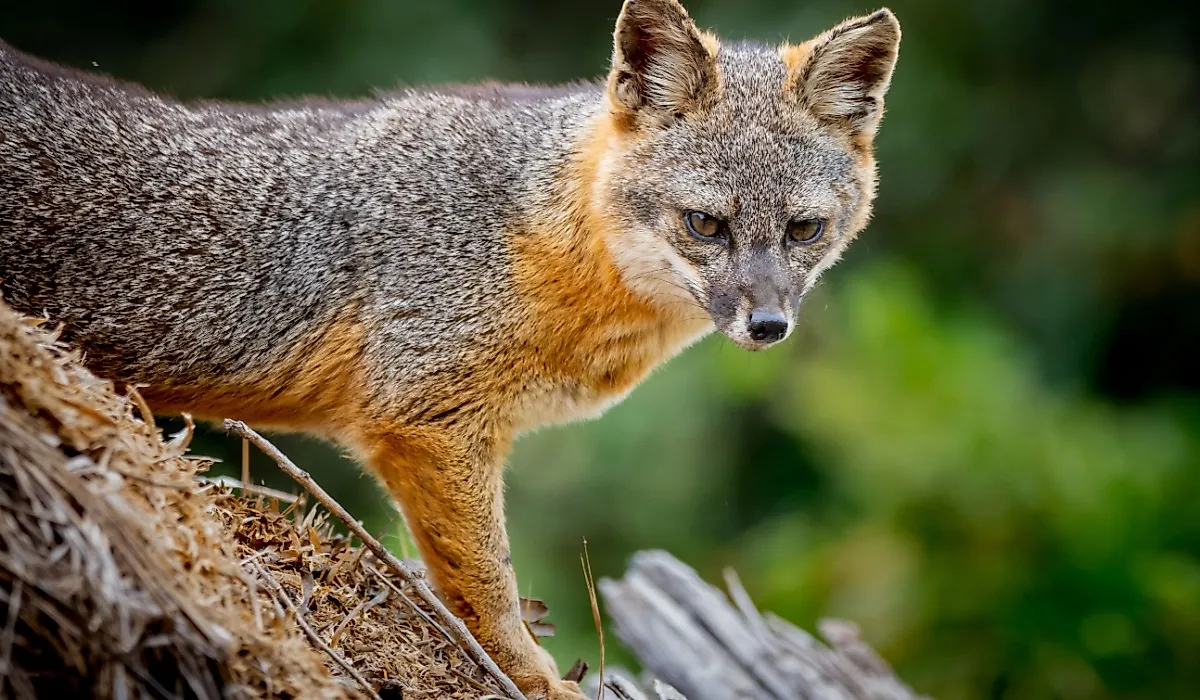
Channel Islands National Park covers three of the six California islands where the island fox lives, and the species is restricted enough that each island supports its own distinct subspecies. Roughly the size of a housecat, the island fox is one of the smallest canid species in the world. Golden eagle predation and canine distemper pushed the San Miguel, Santa Rosa, and Santa Cruz Island subspecies to the brink in the late 1990s, with some island populations dropping below 100 animals. A captive breeding program, an eagle relocation effort, and a vaccination campaign reversed the decline so quickly that in 2016 the U.S. Fish and Wildlife Service delisted all three park subspecies from the Endangered Species Act, calling it the fastest recovery of a mammal in the law's history.

The foxes are no longer classified as endangered, but they remain among the rarest canids on the planet simply because of geography. Nearly every one lives within a few dozen square miles of California island habitat and nowhere else on Earth. Visitors touring Channel Islands National Park's sea caves have a real chance of spotting one trotting along a trail, a wildlife encounter most California islands simply cannot offer.
Everglades National Park

The Florida panther, a subspecies of mountain lion, survives almost entirely within a sliver of South Florida that includes Everglades National Park, Big Cypress National Preserve, and the Florida Panther National Wildlife Refuge. By the early 1990s, decades of inbreeding had reduced the population to roughly 20 animals riddled with heart defects and low fertility. In 1995, wildlife managers introduced eight female Texas cougars to broaden the gene pool. While it was a controversial move at the time, it is now credited with saving the subspecies from collapse. The Florida Fish and Wildlife Conservation Commission now estimates 120 to 230 adults, still few enough to rank among the rarest large mammals in North America; a single male requires up to 200 square miles of territory to hunt and roam.

The panther remains listed as endangered under the Endangered Species Act, but now vehicle collisions on roads bordering protected land are the leading cause of death for adults. Sightings inside the park itself are uncommon, since panthers favor drier pinelands and hardwood hammocks north of the main visitor areas, but tracks and trail-camera footage along the Everglades' backcountry waterways confirm the population still ranges through the park, a reminder that the Florida Everglades support far more than alligators and wading birds.
Hawai'i Volcanoes National Park

The nēnē, or Hawaiian goose, is often described by biologists as the rarest goose species on Earth, and Hawai'i Volcanoes National Park has been the center of its recovery since the 1970s. An estimated 25,000 nēnē lived across the Hawaiian Islands before European contact. Unfortunately, by the 1950s, introduced predators, hunting, and habitat loss had reduced the wild population to around 30 birds, all on the island of Hawai'i. The species was listed under the Endangered Species Act in 1967, and a captive breeding and reintroduction program based in the park has since helped rebuild the population to roughly 250 birds within park boundaries and about 3,000 statewide.
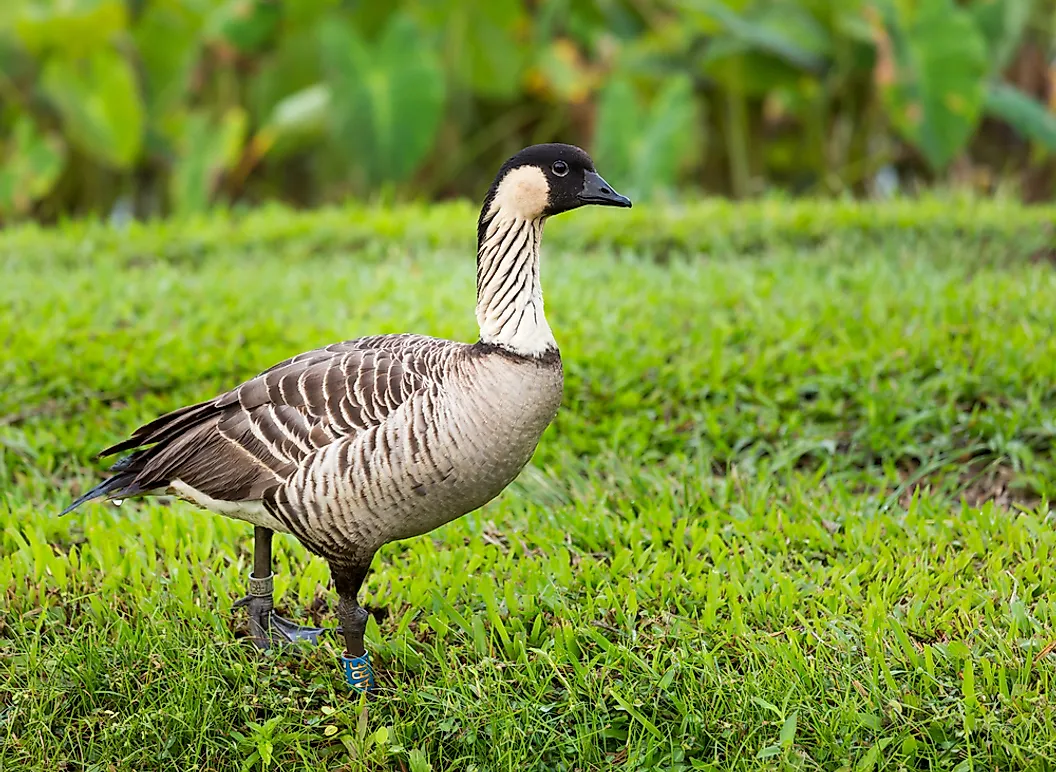
In 2019, the U.S. Fish and Wildlife Service reclassified the nēnē as threatened rather than endangered, reflecting decades of recovery work, though park biologists note the species still depends on ongoing predator control to survive. Unlike most geese, nēnē have reduced webbing on their feet, an adaptation for walking across volcanic terrain rather than swimming. Visitors driving Hawai'i Volcanoes National Park's crater roads are asked to watch for nēnē crossing, since vehicle strikes remain a leading threat to the recovering population, one of the reasons Hawaii's national parks double as a working recovery ward for a species that nearly disappeared entirely.
Badlands National Park

The black-footed ferret was thought extinct until a ranch dog turned one up near Meeteetse, Wyoming, in 1981; by 1987 the last wild individuals had been taken into captivity, leaving the species extinct in the wild. Today, Badlands National Park is one of the few places where it survives as a self-sustaining wild population rather than a captive-release site. Between 1996 and 1999, wildlife managers released 147 ferrets into the park's Conata Basin area, betting on its black-tailed prairie dog colonies as a reliable food source, since ferrets depend almost entirely on prairie dogs for prey and shelter. The gamble worked, as biologists now estimate about 120 ferrets live in the park, with roughly 80 concentrated in Conata Basin, one of only a handful of reintroduction sites anywhere that reproduces without regular infusions of captive-bred animals.

The species remains listed as endangered, and the entire wild population numbers only a few hundred animals across every reintroduction site combined, still short of a recovery goal near 3,000 breeding adults. Sylvatic plague, which can wipe out both prairie dogs and the ferrets that depend on them, remains the biggest ongoing threat. Because ferrets are nocturnal and spend most of their lives underground, few visitors to Badlands National Park ever see one, though the park's ranger-led spotlighting programs occasionally turn one up hunting after dark near its prairie dog towns and eroded buttes.
Isle Royale National Park

Isle Royale National Park, an island wilderness in Lake Superior, hosts one of the most closely studied predator-prey systems in the world. By 2018 its wolf population had collapsed to just two closely related animals, too inbred to reproduce successfully. Rather than let the population disappear, the National Park Service translocated 19 wolves from Minnesota, Michigan, and Ontario onto the island between 2018 and 2019 to rebuild genetic diversity. The strategy paid off. A 2026 survey counted an estimated 37 wolves, the highest number since the late 1970s. Simultaneously, however, the moose population wolves depend on for food dropped sharply, down to roughly 524 animals from about 2,000 in 2019, as predation intensified.

Isle Royale's wolves are not a distinct subspecies, but the population is ecologically rare. It is one of the only wolf populations in North America confined entirely to an island, cut off from the mainland by open water and reliant on winter ice bridges, increasingly unreliable, for any natural gene flow. Researchers with Michigan Technological University have tracked the island's wolves and moose nearly every year since 1958, the longest continuous study of a predator-prey relationship anywhere in the world. Boat access to Isle Royale National Park is seasonal, and no other park bordering the Great Lakes has quite the same story.
Olympic National Park

The Olympic marmot exists nowhere on Earth outside the Olympic Peninsula, and roughly 90 percent of its entire range sits inside Olympic National Park. Washington State designated it the official state endemic mammal in 2009, a nod to how narrow its range is compared with other marmot species scattered across the wider mountain West. Colony surveys documented a steep decline through the mid-2000s, with about 60 percent of known marmot colonies unoccupied by 2006, driven largely by coyotes, a predator that only became established on the peninsula in the 20th century after wolves were eradicated. The population has stabilized since, with current estimates ranging between 2,000 and 4,000 animals.

The Olympic marmot is currently listed as a species of least concern by the IUCN, but in May 2024 the Center for Biological Diversity petitioned for Endangered Species Act protection, citing long-term declines and habitat shifts at higher elevations. In January 2026, the U.S. Fish and Wildlife Service found substantial evidence for that petition and opened a formal status review. Hikers on the subalpine trails around Hurricane Ridge have among the best odds anywhere of spotting one sunning on a rock or sounding an alarm whistle, the behavior that earned marmots the nickname "whistle pigs." Because the species survives only within Olympic National Park's high country and the surrounding Olympic Mountains, a bad wildfire season or disease outbreak could threaten a meaningful share of the entire global population at once.
Redwood National Park

The marbled murrelet spends most of its life at sea, diving for fish along the Pacific coast, but it nests almost exclusively in the mossy upper branches of old-growth trees. Redwood National Park, co-managed with three adjoining California state parks, is one of the last reliable strongholds for the species in the state. Unlike most seabirds, murrelets do not build nests or breed in colonies. A single female lays one egg directly on a wide, moss-covered limb, often more than 150 feet up in a redwood or Douglas fir, a limb that generally does not exist in a forest younger than 200 years.

Because commercial logging removed most coastal old growth over the past century, the U.S. Fish and Wildlife Service listed the marbled murrelet as threatened under the Endangered Species Act in 1992 across Washington, Oregon, and California. Current estimates for that three-state population sit between roughly 15,000 and 24,000 birds, and researchers describe the long-term trend as a continued decline even in protected habitat. Spotting one is difficult, since murrelets fly to and from nests at dawn and dusk, but their presence is part of why Redwood National Park's tallest trees remain standing rather than logged, and why the park's old-growth stands matter well beyond their record-setting height.
Big Bend National Park

The Mexican long-nosed bat has been listed as endangered under the Endangered Species Act since 1988, and Big Bend National Park hosts one of only two confirmed roosting sites for the species anywhere in the United States. The other sits on Bureau of Land Management wilderness land in New Mexico. Pregnant females migrate north from central Mexico each spring while the males stay south, following the bloom of agave and other night-blooming desert plants that make up nearly their entire diet and pollinating those plants in the process. Because their range depends on a chain of roosts and flowering agave stretched across a single migratory corridor, the loss of any one link, whether through agave harvesting or cave disturbance, can cut the bats off from an entire section of their range.

The species roosts seasonally in Mount Emory Cave, high in the park's Chisos Mountains, though colony sizes fluctuate significantly year to year and are difficult to census precisely. The U.S. Fish and Wildlife Service finalized a revised recovery plan for the species in July 2024, emphasizing habitat protection along the full migratory corridor rather than any single roost. Because Big Bend sits at the very edge of the bat's range, sightings are seasonal and tied closely to agave bloom, but the park's desert backcountry remains one of the few places in the country where the species can reliably be documented, a detail that adds to Big Bend's outsized conservation value relative to its remote location.
National Park Of American Samoa

The National Park of American Samoa is the only national park south of the equator and the only one built around a Paleotropical rainforest. This forest is one of the last strongholds for the Samoa flying fox, a fruit bat that is one of just two native land mammal species on the islands. The species is listed as Near Threatened by the IUCN, with a range spanning American Samoa, independent Samoa, and Fiji, though populations have declined steadily from forest clearance and hunting; commercial export hunting ended after the species was placed on CITES Appendix I in 1990, though small-scale local hunting continues.

Unlike most flying fox species, which roost by the thousands in large colonies, the Samoa flying fox roosts alone or in small family groups and is active during the day as well as at night, patrolling territories of roughly three square kilometers. As one of the rainforest's primary pollinators and seed dispersers, the species plays an outsized ecological role, since several native tree species depend almost entirely on flying foxes to reproduce. Because the park protects some of the last intact stands of native rainforest in the territory, it functions as one of the more secure remaining habitats for a species already gone from parts of its historic range elsewhere in the South Pacific. Reaching America's most remote national park requires a flight to Pago Pago, but the payoff includes rainforest and coral reef habitat found in no other unit of the National Park System.
Where America's Rarest Animals Actually Live
If you want to see an animal that exists in one place on Earth and nowhere else, the American national parks are where your odds are best. Big Bend shelters one of only two known Mexican long-nosed bat roosts in the United States, and Olympic protects a marmot found nowhere outside a single Washington peninsula. Whether the draw is a fish in a desert cavern or a goose on a lava field, these are the parks where the rarest wildlife in America still has ground to stand on, and where the numbers shift often enough that it is worth checking current status with the National Park Service before you go.



_(53726957092).jpg)
