The Treasures of Visiting America's Most Remote National Park
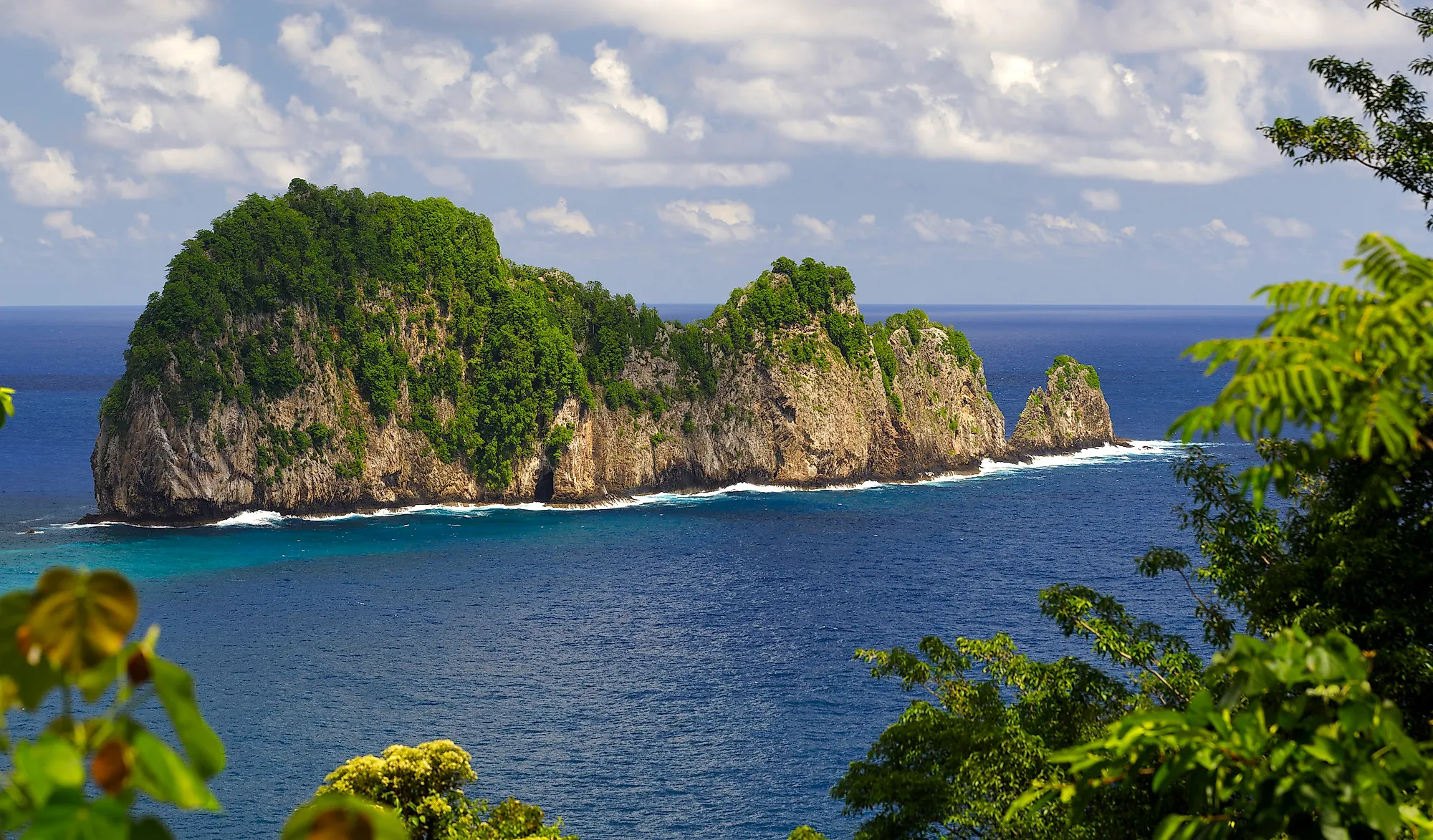
Deep in the South Pacific, 2,600 miles southwest of Hawaii and spread across four of American Samoa's five inhabited islands (the territory has seven islands and atolls in total), the most remote site in the National Park Service awaits travelers willing to make the trip. The roughly 13,500-acre National Park of American Samoa is the only US national park unit located in the Southern Hemisphere. After a full day in transit, the steep volcanic terrain, the heavy tropical humidity, and the active Polynesian culture hit the new arrival at the same time. Tropical rainforest covers most of the slopes, white-sand beaches break up the coastline, coral reefs sit just offshore, and the place runs by a set of rules that no other US national park follows. The land does not belong to the federal government. It is leased from the villages themselves.
Getting There And Around

Because of the isolated setting and modest tourism, there are only a couple of ways to reach the National Park of American Samoa. Hawaiian Airlines is the only major US carrier serving the archipelago (which is an unincorporated US territory), operating twice-weekly flights between Honolulu and Pago Pago International Airport on Tutuila Island. The alternative routing is via the independent state of Samoa (formerly Western Samoa), reached on flights from Australia, New Zealand, or Fiji, with a short flight or ferry across to Tutuila. The park's outer-island units on Ta'ū and Ofu require additional travel: small planes serve Ta'ū from Tutuila on an irregular schedule, and Ofu is most reliably reached by the inter-island ferry that connects Ta'ū with Ofu and Olosega (the two are connected by a short bridge over the Asaga Strait).

On Tutuila, car rental agencies operate near the airport, and the local aiga (family) buses circulate the island as a casual hop-on, hop-off network rather than a fixed schedule. Buses can be formally boarded or disembarked at the market in Fagatogo, and rides typically cost between 50 cents and a couple of dollars. They can take you to surprisingly remote parts of an already remote island.
Landscape
The park's landscape is the product of recent volcanic origins and tropical climate. The islands rose from the seafloor as volcanic peaks within the last few million years, and the resulting topography is steep, sharp, and densely forested. The park's rainforests are paleotropic (sharing more lineage with Southeast Asian and Australasian flora than with the Americas) and contain hundreds of plant species arranged in five distinct elevation zones: coastal, lowland, montane, ridge, and cloud forest. Tutuila's mountainous spine runs the length of the island, with the National Park Service-managed area centered on the rugged section north of Pago Pago Harbor. The Ta'ū unit holds the largest land area of the three units and includes Lata Mountain (3,170 feet), the highest point in American Samoa. The Ofu unit is the smallest by acreage but holds what many visitors describe as the most striking beach in the park system. The name "Samoa" has several disputed etymologies; one popular interpretation translates as "sacred earth," but the historical linguistic record on the term is not settled.
Coral Reefs And Other Wildlife

About 4,000 acres of the park (roughly 30% of its total area) are marine, including a 350-acre coral reef area off the coast of Ta'ū. The park's waters host approximately 950 species of reef fish, around 250 species of coral, the critically endangered hawksbill sea turtle, and seasonal humpback whales. The reefs draw snorkelers and divers, though visiting numbers remain low compared to mainland marine parks. American Samoa's reefs are not exempt from the global coral bleaching problem. The 2014-2015 bleaching event hit the territory's reefs hard, with significant mortality in the shallower zones, and subsequent events have continued the pressure. Reef recovery has been studied in the park as a model for warm-water-adapted coral populations, which is part of why these particular reefs have attracted ongoing scientific attention.

Above the waterline, the park records about 35 species of native and migratory birds, including seabirds (such as the brown booby and white-tailed tropicbird), shorebirds, and forest birds including the Pacific kingfisher and the Samoan starling. The only native land mammals are three species of bats. Two are flying foxes (large fruit bats with wingspans up to about three feet): the Samoan flying fox (Pteropus samoensis) and the Pacific flying fox (Pteropus tonganus). The third is the Pacific sheath-tailed bat (Emballonura semicaudata), classified as endangered by the IUCN and considered one of the park's primary conservation priorities. Both flying foxes are critical pollinators and seed dispersers for the rainforest's native plants, which is part of why the park was authorized in the first place.
Samoan Culture And The Unusual Lease

The administrative arrangement at the National Park of American Samoa is unlike any other unit in the National Park Service. Congress authorized the park on October 31, 1988, under Public Law 100-571, but it could not actually open. The land the legislation covered was communal land, held under the traditional matai (chief) system, and not available for federal purchase or eminent-domain acquisition. Five years of negotiation between the National Park Service and the village councils followed. In September 1993, eight Samoan villages signed a 50-year lease (running through 2043) that allows the NPS to co-manage the land while leaving ownership with the villages. In 2002, two additional villages on Olosega Island joined the arrangement, bringing the park's coverage to four of the territory's five major inhabited islands.
The structure is deliberate, not bureaucratic accident. Samoan land tenure has been communal for roughly three thousand years (the islands were first settled around 1,000 BCE), and the matai system that governs land use predates American jurisdiction by millennia. The 1993 lease arrangement allowed the park to come into being without overriding any of that. Park rangers are predominantly local, the visitor center operates inside the village of Pago Pago, and major management decisions still go through the village councils. Visitors entering park villages are expected to observe fa'asamoa, "the Samoan way," which covers daily protocols including the evening sa (a brief curfew when families gather at home for prayer). Some villages offer homestay programs, an option that does not exist anywhere else in the US national park system. The park was formally dedicated by Interior Secretary Bruce Babbitt in 1997 as the system's 50th national park unit at that time.
A Park Without The Crowds

The National Park of American Samoa is among the least-visited units in the entire National Park Service system, regularly trading the bottom spot with Gates of the Arctic and Lake Clark in Alaska. A park reachable only by lengthy flights cannot really compete with the highway-adjacent mainland parks for raw visitor counts. The 2022 figure was 1,887 recreational visits, well below typical pre-pandemic counts because of lingering closures, against roughly 13 million the same year at Great Smoky Mountains National Park. Visit numbers have recovered since 2022, including a meaningful boost from occasional cruise-ship stops in Pago Pago, but the park still sees only thousands of recreational visits per year against the millions or tens of millions that flow through the marquee mainland parks. Sharing 13,500 acres with relatively few other visitors over the course of a year is a different kind of national park experience.
A National Park Unlike Any Other
The National Park of American Samoa is unusual on almost every measurable axis. It is the only NPS unit in the Southern Hemisphere, the only one protecting paleotropic rainforest, the only one where the federal government does not own the underlying land, and the only one that operates under direct co-management with traditional village authorities. The cultural and environmental value of the place is genuinely intertwined: the rainforest is intact because the villages have managed it that way for three thousand years, and the lease arrangement is what allows the NPS to participate in that work without displacing the communities that did it. Visitors who make the trip get the rainforests, beaches, and reefs that the brochures advertise. They also get a working example of a national park model that the United States has built nowhere else.