The Best National Parks In Hawaii
Of America's 63 National Parks, only Hawaiʻi Volcanoes National Park and Haleakalā National Park are in Hawaii. The first, established in 1916 and the 15th park in the National Park System, covers 14 percent of the island of Hawaiʻi, while the second protects a dormant shield volcano standing 10,023 feet above Maui. They're both bucket-list worthy. Here's what's worth knowing before you go.
Hawaiʻi Volcanoes National Park, Island of Hawaiʻi

Hawaiʻi Volcanoes National Park covers 354,461 acres on the southeastern side of the island of Hawaiʻi, reaching a peak of 13,681 feet at the summit of Mauna Loa. It became the 15th park in the country on August 1, 1916, and was later named an International Biosphere Reserve and a UNESCO World Heritage Site. And it's a popular place to visit, with a recorded 1,433,593 recreational visitors in 2024 alone.
Two active volcanoes are located within the park's boundary, Mauna Loa and Kīlauea, among the most active on the planet. Kīlauea has been erupting episodically from two vents inside Halemaʻumaʻu crater since December 23, 2024. The eruption comes in episodes that last for hours before pausing for days or weeks, with recent lava fountains from the north vent reaching around 500 feet.
As eruptions can be unpredictable, the park stays open 24 hours a day, ensuring those who might want to see the after-dark glow over Halemaʻumaʻu can do so. If that sounds like you, start at the Kīlauea Visitor Center as rangers post important info about current conditions and closures there. Follow Crater Rim Drive to the summit overlooks, which include Uēkahuna, Wahine Kapu (Steaming Bluff), and Haʻakulamanu (Sulphur Banks).

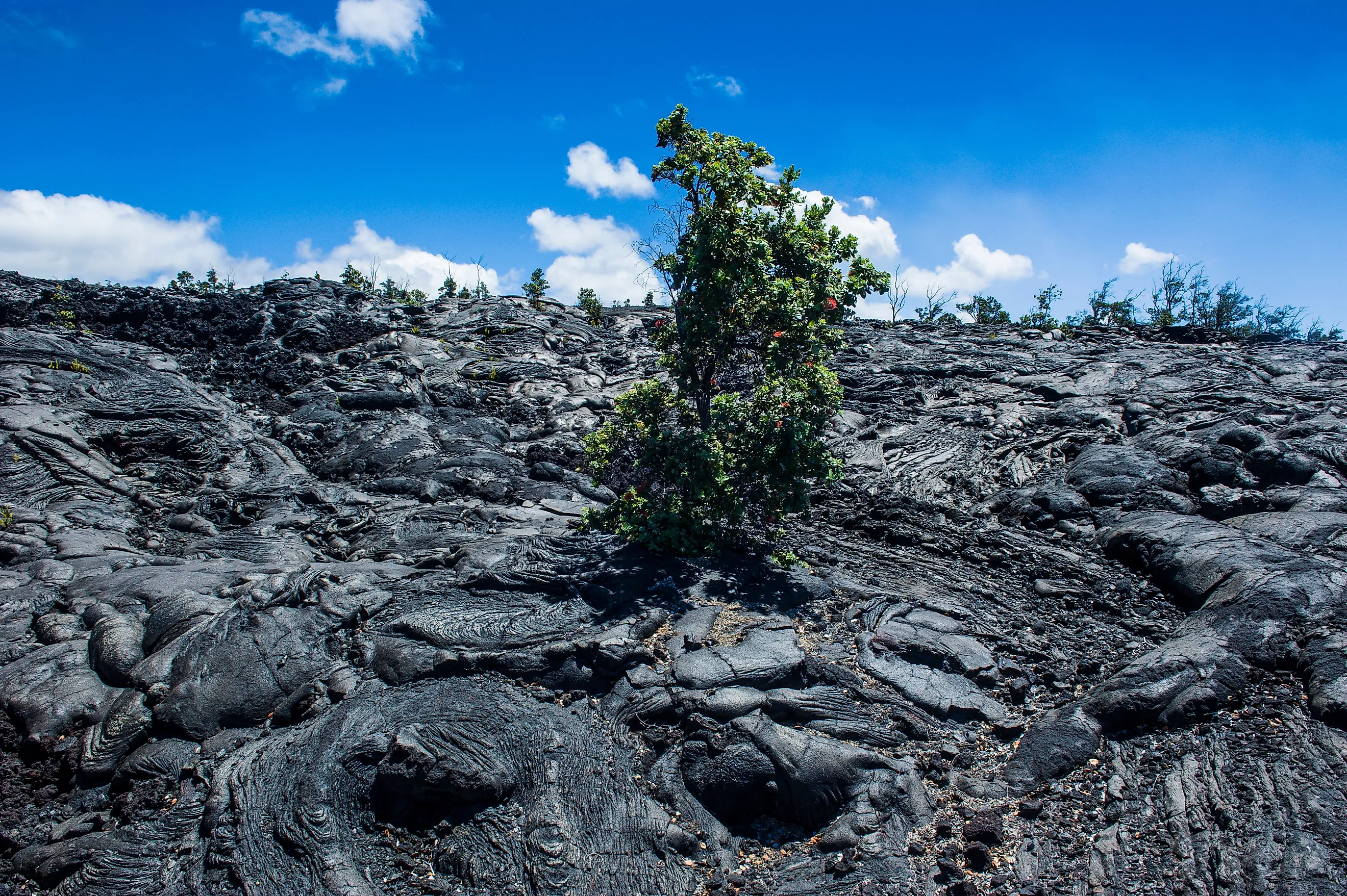
Nāhuku, also called Thurston Lava Tube, is a lit walk-through tunnel left when a river of lava drained away, and its hardened crust stayed put. The Kīlauea Iki Trail makes a 3.3-mile loop down through rainforest before crossing what was, until 1959, still a lava lake.
The park's other road, Chain of Craters Road, stretches 19 miles from the summit down 3,700 feet to the coast, finishing near Hōlei Sea Arch, standing 90 feet above the water. Lava has buried stretches of this road repeatedly since it opened in 1928. A boardwalk partway along leads to Puʻu Loa, the largest group of petroglyphs in Hawaii, with more than 23,000 carvings of human figures, canoes, and geometric designs.
For a quieter visit, the Kahuku Unit is an hour's drive south of the main entrance. Back at the summit, the Volcano Art Center Gallery occupies the first Volcano House, a wooden lodge put up on the caldera rim in 1877.
Haleakalā National Park, Maui

Two districts, separated by a long drive around the mountain, make up Haleakalā National Park on Maui. The Summit District takes in the upper slopes and crater of Haleakalā, a dormant shield volcano whose highest point, Puʻu ʻUlaʻula, reaches 10,023 feet. The park protects 33,265 acres in total, much of it designated wilderness. It began under the same 1916 legislation that created the Big Island park and became a separate unit in 1961 and an International Biosphere Reserve in 1980.
If you're an early riser, sign up for one of the park's summit sunrises. Reservations are required for vehicles entering the Summit District between 3 am and 7 am, and tickets are released 60 days ahead of your preferred date. Bookings can be made through Recreation.gov, the US government's official travel planning site.

The Keoneheʻeheʻe Trail, better known as Sliding Sands, starts at the Haleakalā Visitor Center parking lot and descends into the crater for a round trip of 11 miles. Three wilderness cabins, Hōlua, Kapalaoa, and Palikū, are reachable only on foot and can be reserved through Recreation.gov. Hosmer Grove, just below 7,000 feet, has a first-come campground and a short self-guided loop. Watch for ʻāhinahina, the Haleakalā silversword, a spiky silver plant found nowhere else on Earth. It grows for years before flowering once and then dying.
The coastal Kīpahulu District, reached from the Hāna Highway, is also worth seeing. The trailhead for the Pīpīwai Trail is there, a four-mile round trip climbing 800 feet. Along the way it passes a banyan tree and a grove of bamboo before reaching Waimoku Falls, which drops 400 feet down a mossy cliff face. The shorter Kuloa Point Trail loops past the pools of ʻOheʻo and out to the shoreline.
Two Volcanoes, Two Very Different Parks
Hawaiʻi Volcanoes National Park and Haleakalā National Park started life as a single unit in 1916 and separated in 1961. That split makes sense if you visit both. One protects a still active volcano, while the other protects a dormant summit where the appeal is sunrise above the cloud layer and a crater floor you can walk into. Each needs a full day at minimum to explore, and as they're on separate islands, an inter-island flight needs to be part of the plan if you're to see the best of both Hawaiian national parks.