The US Lakes Where Manatees Swim In From The Sea
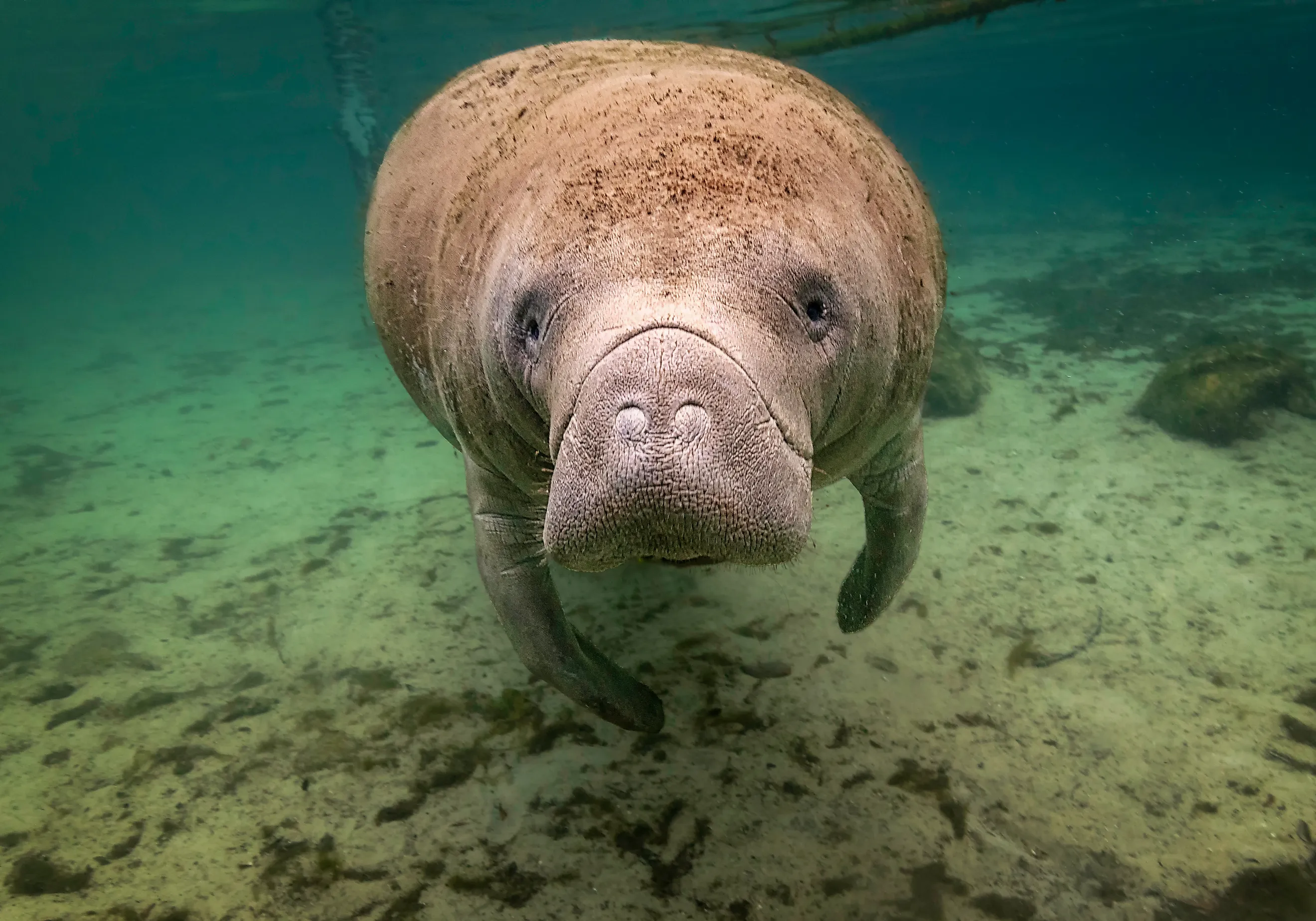
Manatees can travel between the saltwater coast and freshwater rivers, sometimes venturing surprisingly far inland. Their natural habitat includes coastal waters, estuaries, rivers, springs, and inland lakes, and their ability to tolerate both saltwater and freshwater allows them to move freely through connected waterways. This adaptability gives manatees access to a much larger range than their coastal reputation might suggest. In Florida, rivers such as the St. Johns provide aquatic corridors that connect the Atlantic Ocean with a chain of inland lakes, allowing manatees to travel dozens of miles from the coast. For visitors, that means a manatee sighting can happen in places where the ocean seems far away.
Manatees don't travel inland simply because they can. They follow the resources they need, including aquatic plants, sheltered waterways and warm-water refuges during cooler weather. Lakes connected to rivers can provide all three, creating important feeding and resting areas along their seasonal routes. Some of these lakes are also surprisingly large, remote or surrounded by protected wetlands, giving manatees access to habitats that feel worlds away from Florida's busy coastline. The six lakes below offer a closer look at where manatees turn up inland and what makes each destination distinctive.
Lake Worth Lagoon

Lake Worth Lagoon is perhaps the clearest example of a place where manatees can move almost seamlessly between the ocean and an inland-looking body of water. Lake Worth Lagoon runs parallel to Florida's Atlantic coast. It stretches approximately 20 miles from North Palm Beach to Ocean Ridge, and reaches about a mile across in places.
What makes the lagoon particularly interesting for manatees is its direct connection to the Atlantic. Two permanent inlets, Lake Worth Inlet near Palm Beach and South Lake Worth Inlet near Boynton Beach, allow ocean water to flow into the lagoon. The Atlantic Intracoastal Waterway also runs its entire length.
Despite its name, the lagoon is an estuary, meaning freshwater flowing from the land mixes with saltwater from the ocean. That creates changing conditions ranging from freshwater-influenced areas to decidedly salty sections. Manatees are capable of handling that transition.
Lake George

Lake George is where the idea of a manatee swimming inland becomes especially impressive. Located in north-central Florida, the lake is part of the St. Johns River, which flows through the lake and eventually reaches the Atlantic Ocean near Jacksonville. Lake George lies roughly 118 miles upstream from the Atlantic Ocean.
At approximately 46,000 acres, Lake George is Florida's second-largest lake. It is broad and shallow, with an average depth of only about eight feet. The lake is roughly six miles wide and nine miles long, although the river channel running through it extends farther.

For manatees, the lake has historically provided both food and habitat. Lake George once contained thousands of acres of submerged native vegetation, including eelgrass, that provided important habitat for wildlife, including manatees. Much of that vegetation disappeared following Hurricane Irma in 2017, prompting an extensive restoration effort.
The freshwater lake is part of a river system connected to the Atlantic. A manatee can travel from coastal waters, up the St. Johns River, and into Lake George, more than 100 miles from the ocean.
Lake Monroe

Lake Monroe, near Sanford, is another large inland lake that is part of the St. Johns River. The river flows through Lake Monroe, continuing north toward Jacksonville and the Atlantic Ocean. Manatees are documented in the lake, and the broader St. Johns River is an important manatee travel corridor.
Covering about 9,406 acres, Lake Monroe is a broad, shallow body of water. Its average depth is only a few feet, depending on river levels, giving it a different character from that of deep recreational lakes. The lake's southeastern shore includes the Lake Monroe Wildlife Management Area, which protects more than 3,000 acres of surrounding habitat.
The lake's shallow water, aquatic vegetation, and connection to the St. Johns give manatees access to food and a natural travel route, although they do have to travel about 100 miles to get there.
Crescent Lake

Crescent Lake demonstrates just how far manatees can travel through Florida's interconnected waterways. Located in north-central Florida, Crescent Lake connects at its northern end to the St. Johns River through Dunns Creek. The St. Johns then continues northward toward the Atlantic Ocean, about 75 miles away.

The lake covers approximately 30 square miles, or about 15,960 acres, and stretches more than 11 miles from north to south. Its width ranges from roughly one to three miles. Despite its considerable size, Crescent Lake has a distinctly natural, quiet character, surrounded by vegetation and wetlands. The lake also has an interesting geography. Haw Creek feeds it from the south, while Dunns Creek provides the northern connection to the St. Johns River. That makes the lake part of a much larger aquatic network rather than an isolated freshwater basin. The biggest surprise may be simply knowing that a manatee can reach this peaceful inland lake from the Atlantic by following a maze of waterways.
Lake Woodruff

Lake Woodruff National Wildlife Refuge is a particularly wild stop along the St. Johns River corridor. Located near DeLeon Springs, the refuge encompasses 21,574 acres of marshes, swamps, creeks, hammocks and uplands, with the St. Johns River forming its western boundary.
Within the refuge, Lake Woodruff itself covers about 2,200 acres and is roughly 100 miles from the Atlantic Ocean. Manatees are known to move into the refuge and nearby Blue Spring in May and June.

The refuge's location makes that movement possible. It is part of the 70-mile corridor of ecologically sensitive lands along the St. Johns River, extending between the Wekiva River and Lake George. The river provides a continuous aquatic route through much of central and north-central Florida.
Lake Apopka

Lake Apopka is Florida's fourth-largest lake, covering more than 30,000 acres and stretching about 12 miles from north to south. Located roughly 15 miles northwest of Orlando, the lake has undergone one of Florida's most ambitious freshwater restoration efforts. The lake suffered decades of pollution and habitat loss before restoration work began in the late 1980s. Today, restoration has been rebuilding the food and habitat that manatees and other animals need.
Manatees have been documented moving through the Upper Ocklawaha River Basin and into Lake Apopka, although seeing one is never guaranteed. The entire connected river system from Lake Apopka to the Atlantic stretches more than 100 miles.

The lake is also the headwaters of the Ocklawaha Chain of Lakes. Water flows from Lake Apopka through the Apopka-Beauclair Canal and a series of connected lakes before reaching the Ocklawaha River, which eventually joins the St. Johns River. From there, the waterway continues north to the Atlantic Ocean near Jacksonville.
Following The Waterways
Manatees aren't confined to the coastline. These adaptable animals move through Florida's network of rivers, estuaries, springs, canals and lakes, following food and warm water as conditions change. They can move freely between fresh, saline and brackish waters, making Florida's interconnected waterways an important part of their habitat.
A lake that is several miles inland can still be part of the same aquatic network that begins at the coast. Some of the lakes on this list have direct connections to coastal waters, while others are reached through a series of rivers and connected lakes.
A ripple across the surface, a rounded nose breaking the water, or a pair of nostrils appearing for a few seconds may be all the evidence you get that one of Florida's most recognizable mammals has passed through. Whether you see a manatee or simply explore the waterways it calls home, these lakes offer a glimpse into how surprisingly far inland these gentle giants can travel.