The Lakes With The Largest Beaver Populations
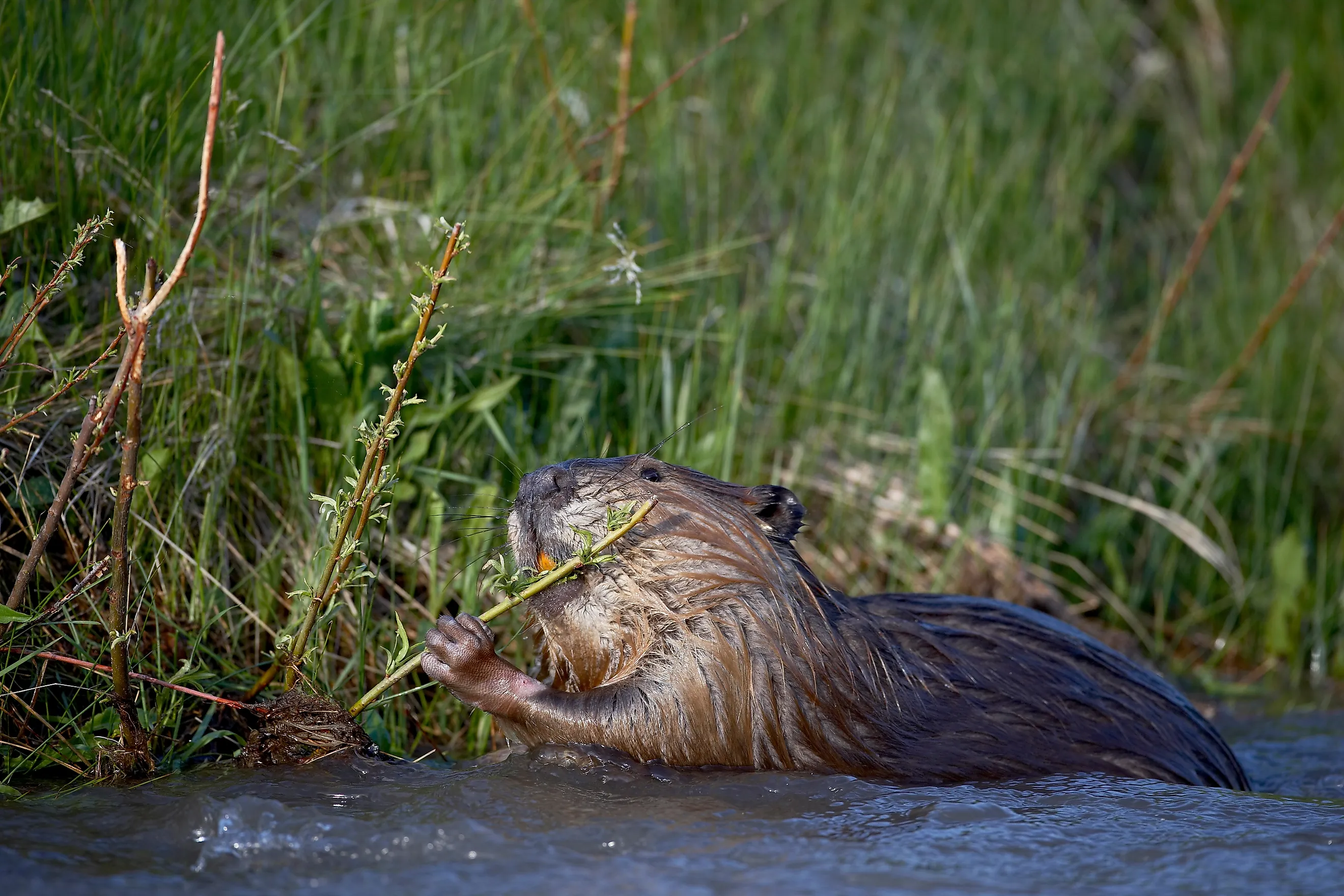
North American beavers (Castor canadensis), North America's largest rodent, are semi-aquatic mammals known best for the dams, canals, and lodges they build to reshape the wetlands they inhabit. They are intensely family-oriented and live in tight colonies of parents, yearlings, and kits. They live near lake shores, river deltas, and marshes where slow-moving water sits close to hardwood forest. Beavers have an incredible comeback story, and through conservation efforts their populations have recovered from near extinction in the 1800s.
Several across the US stand out for large recovered beaver populations based on National Park Service colony surveys, U.S. Fish & Wildlife Service refuge data, and state wildlife-agency or public-university population estimates.
Lake Superior - Isle Royale National Park, Michigan

Isle Royale National Park is a large island archipelago within Lake Superior, and park biologists there publish one of the only park-wide total population estimates of beavers for any U.S. lake system. Every autumn, park researchers fly over the island to count active beaver colonies, since bare trees and a lack of snow cover make lodges easy to spot from the air.
In autumn 2018, their survey counted 542 active beaver colonies across the inland bodies of water on the island and the Lake Superior shoreline. With each colony holding up to 12 family members, the National Park Service estimated 5,500 to 5,600 individual beavers living there at the time of the count.
The Connected Lakes of Voyageurs National Park, Minnesota

Rainy Lake, Kabetogama Lake, Namakan Reservoir, and Sand Point Lake, the connected lakes of Voyageurs National Park, have been the subject of a long-running National Park Service beaver study.
Since 2006, biologists have live-trapped and ear-tagged nearly 500 individual beavers on Rainy Lake and the Namakan Reservoir, 98 of which were also outfitted with radio transmitters, to study how artificial water-level management affects beaver survival and reproduction. Because Voyageurs is a reservoir system regulated for flood control and hydropower downstream, and sudden artificial water level swings can disturb beaver survival and reproduction, the findings matter for the beavers' future here.
Separately, a state-funded aerial census of the wider Greater Voyageurs Ecosystem, flown annually since 2015 as part of research into wolf predation on beavers, counted 1,441 active beaver lodges in a single fall 2017 survey.
The Lakes of Yellowstone National Park, Wyoming

The four largest lakes of Yellowstone National Park, Yellowstone Lake, Shoshone Lake, Lewis and Heart, host a number of the park's numerous beaver colonies. Yellowstone National Park has tracked its beaver colonies through aerial surveys since 1921, when the park's first count found just 25 colonies.
That number bottomed out at a mere 8 colonies in a 1953 survey, a low point that trailed decades of heavy elk browsing, which had stripped the park's streamside willows that beavers depend upon down to stubble. Beaver colonies climbed back up in number as the willow habitat recovered.
Park-wide surveys in 1996, amidst years of release efforts that reintroduced 129 individuals to the area, counted 49 beaver colonies. By 2007 the count had risen to 127, and recent park-wide counts have ranged between roughly 112 and 127 colonies.
Lake Umbagog, New Hampshire and Maine

The U.S. Fish and Wildlife Service manages more than 37,000 acres around Umbagog Lake, on the border of New Hampshire and Maine, as the Umbagog National Wildlife Refuge. This refuge protects nearly all of the lake's shoreline along with stretches of the Androscoggin, Magalloway, and Rapid rivers, and lists beaver among the mammals regularly seen in the lake's marshes and rivers, alongside otter, mink, and muskrat.
Beaver activity is also an important part of the refuge's wetland landscape. The Fish and Wildlife Service reports that beavers have created a series of open-water impoundments, scrub wetlands, and forested wetlands at the refuge.
The refuge may not publish any specific beaver count, but tens of thousands of acres of protected land surround a lake bordered by extensive wetlands and marshes, a substantial protected landscape for beavers and the wetland habitats they help create.
Lake Champlain, Vermont and New York

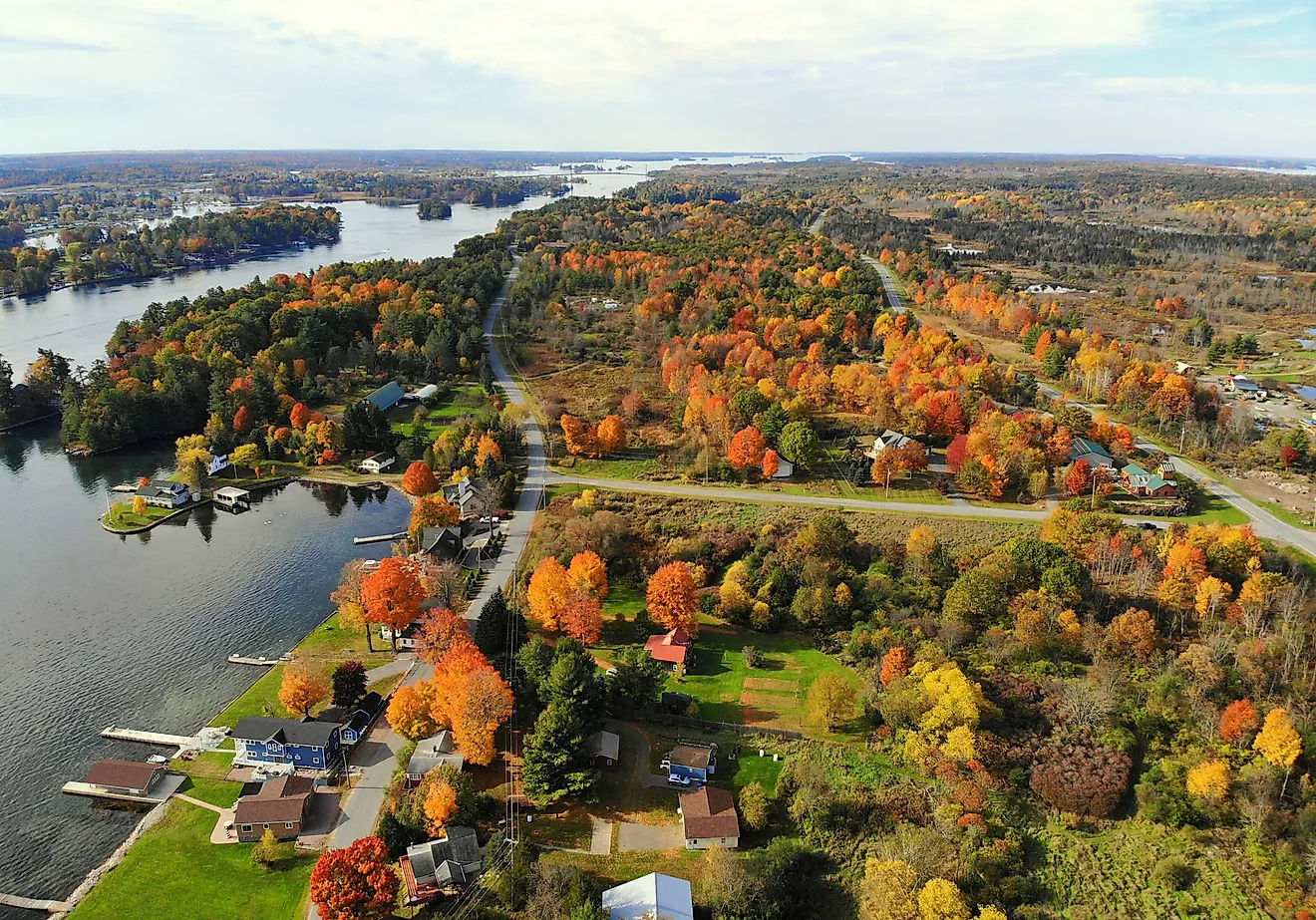
Lake Champlain runs 120 miles between Vermont and New York into Quebec, with a watershed covering more than 8,000 square miles of shallow bays, wetlands, and river deltas. This area makes for ideal beaver habitat. At more than 400 square miles, Champlain is by far the largest lake in the area, and its marshy northern bays around Missisquoi Bay hold much of that habitat.
Vermont's Fish and Wildlife Department formally treats the beaver as a keystone species for the wetlands that its dams create. Though neither Vermont nor New York publishes a specific beaver colony count or population estimate, the scale of sightings and suitable habitat suggests that a large population of beavers lives on Lake Champlain.
Lake George - Adirondack Park, New York

New York's Department of Environmental Conservation, working with the SUNY College of Environmental Science and Forestry, estimates that 50,000 to 75,000 beavers occupy most of the available habitat across the Adirondacks. Lake George is the largest, by acreage, lake contained fully within Adirondack Park, offering a large amount of suitable shoreline and wetland habitat for these abundant colonies.
New York's beaver population collapsed to a single known colony by 1903, located in the area northwest of Upper Saranac Lake in the Adirondacks. The State legislature responded that year with a $500 allocation to restock the species, and fewer than 50 beavers total were released across the region between 1901 and 1907. Once the population was given protection, it expanded rapidly, with contemporary estimates reaching into the tens of thousands within a couple of decades.
The Beaver Comeback

The North American beaver has one of America's greatest conservation comeback stories. They recovered from near extinction nearly a century ago to reclaim their place in lakes and rivers across nearly every U.S. state. Some lakes come with beaver population estimates based on decades of federal aerial surveys and tagging studies, while others earn their place through the sheer scale of protected beaver-favorable habitat.
As park biologists and state wildlife agencies continue to track these populations, lakes like these offer some of the clearest pictures researchers have of where beavers are most numerous and thriving.