The Lakes Created By Meteor Impacts
Although scientists have confirmed roughly 200 meteor impact craters on Earth, only around 30 of the identified craters contain permanent lakes. The seven lakes highlighted here are among the best-known examples, spanning locations from Canada and Russia to Ghana and India. Beyond their visual appeal, these lakes help researchers study ancient climates, geological processes, and even the conditions found on other planets. For travelers, they offer a chance to see landscapes shaped by events that occurred thousands or even millions of years ago. Whether viewed from space, examined in scientific studies, or visited in person, meteor crater lakes provide a remarkable connection between Earth's surface and the broader history of the solar system.
Meteor Crater Lake Formation

Meteor crater lakes begin with an event that lasts only a few seconds. A meteor enters Earth's atmosphere at tremendous speed and, if large enough, survives its descent to strike the surface. The impact generates temperatures hotter than molten lava and shock waves powerful enough to fracture and displace rock. A circular crater forms as material is blasted outward and the ground rebounds. Depending on the size of the impact, the crater may include a central peak, uplifted rim, or ring-shaped structure.
Over time, erosion softens the crater walls, while precipitation and groundwater gradually fill the basin. Some impact lakes remain isolated and develop unusual chemical conditions, while others become connected to surrounding watersheds. Because many impact craters are eventually reshaped or even erased by erosion, tectonic activity, or glaciation, crater lakes are relatively uncommon and often difficult to identify. Therefore, the total number of meteor crater lakes on Earth is still uncertain.
Lake Manicouagan, Canada

One of the most recognizable impact lakes on Earth is Lake Manicouagan in Quebec, Canada. Often called the "Eye of Quebec" because of its distinctive ring shape, the lake occupies the remains of a crater created about 214 million years ago when an asteroid roughly 3 miles (5 km) wide struck the region. The modern lake is actually a reservoir formed after the construction of a hydroelectric dam, but its circular outline still reflects the original impact structure.
At the center lies René-Levasseur Island, which was created by the rebound of Earth's crust immediately after the impact. Visible from space, the lake is roughly 60 miles (100 km) in diameter and reaches a maximum depth of about 1,150 ft (350 m). Scientists continue to study the crater because of its size, age, and potential connection to environmental changes during the late Triassic Period.
Lake Bosomtwe, Ghana

Lake Bosomtwe is located in Ghana's Ashanti Region and is the country's only natural lake. Formed approximately one million years ago by a meteorite impact, the nearly circular lake measures about 6.5 miles (10.5 km) across and sits within a well-preserved crater. The surrounding area contains forests, wetlands, and numerous villages whose residents rely on fishing and agriculture.
The lake also holds cultural significance for local communities and has long been associated with regional traditions. From a scientific perspective, Bosomtwe is especially valuable because its sediments preserve a detailed record of climate conditions in West Africa. Researchers have extracted sediment cores from the lake floor to reconstruct patterns of rainfall, drought, and environmental change extending far into the past.
Karakul Lake, Tajikistan

High in the Pamir Mountains of Tajikistan lies Karakul Lake, which is roughly 16 miles (25 km) in diameter and sits in an ancient impact crater that is more than twice as large. Some scientists believe the crater was formed around twenty million years ago when a meteorite struck the region, creating a basin roughly 32 miles (52 km) in diameter. Because the impact structure is so large and the surrounding terrain is mountainous, visitors on the ground may not immediately recognize that they are standing within a crater.
Scientists only confirmed the impact origin in the late 1980s after examining satellite imagery. Karakul sits at an elevation of nearly 13,000 feet (4,000 m), making it one of the highest large crater lakes in the world. The lake's isolated location and harsh climate create a stark landscape that contrasts sharply with the surroundings of many other impact lakes.
Lonar Lake, India

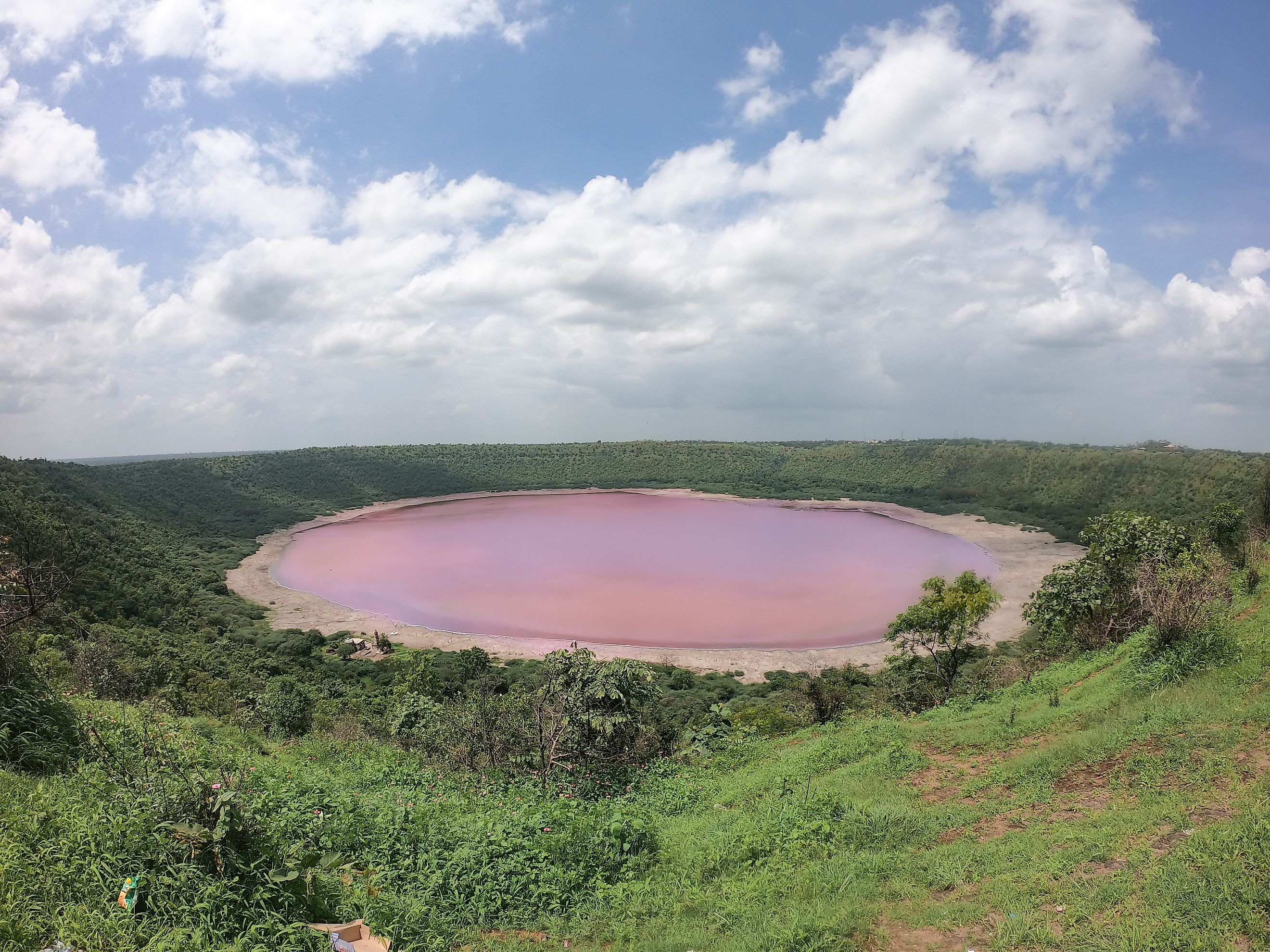
Lonar Lake in the Indian state of Maharashtra is small, at less than 1 mile (1.6 km) in diameter, and sits in a nearly circular bowl that makes it clear that it is a crater lake. The crater in question formed approximately 50,000 to 500,000 years ago when a meteorite struck the volcanic basalt rocks of the Deccan Plateau. This location led to assumptions that Lonar Lake was in a volcanic crater, and only in recent decades has it become clear that it is a meteor crater.
The lake's waters are both saline and alkaline, producing chemical conditions that support distinctive microbial communities. Scientists often compare the crater to impact sites on the Moon and Mars because of its unusual geology. The basin is surrounded by steep slopes and centuries-old temples that add historical and cultural interest to the site.
Mistastin Lake, Canada

Mistastin Lake in Newfoundland and Labrador, Canada, occupies a 17-mile (28 km) wide crater formed by a meteor impact approximately 36 million years ago. Although erosion has altered the original crater, many impact-related features remain visible, including portions of the crater rim and a central uplift. The site is particularly important to planetary scientists because rocks produced during the impact contain glassy materials that resemble samples collected from the Moon.
For this reason, NASA and the Canadian Space Agency have used the area as a training ground for astronauts preparing for lunar exploration. The lake itself sits within a rugged landscape shaped by both the ancient impact and later glacial activity. Researchers continue to investigate the crater's structure and geology to better understand the processes that occur during large impacts.
Lake Elgygytgyn, Russia

Lake Elgygytgyn occupies one of the best-preserved meteor impact craters in northeastern Russia. Formed around 3.6 million years ago, the crater contains a circular lake approximately 7.5 miles (12 km) wide surrounded by an elevated rim. The remote location and absence of major glacial erosion have allowed the site to remain remarkably intact.
What makes Elgygytgyn especially important is the 1300 feet (400 m) of sediment accumulated on its floor. These deposits preserve a continuous record of Arctic climate conditions stretching back millions of years, making the lake one of the most valuable paleoclimate archives in the Northern Hemisphere. International research teams have drilled into the sediments to reconstruct ancient temperatures, precipitation patterns, and environmental changes.
Clearwater Lakes, Canada

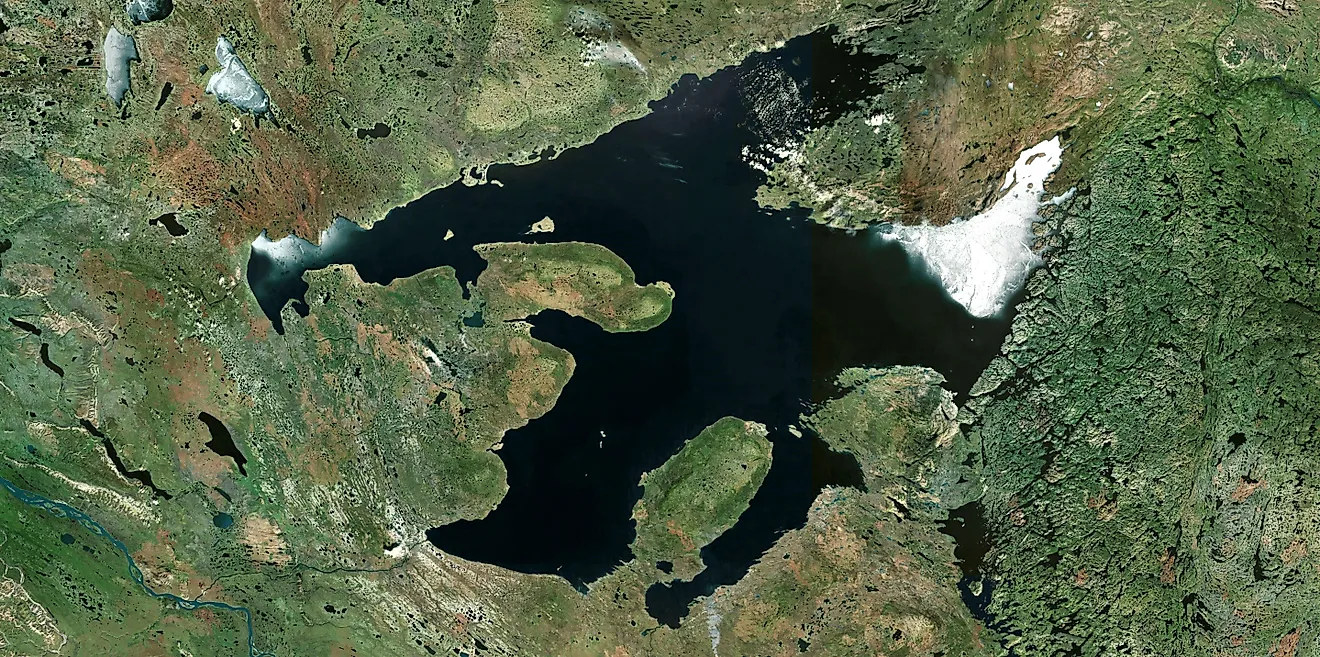
The Clearwater Lakes of northern Quebec represent one of Earth's most intriguing impact structures. The system consists of two adjacent circular lakes (in reality, one lake separated by a series of small islands) created by separate meteor impacts. Scientists naturally assumed that a simultaneous double impact created the pair of craters, but modern dating techniques indicate that the Clearwater East impact happened about 465 million years ago and Clearwater West occurred around 290 million years ago.
The eastern and western craters, 16 miles (26 km) and 22 miles (36 km) in diameter respectively, each contain a submerged central peak formed when the crust rebounded immediately after impact. Today, the lakes are known for their deep, clear waters and distinctive circular outlines, which remain easily visible from above. Their preservation allows researchers to examine the long-term evolution of impact structures and the geological processes that shape them over hundreds of millions of years.
Cosmic Collisions, Natural Wonders
Formed by violent impacts that reshaped the Earth's surface in seconds, meteor crater lakes have evolved into important ecosystems, cultural landmarks, and scientific resources. From the Arctic climate archive preserved beneath Lake Elgygytgyn to the unmistakable ring of Lake Manicouagan, each site tells a different chapter in Earth's geological story. Together, they reveal how the scars left by ancient cosmic collisions can become enduring natural features that continue to attract researchers, photographers, and travelers from around the world.