How Invasive Mussels Made The Great Lakes Clearer And Why That Is A Problem
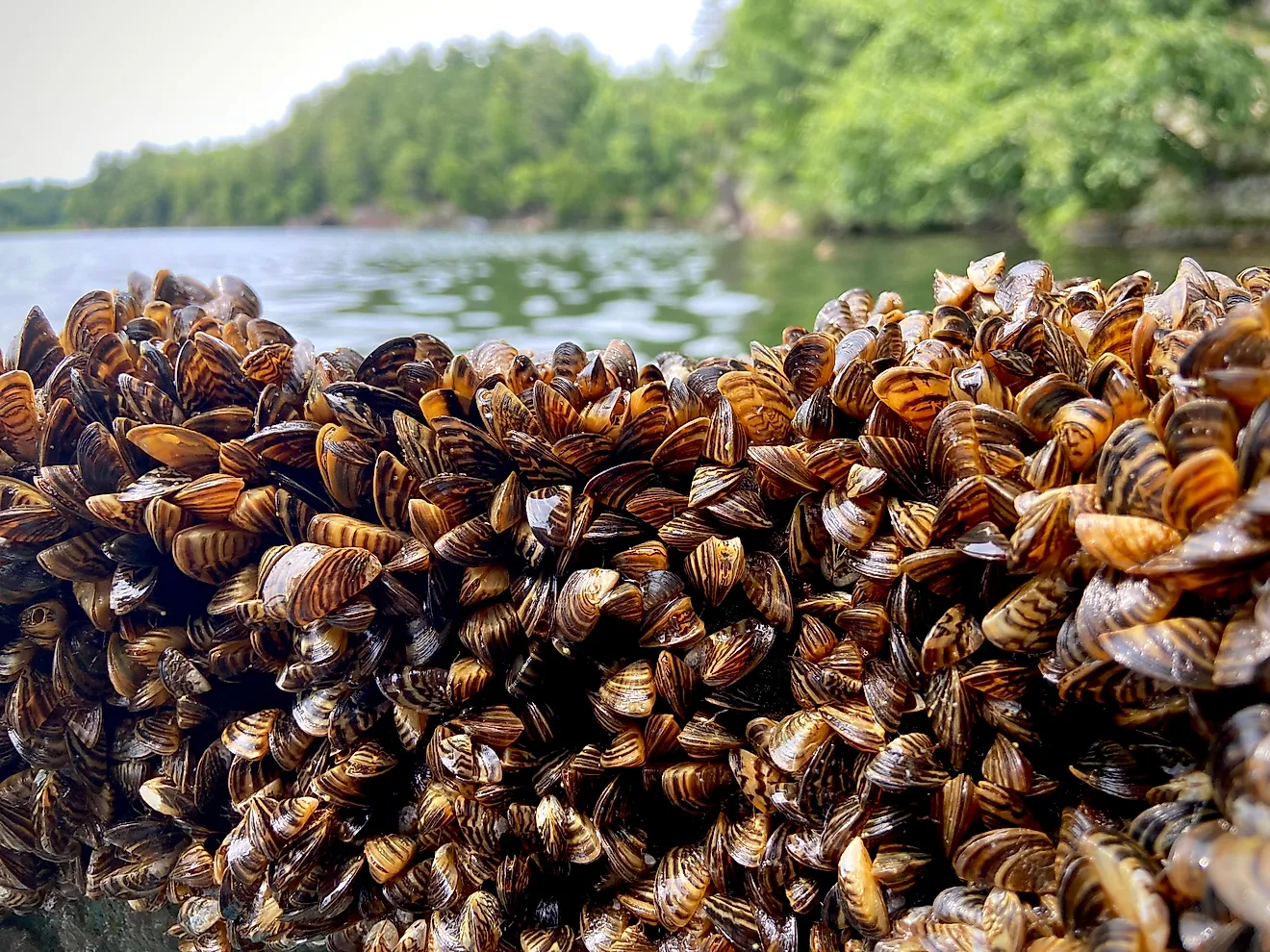
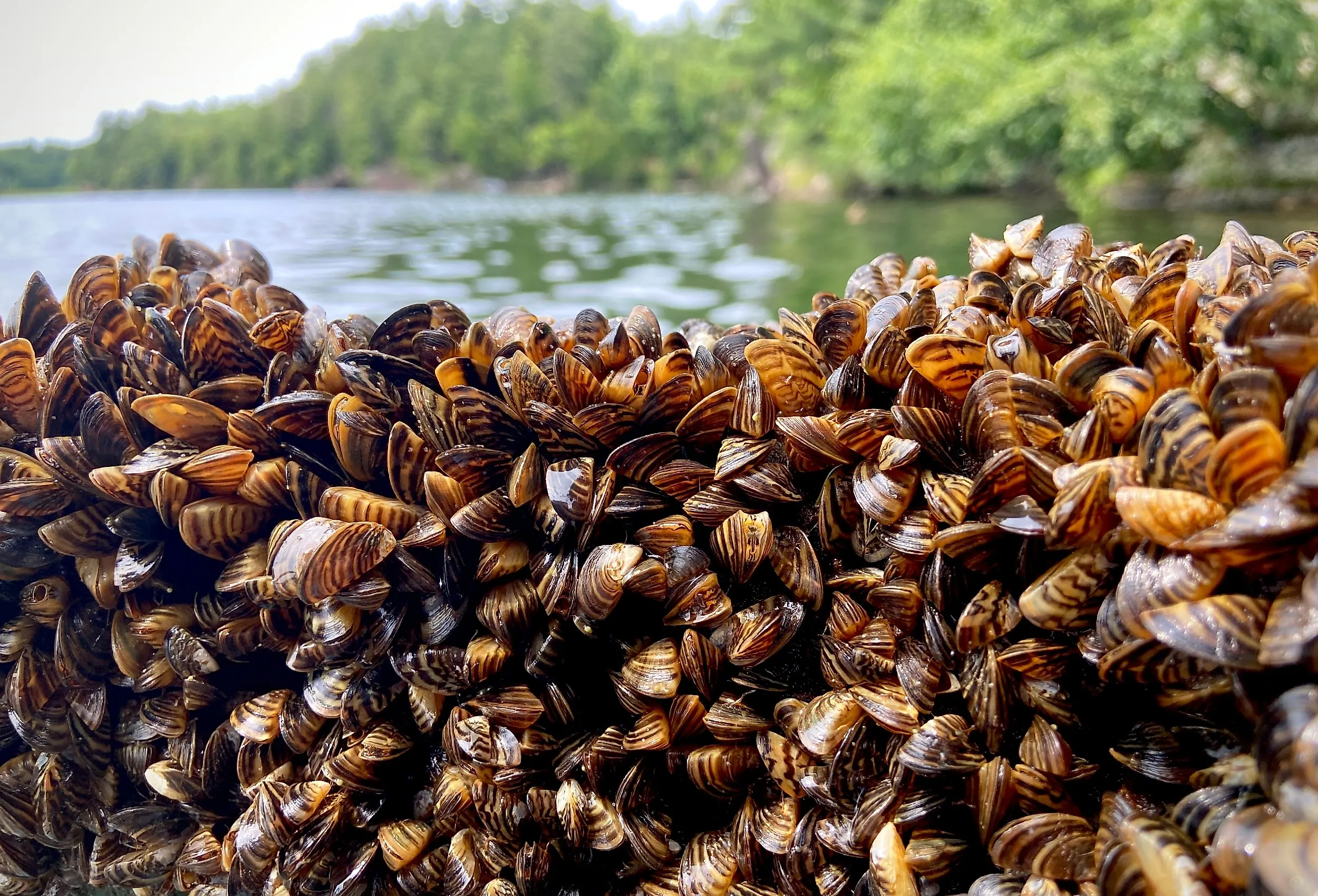
Some stretches of the Great Lakes now look startlingly transparent. From the surface, that clarity can make the water appear cleaner and healthier than it was a few decades ago. But in much of the lower Great Lakes, the change is not simply the result of declining pollution. It is also the work of zebra and quagga mussels, two invasive species that have transformed the way nutrients and energy move through the lakes.
These mussels feed by drawing in water and capturing suspended particles, including phytoplankton, bacteria, and decaying organic matter. In enormous colonies, they can filter vast quantities of water, stripping out much of the microscopic life that once made it cloudier. That material was not useless debris. Phytoplankton forms the base of the open-water food web, feeding zooplankton that are then eaten by young fish and other aquatic animals.
Instead of allowing this biological energy to circulate through open water, invasive mussels consume or capture it, concentrating much of it near the lakebed. The resulting clarity, therefore, comes with serious ecological costs. Reduced food availability for offshore organisms, declines in native invertebrates, disrupted fish populations, and heavier algal growth along parts of the shoreline. The Great Lakes may look cleaner from above, but beneath the surface, their food webs have been profoundly reorganized.
The Invasion Began in Ballast Water

Zebra mussels (Dreissena polymorpha) and quagga mussels (Dreissena rostriformis bugensis) are native to the Ponto-Caspian region of Europe and western Asia. They reached the Great Lakes during the late 1980s, most likely as larvae carried in ballast water discharged by transatlantic ships. Zebra mussels were identified in Lake St. Clair in 1988. Quagga mussels were discovered near Lake Erie in 1989 and confirmed as a separate species two years later. Their free-swimming larvae moved through connected waterways, while adults attached themselves to boats and equipment that carried them into new areas. Both species can reproduce rapidly, allowing a small founding population to cover docks, reefs, pipelines, and natural lakebed within a few years.
Quagga Mussels Took the Invasion Into Deep Water

Zebra mussels first transformed many rocky shorelines and shallow habitats, but quagga mussels eventually became the more powerful force across much of the Great Lakes. Zebra mussels attach mainly to hard substrates, whereas quaggas can also live and thrive on sandy or muddy bottoms. They also tolerate colder water and survive at greater depths. Once quaggas expanded into offshore Lake Michigan during the 2000s, filtration was no longer concentrated near ports and coastlines. Dense colonies were processing water across the lake basin, including zones deeper than 50 meters (about 165 feet).
The Mussels Filtered Out the Material That Made the Water Cloudy

Zebra and quagga mussels feed by drawing water through their bodies and capturing suspended particles. Much of what they remove is phytoplankton, the microscopic algae that convert sunlight and nutrients into biological energy. They also collect bacteria and fragments of decaying organic matter. Zebra mussels can filter roughly one liter of water per individual each day under favorable conditions. When colonies contain millions or billions of animals, their combined filtration removes enough suspended material to lower chlorophyll concentrations and increase visibility through the water column.
This process is often mistaken for natural purification. The mussels do not remove every pollutant or make contaminated water safe to drink. Instead, they ingest some filtered particles and excrete them as feces, while rejecting others before ingestion as pseudofeces. Both settle toward the lakebed. Nutrients that once remained available to drifting organisms become concentrated around mussel colonies, changing where energy is stored and used within the lake.
The Open-Water Food Web Lost Its Foundation

Phytoplankton may make water look cloudy, but it performs the same basic role that grass performs in a terrestrial food web. Zooplankton eat it. Young fish and small forage fish then consume the zooplankton. Removing phytoplankton reduces the energy available at each higher stage. In Lake Michigan, the expansion of quagga mussels into water deeper than 50 meters (about 165 feet) was associated with an estimated 35 percent reduction in annual offshore primary production by 2007. Spring production fell especially sharply because mussels remained active during a season that once supplied an important pulse of food.
The result has been described as an offshore food desert. Water can appear exceptionally clean while supporting less microbial growth and fewer prey organisms. Reduced offshore prey can alter fish diets, habitat use, growth, or condition. Responses vary by species and by lake. Some major Lake Michigan fish populations remained abundant despite lower primary production.
Diporeia Disappeared From Large Areas

One of the most serious changes involved Diporeia, a native shrimp-like amphipod that once dominated parts of the Great Lakes lakebed. It fed on organic material settling from the water and stored that energy in a form valuable to lake whitefish, sculpins, and other fish. As invasive mussels spread, Diporeia declined across the lower four Great Lakes. EPA monitoring shows that the decline followed the expansion of zebra and quagga mussels, although scientists have not established a single cause. Competition for settling food is a leading explanation, but disease or biochemical changes around mussel beds may also have contributed.
In Lakes Michigan, Huron, and Ontario, whitefish that shifted toward dreissenid mussels had lower condition or energy density than Lake Erie whitefish that did not. Responses varied among lakes. Researchers have linked the dietary shift to poorer body condition in parts of the Great Lakes, showing how an invasion at the bottom of the food web can reach a valuable commercial fishery.
Clearer Water Gave Bottom Algae More Sunlight

Greater transparency allows sunlight to reach the lakebed that was previously too dark for heavy algal growth. That has favored Cladophora, a native filamentous green alga that attaches to submerged rock. In normal amounts, Cladophora provides habitat for small organisms. Under bright conditions with enough phosphorus, it can spread across broad sections of shallow lakebed. Mussel colonies can intensify the problem by recycling nutrients at the lakebed, where Cladophora growing in sunlit shallow water can use them.
Large mats eventually detach and wash onto beaches. The stranded algae rot along the shoreline, producing strong odors and interfering with swimming. Decomposition can reduce oxygen near the bottom and create favorable conditions for bacteria. Cladophora also clogs water intakes in affected areas. Lakes Michigan, Erie, and Ontario continue to experience poor conditions related to excessive growth, even though open-water phosphorus concentrations can appear low.
Nutrients Became Trapped Near the Shore

Before the mussel invasion, more phosphorus circulated through open water and supported plankton across a wider area. Mussel filtration now captures part of that phosphorus and deposits it on the bottom, particularly in nearshore zones. Scientists call this process the nearshore nutrient shunt. It helps explain why the same lake can have little food for offshore fish while producing thick algae near beaches. The nutrients have not vanished. Their location and biological availability have changed.
This redistribution complicates pollution control. Reducing phosphorus runoff remains essential, particularly in Lake Erie, but managers must account for an ecosystem that no longer responds like the Great Lakes of the 1970s. A phosphorus concentration that once supported open-water plankton may now be captured by mussels and delivered to algae growing on the lakebed. Whole-lake averages can therefore conceal sharp differences between nutrient-starved offshore water and productive shoreline habitat.
Mussels Can Favor Harmful Cyanobacteria

Zebra mussels can also change which types of plankton survive their grazing. Laboratory and field research has found that their presence may favor Microcystis, the toxin-producing cyanobacterium responsible for some harmful blooms in Lake Erie. Mussels consume competing plankton while rejecting or avoiding certain Microcystis colonies. They also return nutrients to the water through waste. Experiments found that zebra-mussel effects depended on nutrient conditions: at very low phosphorus, they reduced Microcystis biomass, whereas under phosphorus enrichment, they increased it. The research also linked dreissenid invasion to higher microcystin concentrations in lakes with low-to-moderate nutrients.
Invasive mussels are not the original cause of Lake Erie's toxic blooms. Agricultural runoff and other phosphorus sources remain the main fuel. Mussel activity changes how that fuel moves through the food web and which organisms gain access to it. Their influence can make bloom behavior harder to predict and weaken the connection between apparent water clarity and actual ecological health.
Native Mussels and Infrastructure Were Buried

Zebra and quagga mussels attach to nearly any hard submerged surface, including the shells of native freshwater mussels. Dense layers restrict a native mussel's movement and interfere with feeding. Colonies can become heavy enough to bury or exhaust the animal beneath them. Similar growth blocks municipal and industrial water intakes, forcing facilities to spend money on inspection and removal. Mussels also coat docks and historic shipwrecks, where layers of shells conceal structural details and can accelerate deterioration.
Clear Water Is Not the Same as a Healthy Lake
The Great Lakes did not become healthier simply because people could see farther beneath the surface. Invasive mussels produced much of that clarity by removing plankton and transferring nutrients toward the lakebed. Offshore productivity fell, Diporeia disappeared from large areas, and fish lost an important energy source. Near the coast, the same increase in sunlight helped nuisance algae spread into deeper water. Clear water can be desirable, but in this case, it can also reveal how thoroughly an invasive animal has reorganized an ecosystem.