The US Lakes Overrun By Invasive Catfish
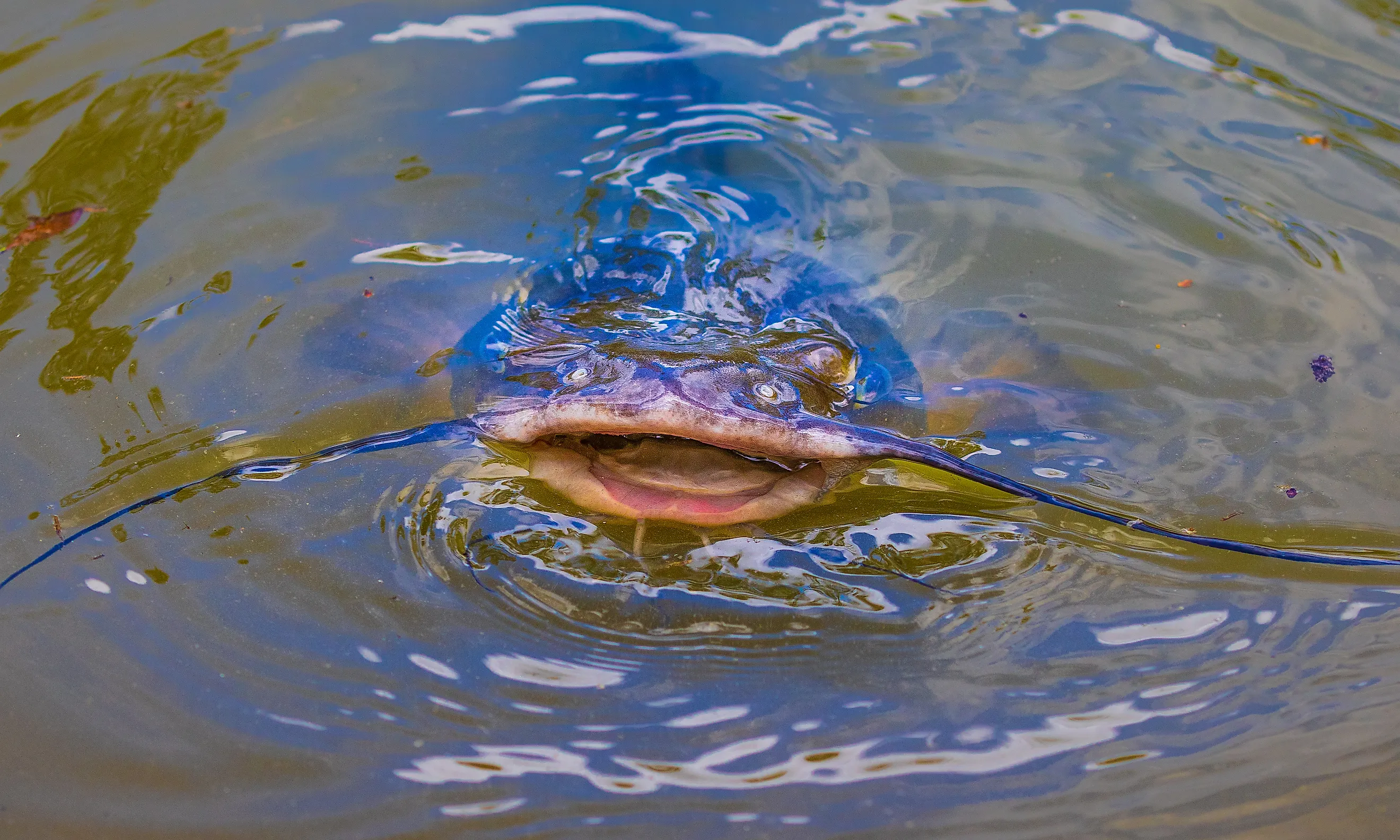
In Florida's Upper St. Johns lakes, crews once removed nearly 7,000 pounds of invasive armored catfish in just 12 fishing trips. In Virginia, only 12 introduced flathead catfish were enough to start a population that later spread through much of the Potomac River system. These cases show how differently invasive catfish can take over a lake. Blue and flathead catfish were stocked outside their native ranges decades ago and can become major predators of native fish, mussels, and crustaceans. Armored sailfin catfish, often descended from released aquarium pets, cause a different kind of damage by digging nesting burrows that weaken shorelines. The lakes below stand out because surveys, removal programs, and long-term studies show established populations, high numbers, or clear ecological harm.
Lake Okeechobee, Florida

Armored catfish have become a conspicuous part of the fish community around Lake Okeechobee, where the non-native Orinoco sailfin catfish is established throughout the drainage. Native to South America, the species belongs to the loricariid family of heavily armored, algae-grazing catfish commonly sold for aquariums. Florida wildlife officials describe sailfin catfish as among the state's most successful introduced fishes. Their impact is particularly visible along shallow shorelines. Adults excavate horizontal nesting burrows into banks, sometimes in large numbers, accelerating erosion and weakening canal edges. Their hard body plates and dorsal spines also make them difficult prey for many native predators. Lake Okeechobee's vast network of marshes, canals, and warm shallow water is extensive habitat for a fish that can tolerate low oxygen and environmental conditions that exclude less hardy species.
Lake Gaston, North Carolina and Virginia

Blue catfish were never part of the original fish community in Lake Gaston, yet they have developed into an important predator within the reservoir. The species is native primarily to Mississippi River and Gulf Coast drainages and is considered invasive in North Carolina waters outside that range. Surveys at Lake Gaston illustrate how strongly the population has established. During targeted sampling in 2016 and 2017, biologists captured 95 blue catfish, compared with five channel catfish, 11 white catfish, and a single flathead catfish. Wildlife officials had already noticed blue catfish appearing more frequently during unrelated striped bass surveys over the previous decade. Large individuals can consume fish, freshwater mussels, and crustaceans, placing them in direct contact with native prey communities and migratory species moving through the Roanoke River system.
Lake Poinsett, Florida

Lake Poinsett sits within an Upper St. Johns River system where invasive vermiculated sailfin catfish occur at densities high enough to justify organized removal. Florida's 2024 commercial haul-seine project required fishers working Lake Poinsett and three nearby lakes to retain and dispose of every sailfin catfish captured. Across the four participating waters, crews removed 6,898 pounds of the armored fish during only 12 fishing events. Lake Poinsett also produced catches heavily dominated by exotic fish during portions of the project, with tilapia and other introduced species accounting for 58% to 89% of some hauls. Sailfin catfish add a different problem because they excavate spawning burrows into banks. Their presence therefore affects more than competition for food: dense colonies can physically alter shorelines while adding substantial non-native biomass to already heavily invaded freshwater habitat.
Lake Washington, Florida

Commercial crews in Lake Washington are not merely pulling up the occasional escaped aquarium fish. The lake was included in Florida's 2024 Upper St. Johns removal operation specifically targeting vermiculated sailfin catfish and other invasive species. Fishers were instructed not to release the armored catfish, and thousands of pounds were ultimately removed from Lake Washington, Lake Poinsett, Lake Florence, and Sawgrass Lake combined. That management response reflects the persistence of a species exceptionally well suited to Florida. Vermiculated sailfin catfish can breathe air through a specialized digestive tract when oxygen levels fall, survive in warm stagnant water, and feed extensively on material growing along submerged surfaces. Their reproductive strategy compounds the problem: males excavate shoreline burrows used as nesting chambers. In heavily occupied habitat, repeated digging can undermine banks and contribute to erosion around canals and lake margins.
Landa Lake, Texas

Landa Lake is small compared with many reservoirs on this list, but its armored catfish problem has required sustained intervention. The spring-fed lake at the headwaters of the Comal River supports federally protected aquatic species, making large populations of introduced fishes particularly undesirable. Management under the Edwards Aquifer Habitat Conservation Plan includes year-round removal of sailfin and suckermouth armored catfish, with crews recording the number and biomass taken from the system. Researchers have also collected these catfish to study their age structure, reproduction, and population dynamics. The stakes extend downstream because Landa Lake feeds directly into the Comal River. Removing adult fish from the lake therefore serves two purposes: reducing pressure inside sensitive spring habitat and limiting a potential source population capable of replenishing invaded stretches of river below the headwaters.
Lake Norman, North Carolina

The blue catfish population in Lake Norman began with deliberate stocking rather than an accidental aquarium release. Fish were introduced during the 1960s, outside the species' native drainage, and subsequently developed a self-sustaining population. Research conducted on the reservoir documented rapid population growth as blue catfish became increasingly familiar to anglers. At the same time, native white catfish and snail bullheads declined, prompting questions about competition and other interactions within the reservoir's catfish community. Those declines cannot be attributed solely to blue catfish without stronger causal evidence, but their arrival added a large, long-lived predator capable of changing food-web relationships. Mature blue catfish consume fish as well as mollusks and other aquatic animals, and the largest individuals can reach sizes that leave them with few natural predators in an artificial lake such as Norman.
Sutton Lake, North Carolina

Few North Carolina reservoirs demonstrate the rise of invasive flathead catfish as clearly as Sutton Lake. Between 1999 and 2006, two linked studies collected 746 flatheads from the reservoir while documenting a population described as well established and exceptionally fast growing. Roughly 70% of sampled fish measured more than 600 millimeters long, evidence that the lake contained a large population of mature predators rather than scattered juveniles. Flathead catfish are primarily fish eaters once they become large, which makes their introduction particularly consequential in systems with native sunfish, catfish, and other prey. Sutton Lake also shows that invasions can change following management. A 2021 survey captured only three flatheads, far fewer than earlier studies. Biologists nevertheless confirmed that the species remained present and recommended additional targeted sampling before concluding that its population had collapsed.
Blue Marsh Reservoir, Pennsylvania

A flathead catfish caught in Blue Marsh Reservoir in 1999 became an early warning for eastern Pennsylvania. The species is native much farther west, yet that record was the first known flathead from the Delaware River drainage. Reproduction and subsequent spread followed, and Pennsylvania now treats flathead catfish as an invasive species in waters where they occur outside their natural range. Blue Marsh is therefore important not simply because it contains introduced catfish, but because it helped document the beginning of a much larger expansion through the Delaware basin. Adult flatheads are powerful predators with a strong preference for live fish. Their presence creates particular concern in eastern rivers supporting native fish communities that did not evolve alongside them. Current lake-wide density estimates are limited, so Blue Marsh is best described as a firmly established invasion site rather than one with a precisely measured modern population size.
Occoquan Reservoir, Virginia

The invasion history of Occoquan Reservoir shows how a surprisingly small founding population can reshape an entire watershed. Records indicate that only 12 flathead catfish were originally stocked in the reservoir. The fish nevertheless reproduced successfully, established themselves, and are regarded as the likely source of flatheads that later appeared throughout parts of the Potomac River system. That progression matters because flathead catfish become increasingly piscivorous as they grow. Large adults routinely prey on other fishes, including species occupying the same deep channels, woody cover, and river margins favored by flatheads. The Occoquan introduction therefore developed from a localized stocking into a pathway for regional expansion. It is an especially useful case study for invasion biology because it demonstrates that the ecological importance of an introduction cannot be judged solely by the number of animals initially released.
Lake Marion and Lake Moultrie, South Carolina

South Carolina's Santee-Cooper lakes contain two major catfish introductions: blue catfish and flathead catfish. Both species were placed into the system during the 1960s and subsequently developed reproducing populations capable of producing exceptionally large adults. Blue catfish in particular became so successful that Lake Marion and Lake Moultrie are now nationally known among trophy-catfish anglers. Their popularity complicates the ecological story. These fish are unquestionably non-native to the lakes, yet they are also managed as economically valuable recreational species rather than simply as pests targeted for eradication. Large blue catfish consume fish, mussels, crustaceans, and other prey, while mature flatheads feed heavily on live fish. The Santee-Cooper system therefore illustrates a recurring management conflict: an introduced predator can alter freshwater food webs while simultaneously supporting a fishery that anglers and local businesses want to preserve.
Why Some Lakes With Invasive Catfish Do Not Belong on This List
Simply detecting an invasive catfish does not mean a lake is overrun. Lake Waccamaw in North Carolina demonstrates the distinction. Flathead catfish have been recorded there, placing a large non-native predator inside a lake famous for endemic and unusual native species. Yet state biologists failed to capture a single flathead during a 2020 survey and concluded that any remaining population appeared to occur at very low abundance. That evidence is fundamentally different from thousands of pounds of armored catfish being removed in Florida or hundreds of flatheads being collected from Sutton Lake. Scientific descriptions should therefore distinguish between introduction, establishment, high abundance, and ecological impact. For these lakes, the strongest evidence comes from repeated surveys, removal programs, documented population growth, or clear expansion beyond the original site of introduction.