The Only Lakes With Landlocked Salmon
Salmon are supposed to be the great adventurers of the fish world. The whole salmon brand is built on the epic journey: hatch in a freshwater stream, swim heroically out to the vast ocean, spend years bulking up on the high seas, then battle back upriver against all odds to spawn where you were born. It is the stuff of nature documentaries. And then there are the landlocked salmon, a rare few that took one look at that grand oceanic odyssey and said, "nah, I'm good," and simply stayed in the lake forever. They are the homebodies of a famously restless family, and they live in a shockingly small, exclusive club of lakes. Here is where you find the salmon that never saw the sea.
Sebago Lake, Maine

If landlocked salmon have a capital, it is Sebago Lake. This deep, clean southern Maine lake is so central to the story that the fish's scientific name is literally Salmo salar sebago, and old-timers still call the species the "Sebago salmon." In the United States, native landlocked salmon were originally found in just four Maine lake systems, full stop, and Sebago is the flagship. It has been the broodstock source for landlocked salmon stocked all over the map, making it something like the ancestral village the whole species traces back to. Bonus fact: an angler hauled a 22.5-pound landlocked salmon out of here back in 1907, which is a genuinely enormous fish for one that never bulked up in the ocean.
Maine's Other Three: Green, Sebec, and West Grand

Sebago gets the fame, but it had three original siblings, and together these four are the entire native US range of the landlocked salmon. Green Lake, Sebec Lake, and the West Grand Lake system (home to the fly-fishing shrine of Grand Lake Stream) round out the exclusive quartet. Here is the truly weird part that scientists still cannot fully explain: all four of these lakes originally had a clear path to the ocean, so these salmon were not trapped or stranded. They apparently just decided, of their own free will, to stop going. Nobody knows why a fish would voluntarily give up the sea, which makes the landlocked salmon less a victim of geography and more a committed introvert.
Lac Saint-Jean, Quebec

Cross into Canada and the landlocked salmon gets a much better name: the ouananiche, a word from the Innu language that is far more fun to say than "landlocked salmon." The undisputed heart of ouananiche country is Lac Saint-Jean, a big, relatively shallow lake in south-central Quebec that drains all the way to the sea via the Saguenay River, yet whose salmon stubbornly stay put. In fact, Quebec and Newfoundland together hold most of the entire planet's non-ocean-going Atlantic salmon populations. The ouananiche is such a point of regional pride that it has lent its name to everything from fishing lodges to local lore. It is the same homebody fish, just with a better accent.
Lake Saimaa, Finland

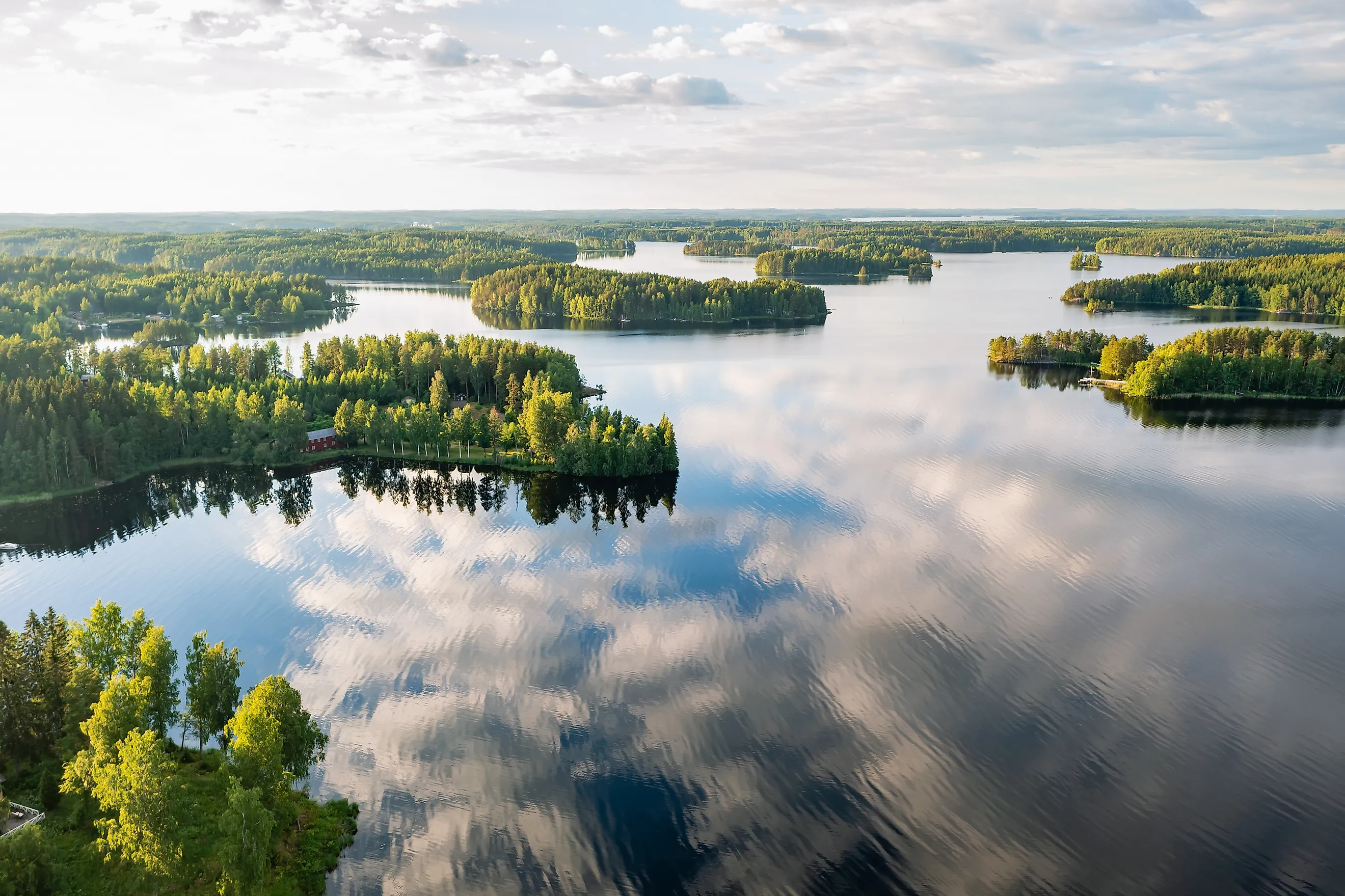
Over in Finland, the sprawling, island-choked maze of Lake Saimaa is home to its own utterly unique landlocked salmon, found nowhere else on the planet. Sadly, this one is a cautionary tale: the Saimaa landlocked salmon is now critically endangered, its wild runs wiped out by logging and hydropower dams built in the mid-1900s, and it survives today almost entirely thanks to hatcheries. It shares its watery labyrinth with another impossibly rare local celebrity, the Saimaa ringed seal, one of the few freshwater seals on Earth. Saimaa is basically a lake full of animals that got trapped in fresh water and quietly evolved into something special, whether they meant to or not.
Lake Vänern, Sweden

Sweden's Lake Vänern, the largest lake in the entire European Union, is a heavy hitter in the landlocked salmon world. Because a landlocked salmon's maximum size tends to track the size of its lake, and Vänern is enormous, its salmon grow big, ranking among the largest landlocked populations on the planet alongside the likes of Sebago and Lac Saint-Jean. These fish run up the lake's tributary rivers, most famously the Klarälven, to spawn, completing their entire life cycle without the sea ever entering the picture. It is proof that with enough room and enough food, a stay-at-home salmon can still grow into an absolute tank.
Lake Ladoga, Russia

Rounding out the European contingent is Lake Ladoga, the largest lake in all of Europe, a body of water so vast and sea-like that its landlocked salmon could be forgiven for not realizing they are missing out on anything. Ladoga, along with its neighbor Lake Onega, hosts populations of these non-migratory salmon in the cold, deep water of northwestern Russia. When your home lake is nearly 7,000 square miles of open water with its own storms and waves, the ocean starts to look less like a grand adventure and more like an unnecessary commute. These are the landlocked salmon that got the best possible consolation prize.
Lake Tahoe, California and Nevada (The Kokanee Curveball)

Time for a plot twist, because the Atlantic salmon are not the only ones who quit the sea. Meet the kokanee, which is simply a sockeye salmon, a Pacific species, that lives its whole life in fresh water instead of running to the ocean. Introduced into deep, cold western lakes like Lake Tahoe, kokanee pull off the same trick as their Atlantic cousins from the opposite side of the continent, and they do it with flair: come autumn, they turn a brilliant, screaming shade of red and swarm into the tributary streams to spawn, all without a single one of them ever tasting salt water. It is the landlocked salmon lifestyle, Pacific edition, and it is arguably even prettier.